


In engineering, materials do not all respond the same under load. Some deform gradually, while others fracture with little warning. This behavior is governed by brittleness, a property that indicates how much a material can withstand stress before breaking. Brittleness affects not only structural safety but also machining behavior, surface integrity, and long-term performance.
This article provides a clear overview of what brittleness is, the factors that cause it, how it is measured, and its implications for material selection and CNC machining processes.
1. What Is Brittleness?
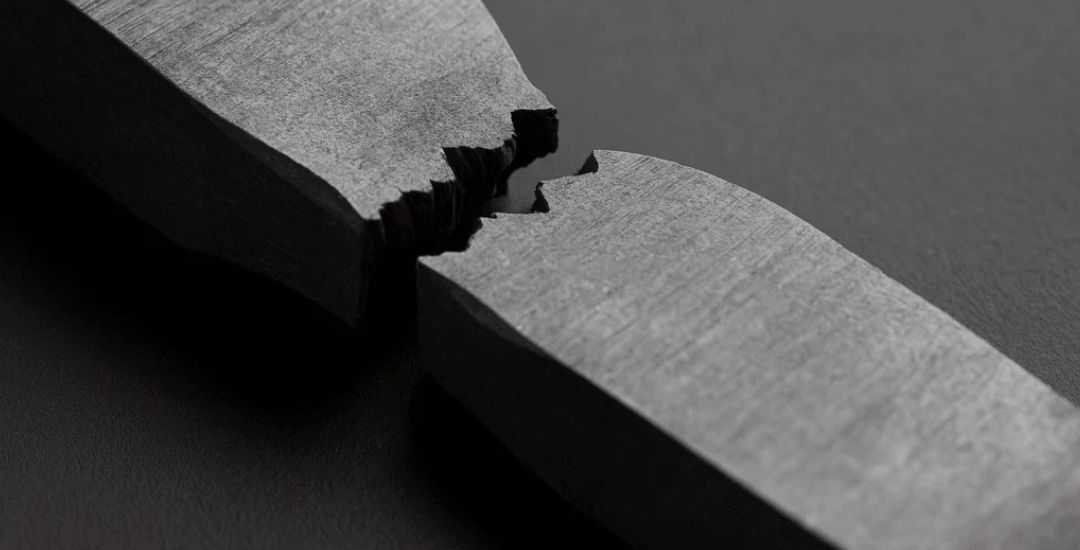
Brittleness refers to a material’s tendency to fracture with little or no plastic deformation before failure. In practical terms, a brittle material does not significantly stretch, bend, or yield under tensile stress. Instead, it cracks and separates once the applied stress exceeds its fracture strength.
From a stress–strain curve perspective, brittle materials show:
- A steep linear elastic region
- Minimal or no distinct yield point
- Very low strain at fracture
Unlike ductile materials, which absorb considerable energy through plastic deformation, brittle materials store elastic energy and release it rapidly when a crack propagates. Crack growth in brittle materials is often fast and unstable, leading to sudden fracture.
It is important to clarify that brittleness is not the same as hardness or strength. A material can be strong yet brittle or relatively soft yet brittle under specific conditions. Brittleness describes how a material fails, not simply how much load it can carry.
2. What Causes Brittleness in Materials?
Brittleness can arise from several interacting factors, including microstructure, temperature, environment, and processing history.
Microstructural Factors
Material structure plays a fundamental role in fracture behavior. Grain size, phase distribution, and the presence of inclusions or second-phase particles all influence crack initiation and propagation. For example:
- Coarse grains may reduce resistance to crack growth.
- Brittle phases, such as certain carbides, can act as crack initiation sites.
- Non-metallic inclusions can concentrate stress locally.
In hardened steels, martensitic structures increase strength but may reduce ductility, making the material more susceptible to brittle fracture if not properly tempered.
Temperature and Environmental Effects
Many materials become more brittle at low temperatures. This is particularly relevant for certain steels that exhibit ductile-to-brittle transition behavior. Below a critical temperature range, impact resistance decreases significantly, and fracture mode changes from ductile tearing to cleavage.
Environmental effects such as hydrogen exposure can also induce embrittlement. Hydrogen atoms diffuse into the material and reduce its resistance to crack propagation, sometimes leading to sudden failure under relatively low loads.
Heat Treatment and Processing
Improper quenching, excessive hardening, or high residual stresses from forming or welding may increase brittleness. Surface damage, machining-induced micro-cracks, and thermal gradients can further reduce fracture resistance.
In many cases, brittleness is not an inherent flaw of the base material but a result of processing and service conditions.
3. How Brittleness Is Measured and Tested
Brittleness is rarely captured by a single number. Instead, it is understood by observing how a material behaves under stress and how it fractures.
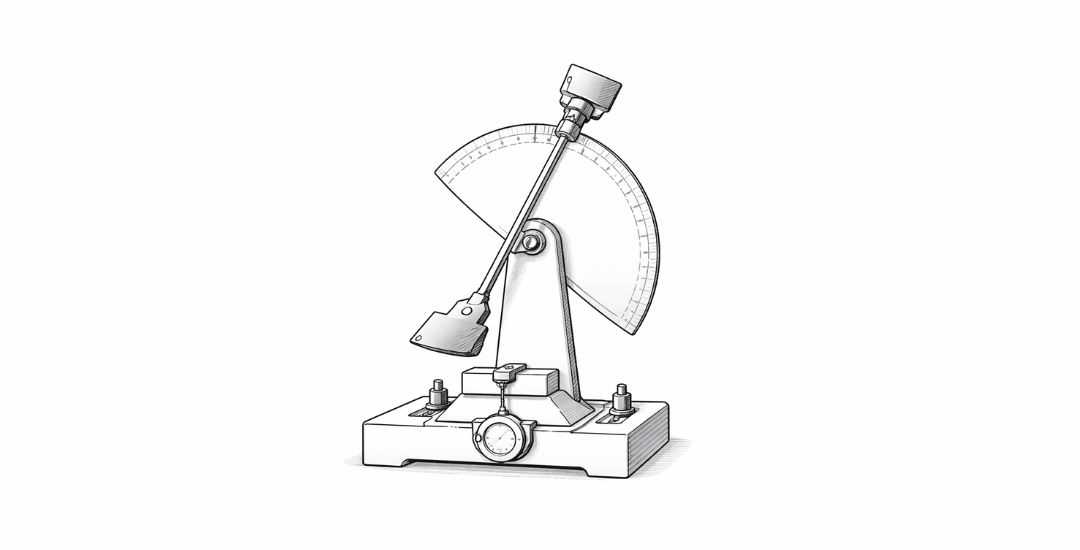
Darbe Testi
Tests like Charpy or Izod give a sense of how materials absorb energy during sudden loads. Brittle metals and plastics show very low energy absorption, especially at low temperatures, which reveals their tendency to fail abruptly rather than bend or stretch.
Fracture Toughness
Fracture toughness reflects a material’s resistance to crack growth. Materials with low fracture toughness, such as ceramics or certain hardened steels, can fracture from small flaws or sharp notches under relatively low stress. Knowing this helps engineers anticipate where cracks might start during service or machining.
Tensile Behavior
Standard tensile tests provide clues about brittleness. Materials that break with minimal stretching or reduction in cross-sectional area demonstrate limited plastic deformation. Stress–strain curves show a steep rise and sudden fracture, highlighting the material’s tendency to snap rather than yield. Observing fracture surfaces, such as cleavage in metals or intergranular cracks in ceramics, adds further insight into failure mechanisms.
These approaches together reveal how and why a material might fail suddenly. Such insights inform material choice, heat treatment decisions, and machining strategies without relying solely on abstract numbers.
4. Brittleness vs Toughness vs Ductility
Materials can behave very differently under stress. Some bend or stretch before breaking, some absorb energy without fracturing, and some fail suddenly with little warning. These differences are captured by ductility, toughness, and brittleness. A clear comparison with typical indicators is shown below:
| Mülk | Tanım | Typical Indicators | How It Appears in Materials |
| Ductility | Ability to undergo plastic deformation before fracture | Elongation at break: 10–50% (metals), >50% (polymers) | Material stretches or bends noticeably under load |
| Dayanıklılık | Total energy a material can absorb before failure | Impact energy: 20–300 J (metals), Fracture toughness KIC: 20–100 MPa·m^0.5 | Can handle sudden loads or shocks without fracturing |
| Brittleness | Fractures with minimal plastic deformation | Elongation at break: <5%, Impact energy: <20 J | Breaks suddenly, cracks propagate rapidly, sensitive to notches or flaws |
In general, materials that can stretch or deform significantly before breaking tend to be less brittle. Strengthening a material through hardening can improve its load-bearing capacity but may also reduce ductility and increase brittleness. Hardness alone does not determine how a material will fracture; microstructure and processing conditions play a decisive role in its behavior under stress.
5. Brittleness Across Different Material Categories
Brittleness manifests differently depending on the material and its environment, and recognizing these differences helps engineers anticipate potential failures.
Bardak
Glass is a classic brittle material. Soda-lime, borosilicate, and tempered glass fracture with almost no plastic deformation. Even minor scratches, thermal gradients, or impact points can trigger sudden breakage, making surface control critical.
Metaller
Most structural metals retain some ductility under typical conditions, but certain steels and cast irons can fracture suddenly. For example, high-carbon steels may fail without much deformation when exposed to low temperatures, and improper heat treatment can further increase the risk. Engineers often watch for sharp corners, notches, or sudden load changes, which can trigger brittle fracture.
Plastikler
Polymers can transition from flexible to brittle as temperatures drop. Materials like ABS or polycarbonate may handle room-temperature impacts well but crack under cold conditions. Molecular structure, additives, and crystallinity play a key role in this behavior, influencing whether a component bends, stretches, or snaps.
Seramikler
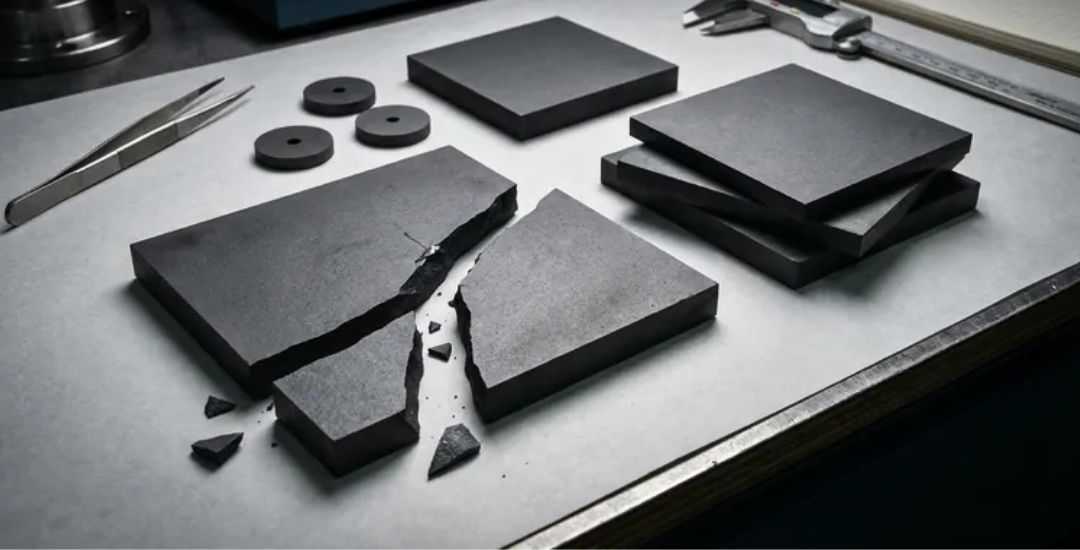
Ceramics are naturally brittle due to their atomic bonds and limited ability to deform plastically. They can bear high compressive loads, yet even small surface flaws may lead to sudden fracture under tension. In practice, engineers rely on flaw control, surface finishing, and design strategies such as compressive pre-stress to manage their brittleness.
Composites and Other Materials
Fiber-reinforced composites and ceramic-matrix composites may behave brittlely depending on fiber orientation and matrix properties. Even typically ductile materials, like elastomers, can become brittle at low temperatures or after aging.
In all cases, material category alone does not define brittleness. Service temperature, loading conditions, and component design are equally important in determining whether a part will fail gradually or suddenly.
6. How Brittleness Affects CNC Machining
Brittleness strongly affects how materials behave during CNC machining, influencing tool life, surface quality, and dimensional precision.
Tool Wear and Edge Chipping
Brittle metals such as cast iron or high-carbon steel, and engineering plastics like PEEK or polycarbonate, can cause micro-fractures at the cutting edge. High feed rates, interrupted cuts, or sharp tool engagement amplify edge chipping, leading to faster tool wear. Using tools with tougher coatings (e.g., TiAlN) and optimized edge radius can reduce this risk.
Surface Integrity
Machining brittle materials may induce micro-cracks or subsurface damage. Localized tensile stresses during cutting can propagate existing flaws, especially in ceramics or glass-filled polymers. These micro-cracks can become initiation points for fracture under cyclic loading, making surface finish and stress control critical.
Çip Oluşumu
Brittle materials often produce short, fragmented chips rather than continuous ribbons. While fragmented chips can be easier to evacuate, they also indicate unstable fracture processes at the tool-material interface. Controlling cutting speed, depth of cut, and tool geometry helps maintain stable chip formation and prevents catastrophic edge failure.
Effective machining of brittle materials requires careful tool selection, controlled speeds, rigid fixturing, and appropriate cooling or lubrication. Optimizing these parameters improves surface quality, maintains dimensional accuracy, and extends tool life, even when machining inherently brittle metals, plastics, or ceramics.
7. Engineering Design Considerations for Brittle Materials
Working with brittle materials requires careful attention to stress distribution and potential failure modes.
Stress Concentration Sensitivity
Sharp corners, notches, and surface flaws can dramatically increase local stress in brittle metals, ceramics, or glass-filled plastics. Even small machining marks or micro-cracks may act as crack initiation sites. Using fillets, chamfers, and smooth surface finishing helps reduce these risks.
Load Type and Direction
Brittle materials generally tolerate compressive loads better than tensile or impact loads. Components are often designed to keep tensile stresses low and distribute loads evenly. For example, stiff ceramic parts or hardened steel gears are oriented to minimize bending stress where possible.
Safety Factors and Inspection
Sudden fracture necessitates conservative design margins. Non-destructive inspection techniques, such as dye penetrant testing or ultrasonic scanning, help identify hidden flaws. Surface polishing and deburring further reduce the chance of premature failure.
Brittleness does not automatically make a material unsuitable. In applications demanding high stiffness, wear resistance, or dimensional stability, properly designed brittle materials can perform reliably when their mechanical behavior aligns with service conditions and expected loading.
8. Can Brittleness Be Reduced or Controlled
Brittleness can often be managed through careful material and design strategies.
Alloy Design and Composition
Adjusting alloying elements, such as adding nickel to steels, can improve toughness without sacrificing strength. In polymers, blending or copolymerization can enhance impact resistance.
Grain Refinement
Reducing grain size in metals increases resistance to crack initiation and propagation. Fine-grained structures are less prone to sudden fractures under stress.
Isıl İşlem
Optimized processes like tempering or annealing can balance strength and ductility. Over-hardening may increase brittleness, while controlled tempering restores some plasticity.
Surface Treatments
Methods such as shot peening, surface polishing, or coatings reduce stress concentrations and improve fatigue resistance. Minor flaws or machining marks can otherwise act as fracture initiation points.
Design Adjustments
Increasing fillet radii, smoothing transitions, and redistributing loads can lower local stress intensity and reduce fracture risk. Component orientation relative to expected loads also matters, especially for brittle ceramics or glass-filled plastics.
Effective control requires coordination between material selection, processing methods, and structural design. No single approach eliminates brittleness entirely; it is a property that must be systematically managed throughout the design and manufacturing process.
Çözüm
Brittleness describes a material’s tendency to fracture with minimal plastic deformation and rapid crack propagation. It is influenced by microstructure, temperature, processing history, and service conditions. Brittleness is not inherently a flaw; it only becomes a concern when it conflicts with the intended load or application.
Managing brittleness requires thoughtful material selection, design adjustments, and optimized processing. Consulting the right supplier like the Beska team who understands material behavior and machining processes is essential to ensure components meet performance and reliability expectations.
Kaynaklarımıza Daha Derinlemesine Dalın
Daha çeşitli hizmet seçenekleri mi arıyorsunuz? Özenle seçilmiş seçeneklerimize göz atın:
 Turkish
 English
 Hebrew
 French
 Russian
 German
 Spanish
 Portuguese