
CNC Machining Bronze Service
- Achievable tolerances ±0,005 mm
- 3-axis, 4-axis, and 5-axis machining centers
- Wide range of bronze alloys available
- The MOQ is one piece

Beska – Meilleure qualité à prix compétitif.
Avec une expertise dans la fabrication de tôles et l'usinage CNC, nous sommes là.
Our CNC Machining Bronze Capability
Usinage CNC delivers precise, repeatable, and efficient solutions for manufacturing parts. At Beska, the process is supported by advanced equipment and strict quality control, ensuring both flexibility and accuracy:

Beska – Meilleure qualité à prix compétitif.
Avec une expertise dans la fabrication de tôles et l'usinage CNC, nous sommes là.
- Machining Equipment: We operate 3-axis, 4-axis, and 5-axis CNC milling centers alongside CNC turning machines. This combination allows us to handle both simple cylindrical parts and highly complex geometries.
- Production Scale: Projects can range from single prototypes to full-scale production batches, giving you the flexibility to move from testing to mass manufacturing without changing suppliers.
- Tolérances : Standard bronze parts are produced with tolerances of ±0.01 mm, and for high-precision applications, we can achieve tolerances as tight as ±0.005 mm.
- Materials We Work With: Our machining services cover a wide selection of materials, including aluminum, stainless steel, titanium, brass, and engineering plastics. Among them, bronze stands out for its strength, durability, and corrosion resistance.
Thanks to these capabilities, CNC machining bronze has become a core part of our services, serving industries that require durable and precise components.
| Spécification | Typical / Recommended | Minimum / High Precision |
|---|---|---|
| Minimum Wall Thickness | ≥ 0.8 mm | ~0.5 mm |
| Tolérances | ±0.01 – ±0.02 mm | ±0,005 mm |
| Max Part Size (X/Y/Z) | ~1000 x 400 x 150 mm | Customizable based on part design |
Why Choose Bronze for CNC Machining?
Bronze is valued in CNC machining because it combines durability with functional performance. Several material properties make it a reliable choice across industries:
Wear and Corrosion Resistance
Bronze naturally resists wear, making it suitable for sliding and rotating parts like bushings, bearings, and gears. It also stands up well in marine or chemical environments, keeping components reliable over time.
Thermal and Electrical Conductivity
With good thermal and electrical conductivity, bronze is ideal for power generation, electrical connectors, and switchgear components, ensuring consistent performance in demanding applications.
Self-Lubricating Properties
Many bronze alloys reduce friction naturally, which helps extend the life of mechanical parts without frequent lubrication.
Machinability and Precision
Bronze is easy to machine, allowing CNC processes to achieve tight tolerances and fine details. Its versatility makes it suitable for a wide range of industries while maintaining consistent quality.

Galerie de produits
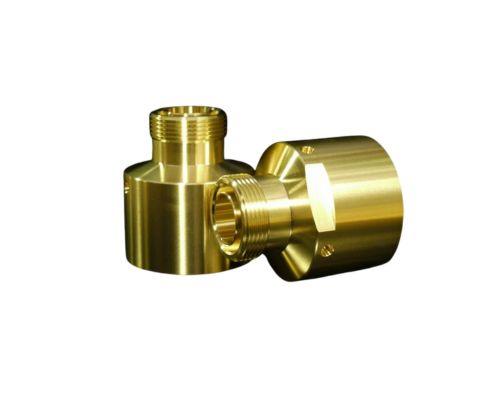
Here you will find examples of CNC machined bronze components, from bushings and gears to marine fittings and electrical connectors. These showcase the precision, finish, and versatility achievable with bronze machining.



Beska – Meilleure qualité à prix compétitif.
Avec une expertise dans la fabrication de tôles et l'usinage CNC, nous sommes là.
Common Bronze Alloys Used in CNC Machining
Different bronze alloys are selected based on performance needs. Each alloy has distinct advantages that influence how it performs during machining and in service.
| Type d'alliage | Tensile Strength (MPa) | Hardness (HB) | Applications |
| Bronze à l'étain | 350–500 | 65–150 | Bearings, gears, valves |
| Bronze phosphoreux | 450–850 | 100–200 | Springs, electrical contacts, bushings |
| Aluminum Bronze | 500–800 | 110–250 | Marine hardware, heavy-duty gears |
| Silicon Bronze | 350–700 | 80–200 | Fasteners, architectural hardware |
| Leaded Bronze | 150–400 | 50–120 | Pump parts, bearings, sliding components |
| Manganese Bronze | 600–900 | 120–220 | Ship propellers, heavy machinery parts |
Selecting the right alloy ensures that CNC machining results match the performance requirements of the final part. Phosphor bronze, for instance, is excellent for electrical connectors, while aluminum bronze is more common in marine components exposed to saltwater.
CNC Machining Capabilities for Bronze
CNC machining allows bronze to be shaped into parts that range from simple geometries to highly complex designs.


Milling and Turning
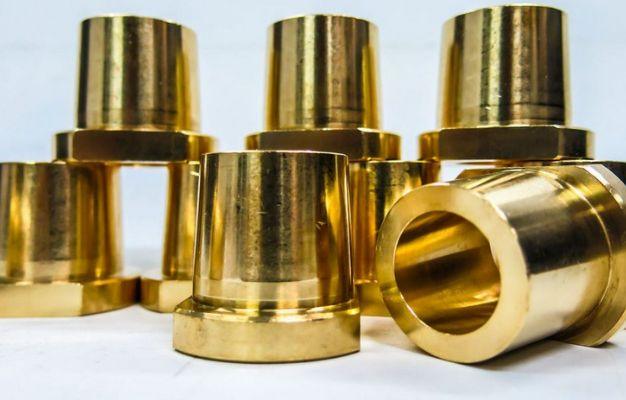
Milling is often used for creating slots, pockets, and detailed contours, while turning is ideal for producing bushings, shafts, and other cylindrical parts that demand tight concentricity.
Usinage multi-axes
With 3-axis, 4-axis, and 5-axis equipment, complex bronze components can be produced in fewer setups. This reduces cumulative error, improves precision, and shortens lead times.
Secondary Operations & Finishing
Operations like drilling, threading, and contouring are commonly applied to bronze parts. A typical process may involve roughing to remove material efficiently, followed by finishing to achieve smooth surfaces.
Beska – Meilleure qualité à prix compétitif.
Avec une expertise dans la fabrication de tôles et l'usinage CNC, nous sommes là.
Finition de surface
Precision is a key reason why CNC machining is chosen for bronze components. Both dimensional accuracy and surface quality can be controlled to meet demanding requirements:

Beska – Meilleure qualité à prix compétitif.
Avec une expertise dans la fabrication de tôles et l'usinage CNC, nous sommes là.
Tolérances
High-precision: ±0.005 mm for specialized applications. These tolerances ensure proper fit and reliable performance in assemblies where bronze interacts with other materials.
Surface Finish Options
- As-machined: Bronze can achieve smooth surfaces directly after machining.
- Polishing: Enhances the natural golden appearance of bronze.
- Brushing: Provides a uniform matte texture.
- Coatings/Protective Layers: Improve wear resistance and extend durability in harsh environments.
By combining precise tolerances with tailored finitions de surface, CNC machining delivers bronze parts that are both functional and visually refined.
Applications of CNC Machined Bronze Parts
Bronze’s adaptability allows it to serve multiple industries. Some of the most common applications include:
- Équipement industriel : bushings, bearings, worm gears, and valve parts.
- Marine Applications: ship fittings, propellers, and pump components resistant to seawater.
- Electrical Components: connectors, switch contacts, and terminals where conductivity is important.
- Architectural and Decorative Uses: sculptures, fittings, and design elements that highlight bronze’s appearance.
These applications demonstrate bronze’s ability to combine mechanical strength with functional reliability. CNC machining makes it possible to consistently deliver bronze parts that meet the high demands of each industry.

Case Example: Custom Bronze Bushings
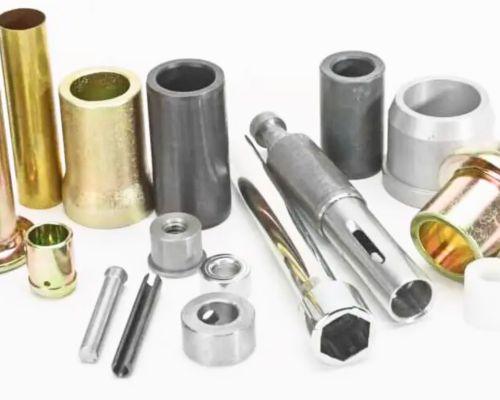
We once worked with a marine equipment supplier who needed custom bronze bushings for propeller systems.
Beska – Meilleure qualité à prix compétitif.
Avec une expertise dans la fabrication de tôles et l'usinage CNC, nous sommes là.
The parts would be exposed to seawater on a daily basis, so corrosion resistance was the top priority. At the same time, they had to maintain tight clearances to avoid premature wear when paired with stainless steel shafts.
For this project, aluminum bronze proved to be the right choice. Its combination of strength and resistance to saltwater made it more reliable than brass or standard bronze grades. Using tournage CNC, we were able to keep the bushings perfectly concentric, and the final machining steps produced smooth surfaces that reduced friction during operation.
Each bushing was held to a tolerance of ±0.005 mm. With more than 2,000 pieces delivered in one production run, the customer reported that the new bushings significantly extended service intervals, cutting down both downtime and replacement costs.
FAQ
Most bronze parts can be machined to ±0.01 mm. For high-precision applications, tolerances down to ±0.005 mm are possible.
Aluminum bronze and manganese bronze are preferred due to their strength and excellent resistance to seawater corrosion.
Bronze generally offers greater wear resistance and higher strength than brass, making it better suited for demanding applications like bearings and gears. Brass, however, is easier to machine.
Yes. Bronze can be polished, brushed, or sandblasted for aesthetic purposes. Protective coatings can also be applied to preserve its natural appearance.
Bronze CNC components are widely applied in marine engineering, power generation, industrial machinery, and electrical equipment.
Plongez plus profondément dans nos ressources
For more details, we’ve curated a few recommended pages and articles just for you:
Get A CNC Machining Bronze Quote!
Beska – Meilleure qualité à prix compétitif.
Avec une expertise dans la fabrication de tôles et l'usinage CNC, nous sommes là.
 French
 English
 Hebrew
 Turkish
 Russian
 German
 Spanish
 Portuguese