
Electronics Industry: Manufacturing Services and Prototyping Support
- Fast DFM Feedback
- ISO 9001:2015 Certified

Beska – Meilleure qualité à prix compétitif.
Avec une expertise dans la fabrication de tôles et l'usinage CNC, nous sommes là.
Why Choose Beska for Electronics Manufacturing?
At Beska, we specialize in electronic prototyping, turning your concept into production. We deliver precision parts for the electronics industry with repeatability and efficiency.
ISO9001:2015 certified. We’re committed to delivering parts to the industry standard as to your requirements.
Well-experienced. The Beska team has been collaborating closely with design engineers and OEMs worldwide. It ensures repeatability across every stage of electronics manufacturing.
Multiple Solutions. According to the requirements of your projects, we customize the electronics parts with CNC machining, sheet metal fabrication, and injection molding.
From prototyping to mass production. At Beska, we’re fully equipped to support your project from testing to mass production.
Surface finishing. To make these finished electronics prototypes more durable or smooth, we have 30+ surface finishing options available.
Lead Time. As for low-volume production, we can deliver the custom parts to you within 2~4 weeks.
From Prototype to Production: Our Electronics Workflow
Stage 1: Rapid Prototyping
In the early phase of electronic product development, speed and accuracy matter most. You may have a CAD model or physical prototype, and you’re aiming to validate fit, form, and function—especially for components like sensor housings, internal brackets, or test jigs.
At Beska, we use CNC machining for electronics and quick-turn sheet metal fabrication to produce your first working samples. We machine heat sinks, EMI shielding housings, and connector interfaces from materials such as aluminum or engineering plastics. This stage allows you to evaluate design ergonomics, perform assembly validation, and test thermal or electrical performance.


Stage 2: Bridge Production
After the rapid prototyping phase, you may still need to do a medium-sized volume of parts fabrication for internal verification. We support you with quantities from 100 to 5,000+ units with tight repeatability.
We usually apply injection molding and CNC machining to help you simulate mass production with flexible design iterations. These finished parts could be used for EVT (engineering validation test), DVT (design validation test), and to prepare for supply chain readiness. During this phase, we also support insert molding electronics for functional module assemblies.
Stage 3: Full-scale Production
After you confirm the final design drawings, it’s time to ramp up to full-scale production. We integrate CNC lines, molding stations, and metalworking cells capable of supporting volumes beyond 10,000 units per month. All parts go through in-line inspection and structured quality control processes.
From electronic enclosure fabrication to post-processing like anodizing or coating, every operation is integrated for maximum efficiency. For example, we can manage aluminum enclosure machining, logo engraving, and EMI shielding treatments as a continuous workflow. Beska ensures that your products meet industrial-grade standards for consistency, scalability, and delivery.

Our Electronics Manufacturing Capabilities
With 15+ years of experience in CNC machining, sheet metal fabrication, and plastic injection molding, we deliver custom parts according to your 2D & 3D files.


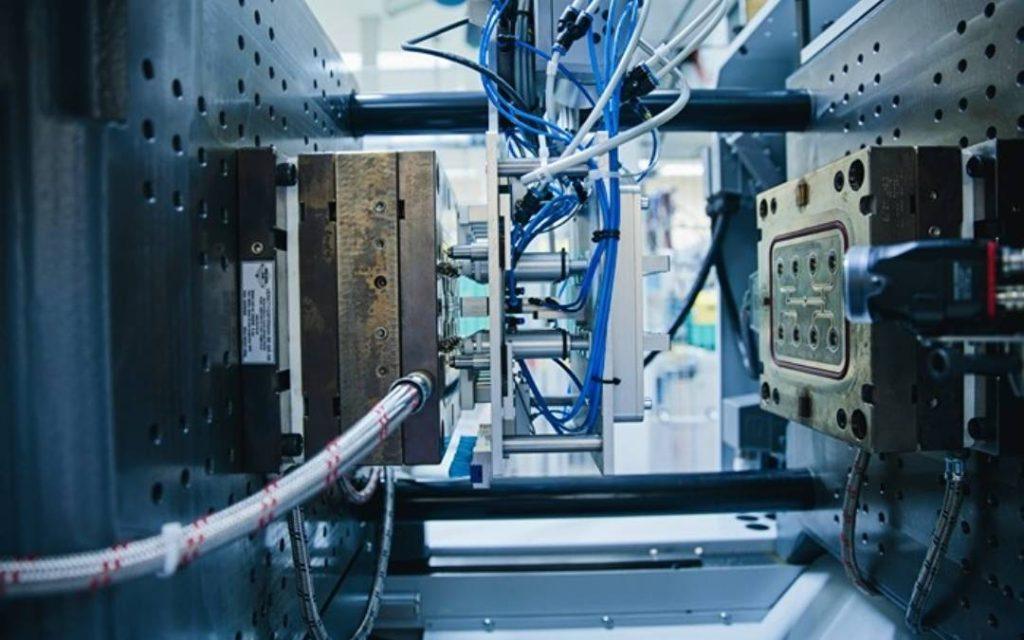
CNC Machining for Electronics
CNC machining’s advantages in the production of electronic components are its precision, reliable fit, and superior surface finishes. Our multi-axis machining equipment handles complex geometries with tight tolerances up to ±0.005mm for electronics parts.
Sheet Metal Enclosure Fabrication
We often apply sheet metal forming/bending/welding/cutting to create custom electronic enclosures like lightweight aluminum cases and stainless steel panels with EMI shielding requirements.
Plastic & Insert Molding for Electronics
For plastic fabrication projects, our plastic and insert molding capabilities support your product development of rugged, compact electronic parts. Electronics injection molding allows us to produce durable housings, buttons, and mounting parts.
Supported Materials for Electronics
Our electronic prototyping service provides various materials widely used in the industry.
- Aluminum (6061, 5052, 7075)—These parts are commonly used for lightweight, thermally conductive housings
- Copper and Brass—Because of their excellent conductivity, they are often used in power and grounding components.
- ABS, PC, Nylon-The plastic parts are preferred in electronics injection molding for their mechanical and thermal properties.
- Acier inoxydable—With corrosion resistance and strength, the parts are widely applied for structural components
We help you select the right material based on application requirements, environmental exposure, and manufacturing feasibility.

Common Applications of Electronics Prototypes
Our custom electronic parts are commonly used in the following applications:

Électronique grand public
- Custom enclosures for handheld devices, wearables, and smart home systems
- CNC-machined frames for tablets, cameras, and audio components
IoT and Smart Devices
- Precision housings for sensors, hubs, and embedded modules
- Insert-molded cases with integrated mounts and ports
Industrial Electronics
- Structural frames and protective panels for automation and control systems
- Sheet metal enclosures with EMI shielding and ventilation features
Electronics Post-Processing Options
There is a list of surface finishing options to make your electronic enclosures more durable and aesthetically appealing.

Revêtement en poudre
Il s’agit d’une finition de surface populaire pour l’usinage de pièces métalliques, offrant durabilité, aspect élégant, rentabilité et respect de l’environnement.

Anodisation
Il s’agit d’immerger le métal dans une solution électrolytique et d’appliquer un courant électrique, qui forme une couche d’oxyde protectrice sur les pièces métalliques.

placage au nickel
Il s’agit d’un procédé largement utilisé qui consiste à déposer une fine couche de nickel sur un substrat, améliorant ainsi la durabilité, la résistance à la corrosion et l’attrait esthétique de divers composants métalliques d’usinage.

Sablage
Il s'agit d'un processus de finition de surface qui utilise de l'air à haute pression pour propulser des particules de sable abrasives sur une surface, éliminant efficacement les impuretés, lissant les bords rugueux et créant une texture uniforme.

Chromage
Il s'agit d'un procédé qui consiste à recouvrir une surface métallique, généralement de l'acier, d'une fine couche de chrome par galvanoplastie. Ce revêtement améliore la durabilité, la résistance à la corrosion et l'esthétique de la pièce métallique.

Traitement thermique
Le processus consiste à chauffer le matériau à une température spécifique, à le maintenir à cette température pendant une certaine période, puis à le refroidir à une vitesse contrôlée.
Case Study: Electronics Enclosures
We’ve supported numerous electronics clients with technically demanding projects. Here is a detailed case study for your reference.
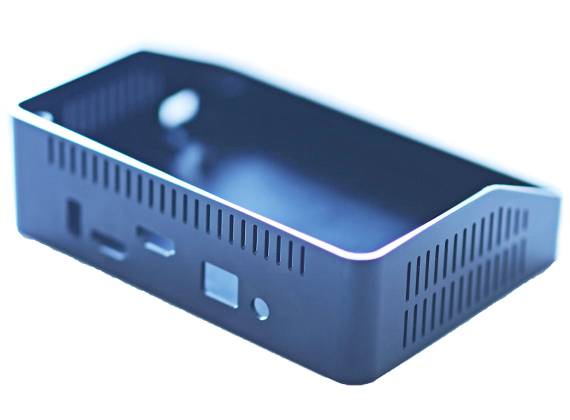
Client: a European startup specializing in environmental monitoring
They emailed us to assist in developing a compact smart sensor device for air quality tracking. Their main challenge was housing multiple sensors within a sealed aluminum enclosure with accuracy and surface durability.
Our solution:
Firstly, our engineering team reviewed their 3D CAD files and noticed tolerance conflicts between the sensor slots and internal mounting pillars. We provided multiple times of DFM feedback to optimize slot widths. They required us to apply CNC machining on 6061-T6 aluminum with ±0.01 mm tolerance to finish the project. To enhance durability and appearance, we applied a Type II clear anodizing with a matte finish.
It turned out that it was a successful project. We didn’t rework and delivered the parts to our client in time. She was satisfied with the final parts.
“Thanks again. These parts arrived as expected. We appreciate your detailed DFM feedback. Looking forward to working together on the next batch!”
— Product Engineer, Environmental Sensor Startup (Europe)
Populal Industries Served
Except for electronics, we have been delivering custom parts to other popular industries like automotive, aerospace, and medical.


FAQ
As for metals, aluminum 6061/5052 is one of the top-listed materials for enclosures for its lightweightness, strength, and heat dissipation. As for plastics, ABS and PC can be suitable for creating plastic housings when you are concerned about electrical insulation or complex shapes.
Yes, we can design enclosures with EMI shielding features and also apply conductive coatings or fabricate them using stainless steel or copper for natural shielding.
It depends on complexity and material availability. Usually, we can deliver electronic prototypes in as fast as 5~7 business days. For urgent projects may qualify for expedited service.
Absolutely. We can overmold terminals, metal threads, and sensors into plastic housings, making your electronic assemblies more compact and robust.
It's Time to Get An Electronics Prototyping Quote!
Beska – Meilleure qualité à prix compétitif.
Avec une expertise dans la fabrication de tôles et l'usinage CNC, nous sommes là.
 French
 English
 Hebrew
 Turkish
 Russian
 German
 Spanish
 Portuguese