


Aluminum and its alloys are ubiquitous in modern industry, from precision aerospace components to battery housings for electric vehicles and high-frequency communication equipment.
Yet, one question often comes up when engineers consider electromagnetic compatibility or select materials for permanent magnet assemblies: is aluminum magnetic? While experience might suggest that “aluminum doesn’t stick to magnets, so it must be non-magnetic,” experimental observations and certain industrial alloys tell a more nuanced story.
In this article, we explore the magnetic properties of aluminum from an industrial perspective. We’ll first explain the fundamentals of magnetism, then examine aluminum’s atomic structure and its effect on magnetism, discuss how different alloys can alter magnetic behavior, and finally highlight testing methods and common misconceptions.
1. Understanding Magnetism: Types and Fundamentals
When engineers evaluate materials for electromagnetic-sensitive equipment or permanent magnet assemblies, understanding a material’s magnetic behavior is essential. In simple terms, magnetism is a material’s response to a magnetic field, originating from atomic magnetic moments. These are tiny “micromagnets” generated by electron orbital motion and spin.
When atomic moments align, the material exhibits observable magnetism. When they are disordered, their effects cancel out, making the material appear nonmagnetic. Materials are generally classified into five types based on how they respond to magnetic fields:
| Type | Characteristics | Examples |
| Ferromagnetic | Atomic moments spontaneously align into domains, retain magnetization without a field, and are easily attracted and magnetized | Iron, cobalt, nickel, NdFeB alloys |
| Paramagnetic | No spontaneous alignment; moments weakly align with external fields; magnetism disappears when field is removed | Aluminum, magnesium, lithium, platinum |
| Diamagnetic | Aligns opposite to external field, generating weak repulsion; disappears without field | Copper, silver, gold, glass, water |
| Ferrimagnetic | Opposing moments partially cancel, resulting in intermediate magnetism | Ferrites, magnetite |
| Antiferromagnetic | Opposing moments fully cancel; no macroscopic magnetism | Chromium, manganese (under certain conditions) |
From this classification, it is clear that magnetism is not simply present or absent. What we usually call “magnetic” refers to ferromagnetic behavior, but paramagnetic and diamagnetic materials also respond to magnetic fields, albeit much more weakly. Aluminum falls into the paramagnetic category. Its atomic moments align slightly with an external field, but the effect is extremely weak, which explains why ordinary magnets do not stick to everyday aluminum products.
2. Aluminum’s Magnetic Nature: From Atoms to Macroscopic Behavior
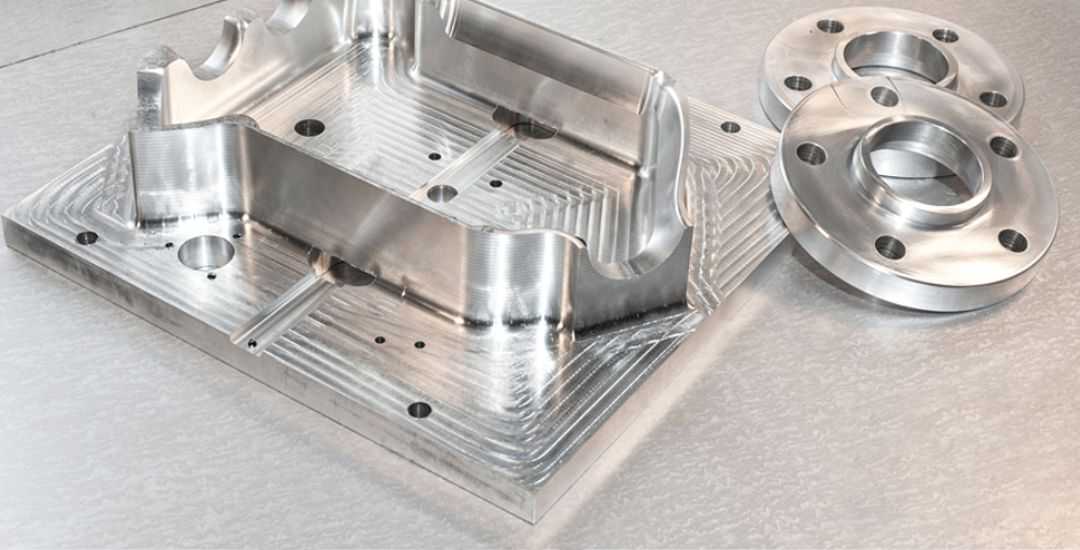
From a materials science perspective, aluminum’s magnetic properties are determined by its electronic structure. Aluminum (atomic number 13) has the electron configuration [Ne] 3s² 3p¹ and forms a face-centered cubic crystal in metallic form. This structure results in weak paramagnetism, with a volume magnetic susceptibility around +2.2×10⁻⁵, negligible in most engineering applications.
Key industrial characteristics of aluminum magnetism:
- Temperature Stability: Between -50°C and +200°C, aluminum’s susceptibility varies less than 5%, ensuring stable electromagnetic performance across wide operating ranges.
- Isotropy: Unlike some magnetic materials with directional dependence, polycrystalline aluminum exhibits near isotropy, simplifying design and manufacturing.
- Purity Dependence: Industrial pure aluminum (1060, 1070) and alloys (6061, 7075) show slight differences. Higher purity emphasizes weak paramagnetism, but the effect is negligible in most applications.
| Matériel | Al Content (%) | Magnetic Susceptibility (×10⁻⁵) | Conductivity (%IACS) | Main Alloying Elements | Applications typiques |
| 1070 | 99.7 | 2.21 | 61 | Fe, Si | Electronic foils, chemical equipment |
| 1060 | 99.6 | 2.2 | 60 | Fe, Si | Architectural panels, heat exchangers |
| 3003 | 98.6 | 2.15 | 50 | Mn, Fe | Cookware, tanks, pipelines |
| 5052 | 97.2 | 2.08 | 35 | Mg, Cr | Marine, automotive components |
| 6061 | 97.9 | 2.1 | 43 | Mg, Si | Aerospace structures |
| 7075 | 90 | 1.95 | 33 | Zn, Mg, Cu | High-strength aircraft parts |
Even though aluminum is only weakly paramagnetic, these predictable and stable properties make it reliable for a wide range of industrial applications.
3. Can Aluminum Alloys Become “Magnetized”?

Pure aluminum is weakly paramagnetic, but in industry, aluminum is often used as an alloy with copper, magnesium, silicon, zinc, iron, cobalt, and other elements to enhance strength, corrosion resistance, and other properties. These alloying elements can influence magnetic behavior in different ways.
1. Magnetic Alloying Elements:
Adding elements such as iron, cobalt, nickel, or neodymium can significantly increase aluminum’s magnetic response. For example:
- Aluminum-iron alloys (1–3% Fe) exhibit paramagnetism tens of times stronger than pure aluminum and can be slightly attracted by strong magnetic fields.
- Aluminum-nickel-cobalt alloys (Ni 10–20%, Co 5–10%, Fe 5–10%) can even become permanent magnets, used in high-temperature instruments and aerospace sensors.
2. Non-Magnetic Alloying Elements:
Alloys containing copper, magnesium, silicon, or zinc largely retain aluminum’s weak paramagnetism. Ordinary magnets cannot attract these materials. Typical examples include:
- 6061 alloy (Mg 0.8–1.2%, Si 0.4–0.8%), commonly used in aerospace structures and bicycle frames.
- 7075 alloy (Zn 5.1–6.1%, Mg 2.1–2.9%), widely applied in aircraft skins and pressure vessels.
3. Processing Effects:
Certain industrial processes can cause minor variations in magnetic behavior:
- Cold working may slightly change magnetic susceptibility by ±5% due to crystal defects and electron state variations.
- Heat treatment, such as T6 versus O temper, can modify the distribution of alloying elements and subtly affect magnetic response.
- Surface treatments, like anodizing, form a thin diamagnetic oxide layer (10–50 μm), which has minimal influence on overall magnetism.
In practice, while aluminum alloys rarely become strongly magnetic, their subtle paramagnetic behavior can still be relevant in precise electromagnetic applications, especially when magnetic elements are intentionally added or when strong external fields are involved.
4. Quality Control and Magnetic Testing for Aluminum
In industrial quality systems, testing the magnetic properties of aluminum and its alloys is an essential step to ensure performance and compliance with design specifications. Key methods include:
1. Magnetic Susceptibility Testing:
Magnetic susceptibility is measured using Vibrating Sample Magnetometers (VSM) or SQUID magnetometers. This ensures the material meets the required paramagnetic or non-magnetic standards, verifying that it will not interfere with sensitive electromagnetic applications.
2. Eddy Current Testing:
Eddy current probes are used to assess material uniformity and detect potential defects. By evaluating conductivity and the corresponding magnetic response, manufacturers can confirm that aluminum components are consistent and reliable across batches.
3. Magnetic Shielding Verification:
For aluminum components used in electromagnetic shielding, actual shielding effectiveness is tested in dedicated shielded chambers. This process ensures the material meets required EM compatibility standards, typically achieving shielding greater than 40 dB across 100 kHz–1 GHz.
4. Residual Magnetism Inspection:
Surface residual magnetism is measured with Gauss meters, ensuring any magnetization induced during processing remains below 0.5 mT. This prevents unwanted magnetic effects in sensitive equipment or high-precision assemblies.
Through these rigorous testing methods, aluminum and its alloys are confirmed to maintain predictable and stable magnetic behavior, supporting their safe and effective use in a wide range of industrial applications.
5. Common Misconceptions About Aluminum and Magnetism

Despite its widespread use, aluminum’s magnetic properties are often misunderstood. Here are three common misconceptions:
Misconception 1: “If a magnet attracts aluminum, it’s fake.”
Reality: Some aluminum alloys, such as aluminum-nickel-cobalt or aluminum-iron alloys, are genuinely magnetic. Additionally, surface plating with magnetic metals can cause attraction. Correct identification should rely on density, hardness, and acoustic testing, rather than simply using a magnet.
Misconception 2: “Aluminum can become a permanent magnet.”
Reality: Aluminum is paramagnetic, meaning its magnetic behavior is induced only in the presence of an external field and disappears when the field is removed. It cannot retain permanent magnetism.
Misconception 3: “High electrical conductivity implies strong magnetism.”
Reality: Conductivity and magnetism are independent properties. Aluminum’s combination of high conductivity and weak paramagnetism is actually advantageous for electromagnetic applications, allowing efficient current flow without significant magnetic interference.
Clearing up these common misunderstandings allows engineers and manufacturers to better appreciate aluminum’s true magnetic behavior and choose the right alloys for precise, magnetically sensitive applications.
Conclusion
Aluminum exhibits very weak paramagnetism. Ordinary magnets won’t attract it, but strong magnetic fields can produce slight responses. Alloys containing magnetic elements may show stronger magnetism or even act as permanent magnets.
This combination of weak paramagnetism and high conductivity makes aluminum ideal for EM shielding, high-frequency devices, and medical equipment. Understanding its magnetic behavior helps engineers and designers make informed decisions on material selection and manufacturing processes.
As aluminum’s properties can be further optimized through alloy design and advanced processing, contacting the right CNC machining or metal fabrication partner becomes crucial to fully leverage these benefits.
Plongez plus profondément dans nos ressources
Pour des lectures enrichissantes, nous avons sélectionné pour vous une liste d'articles recommandés :
 French
 English
 Hebrew
 Turkish
 Russian
 German
 Spanish
 Portuguese