


A customer asked us to machine a seawater pump impeller in super duplex stainless steel after their 316L version failed from chloride pitting within two years. The material solved the corrosion problem. The machining, however, was a different story. Tool life dropped, cutting forces climbed, and the quote needed a second look.
Super duplex stainless steel sits at the high end of the duplex family. It combines the strength of a ferritic structure with the toughness of an austenitic one, and it resists chloride-induced corrosion better than most standard stainless grades. But those same properties make it one of the more demanding materials to machine.
This article covers what super duplex is, where it outperforms other stainless steels, and what actually happens in Usinage CNC.
1. What Is Super Duplex Stainless Steel?
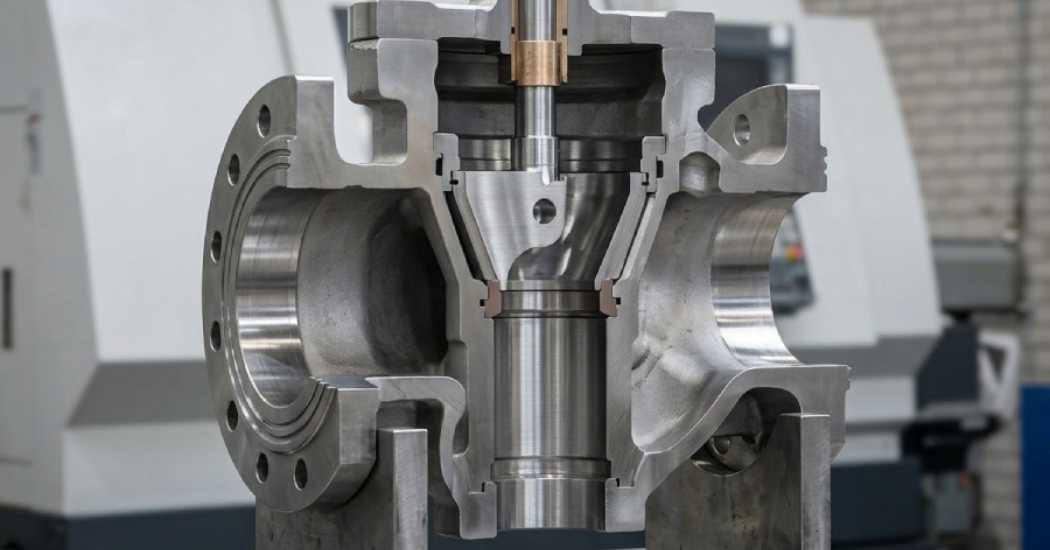
Super duplex stainless steel is a family of stainless alloys with a roughly 50/50 microstructure of austenite and ferrite. What makes it different from conventional stainless steels is not just its chemistry, but the way that chemistry translates into real-world performance.
The word “super” does not refer to strength alone. It refers to a higher level of corrosion resistance than standard duplex grades, achieved through increased chromium, molybdenum, and nitrogen content. In practical terms, it means the material can survive in environments where 316L can. And sometimes even Duplex 2205 may eventually struggle.
The two most commonly specified super duplex grades are UNS S32750 (commonly called 2507) and UNS S32760. Both were developed for chloride-rich environments where standard stainless steels often reach their limits.
The dual-phase microstructure gives super duplex roughly twice the yield strength of 316L while providing corrosion resistance that can compete with much more expensive nickel-based alloys. For manufacturers, however, those same advantages often mean higher cutting forces, shorter tool life, and less room for process variation.
2. Key Grades and When to Use Them
2507 is generally considered the workhorse grade. It has a long track record in offshore, marine, and chemical processing applications and is widely available in plate, bar, and tube forms.
S32760 adds copper and tungsten to the alloy composition. These additions improve resistance to certain acidic environments and make it particularly attractive for sour gas service involving hydrogen sulfide.
For most seawater applications, 2507 is usually the first material engineers evaluate. S32760 tends to enter the discussion when the operating environment becomes more aggressive and corrosion margins become increasingly important.
Table 1: Selection Guide
| Service Condition | Recommended Grade | Reasons |
| Seawater (commonly below roughly 30°C) | 2507 (S32750) | PREN above 40 handles pitting; widely available |
| Warm seawater (commonly above roughly 30°C) | S32760 | Copper content improves crevice corrosion resistance at elevated temperatures |
| Sour gas with H₂S | S32760 | Tungsten and copper improve resistance to sour service cracking |
| Chloride-containing chemical process streams | 2507 (S32750) | Sufficient PREN for most chloride levels; lower material cost |
| High-strength structural components in marine environments | 2507 (S32750) | Yield strength comparable to S32760; better availability in thicker sections |
3. Mechanical Properties of Super Duplex Stainless Steel
Datasheets list numbers. What matters on the shop floor is what those numbers mean for the part and the process.
High Strength Changes More Than Design
Super duplex offers roughly twice the yield strength of 316L. For designers, that can mean thinner walls, lower weight, and higher pressure capability without increasing part size.
For machinists, however, the same strength means significantly higher cutting forces. Machine rigidity, tool stability, and workholding become more important than they would be for conventional stainless steel components.
Work Hardening Becomes a Real Production Issue
Hardness is only part of the story. Super duplex is typically supplied in the mid-20s HRC range, but it work-hardens rapidly during machining.
A surface that starts at 25 HRC can become considerably harder in the deformation zone ahead of the cutting edge. Once that hardened layer forms, wear accelerates and dimensional consistency becomes harder to maintain.
Heat Stays in the Tool
At elevated temperatures, super duplex retains its strength better than most austenitic stainless steels. That is one reason it performs well in heat exchangers and pressure-containing equipment.
The downside is that the material does not soften significantly during machining. More heat remains concentrated at the cutting edge instead of leaving with the chip, increasing thermal load on the tooling.
Table 2: Performance Comparison
| Propriété | Super Duplex 2507 | Duplex 2205 | 316L |
| Yield Strength (MPa) | ~550 | ~450 | ~205 |
| Tensile Strength (MPa) | ~800 | ~620 | ~515 |
| Hardness (HRC) | ~25 | ~22 | ~15 |
| PREN | >40 | ~35 | ~25 |
| Relative Machinability | Difficult | Modéré | Standard |
4. Corrosion Resistance: Where Super Duplex Creates the Most Value
Material datasheets often focus on laboratory values and PREN numbers. In practice, engineers care about something much simpler: whether the material survives in service. This is where super duplex separates itself from conventional stainless steels.
Pitting in Chloride Environments
Pitting is the most common failure mode. Super duplex resists it because high chromium and molybdenum content stabilizes the passive film. In seawater at temperatures commonly cited as up to roughly 30°C, 2507 typically performs without pitting. Above that range, crevice corrosion becomes the concern, especially at gasket surfaces and under deposits.
Stress Corrosion Cracking
This is where super duplex really separates itself from austenitic grades. 316L is susceptible to SCC in hot chloride solutions, which is why it fails in seawater heat exchangers. Super duplex, with its mixed microstructure, resists SCC in the same conditions. That is one of the main reasons engineers switch from 316L to super duplex in offshore and desalination equipment.
Sour Service
In environments with hydrogen sulfide, super duplex meets the requirements of NACE MR0175 when properly solution-annealed. S32760, with its additional copper and tungsten, is often the preferred choice here, though 2507 is also qualified for many sour service applications.
5. Machining Challenges of Super Duplex Stainless Steel
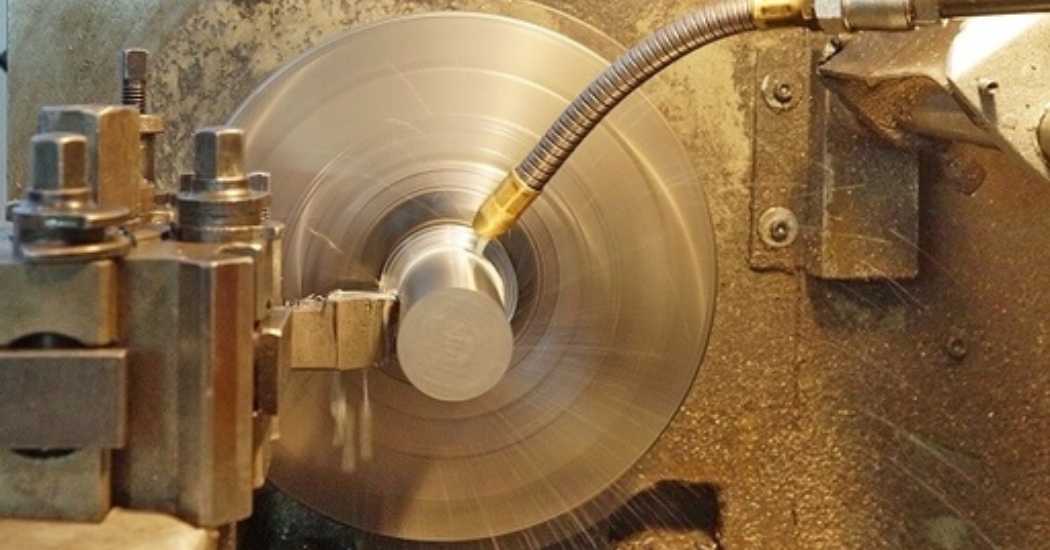
Many engineers are familiar with the corrosion advantages of super duplex. Fewer people appreciate how differently it behaves once it reaches the machine shop.
If your experience is mostly with 304 or 316L, super duplex can be an eye-opening material. The same properties that make it attractive in service often make it more challenging to manufacture.
écrouissage
Super duplex hardens rapidly in the deformation zone ahead of the cutting edge. When the tool engagement is light or the edge starts to wear, the hardened layer builds up. The next pass encounters a surface much harder than the base material, which accelerates tool wear and can push dimensions out of tolerance. Shallow cuts are not your friend with this material.
Cutting Forces
The material is both strong and tough. A machine that handles 316L without complaint may show chatter on super duplex, especially on interrupted cuts or when using long tool overhangs. Rigidity in the setup matters more than with most stainless steel.
Usure des outils
Carbide inserts that last through a full batch of 316L parts may need replacement after machining only a fraction of that in super duplex. Coated inserts help, but the cost per part still climbs. This is something buyers need to understand when comparing quotes.
Chip Control
Super duplex produces tough, stringy chips that do not break easily. Without proper chipbreaker geometry and feed rates, chips wrap around the tool or the workpiece, risking surface damage and downtime to clear them.
Heat Concentration
Super duplex has lower thermal conductivity than carbon steels. The heat generated at the cutting edge does not flow into the chip or the workpiece as readily, so the tool tip runs hotter. Flood coolant is not optional.
What We Have Learned During Production
In production, the biggest difference is not a single machining parameter but the overall process window. Super duplex gives less room for error than 316L, whether in tooling, setup, or cutting conditions. When those factors are controlled properly, the material machines reliably. When they are not, problems tend to appear much sooner.
6. Is Super Duplex Difficult to Weld?
Compared with standard austenitic stainless steels such as 304 or 316L, super duplex requires tighter welding control, but it is not considered difficult to weld when proper procedures are followed.
The main challenge is maintaining the correct balance between austenite and ferrite in the weld zone. Excessive heat input can reduce corrosion resistance and toughness, while insufficient heat can leave the weld structure less than ideal. For this reason, welding parameters are typically controlled more carefully than they would be for conventional stainless steels.
Filler metal selection also plays an important role. Nickel-enhanced filler materials are commonly used to help restore the desired microstructure and maintain corrosion performance across the weld.
In most applications, post-weld heat treatment is not required. However, for thick-section weldments or components exposed to elevated temperatures for extended periods, additional heat treatment may be necessary to restore the material’s intended properties.
7. Where Is Super Duplex Stainless Steel Used?
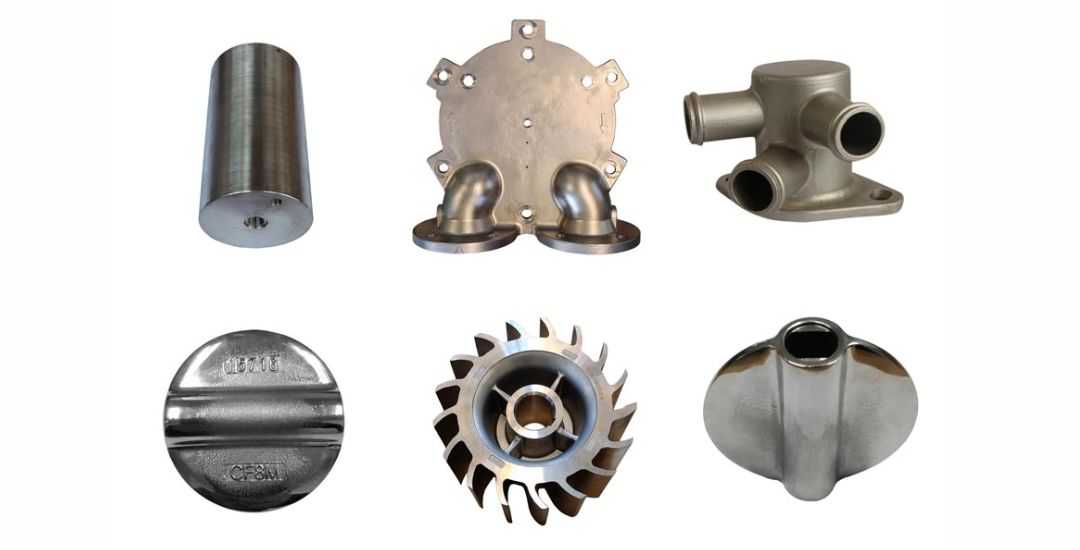
The decision to use super duplex is driven by the intersection of corrosion severity and mechanical demand. If only one of those factors is present, a less expensive grade may be suitable.
Offshore Oil and Gas
Super duplex is used for subsea connectors, valve bodies, and manifold components that see seawater exposure combined with high pressure. The material handles both the corrosion and the mechanical loads without the thickness penalty of 316L.
Desalination
Heat exchanger tubes and pump components resist warm seawater that would pit 316L and stress-corrode 2205 under certain conditions. The higher PREN provides a practical margin in the warmest sections of the plant.
Traitement chimique
Reactors and piping handling hot chloride-containing media or sulfuric acid at moderate concentrations benefit from super duplex. The corrosion resistance replaces the need for high-nickel alloys in many of these services at a lower material cost.
When the Upgrade Is Worth It
For buyers evaluating whether super duplex is worth the premium over 2205 or 316L, the question to ask is: what is the cost of failure? If a corroded part means a shutdown, a leak, or a safety incident, the extra material cost is usually justified. If the environment is mild enough that 316L lasts the required service life, there is no reason to upgrade.
Conclusion
Specifying super duplex is a commitment that goes beyond material selection. The machining challenges alone change the cost structure, the welding requirements narrow the process window, and the fixture strategy cannot be carried over from 316L jobs. Getting those conversations right early is what separates a successful project from an expensive surprise.
Beska has 10+ years of experience in machining multiple materials like super duplex components for marine, chemical, and oil and gas applications. If you are evaluating super duplex for an upcoming project and want to understand the manufacturing implications before committing, Contactez-nous to discuss your part requirements.
 French
 English
 Hebrew
 Turkish
 Russian
 German
 Spanish
 Portuguese