


A machined part can meet its dimensions on the machine and still change shape after unclamping or further material removal. One common reason is residual stress already present in the material or introduced during machining.
As material is removed, the internal stress balance changes. Thin walls, deep pockets, large flat surfaces, and parts with heavy or uneven stock removal are especially sensitive because even small movement can affect flatness, parallelism, or other critical dimensions.
The following sections look at where these stresses come from, when stress relief is worth considering, how different materials respond, and how rough machining, stress relief, and finish machining can be planned to improve dimensional stability.
1. How Does Residual Stress Cause Machining Distortion?
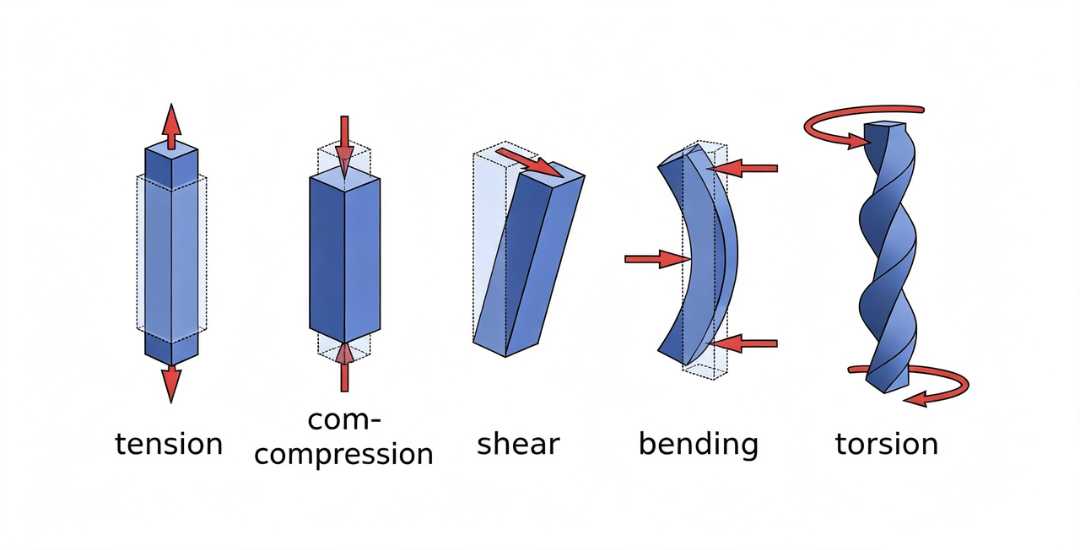
Residual stress that contributes to machining distortion generally comes from two sources.
Residual Stress in the Raw Material
Rolling, forging, heat treatment, extrusion, and other upstream processes can leave tensile and compressive stresses distributed through the stock. While the material remains intact, these stresses remain in balance.
Machining removes part of that material and changes the original stress distribution. The remaining workpiece may then bend, twist, or change shape as it settles into a new equilibrium.
Machining-Induced Residual Stress
The cutting process can also introduce residual stress near the newly machined surface. Cutting forces, heat generation, tool geometry, process parameters, and tool wear can all influence the stress state left behind after machining.
These two effects can occur at the same time. Distortion may become visible after unclamping, after additional stock is removed, or during later processing as the stress distribution changes again.
2. Why Residual Stress Matters in Precision Machining
Residual stress becomes a machining problem when its redistribution changes a dimension that matters. A part may leave the cutting operation with acceptable dimensions but move after unclamping, additional material removal, or later processing. Flatness, parallelism, hole position, and other geometry can then fall outside the drawing requirements.
The consequences are usually additional inspection, re-machining, straightening, or scrap. The risk becomes more significant for large plates, thin-walled structures, deep-pocket parts, and other components that combine low stiffness with substantial material removal.
Stress relief can reduce this risk in suitable applications, but it is only one way to control distortion. Material condition, machining sequence, balanced stock removal, fixturing, and finish allowance can be just as important. The key decision is whether the expected movement is large enough to justify an additional stress-relief or stabilization step before final machining.
3. Should Stress Relief Be Done Before or After Machining?
Stress control can be introduced at different stages of machining, and the best timing depends on where the residual stress comes from and how much material will be removed.
Before Machining
For some materials, the first step is choosing stock with a stress-relieved condition before machining begins. Aluminum tempers such as T651 or T7351 are processed to reduce residual stress in the supplied material, which can improve dimensional stability when large amounts of stock are removed.
Using stress-relieved material does not eliminate all distortion, but it can reduce the amount of stress already present before cutting starts.
After Rough Machining
For parts that require additional stress-relief treatment, the most useful stage is often after rough machining and before finishing machining.
Roughing removes most of the excess material and allows part of the original stress balance to redistribute. The stress-relief step can then reduce remaining internal stress before the final dimensions and critical surfaces are machined.
Enough material should remain for finish machining so that any dimensional change caused by the treatment can be corrected afterward.
After Final Machining
Applying stress relief after the part has already been finished to size requires more caution. The treatment itself may cause movement, oxidation, or changes in material properties, while little or no machining allowance remains to correct the geometry.
For this reason, post-finish stress relief is normally used only when the material, heat-treatment cycle, and dimensional requirements have been specifically planned for it.
4. Stress Relief Methods and Material Considerations
Stress relief can be achieved in different ways, but the same method cannot be applied to every machined material. The treatment must be compatible with the alloy, its existing heat-treatment condition, and the mechanical properties required in the finished part.
Thermal Stress Relief
Thermal stress relief uses a controlled heating and cooling cycle to reduce residual stress without intentionally performing a full anneal. It is widely used for many steels, castings, weldments, and other components where dimensional stability is important.
For heat-treated steels, the stress-relief temperature must be selected with reference to the previous tempering or heat-treatment condition so that hardness and strength are not unintentionally changed. The required temperature and holding time should therefore follow the applicable material specification rather than a single shop rule.
Precipitation-hardened aluminum alloys require different treatment. Applying an additional high-temperature cycle to 6061-T6 or 7075 can alter the temper and mechanical properties, so a generic post-machining thermal stress-relief temperature should not be specified without reviewing the alloy condition and property requirements.
Vibratory Stress Relief
Vibratory stress relief applies controlled cyclic loading to redistribute or reduce residual stress. It is used particularly for some large fabrications, weldments, castings, and other structures where furnace treatment may be impractical.
Its effectiveness depends on the material, geometry, initial stress state, and vibration parameters. It should therefore be treated as a process-specific option rather than a direct substitute for thermal stress relief in every precision-machined component.
Stress-Relieved Material Conditions
For some machined parts, residual stress is better addressed before cutting begins. Aluminum products supplied in stress-relieved tempers, such as certain T651 or T7351 conditions, undergo controlled mechanical stress relief during material processing.
Starting with an appropriate material condition can reduce distortion during heavy stock removal, although machining sequence, part stiffness, and the amount of material removed still affect the final result.
5. Rough Machining, Stress Relief, and Finish Machining
For parts that need an intermediate stress-relief step, the machining sequence is usually just as important as the treatment itself. A common approach is to remove most of the material first, allow the part to stabilize, and machine the final dimensions afterward.
Rough Machining
Rough machining removes the majority of the excess stock and begins to redistribute the residual stress already present in the material. At this stage, enough material should remain on critical surfaces to allow for movement and later finish machining.
The required allowance depends on part size, stiffness, expected distortion, and final tolerance rather than a fixed value for every component.
Stress Relief or Stabilization
After roughing, the part can undergo the selected stress-relief or stabilization process where required. Some dimensional movement during this stage is normal because the internal stress state is changing.
The treatment must be compatible with the material and its existing heat-treatment condition. For precipitation-hardened aluminum, for example, an additional thermal cycle should not be specified without considering its effect on temper and mechanical properties.
Finish Machining
Once the part has stabilized, critical surfaces, holes, and other tolerance-sensitive features are machined to their final dimensions. Leaving the final cuts until this stage gives the manufacturer an opportunity to correct movement that occurred during roughing or stress relief.
This sequence does not guarantee that the part will never move again, but it can reduce the risk of losing final geometry after heavy material removal.
6. How to Reduce Machining Distortion Without Additional Stress Relief
An additional stress-relief treatment is not the only way to improve dimensional stability. In many parts, distortion can be reduced by controlling how the material is selected, supported, and removed during machining.
Start With a More Stable Material Condition
Where available, stress-relieved stock can reduce the amount of residual stress entering the machining process. This is especially useful for parts that require heavy stock removal from aluminum plate or bar.
The supplied temper and product form should be considered together with the final geometry rather than assuming that all materials of the same alloy will behave the same way.
Balance Material Removal
Removing large amounts of material from one side of a part can create an uneven redistribution of residual stress. Where the geometry allows, roughing from multiple sides or sequencing material removal more evenly can reduce the tendency for the workpiece to bow or twist.
For thin-walled or heavily pocketed parts, the order in which material is removed can be as important as the total amount removed.
Control Fixturing and Clamping
Excessive clamping force can elastically deform a low-stiffness part during machining. The part may appear accurate while restrained and then move after it is released.
Fixtures should support the workpiece securely without forcing it into a geometry that cannot be maintained after unclamping. Releasing and rechecking the part between major machining stages can also reveal movement before final dimensions are completed.
Plan Roughing and Finishing Separately
Roughing and finishing should not always be treated as one continuous operation. Allowing the part to be unclamped, inspected, and re-established between stages gives the workpiece an opportunity to redistribute stress before the final tolerance-sensitive surfaces are machined.
Cutting parameters, tool condition, and toolpath also matter because machining itself can introduce additional residual stress near the finished surface.
These methods do not eliminate residual stress, but they can reduce distortion enough that a separate stress-relief treatment is unnecessary for some parts.
7. Common Mistakes When Planning Stress Relief
Stress relief is most effective when it is planned as part of the machining process rather than added only after distortion has already appeared.
Using One Heat-Treatment Rule for Every Material
Steel, precipitation-hardened aluminum, stainless steel, and titanium do not respond to thermal treatment in the same way. A cycle that is appropriate for one material may reduce hardness, strength, or dimensional stability in another.
The material grade, temper, and previous heat-treatment condition should be checked before specifying a stress-relief cycle.
Finishing Critical Dimensions Before Stress Relief
If a part is machined to final size before an intermediate stress-relief treatment, any movement during the treatment may push critical dimensions outside tolerance.
Where stress relief is planned between roughing and finishing, enough material should remain for final correction afterward.
Treating Stress Relief as a Fix for Poor Machining Strategy
Stress relief cannot compensate for excessive clamping force, unbalanced stock removal, unstable fixturing, or a poorly planned roughing sequence. These factors should be addressed first because they can introduce or amplify distortion even when the material has already been stress relieved.
Ignoring the Supplied Material Condition
Two pieces of the same alloy can behave differently if their product form, temper, or previous processing history is different. For heat-treatable aluminum, using an appropriate stress-relieved temper may reduce the need for additional post-machining treatment.
Assuming Stress Relief Eliminates All Future Movement
Stress relief reduces residual stress but does not remove every source of distortion. Later machining, heat treatment, coating, welding, or service loading can still change the stress state of the part.
Final dimensional verification should therefore be carried out after the last process that can materially affect the required geometry.
Conclusion
Stress relief can improve dimensional stability, but it should not be treated as an automatic step for every precision-machined part. Material condition, part stiffness, stock removal, fixturing, and machining sequence can all influence how much a component moves as it is produced.
For parts with meaningful distortion risk, an intermediate stress-relief or stabilization step between rough and finish machining may provide better control of the final geometry. In other cases, starting with a more stable material condition and adjusting the machining strategy may be sufficient.
For CNC projects involving thin walls, deep pockets, large material removal, or demanding geometric tolerances, Beska can review the drawing and machining requirements before production and plan the roughing, finishing, and inspection sequence according.
 French
 English
 Hebrew
 Turkish
 Russian
 German
 Spanish
 Portuguese