


When it comes to engineering plastics for Usinage CNC, ABS and POM (Polyoxymethylene, also known as Delrin) are two of the most widely used options.
Both are valued for their mechanical properties and machinability, yet they have distinct characteristics that make each better suited for specific applications. Choosing the wrong material can lead to part failure, higher costs, or reduced performance.
This article provides a detailed comparison of ABS and POM for CNC machining, covering their properties, strengths and weaknesses, machining behavior, cost considerations, and ideal use cases.

1. What Is ABS?
ABS (Acrylonitrile Butadiene Styrene) is a widely used thermoplastic polymer composed of three key components:
- Acrylonitrile (A): provides hardness, strength, heat resistance, and chemical resistance
- Butadiene (B): offers impact resistance and toughness, even at low temperatures.
- Styrene (S): contributes gloss, rigidity, and ease of machining.
This combination makes ABS a well-balanced material. It has good strength, decent toughness, easy machinability, and a relatively low cost. Common ABS products include LEGO bricks and automotive interior components.
2. What Is POM?
POM (Polyoxymethylene), often referred to as acetal or by the brand name Delrin, is a high-performance engineering plastic designed for precision and durability. It combines metal-like strength, rigidity, and hardness with the lightweight and low-friction properties typical of plastics.
POM is especially valued for its dimensional stability, wear resistance, and reliable performance under repeated stress. These qualities make it ideal for manufacturing precision components such as gears, bearings, bushings, and fasteners—parts that require long-term accuracy and low maintenance.
3. Key Material Properties: ABS vs POM
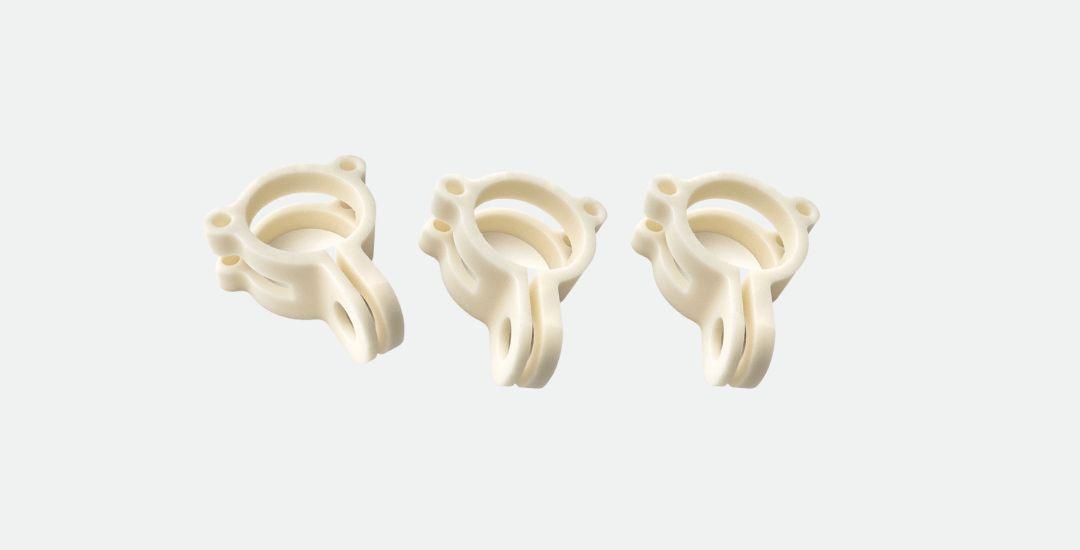
To make a clearer comparison, here’s how ABS and POM stack up across multiple performance metrics.
2.1 Physical Properties
| Propriété | ABS (General Grade) | POM (Homopolymer / Glass-Filled) | Standard |
| Densité (g/cm³) | 1.04–1.06 | 1.41–1.42 (homopolymer), 1.59 (25% GF) | ASTM D792 |
| Water Absorption (24h) | 0.2–0.3% | 0.20% | ASTM D570 |
| Mold Shrinkage (%) | 0.4–0.7% | 1.2–3% (homopolymer), 0.4–0.8% (GF) | ASTM D955 |
| Heat Deflection Temp (°C) | 80–105 | 164 (GF) | ASTM D648 |
| Linear Thermal Expansion (×10⁻⁵/°C) | 7–10 | 4.7 (homopolymer) | ASTM D696 |
POM maintains dimensional stability better at high temperatures. ABS may soften above 80°C, while POM can withstand up to ~100°C. Neither is suitable for continuous exposure above 150°C.
2.2 Mechanical Properties
| Propriété | ABS | POM | Standard |
| Tensile Strength (MPa) | 35–55 | 62–70 (homopolymer), 137 (GF) | ASTM D638 |
| Elongation at Break (%) | 20–40 | 30% (homopolymer), 3% (GF) | ASTM D638 |
| Flexural Strength (MPa) | 50–80 | 90–105 (homopolymer), 206 (GF) | ASTM D790 |
| Flexural Modulus (MPa) | 2000–2500 | 2800–3100 (homopolymer), 9120 (GF) | ASTM D790 |
| Notched Impact (J/m) | 70–370 | 60–80 (homopolymer) | ASTM D256 |
| Hardness (Rockwell M) | 65–80 | 94–95 (homopolymer) | ASTM D785 |
| Friction Coefficient (Steel on Steel) | 0.3–0.4 | 0.15–0.25 | ASTM D1894 |
ABS excels in toughness and impact resistance. POM is superior in rigidity, wear resistance, and mechanical strength, making it better for high-load, high-precision applications.
2.3 Thermal and Chemical Resistance
| Propriété | ABS | POM | Standard |
| Continuous Use Temp (°C) | -40 to 80 | -40 to 100 | — |
| Flame Rating | HB (General) | V-0 (Flame Retardant) | UL 94 |
| Résistance chimique | Weak acids/bases, not ketones/chlorinated solvents | Organic solvents, oils; not strong acids | ASTM D543 |
POM generally outperforms ABS in chemical and thermal resistance, making it more reliable in harsh environments or applications exposed to solvents, oils, or higher operating temperatures.
When comparing ABS and POM, the choice depends on the balance between toughness, precision, and environmental demands.
4. CNC Machining Considerations: ABS vs POM
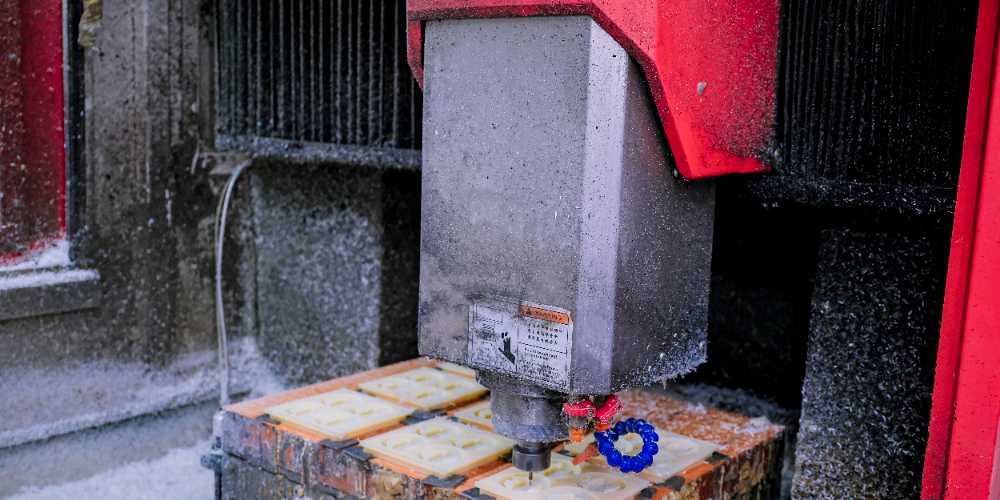
Material choice influences cutting efficiency, precision, and finishing. Here’s how ABS and POM perform in key CNC aspects:
4.1 Machining Performance and Surface Finish
ABS:
- Being relatively soft, ABS offers low cutting resistance, which allows faster machining. However, it produces long, stringy chips that require careful removal to prevent tool interference.
- Surface finish typically reaches Ra ~1.6–3.2 μm, but burrs can appear if parameters are not optimized. Recommended tools: HSS or carbide, 800–1500 rpm.
- Takeaway: ABS is easier to cut and ideal for parts where speed and moderate surface quality are sufficient.
POM:
- POM is harder and tougher, causing higher tool wear, especially for homopolymer grades. Its chips are short and easy to clear, contributing to cleaner machining.
- Surface finish can reach Ra ~0.8–1.6 μm, approaching metal-like smoothness.
- Recommended tools: sharp carbide, 1000–2000 rpm, with cooling to avoid local softening.
- Takeaway: POM may require more careful setup but delivers superior surface quality, reducing downstream finishing.
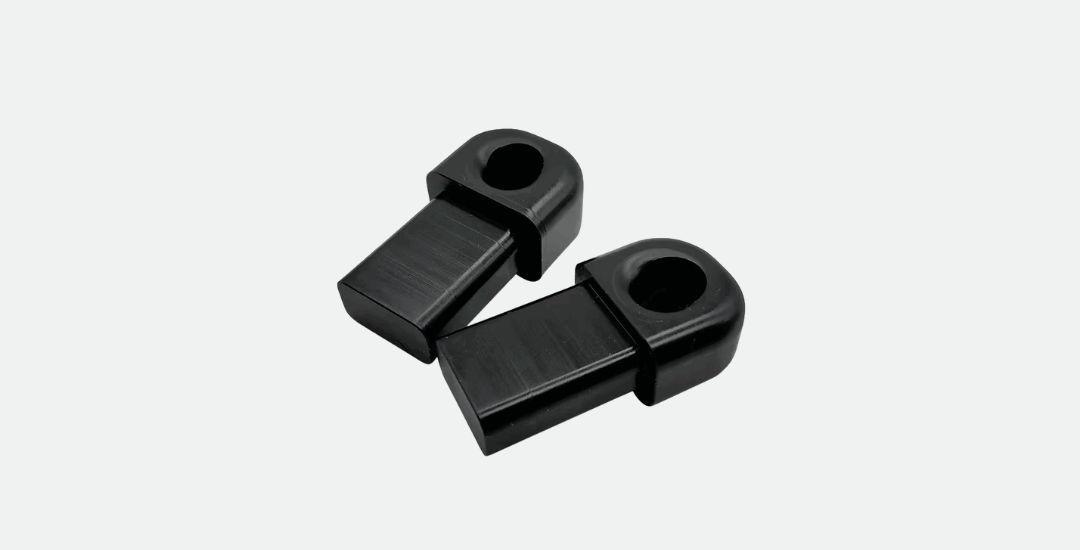
Overall, ABS favors faster machining with acceptable surface quality, while POM trades speed for precision and superior finish.
4.2 Dimensional Stability
ABS:
While shrinkage is low (0.4–0.7%), ABS is sensitive to temperature and humidity changes, which can affect precise fits. Tip: Maintain controlled workshop conditions to ensure dimensional accuracy.
POM:
Shrinkage is higher (1.5–3%), but uniform, and water absorption is minimal (<0.2%), resulting in reliable long-term precision. Tip: Account for predictable shrinkage in CNC programming, especially for larger components.
ABS can be reliable for moderate-precision parts if environmental conditions are controlled, whereas POM offers inherently stable dimensions for high-precision components over time.
4.3 Post-Processing Compatibility
- ABS: Easily processed with painting, plating, silk-screening, or gluing. Metallic finishes are achievable with proper additives or treatments. Use case:Ideal for aesthetic parts requiring color, finish, or assembly features.
- POM: Low surface energy makes direct adhesion and plating difficult, requiring treatments such as plasma etching. Its self-lubricating property, however, allows direct assembly with metals or other plastics. Use case: Best for functional components where low friction and durability are critical.
ABS excels when appearance and secondary finishing are important, while POM is optimized for functional performance and assembly precision rather than visual enhancements.
5. Other Processing Techniques for ABS and POM
Beyond CNC machining, ABS and POM can be processed using various manufacturing techniques, each offering unique advantages depending on part geometry, production volume, and performance requirements.
Moulage par injection
ABS is ideal for high-volume, aesthetic components such as enclosures, consumer products, and automotive interior panels due to its excellent flow properties and surface finish. POM, with its high rigidity and wear resistance, is commonly used for precision mechanical parts like gears, clips, and fasteners. Proper mold design and cooling are essential to minimize warpage and shrinkage, especially for POM.
Impression 3D
ABS is widely used for prototyping, functional testing, and small-batch production thanks to its good machinability and thermal stability. POM 3D printing is less common and requires specialized printers and filaments, as its high melting point and low surface energy make standard printing challenging.
Extrusion and Sheet Forming
Both ABS and POM can be extruded into rods, sheets, or custom profiles for later machining, bending, or forming. ABS sheets are easier to thermoform and post-process, while POM rods and sheets maintain high dimensional stability under mechanical stress, making them suitable for precise industrial components.
Welding and Bonding
ABS can be joined using solvent welding, adhesives, or thermal welding, making it versatile for assemblies. POM, due to its low surface energy, generally requires surface treatment (plasma or corona) or specialized adhesives to achieve reliable bonding.
Considering these alternative processing techniques allows manufacturers to optimize production cost, improve efficiency, and select the method best suited for part performance. For example, a high-volume ABS casing may be injection molded, while its internal POM gear could be CNC machined for precision.
6. Compatibility with Other Materials
ABS and POM differ in how they interact with metals, plastics, adhesives, and chemicals, which can affect assembly performance and longevity.
| Matériel | ABS | POM |
| Métaux | Bonds well with standard adhesives; thermal expansion ~70×10⁶ /°C should be considered | Low friction against stainless steel (μ ≈ 0.2–0.25), ideal for sliding components |
| Other Plastics | Solvent welding works with ABS or PVC; service temperature up to ~80°C | Poor adhesion; requires surface treatment or primers; service temperature up to ~100°C |
| Adhesives | Epoxy, cyanoacrylate effective | Standard adhesives fail; low-surface-energy adhesives or primers required |
| Chemicals | Resistant to mild acids, bases, and alcohols; not suitable for strong oxidizers | Resistant to oils and most solvents; sensitive to concentrated acids and oxidizers |
Considering these properties during design ensures that ABS and POM components assemble correctly and perform reliably under expected operating conditions.
7. Common Applications of ABS and POM
ABS and POM are both versatile engineering plastics, but they are typically used in different types of components due to their distinct properties.
Électronique
ABS is commonly found in device housings, protective enclosures, and 3D-printed prototypes, valued for its smooth finish and ease of machining. POM is preferred for precision connectors, switches, and sliding parts because of its low friction and dimensional stability.
Automobile
ABS is used in dashboards, interior panels, and trim pieces where visual quality and impact resistance matter. POM is chosen for functional components like gears, bushings, and fuel system parts, which demand wear resistance and chemical stability.
Machines industrielles
ABS can be applied for lightweight housings or non-critical structural parts. POM excels in conveyor rollers, bearings, and other moving assemblies that require low friction and consistent tolerances.
These differences illustrate how each material is best matched to applications that exploit its strengths, rather than treating them interchangeably.
8. Cost Analysis: ABS vs. POM
Along with performance, cost is a key factor when choosing between ABS and POM. Let’s look at how they compare in material, machining, and post-processing expenses.
| Aspect | ABS | POM |
| Matériel | 15–25 RMB/kg (general), 25–40 RMB/kg (special grades) | 25–40 RMB/kg (copolymer), 40–60 RMB/kg (homopolymer) |
| Usinage | Lower tool wear, faster cutting | Higher tool wear, slower cutting, slight increase in scrap rate |
| Post-traitement | Standard paint/plating cost | Special treatments cost ~2–3× ABS cost |
ABS offers cost advantages for high-volume, general-purpose parts. POM is costlier but provides precision, durability, and wear resistance.
9. Choosing Between ABS and POM
When deciding between ABS and POM for your CNC project, consider the intended function, environment, and performance requirements. Here’s a practical breakdown:
ABS is ideal when:
- Parts require complex shapes, surface finishing, or plating.
- Impact resistance and toughness are critical (e.g., casings, handles, clips).
- Budget is a priority and moderate mechanical performance is sufficient.
POM is ideal when:
- Parts are mechanical and require high precision or load-bearing capacity.
- Low friction and self-lubricating properties are needed (e.g., gears, bearings).
- Rigidity, strength, and chemical resistance are essential.
Mixed applications:
Some assemblies benefit from using both materials. For example, a car door handle might have an ABS exterior for appearance and impact resistance, while internal gears are made of POM for precision and wear resistance.
Conclusion
ABS and POM each bring distinct advantages to CNC machining projects. ABS stands out for its balance of toughness, machinability, and cost-effectiveness, making it suitable for parts with aesthetic or impact-resistant requirements. POM, on the other hand, offers exceptional dimensional stability, low friction, and wear resistance, ideal for high-precision or load-bearing components.
When choosing between them, focus on how the material aligns with your part’s function, operating conditions, and long-term performance needs rather than simply following common practice. In some cases, combining both materials within a single assembly can deliver the best results, leveraging ABS for appearance and impact protection while using POM where precision and durability are critical.
To ensure optimal outcomes, you can consult a CNC machining partner like the Beska team who understands these materials’ properties and can provide guidance on design, processing, and finishing.
Plongez plus profondément dans nos ressources
Pour des lectures enrichissantes, nous avons sélectionné pour vous une liste d'articles recommandés :
- Delrin(pom) vs Teflon
- What is POM Plastic
- CNC Machining ABS Service
- CNC Machining POM Service
- 5-axis-CNC Machining
 French
 English
 Hebrew
 Turkish
 Russian
 German
 Spanish
 Portuguese