


A machine shop has two material bins. One holds carbon steel bars. The other holds cast iron castings. Both look similar and feel heavy, but they behave very differently during machining and in service.
Many people assume these two materials can be used interchangeably because both are iron-based. In practice, the wrong choice can lead to poor part performance, rework, and unnecessary cost.
Carbon steel is typically selected for parts that carry tension, bending, impact, or require welding. Cast iron is preferred for components that need high stiffness, compressive strength, and vibration damping. One bends before it breaks. The other breaks before it bends.
This comparison examines the differences that matter during design and manufacturing, including material properties, applications, usinage behavior, traitement thermique, welding, and cost.
1. Qu'est-ce que l'acier au carbone ?
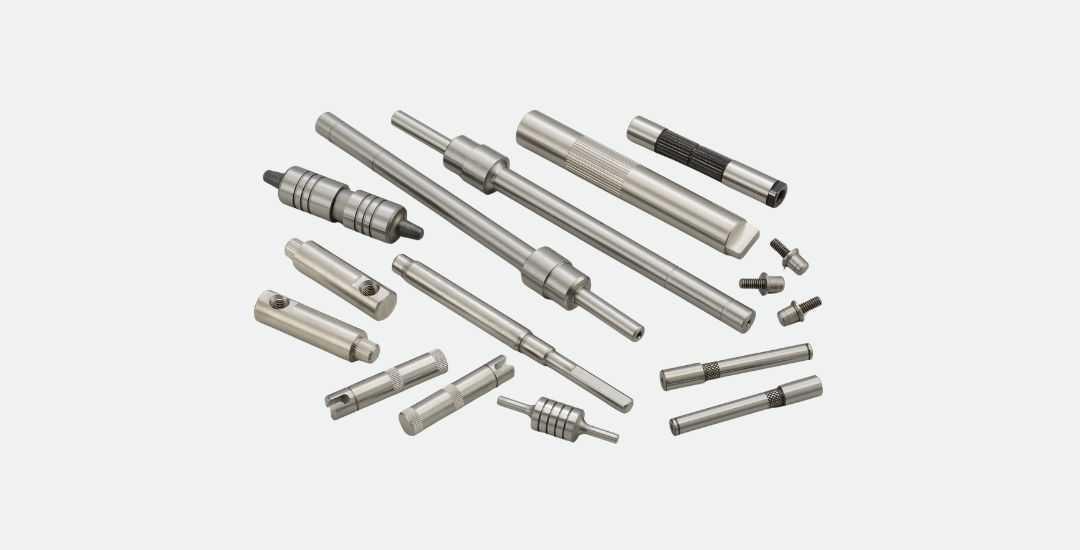
Walk through any machine shop and look at the parts on the racks. Shafts, gears, brackets, and fixtures. Chances are, many of them are made from carbon steel. It remains one of the most widely used materials in general engineering.
Carbon steel is an iron-carbon alloy with carbon content typically ranging from about 0.05% to 2.0% by weight. Carbon changes the steel’s microstructure, increasing strength and hardness as the carbon content rises.
Common grades used in manufacturing include 1018, 1045, and 4140. These grades represent differences in carbon content and alloy composition. For example, 1018 is a low-carbon steel with good machinability and weldability, while 1045 provides higher strength with lower ductility. 4140 adds alloying elements that improve strength and hardenability for more demanding applications.
Carbon steel is available as bar stock, plate, sheet, and pipe. Its microstructure allows it to respond well to heat treatment, such as quenching and tempering, to increase strength and wear resistance.
Because of its combination of strength, weldability, machinability, and availability, carbon steel is commonly used for shafts, gears, structural components, and pressure-containing parts.
2. What Is Cast Iron?
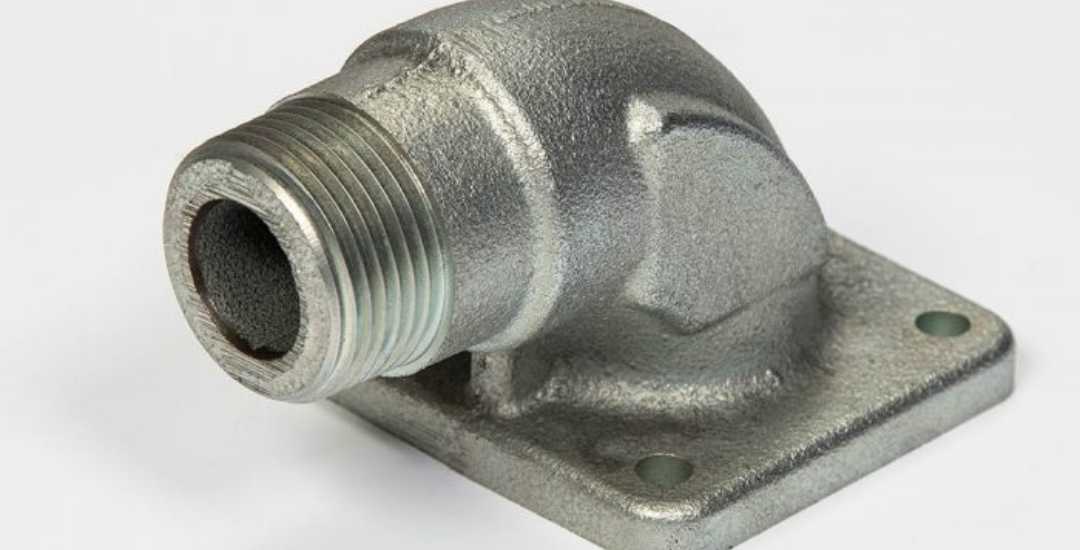
Grab a cast iron part off the rack, then compare it with a steel part of similar size. They may look similar, but they behave very differently during machining and in service. Cast iron is valued for its stiffness and vibration damping, which is why it is widely used in heavy machine components.
Cast iron contains more carbon than steel, typically about 2.0% to 4.5% by weight. In common gray cast iron, much of the carbon exists as graphite flakes. This graphite gives cast iron its gray appearance, improves machinability, and helps chips break into short pieces instead of forming long continuous ribbons.
Common types include gray iron, ductile iron, and malleable iron. Gray iron is the most widely used because of its excellent damping characteristics and machinability. Ductile iron provides improved toughness and impact resistance compared with gray iron.
Cast iron is typically produced by casting rather than rolling or forging. This makes it suitable for complex shapes and large components. Common applications include machine bases, pump housings, brake discs, and other parts where stiffness, compression strength, and vibration damping are important.
3. Key Properties Compared: Tensile Strength, Hardness, Ductility, and More
The values below represent common grades such as 1045 carbon steel and gray cast iron. Actual properties vary by grade, heat treatment, and manufacturing process, but the general differences between the two materials remain consistent.
Propriété | Carbon Steel (Typical) | Cast Iron (Typical) | Why It Matters |
|---|---|---|---|
Résistance à la traction | 400–700 MPa | 150–300 MPa | Carbon steel handles tension. Cast iron is weak in tension. |
Résistance à la compression | Modéré | 600–900 MPa | Cast iron excels under compression. |
Dureté | Modéré | Haut | Cast iron resists wear. |
Ductility | 15–30% | < 1% | Carbon steel bends. Cast iron cracks. |
Impact Toughness | Haut | Faible | Carbon steel takes shock. Cast iron does not. |
Vibration Damping | Poor | 10–15x better | Cast iron absorbs vibration. |
In practice, the choice usually comes down to how the part is loaded. If the component experiences tension, bending, impact, or requires welding, carbon steel is usually the safer choice. This is why it is common for shafts, gears, and structural components.
If the component mainly carries compression and requires vibration control, cast iron is often preferred. This is why it is widely used for machine bases, housings, and pump bodies.
One bends before it breaks. The other cracks before it bends. That difference drives many material decisions in manufacturing.
4. Applications and Industry Use: Carbon Steel vs Cast Iron
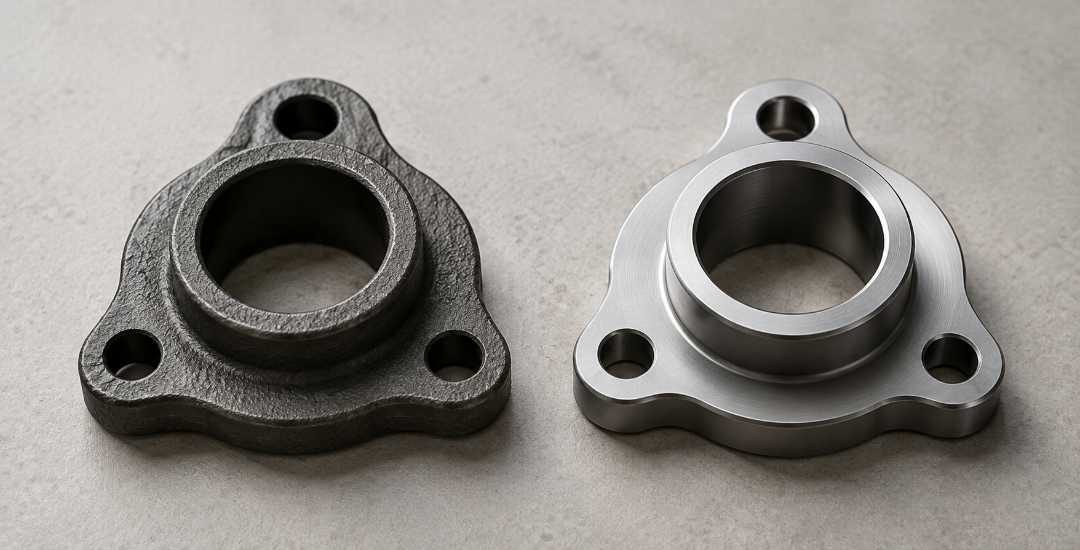
You will find both materials throughout manufacturing, but usually in different types of components. A gearbox housing and a drive shaft may work together in the same machine, yet their material requirements are completely different.
Acier au carbone
Carbon steel is commonly used for parts that move, carry loads, or experience impact. Typical examples include shafts, axles, gears, fasteners, structural frames, and welded assemblies.
In general machinery, carbon steel is widely selected for rotating components because it provides a good combination of strength, machinability, and weldability. If a part needs to handle tension, bending, or impact without failing suddenly, carbon steel is often a practical choice.
Fonte
Cast iron is commonly used for components that require stiffness, stability, and vibration damping. Typical examples include machine bases, engine components, pump housings, valve bodies, and brake components.
In machine tools and heavy equipment, cast iron is often selected for structures that need to remain rigid under load while reducing vibration during operation. If a component mainly carries compression and requires dimensional stability, cast iron is often a strong candidate.
As a general guideline, moving parts and welded structures often favor carbon steel, while stationary components that require stiffness, compression strength, and vibration damping often favor cast iron. The final choice still depends on the actual loading conditions, manufacturing process, and service environment.
5. Manufacturing and Machinability: How These Materials Cut Differently
Spindle load, chips, and surface finish often reveal the difference between carbon steel and cast iron during machining. Cast iron generally machines with lower cutting forces because graphite in the material structure improves chip breakability. Carbon steel produces stronger cutting resistance and requires more attention to heat and chip control.
Cutting Behavior and Coolant: Different Approaches on the Shop Floor
Cast iron is relatively easy to machine because graphite helps reduce friction and break chips into short pieces. Many gray cast iron operations can be performed dry, depending on the tooling and application.
Carbon steel behaves differently. It tends to produce longer chips that require proper chip breakers and cutting parameters to prevent wrapping and surface damage. Coolant is commonly used to control cutting temperature and improve tool life.
Tool Wear and Surface Finish: Different Failure Modes
Cast iron is abrasive because hard particles in the material can gradually wear the cutting edge. Carbide tooling is commonly used to maintain tool life. The machined surface may show graphite-related characteristics, which are normal for cast iron. When a smoother sealing surface is required, additional finishing operations may be needed.
Carbon steel affects tools mainly through heat and friction rather than abrasion. Tool life depends heavily on cutting speed, coolant, and chip control. With proper parameters, carbon steel can achieve consistent surface finish and dimensional accuracy.
Cast iron is often easier to cut but requires attention to abrasive tool wear. Carbon steel provides better ductility and surface finish potential but requires more control of chips, heat, and cutting conditions.
6. Cost Comparison: Material Price, Machining, and Production Volume
Cast iron is often less expensive per kilogram than carbon steel, which leads to a common question during material selection: can the two materials be substituted to reduce cost?
The answer depends on more than material price alone. The final manufacturing cost is influenced by material form, tooling requirements, machining time, and production volume.
| Facteur de coût | Acier au carbone | Fonte |
| Material form | Available as bar stock, plate, and sheet without casting tooling | Typically supplied as castings; tooling may be required |
| Machining speed | Moderate cutting efficiency | Often faster machining due to short, brittle chips |
| Coolant requirement | Commonly required depending on operation | Many gray cast iron operations can be performed with reduced coolant use |
| Tool wear | Modéré | Higher due to abrasive graphite structure |
| Small batch production | Often economical because no casting tooling is required | Higher initial cost due to casting preparation |
| Large batch production | Machining cost may remain higher | Casting cost can become competitive as tooling cost is distributed |
For low-volume production, carbon steel often provides a cost advantage because it does not require casting tooling. For higher production volumes, cast iron can become more competitive when casting costs are distributed across many parts.
The final cost depends on the complete manufacturing process, including material form, machining requirements, tooling, and production volume.
7. Heat Treatment and Welding: Carbon Steel vs Cast Iron
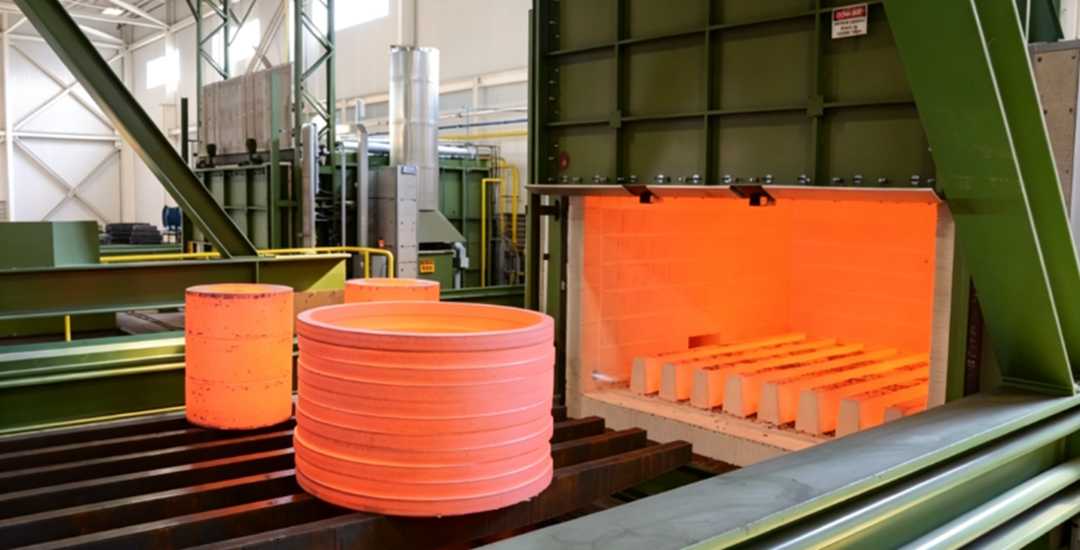
Heat treatment and welding both expose materials to significant thermal cycles. The difference is how carbon steel and cast iron handle those changes. Carbon steel can gain strength through heat treatment, but distortion needs to be controlled. Cast iron changes less during processing, but cracking becomes the main concern when heat is introduced.
Carbon Steel: Heat Treatment and Welding Capability
Carbon steel responds well to heat treatment. Grades such as 1045 and 4140 are commonly quenched and tempered when higher strength or wear resistance is required.
The challenge comes after heat treatment. Parts can expand, shrink, or warp depending on the material grade, geometry, and process conditions. For critical dimensions, manufacturers usually leave machining allowance before heat treatment and complete the final machining or grinding afterward.
Carbon steel is also widely used for welded structures because of its predictable weldability. MIG, TIG, and stick welding are common processes for fabricated components. For higher-carbon or alloy grades, additional controls such as preheating, controlled cooling, or post-weld treatment may be required.
Cast Iron: Thermal Stability and Cracking Risk
Cast iron behaves differently during thermal processing. The graphite structure that gives cast iron excellent damping and machinability also limits its response to hardening compared with carbon steel.
The main concern with cast iron is cracking. Rapid heating, uneven cooling, or welding repair can create high stress in the heat-affected zone. Successful cast iron welding requires careful preparation, suitable filler materials, controlled preheating, and slow cooling.
For this reason, cast iron is usually selected for cast components such as machine bases, housings, and structural parts where stiffness and vibration damping are important, rather than welded assemblies.
8. Material Selection: When to Use Carbon Steel vs Cast Iron
Material substitution often starts with cost, but the more important question is how the component carries load and how it will be manufactured.
Cast iron may be a suitable alternative to carbon steel when:
- The component mainly carries compressive loads, such as machine bases, columns, and housings
- The loading is steady with limited impact or shock
- Welding is not required
Cast iron is usually not a suitable replacement when:
- The component experiences significant tensile, bending, or impact loads
- Fatigue resistance is important
- The design requires welded fabrication
Replacing cast iron with carbon steel also requires consideration. Carbon steel provides higher ductility and weldability, but it does not provide the same vibration damping characteristics as cast iron. For machine structures and components where rigidity and vibration control are important, changing materials may affect performance.
The selection usually comes down to the loading condition and manufacturing requirements. Compression, stiffness, and vibration control often favor cast iron. Tension, bending, impact resistance, and welded fabrication often favor carbon steel.
Conclusion
Carbon steel and cast iron both have their place in manufacturing, but they are not interchangeable materials. Carbon steel is valued for its ductility, strength, and weldability, while cast iron is preferred for stiffness, compression strength, and vibration damping.
The choice should start with how the part will perform in service. Loading conditions, manufacturing requirements, and production volume all influence the final decision. Selecting the material that fits the application is more important than choosing the material with the highest individual property.
At Beska, we review material selection together with part geometry, manufacturing process, and production requirements. If you are unsure whether carbon steel or cast iron is the better fit for your component, we can help evaluate the practical options before production begins.
Deeper into Our Resources
Pour des lectures enrichissantes, nous avons sélectionné pour vous une liste d'articles recommandés :
 French
 English
 Hebrew
 Turkish
 Russian
 German
 Spanish
 Portuguese