


The drone industry has evolved rapidly, with applications spanning from aerial photography to industrial inspection and security operations. As drone functions diversify, so do their design and manufacturing requirements. Performance, stability, and reliability all come down to how the drone is built.
Most drones, whether used for recreation, mapping, or inspection, require custom-designed components to ensure proper fit, weight balance, and system integration. Off-the-shelf parts often cannot meet the specific demands of drone frames, housings, or propulsion systems.
In this blog, we explore the full manufacturing process of drones, from structural design to materials selection and precision machining. Rather than discussing basic cost structures, we’ll focus on how manufacturing decisions shape your final product.
1. Common Drone Parts and Manufacturing Challenges

Drones are complex systems made up of various critical components, each with specific design and manufacturing requirements. Understanding these parts and the challenges they present is essential for producing reliable, high-performance drones.
Key Drone Components
- Propellers and Rotors: These generate lift and thrust. They require precise balancing and aerodynamic shaping to ensure stable flight and efficiency.
- Arms and Frames: These support the drone’s structure and house wiring and electronics. Materials must be lightweight yet strong, and manufacturing tolerances must be tight to maintain stability.
- Motors and Motor Mounts: Accurate machining is necessary to securely hold motors and maintain alignment, preventing vibrations and power loss.
- Electronic Housings: Protect sensitive components like GPS, flight controllers, and batteries from environmental damage. These parts often require complex shapes and tight sealing.
- Sensors and Cameras: Integration requires precise mounts and enclosures to avoid misalignment or interference.
Manufacturing Challenges
Producing these components involves several difficulties:
- Weight vs. Strength: Minimizing weight while ensuring durability requires careful material selection and advanced fabrication methods like carbon fiber lamination or high-strength aluminum alloys.
- Dimensional Accuracy: Even small deviations can affect flight control and safety, especially in parts such as motor mounts and propellers.
- Complex Geometries: Electronic housings and sensor mounts often have intricate shapes that challenge machining and molding processes.
- Assembly Fit: Parts must fit precisely to avoid gaps that could compromise aerodynamics or allow dust and moisture ingress.
By addressing these challenges through appropriate design and manufacturing techniques, drones can achieve the performance and reliability expected in their applications.
2. Step-by-Step Drone Manufacturing Process
The drone manufacturing process involves a series of tightly connected stages, each contributing to structural reliability, flight performance, and system integration. Below is a closer look at how a drone takes shape from concept to final test flight:
Structural Design
Every project begins with computer-aided design (CAD) software to build a precise 3D model of the drone. Engineers focus on key structural elements such as frame geometry, weight distribution, and mechanical interfaces. To ensure the design can handle aerodynamic loads and vibration, simulations like finite element analysis (FEA) are run during this phase. This step is critical for balancing performance with manufacturability.
Prototypage rapide
Once the digital model is validated, physical prototypes are created using Usinage CNC and 3D printing. These early-stage samples help assess dimensional accuracy, component fit, and overall design feasibility. Prototyping also allows for quicker design iterations before committing to production tooling or materials.
Part Production

With a finalized prototype, manufacturers move to actual part production. CNC machining is used to create precise metal components like frames, motor brackets, and connectors. For plastic parts such as housings or covers, injection molding offers high efficiency, especially at scale. Carbon fiber and other composite materials are layered and cured to form lightweight yet strong structures like arms or body shells.
System Integration
As mechanical parts come together, internal systems—such as flight controllers, motors, GPS modules, and sensors—are installed. This step requires close attention to layout and wiring to maintain balance, signal integrity, and cooling. A well-executed integration ensures that hardware and software work seamlessly during flight.
Tests de performance
Before delivery or deployment, every drone undergoes functional testing. This includes motor calibration, stability checks, sensor verification, and real-world flight trials. Any deviation in response, noise, or balance is corrected during this phase to guarantee reliable performance under varied conditions.
Each of these steps builds on the last. Together, they form a closed-loop process that ensures the final drone meets both engineering and operational standards.
3. Common Materials Used in Drone Manufacturing
Material selection can affect the durability, weight, and performance of a drone. Here is a brief overview for your reference:
| Matériel | Densité (g/cm³) | Tensile Strength (MPa) | Relative Cost | Usinabilité | Typical Use Cases |
| Aluminium 6061 | 2.7 | ~275 | Moyen | Haut | Frames, brackets, motor mounts |
| Aluminium 7075 | 2.81 | ~500 | Medium-High | Modéré | High-load frame parts, arms |
| Titanium Alloy | 4.43 | ~900 | Très élevé | Faible | Structural elements under high stress |
| Carbon Fiber (CFRP) | 1.6 | 500+ | Haut | Modéré | Arms, body shells, lightweight enclosures |
| Glass Fiber (GFRP) | 2 | ~350 | Moyen | Modéré | Internal panels, arm reinforcements |
| Kevlar Composite | 1.44 | ~300 | Medium-High | Faible | Impact-resistant housings, shielding |
| COUP D'OEIL | 1.3 | ~100 | Haut | Haut | Battery compartments, brackets |
| Nylon (PA6) | 1.15 | ~80 | Faible | Haut | Mounts, gears, clips |
| Polycarbonate (PC) | 1.2 | ~70 | Faible | Haut | Protective covers, light housings |
| ABS | 1.05 | ~40 | Faible | Très élevé | Prototyping, lower-load plastic parts |
Different drones prioritize different material attributes. For example, carbon fiber drones focus on weight reduction and rigidity, while aluminum drone parts offer reliable strength and cost efficiency.
4. Key Manufacturing Methods for Drone Parts
Here’s a breakdown of the main processes used to produce drone parts and how each method contributes to overall performance:
Usinage CNC

CNC machining is commonly used to produce structural and precision-critical parts such as motor mounts, frames, brackets, and housings made from metals like aluminum or titanium. This method offers tight tolerances—often within ±0.01 mm—consistent repeatability, and supports a variety of materials. Thin-walled parts, complex profiles, and components with precise fits, especially those affecting flight stabilization or gimbal mounting, benefit significantly from CNC machining. Although it generally incurs higher costs than molding when produced in large volumes, CNC machining is well-suited for low- to medium-production runs and applications where precision is paramount.
Moulage par injection plastique
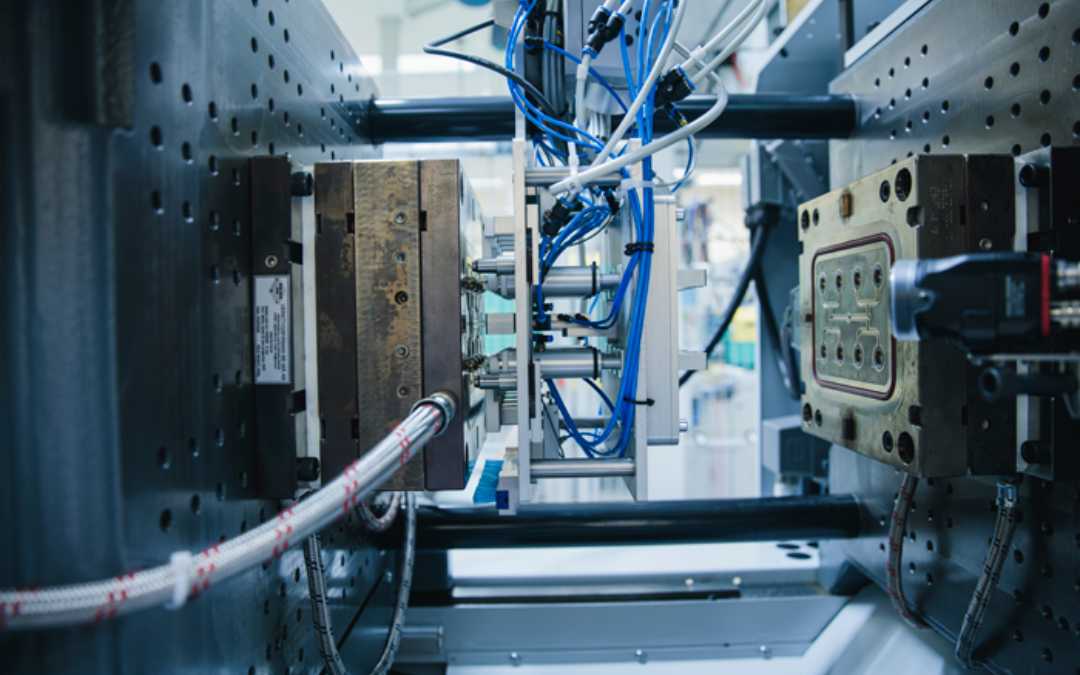
Moulage par injection is typically the most cost-effective method for high-volume production of plastic parts such as housings, landing gear, battery covers, and non-load-bearing fasteners. While the initial tooling investment is substantial, the per-unit cost decreases considerably as volume increases. Materials commonly used include polycarbonate, nylon, and ABS, selected for their balance of strength, weight, and moldability. Injection molding also allows for integrated design features such as snap fits and clips, which can simplify assembly and reduce manufacturing time.
Composite Lamination
To achieve strength without adding weight, composite lamination using carbon fiber or fiberglass is widely applied to drone arms, booms, and structural skins. In this process, layers of material are placed in molds and cured to form rigid, lightweight components with excellent stiffness-to-weight ratios. Carbon Fiber Reinforced Polymer (CFRP) is especially favored for racing drones, long-range UAVs, and industrial applications that demand both durability and performance. Although less scalable than injection molding, composite lamination delivers superior strength for weight-sensitive parts.
Impression 3D
3D printing technologies such as FDM, SLA, and SLS provide flexibility during early development and for producing low-volume custom parts. This method is effective for validating new designs, creating internal mounts, or fabricating geometries that would be challenging to machine or mold. Although 3D-printed parts generally do not match the mechanical strength of machined or laminated components, advances in materials—like carbon fiber-reinforced nylon—are narrowing this gap. 3D printing is increasingly used for one-off components such as camera mounts, sensor housings, and aerodynamic fairings.
In practice, drone manufacturers often combine these methods. A single drone might feature CNC-machined parts for the core frame, injection-molded plastic panels, and composite-laminated arms. This multi-process approach balances performance, weight, and cost effectively.
5. Why Precision Matters in Drone Manufacturing
Precision in drone manufacturing goes beyond simply meeting tight tolerances. It directly impacts the drone’s overall performance, reliability, and safety. Even small variations in part dimensions or assembly can lead to significant issues during flight.
Flight Stability
The stability of a drone depends heavily on the precise alignment and balance of its components. Minor deviations in geometry—such as uneven arm lengths or misaligned motor mounts—can cause vibrations and reduce flight smoothness. This not only affects control responsiveness but can also shorten the lifespan of motors and bearings due to increased wear.
System Integration
High-precision manufacturing ensures that electronic modules, sensors, and mechanical parts fit together seamlessly. When components are machined or fabricated with consistent accuracy, assembly becomes more straightforward, reducing the risk of electrical or mechanical failures. Proper alignment is especially critical for components like gimbals and cameras, where even slight misplacement can degrade sensor performance or image quality.
Tolerance Guidelines
For drone parts subject to mechanical stress—such as arms, frames, and motor mounts—a machining tolerance of ±0.01mm or tighter is often required. This level of precision helps maintain structural integrity and consistent aerodynamic properties. Looser tolerances can introduce instability, affect control algorithms, and cause premature part failure.
Quality Control Measures
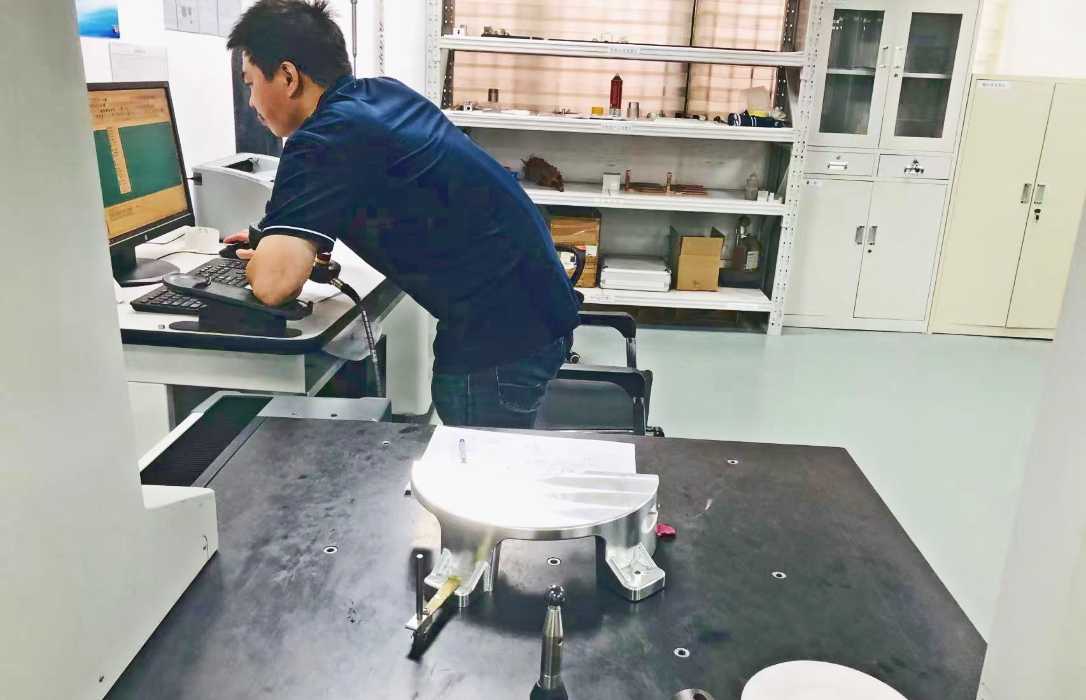
To guarantee such precision, advanced quality control processes are essential. Coordinate Measuring Machines (CMM) provide accurate dimensional inspections, verifying that each part conforms to design specifications. Additionally, dynamic balancing tests are performed on rotating components like motors and propellers to minimize vibration. These quality checks ensure every drone component contributes to reliable, safe flight performance.
6. Case Study of Drone Manufacturing
A client specializing in industrial infrastructure inspection approached us to manufacture critical parts for their new commercial drone model. The drone required a lightweight yet robust frame capable of carrying advanced sensors while maintaining stable flight over extended periods.
Manufacturing Challenges
- The frame needed complex geometry to house sensors and wiring securely without adding unnecessary weight.
- Motor mounts demanded tight tolerances (±0.01mm) to prevent vibration that could interfere with high-resolution imaging.
- The drone’s outer shell required impact resistance and weatherproofing for harsh environments.
Manufacturing Approach
- The core frame was produced using CNC machining from aerospace-grade aluminum 7075. This ensured strength and precision fit for the motor mounts and internal brackets.
- Carbon fiber composite lamination was applied to the drone arms to reduce weight while providing high stiffness.
- The outer shell and sensor housings were manufactured via plastic injection molding with polycarbonate to balance durability and weight.
- Throughout production, coordinate measuring machines (CMM) inspected the critical parts to guarantee dimensional accuracy. Dynamic balancing tests were also performed on rotating components to minimize vibration.
Résultat
This combination of manufacturing methods delivered a drone frame that met the client’s strict requirements for strength, precision, and weight. In the email, the client said, “We were impressed by the precision and quality of the parts delivered.”
Conclusion
The way a drone is manufactured directly affects how well it performs and how long it lasts. Choosing the right materials and manufacturing methods, whether CNC machining for precise metal parts, injection molding for durable plastic components. It makes a big difference in weight, strength, and flight stability.
Every drone project has its own set of challenges, like meeting tight tolerances, handling complex shapes, and working with different materials. Looking for an expert to handle drone manufauctirng challenges? Consult the Beska team. We’ll customize your drone parts as you required.
Plongez plus profondément dans nos ressources
Vous recherchez des services plus diversifiés ? Découvrez notre sélection soigneusement sélectionnée :
Pour des lectures enrichissantes, nous avons sélectionné pour vous une liste d'articles recommandés :
- Best Material for Drone Frame
- Top 10 Drone Parts Manufacturers in the USA
- Carbon Fiber Composite
- Best Materials for Drone Frames
 French
 English
 Hebrew
 Turkish
 Russian
 German
 Spanish
 Portuguese