


Stainless steel is widely used in manufacturing due to its excellent corrosion resistance, strength, and attractive finish. From precise medical device components to large industrial piping, it plays a vital role across many sectors.
Welding is a crucial process for joining stainless steel parts, and the quality of the weld directly affects the product’s performance, safety, and lifespan. So, knowing the basis of welding stainless steel, from selecting the right methods to controlling heat input and shielding gases, is essential for you working with this material.
This article explores how to weld stainless steel from the main welding methods to tips on achieving reliable results.
1. How to Weld Stainless Steel with Proper Methods
Selecting a suitable welding technique depends on factors such as part design, dimensional accuracy, and production volume. Experienced welders often say there’s no single “best” method, only the one that fits your specific needs.
1. Manual Arc Welding: Reliable and Flexible
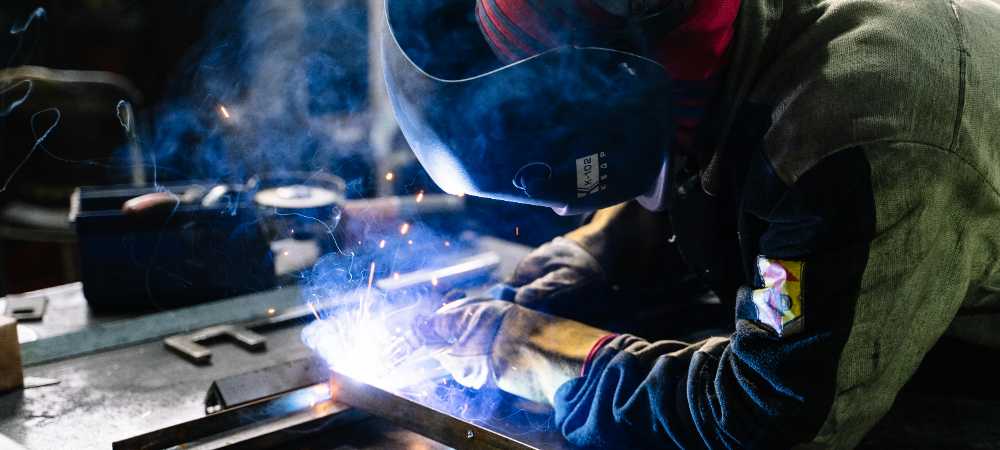
Manual arc welding remains a top choice for small batches or complex geometries. For instance, repairing an old stainless steel fermentation tank in a tight space recently required skilled manual welding to reach difficult areas. Keep in mind, stainless steel welding rods require lower drying temperatures than carbon steel—usually around 150°C for about an hour.
2. TIG Welding: Ideal for Thin Sheets

Tungsten Inert Gas (TIG) welding is commonly used for stainless steel thin sheets, offering precise control and clean welds. A common issue with TIG welds is dark discoloration along the seam, often caused by insufficient shielding gas coverage. Backside protection is essential; a useful trick is to apply high-temperature tape on the backside and flow argon gas before welding, which significantly improves the weld appearance.
3. MIG Welding: Efficient for Volume Production
Metal Inert Gas (MIG)
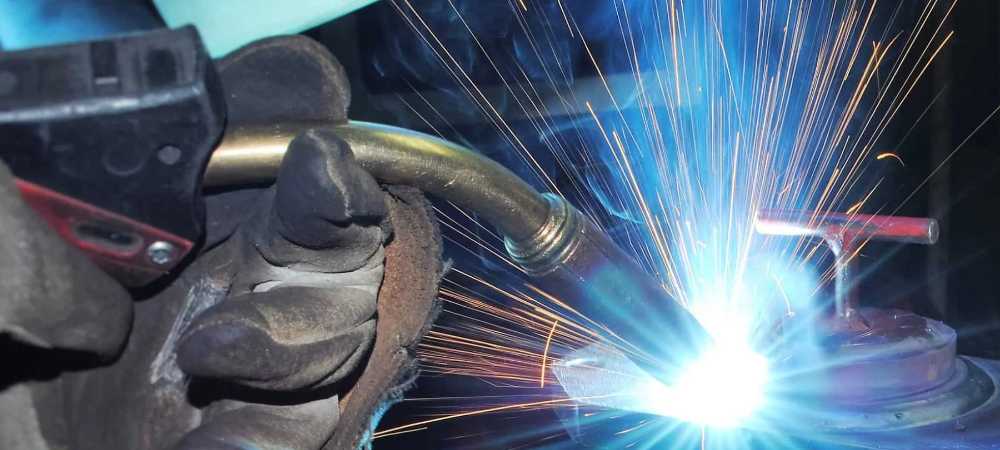
welding excels in higher-volume stainless steel fabrication, such as assembling racks or frames. It can be over three times faster than manual welding. However, parameter settings (like wire feed speed and voltage) must be carefully matched. Many workshops post reference tables for these parameters to train new operators efficiently.
2. Stainless Steel Welding Parameters Reference Table
The following are examples of key parameters for common stainless steel welding methods, which are suitable for guiding actual operations. In actual applications, you can make fine adjustments based on the characteristics of the equipment and workpiece.
| Welding Method | Material Thickness (mm) | Current (A) | Voltage (V) | Shielding Gas | Filler Material | Travel Speed (cm/min) |
| Manual Arc Welding | 2 – 6 | 80 – 130 | 20 – 25 | Argon (for TIG)/CO2 mix | E308-16 (austenitic SS) | 20 – 30 |
| Soudage TIG | 0.5 – 3 | 50 – 120 | 10 – 15 | 100% Argon | ER308, ER316L | 30 – 60 |
| Soudage MIG | 1 – 8 | 120 – 250 | 18 – 24 | Argon + 2-5% CO2 mix | ER308L, ER316L | 40 – 80 |
3. Choosing Stainless Steel Grades and Welding Materials
Stainless steel comes in various grades, commonly austenitic, martensitic, and ferritic. Each requires specific filler metals. The table below summarizes typical matches between base metals and filler materials.
| Stainless Steel Type | Common Grade(s) | Welding Challenges | Recommended Filler Metal | Remarques |
| austénitique | 304, 316, 321 | Good weldability; prone to hot cracking | ER308, ER316, E308-16 | Use back purging for full penetration welds |
| Martensitic | 410, 420 | Prone to hardening and cold cracking | E410-15, ER410NiMo | Use low-hydrogen rods and consider preheating |
| ferritique | 430, 409 | Poor ductility; sensitive to heat cycling | ER430, ER309L | Avoid overheating; use short welds to control grain growth |
| Duplex | 2205, 2507 | Requires careful heat input balance | ER2209, E2209-16 | Maintain interpass temps below 150°C |
4. Stainless Steel Welding Quality: Key Factors to Control
Producing high-quality stainless steel welds requires more than just selecting the right process. Below are four critical areas to manage during welding:

1. Heat Management
Stainless steel has low thermal conductivity, so heat tends to concentrate, risking coarse grain growth and hot cracking. Use low current and fast welding speed to limit heat input. For thicker parts, multi-pass welding with controlled cooling between layers helps prevent overheating.
2. Post-Weld Treatment
To enhance corrosion resistance and appearance, austenitic stainless steel welds benefit from pickling and passivation—chemical treatments that remove oxidation and restore a protective chromium oxide layer. Surfaces requiring paint should be ground smooth to ensure coating adhesion.
3. Preventing Oxidation
The corrosion resistance depends on a stable oxide film on the surface. Welding heat can break down this film, so shielding gas purity and flow rate are critical. In manual arc welding, choosing electrodes rich in alloying elements helps form a protective slag covering and replenishes alloy losses during welding.
4. Minimizing Distortion
Welding distortion can affect dimensions and aesthetics. Strategies include balanced welding sequences (symmetrical or segmented), fixturing to hold parts in place, and parameter control to reduce heat input.
A small but effective principle here is the less heat you put in, the less correction you’ll need after welding. Keeping inputs controlled from the start is often more efficient than fixing distortion or discoloration after the fact.
5. Common Weld Defects and How to Address Them
Even with the right setup, stainless steel welding is prone to specific types of defects. Identifying them early and finding out the cause can ensure a professional finish.
Discoloration and Surface Finish
Yellow or blackened weld seams can detract from quality. Typically, a wire brush followed by chemical pickling removes discoloration safely. Use proper personal protective equipment, as chemicals are hazardous.
Cracks: Types and Causes
Weld cracks are critical defects, categorized as hot cracks (during solidification), cold cracks (post-weld cooling), and reheating cracks (during heat treatment or high-temperature service).
- Hot cracks form during weld solidification. They’re often due to the presence of brittle compounds at grain boundaries or excessive thermal stress. To reduce the risk, use low-carbon or stabilized filler metals, especially with austenitic stainless steels.
- Cold cracks typically develop after welding as the joint cools. These are often hydrogen-induced or the result of hard, brittle microstructures forming too quickly. For materials like martensitic stainless steel, preheating before welding and slowing the cooling process can greatly reduce cold crack formation.
- Reheat cracks occur during post-weld heat treatment or high-temperature service, especially in materials with high alloy content. They stem from impurity segregation at grain boundaries. Selecting clean base metals and avoiding excessive heat input during welding can help minimize this risk.

Even well-trained welders can encounter these issues occasionally. The key is to build consistency through proper material selection, parameter control, and post-weld inspection.
6. Practical Tips on Welding Stainless Steel
Beyond theory, hands-on experience in the workshop often reveals the small but critical details that make a difference in stainless steel welding. Here are a few practical best practices we’ve found valuable in daily operations:
- Always verify material grades before welding. Mixing 304 and 316 stainless steel, for example, can lead to galvanic corrosion or unexpected strength mismatches.
- Control heat input with precision. Excessive heat not only risks distortion but can also degrade corrosion resistance and alter the weld’s mechanical properties.
- Use welding simulation software during the planning phase, especially for high-precision parts, to anticipate distortion and optimize weld sequences before fabrication begins.
- Incorporate nondestructive testing (NDT) such as dye penetrant, ultrasonic, or X-ray inspections when working on critical welds. These methods help detect internal flaws early and avoid downstream failures.
These measures contribute to more predictable, consistent results, especially in high-spec environments like medical devices and food equipment.
7. Industry Applications of Stainless Steel Welding
The stainless steel welding is widely applied across various industries.
Food and Pharmaceutical Equipment
Welding in food and pharmaceutical manufacturing demands exceptionally clean, corrosion-resistant joints. Weld seams must be smooth and free of crevices to prevent bacterial growth. TIG welding is often used for thin-walled pipes and tanks. Post-weld pickling and passivation are crucial steps to meet hygiene standards.
Petrochemical Pipelines and Pressure Vessels
In petrochemical applications, pipelines and vessels operate under high pressure and temperature. Welding quality directly affects safety. Automated welding processes and multi-pass techniques are common to control heat input and avoid cracks or distortion.
Medical Devices and Precision Instruments
Welds on medical devices require not only strength but also aesthetic smoothness and sterility. Austenitic stainless steel is widely used, with TIG and laser welding techniques preferred to ensure clean, strong joints.
Transportation (Automotive and Rail)
Stainless steel welding is widely employed in vehicle bodies and exhaust systems. Balancing speed and quality is key to prevent warping and cracking, with MIG and TIG welding frequently combined.
Conclusion
Welding stainless steel isn’t just about joining metal. It’s about precision, process control, and material knowledge. From choosing the right filler and shielding gas to managing heat input and avoiding post-weld defects, each decision directly impacts the performance and longevity of the final part.
For manufacturers working in high-spec industries like electronics, medical devices, or food-grade equipment, these details are critical. That’s why partnering with an experienced fabrication supplier matters. If you are looking for a reliable sheet metal fabricator, just contact the Beska team. We combine engineering expertise with proven quality control to deliver custom stainless steel components to you.
FAQ
Q1: What if stainless steel welds start rusting?
First, verify the material—mixing up 304 and 316 is a common cause. If the material is correct, likely the heat input was too high, damaging corrosion resistance.
Q2: How to fix welding distortion?
Small distortions can be corrected with a hydraulic press carefully. For larger ones, prevention is better—use welding simulation to plan and minimize distortion before welding.
Q3: How to verify stainless steel grades quickly before welding?
Using handheld positive material identification (PMI) analyzers or simple chemical tests helps avoid costly grade mix-ups.
Q4: How do regulatory standards influence stainless steel welding in food or medical industries?
Compliance with FDA or ISO standards often requires additional weld inspections and surface treatments.
Deeper into Our Resources
Pour des lectures enrichissantes, nous avons sélectionné pour vous une liste d'articles recommandés :
 French
 English
 Hebrew
 Turkish
 Russian
 German
 Spanish
 Portuguese