


Spring steel refers to a group of high-carbon and alloy steels used for components that must repeatedly deflect and return to their original shape. Common grades include SAE 1075, 1095, 5160, 6150, 9255, and 17-7PH stainless steel, each offering a different balance of strength, fatigue resistance, formability, and corrosion resistance.
Choosing a spring steel grade involves more than comparing strength or hardness. A material that performs well under repeated loading may be harder to form, more sensitive to heat treatment, or unsuitable for corrosive environments. The wrong choice can eventually appear as fatigue cracking, permanent set, or premature component failure.
This guide compares the common types of spring steel, their properties, applications, and manufacturing considerations, with practical guidance for selecting a suitable grade.
1. What Is Spring Steel?
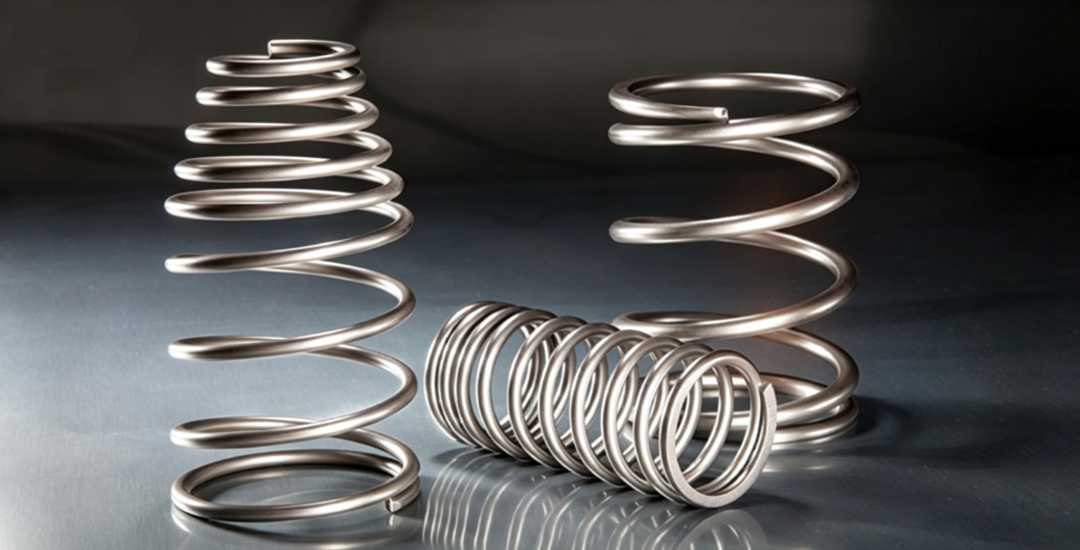
Spring steel refers to a group of steels used for components that must store and release elastic energy while resisting permanent deformation. Compared with common low-carbon structural steels, properly heat-treated spring steels can provide higher strength, elastic limits, and fatigue performance.
A key characteristic of spring steel is its high elastic limit. This allows a component to deflect under load and recover its original shape when the load is removed, provided the applied stress remains within the material’s elastic range. Many carbon and alloy spring steels contain roughly 0.5% to 1.0% carbon, while alloying elements such as silicon, manganese, chromium, and vanadium are used in different grades to modify hardenability, strength, toughness, and fatigue performance.
Spring steel is therefore defined not simply by high carbon content, but by the combination of material composition, heat treatment, and mechanical properties required for repeated elastic loading.
2. Common Types and Grades of Spring Steel
Spring steels include high-carbon steels, alloy spring steels, stainless spring steels, and high-strength spring wire grades. Each group offers a different balance of strength, fatigue resistance, hardenability, corrosion resistance, and manufacturability.
High-Carbon Spring Steels
High-carbon grades are widely used for general-purpose springs because they provide high strength and hardness at relatively low material cost. As carbon content increases, achievable hardness generally increases, while forming and heat-treatment control become more demanding.
- SAE 1070 contains approximately 0.65–0.75% carbon and is used for general-purpose spring applications where moderate spring performance and economical material cost are important.
- SAE 1075 offers a useful balance of strength, toughness, and heat-treatment response. It is commonly used for flat springs, clips, and other general spring components.
- SAE 1095 has a higher carbon content and can achieve greater hardness and wear resistance after appropriate heat treatment. It is commonly used for high-stress flat springs, spring strips, blades, and wear-resistant components, although forming and heat treatment require greater care than with lower-carbon grades.
Alloy Spring Steels
Alloy spring steels use elements such as chromium, vanadium, silicon, and manganese to improve hardenability, toughness, fatigue resistance, or resistance to stress relaxation.
- SAE 5160 is a chromium spring steel widely associated with leaf springs and heavy-duty suspension components. Its improved hardenability makes it suitable for thicker sections where plain high-carbon steels may not develop sufficiently uniform properties through the cross-section.
- SAE 6150 is a chromium-vanadium steel valued for toughness, fatigue resistance, and performance under repeated impact loading. Typical applications include heavily loaded springs and other cyclically stressed components.
- Chrome-silicon spring steels, such as SAE 9254, provide high strength and good resistance to fatigue and stress relaxation. They are widely used for coil springs, valve springs, and demanding suspension applications.
- SAE 9255 is a silicon-manganese spring steel commonly used for heavy-duty leaf and coil springs. Its alloy content improves strength and hardenability, although decarburization requires careful control during heat treatment.
Stainless Spring Steels
Stainless spring steels are selected when corrosion resistance is important in addition to elastic performance.
- Types 301, 302, and 304 provide combinations of corrosion resistance, formability, and spring properties for clips, small springs, retainers, and other components exposed to moisture or mildly corrosive environments.
- 17-7PH precipitation-hardening stainless steel provides higher strength and fatigue capability while maintaining good corrosion resistance. It is commonly considered for demanding springs and precision components where both mechanical performance and environmental resistance matter.
Music Wire (ASTM A228)
ASTM A228 music wire is a high-carbon, cold-drawn steel wire known for very high tensile strength and excellent fatigue performance. It is widely used for small, highly stressed compression, extension, and torsion springs.
Its main limitation is corrosion resistance. Music wire generally requires appropriate protection when exposed to moisture or corrosive environments, and its high strength also makes forming and machining more demanding.
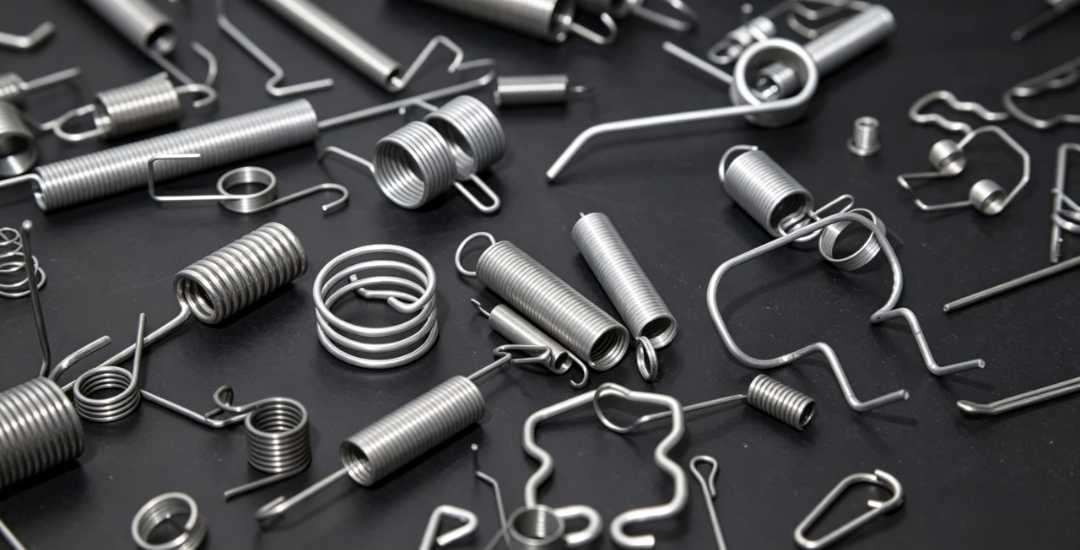
3. Key Properties and Spring Steel Grade Comparisons
Spring steel selection depends on more than carbon content or maximum hardness. Yield strength, fatigue resistance, toughness, hardness, and heat-treatment response all influence how a grade performs in repeated loading.
- Yield strength determines how much stress a spring can withstand before permanent deformation begins. A higher yield strength generally allows greater elastic loading, provided the component geometry and heat treatment are appropriate.
- Tensile strength indicates the maximum tensile stress the material can withstand before failure. High-strength spring wires can reach very high tensile strengths, although strength varies significantly with wire diameter, processing condition, and heat treatment.
- Fatigue resistance is critical for springs exposed to repeated loading. Surface defects, decarburization, poor finishing, and residual tensile stresses can significantly reduce fatigue life. Processes such as shot peening may be used to improve fatigue performance in demanding applications.
- Hardness is closely related to strength and wear resistance, but higher hardness can reduce formability and increase sensitivity to cracking. The required hardness should therefore be balanced against toughness and manufacturing requirements.
1075 vs 1095 Spring Steel
Both 1075 and 1095 are high-carbon spring steels, but their different carbon contents create practical differences in processing and performance.
- 1095 contains more carbon and can achieve higher hardness and wear resistance after appropriate heat treatment. This makes it suitable for high-stress flat springs, spring strips, blades, and wear-resistant components.
- 1075 contains less carbon and generally provides a more balanced combination of strength, toughness, and processing tolerance. It is commonly used for general-purpose springs, clips, washers, and similar components.
Both grades become more difficult to machine as hardness increases. Heat-treatment control is also important, particularly for 1095, where the higher carbon content can increase sensitivity to cracking and distortion.
For applications prioritizing higher achievable hardness and wear resistance, 1095 may be preferred. When toughness, formability, and easier heat-treatment control carry more weight, 1075 may be the more practical choice.
5160 vs 6150 Spring Steel
5160 and 6150 are alloy spring steels used where greater hardenability, toughness, or fatigue performance is required than plain high-carbon grades can typically provide.
- 5160 is a chromium spring steel known for good hardenability and toughness. It is widely used for leaf springs, suspension components, and other heavy-duty applications exposed to repeated loading.
- 6150 contains both chromium and vanadium. Vanadium contributes to grain refinement and supports strength, toughness, and fatigue performance after appropriate heat treatment. The grade is commonly used for heavily loaded springs and components exposed to repeated impact or cyclic stress.
The choice between them depends on section size, loading conditions, fatigue requirements, heat treatment, and manufacturing cost rather than strength alone.
4. Manufacturing Considerations for Different Spring Steel Types
Spring steel grades can behave very differently during forming, heat treatment, and finishing. These manufacturing differences can be just as important as their final mechanical properties.
Carbon Content and Formability
Higher carbon content generally increases achievable hardness and strength, but it also makes forming more demanding. Tight bend radii, severe deformation, and inappropriate material condition can increase the risk of cracking.
For example, 1075 generally provides more forming tolerance than 1095, while the higher-carbon 1095 requires greater attention to forming sequence, bend geometry, and heat-treatment condition.
Heat Treatment and Hardenability
Heat treatment strongly influences the final performance of carbon and alloy spring steels. Higher-carbon grades such as 1095 require careful control of austenitizing, quenching, and tempering to manage hardness while limiting distortion and cracking.
Section thickness also matters. In thicker parts, plain high-carbon steels may have difficulty developing the desired properties through the full cross-section. Alloy grades such as 5160 and 9255 provide greater hardenability and are therefore commonly considered for larger or more heavily loaded spring sections.
Cold Forming and Hot Forming
Smaller spring components are often formed from wire or strip in a condition suitable for cold working, while larger sections may require hot forming depending on material grade, geometry, and required deformation.
- ASTM A228 music wire is supplied in a high-strength cold-drawn condition and is commonly used for smaller high-stress springs. A low-temperature stress-relief treatment may follow forming.
- 17-7PH stainless steel follows a different processing route. It can be formed in a softer condition and subsequently strengthened through precipitation hardening, which can provide high final strength with relatively controlled dimensional change.
Surface Integrity and Decarburization
Surface condition has a major influence on spring fatigue life. High-carbon and many alloy spring steels can experience decarburization during high-temperature processing, reducing surface hardness and potentially weakening fatigue performance.
Silicon-containing spring steels require particular attention to furnace atmosphere and heat-treatment control. Controlled-atmosphere or other appropriately protected heat-treatment processes can help limit surface decarburization.
| Spring Steel | Forming Characteristics | Heat-Treatment / Manufacturing Considerations |
| SAE 1075 | Relatively good forming tolerance for a high-carbon spring steel | Quench-and-temper processing; control distortion and surface condition |
| SAE 1095 | More demanding as deformation severity increases | Higher-carbon grade requiring careful quenching and tempering |
| SAE 5160 | Suitable for many heavier spring components | Improved hardenability is useful for thicker sections |
| SAE 9255 | Common in heavy-duty spring applications | Good hardenability; surface decarburization requires attention |
| Chrome-Silicon | Commonly used for highly stressed spring forms | Heat treatment and surface condition strongly influence fatigue performance |
| 17-7PH | Can be formed before final precipitation hardening | Aging treatment develops final strength with relatively controlled dimensional change |
| Music Wire (ASTM A228) | Used primarily in wire-form spring production | Supplied in a high-strength cold-drawn condition; stress relief may follow forming |
5. Common Applications and Material Selection
Spring steel grades are used across automotive, industrial, precision, and corrosive-service applications. The appropriate grade depends on the loading cycle, required strength, component geometry, operating environment, and manufacturing route.
Automotive Suspension Springs
Chrome-silicon spring steels are commonly used for automotive suspension coil springs because they combine high strength with good fatigue and stress-relaxation performance.
Manufacturing control is particularly important for these components. Surface condition, heat treatment, decarburization, and residual stresses can all influence fatigue life and long-term resistance to permanent set. Shot peening is also commonly used to improve fatigue performance in highly loaded suspension springs.
Valve Springs
Valve springs operate under repeated cyclic loading, making fatigue resistance and material cleanliness important considerations. Chromium-vanadium steels such as SAE 6150 and chrome-silicon spring steels are both used for demanding valve-spring applications.
Heat-treatment consistency, surface integrity, inclusions, and decarburization can significantly affect service life. The final material choice also depends on operating temperature, spring geometry, and required stress level.
Flat Springs and Leaf Springs
Different spring steels are used depending on section thickness and loading requirements. SAE 5160 is widely used for leaf springs and heavy-duty suspension components, while SAE 1095 is commonly used for thinner flat springs and wear-resistant spring components. SAE 9255 may be selected for larger or more heavily loaded spring sections.
For thicker parts, hardenability becomes increasingly important because the required mechanical properties must be developed through a greater section thickness. Heat-treatment control and surface condition therefore play a major role in final performance.
Small Precision Springs
ASTM A228 music wire is widely used for small compression, extension, and torsion springs that require high strength and good fatigue performance.
Because these springs often operate under repeated loading, wire quality and surface condition are important. Scratches, decarburization, and other surface defects can become fatigue initiation sites, while forming and stress-relief conditions also influence final spring performance.
Springs for Corrosive Environments
Stainless spring steels are commonly selected where moisture, chemicals, or outdoor exposure make corrosion resistance important. Austenitic grades such as 301, 302, 304, and 316 are used for many corrosion-resistant spring applications, while 17-7PH is considered when higher strength is required together with corrosion resistance.
The trade-off is not simply corrosion resistance versus strength. Formability, heat treatment, fatigue requirements, temperature, and environmental severity should all be considered when selecting a stainless spring grade.
6. Spring Steel Selection Guide
The table below provides a quick reference for matching common spring applications and service requirements with frequently used spring steel grades. Final selection should also consider loading, section size, heat treatment, corrosion exposure, and manufacturing method.
| Application or Requirement | Commonly Considered Grade | Selection Consideration |
| General-purpose small springs | SAE 1070 / 1075 | Good balance of strength, toughness, and processing cost |
| High-stress flat springs | SAE 1095 | Higher achievable hardness and wear resistance after appropriate heat treatment |
| Automotive leaf springs | SAE 5160 | Good hardenability and toughness for heavier sections |
| High-cycle valve springs | SAE 6150 / Chrome-Vanadium | Good fatigue and impact resistance |
| Suspension coil springs | Chrome-Silicon | Good fatigue and stress-relaxation performance |
| Thick or heavily loaded spring sections | SAE 9255 | Improved hardenability for larger sections |
| General corrosive environments | Stainless 302 / 304 | Combines corrosion resistance with useful spring properties |
| More demanding corrosive environments | Stainless 316 | Greater corrosion resistance where environmental exposure is the priority |
| High strength with corrosion resistance | 17-7PH | High strength from precipitation hardening together with corrosion resistance |
| Small high-stress wire springs | Music Wire (ASTM A228) | Very high tensile strength and good fatigue performance |
Conclusion
Choosing the right spring steel requires balancing strength, fatigue performance, formability, hardenability, corrosion resistance, and manufacturing requirements. High-carbon grades such as 1075 and 1095, alloy steels such as 5160, 6150, and 9255, stainless spring steels, and music wire each serve different applications and processing conditions.
A higher-strength grade is not automatically the better choice. The final material should match the actual loading conditions, section size, operating environment, heat-treatment route, and required fatigue life. In many cases, manufacturability and surface condition are just as important as the nominal material grade.
If you are evaluating spring steel for a manufactured component, the drawing, required material condition, heat treatment, critical dimensions, and service environment should be reviewed together before the final grade and process route are selected.
 French
 English
 Hebrew
 Turkish
 Russian
 German
 Spanish
 Portuguese