
CNC Milling Service
- ISO 9001:2015 certified
- Tolerances: Typical ±0.01–0.05 mm, depending on material and part size
- Batch Size: Prototyping to full production runs

Beska – Best Quality with Competitive Price.
With expertise in sheet metal fabrication and CNC machining, we’re here.
Why Choose Beska for CNC Milling?
At Beska, we combine precision, expertise, and responsiveness to deliver CNC milling solutions that meet your most demanding requirements:
- High Precision: Every part is manufactured to meet tight tolerances, ensuring prototypes, medical components, and precision molds perform exactly as designed.
- Versatile Material Expertise: From aluminum and stainless steel to titanium and engineering plastics, we handle a wide range of materials across industries.
- Responsive Production: Small-batch projects can often be completed within 7 days, helping your team stay on schedule.
- Fast and Transparent Quotation: Free quotes are provided typically within 4 hours. So, projects can start quickly and confidently.
- Design-for-Manufacturing Support: Practical recommendations optimize your design for CNC milling, improving manufacturability and reducing costs.
With these strengths in place, our multi-axis CNC machines are ready to handle parts of any complexity.
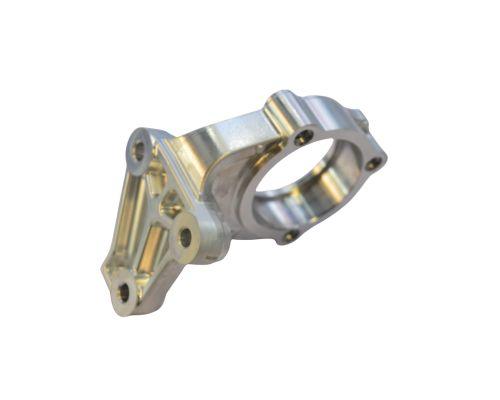
Beska – Best Quality with Competitive Price.
With expertise in sheet metal fabrication and CNC machining, we’re here.
Multi-axis CNC Milling Capabilities
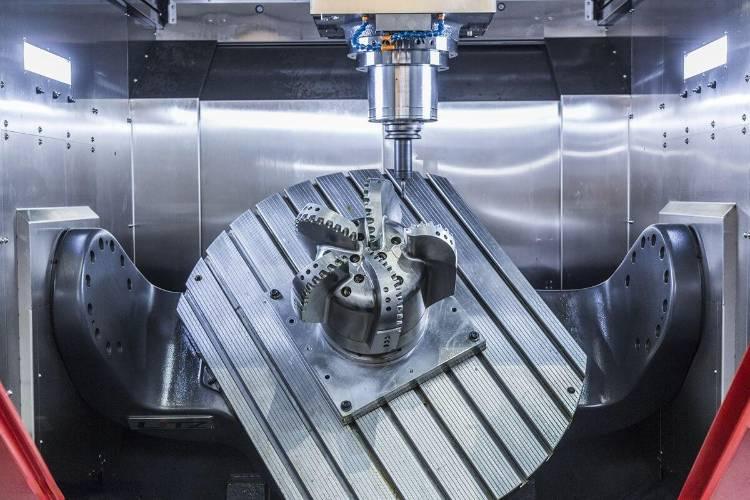
To tackle parts of varying geometries and tolerances, Beska’s facility is equipped with 3-, 4-, and 5-axis CNC milling capabilities.


3-axis CNC Milling
Perfect for basic geometries and flat surfaces, our 3-axis milling delivers cost-effective solutions, achieving tight tolerances of ±0.02mm.
4-axis CNC Milling
Handle cylindrical parts, slots, and angled features. Ideal for complex components like gears, camshafts while maintaining precision of ±0.015mm.
5-axis CNC Milling
It ensures unmatched accuracy of ±0.005mm, making it ideal for high-precision industries such as aerospace impellers and medical implants.
Beska’s Workflow and Process
We follow a systematic approach to deliver consistent quality for every project:

1. CAD & Drawing Review
After signing an NDA, we analyze your files to ensure manufacturability and accuracy

2. DFM Suggestions
Optimize design for cost, strength, and material usage

3. CNC Milling
High-precision machining with advanced equipment

4. In-Process Inspection
Continuous checks to meet tolerance requirements

5. Final Inspection & Client Confirmation
Photos and videos provided before shipping
Materials Commonly Used for CNC Milling
From metals to engineering plastics, the right material makes all the difference. Below is a guide to the materials we commonly use in CNC milling.
| Material | Key Properties | Typical Applications | Machinability / Notes |
| Aluminum (6061 / 7075 / 5052) | Lightweight, corrosion-resistant, and with a good strength-to-weight ratio | Aerospace, automotive, enclosures, prototypes | Excellent machinability; smooth surface finish; suitable for 3/4/5-axis milling |
| Stainless Steel (304 / 316 / 17-4PH) | Corrosion-resistant, high strength, durable | Medical devices, food equipment, chemical machinery, marine parts | Moderate machinability; requires proper tooling and cutting fluid |
| Carbon Steel (1018 / 1045 / 4140) | Strong, hardenable, cost-effective | Structural components, automotive parts, machinery | Good machinability; coolant recommended to manage heat |
| Brass (C360 / C377) | Corrosion-resistant, good electrical conductivity, attractive finish | Electrical components, valves, decorative hardware | Very easy to machine; low tool wear; excellent surface finish |
| Copper (C101 / C110) | High thermal & electrical conductivity, ductile | Electrical contacts, heat sinks, precision parts | Soft material; may gum up cutting tools; coolant recommended |
| ABS (Acrylonitrile Butadiene Styrene) | Lightweight, good impact resistance | Prototypes, enclosures, aesthetic parts | Easy to machine; low tool wear |
| Delrin / POM (Polyoxymethylene) | High strength, low friction, good dimensional stability | Gears, sliders, mechanical components | Easy to machine; avoid heat buildup |
| Nylon (PA6 / PA66) | Tough, wear-resistant, chemical-resistant | Mechanical parts, bushings, bearings | Moderate machinability; moisture absorption affects dimensions |
| Polycarbonate (PC) | Transparent, high impact resistance | Protective covers, housings | Sensitive to heat; moderate feed rates recommended |
| Titanium (Ti-6Al-4V / Ti-3Al-2.5V) | High strength-to-weight ratio, corrosion-resistant, biocompatible | Aerospace, medical implants, high-performance parts | Difficult to machine; slow feed rates and specialized tooling required |
Reliable Post-Processing
Post-processing completes the manufacturing process, enhancing precision, durability, and surface quality. Below are the common surface finishing options that we often apply for custom CNC milling parts.

Powder Coating
It is a popular surface finishing for CNC milling parts, offering durability, a sleek look, cost – effectiveness, and environmental friendliness.

Anodizing
It involves immersing the metal in an electrolyte solution and applying an electric current, which forms a protective oxide layer on the CNC milling parts.

Nickel Plating
It’s a widely used process that involves depositing a thin layer of nickel onto a substrate, enhancing the durability, corrosion resistance, and aesthetic appeal of various CNC milling components.

Sandblasting
It’s a surface finishing process that uses high – pressure air to propel abrasive sand particles onto a surface, effectively removing impurities, smoothing rough edges, and creating a uniform texture.

Chrome Plating
It’s a process that coats a metal surface, typically steel, with a thin layer of chromium through electroplating. This coating improves the CNC milling part’s durability, corrosion resistance, and aesthetic appeal.

Heat Treatment
The process involves heating the material to a specific temperature, holding it at that temperature for a certain period, and then cooling it at a controlled rate.
Perfect Your CNC Milling Needs with Us
Beska – Best Quality with Competitive Price.
With expertise in sheet metal fabrication and CNC machining, we’re here.
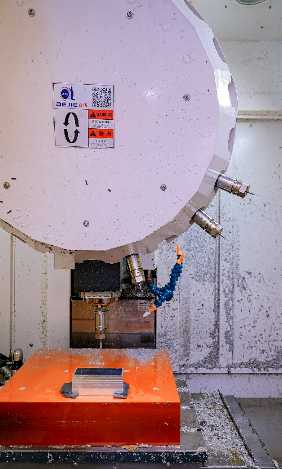
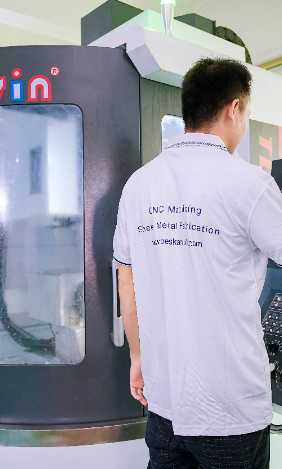
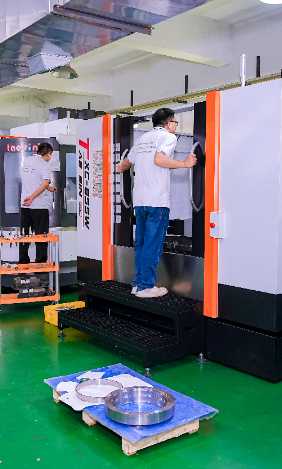
CNC Milling Equipment
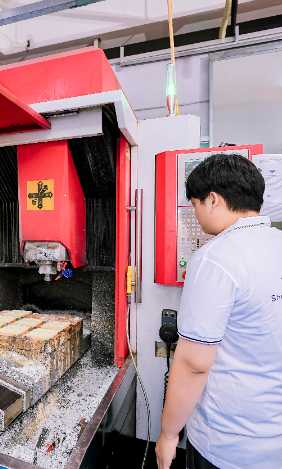
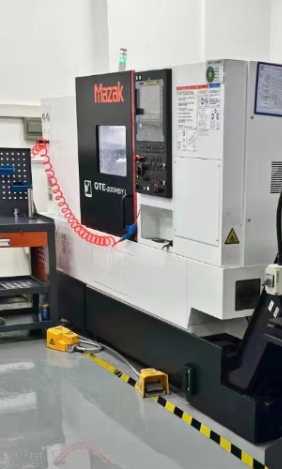
Check out our multi-axis CNC milling equipment workshop! It comprises 10 sets of advanced 5-axis Mazak CNC machines and over 30 sets of 3&4-axis CNC machines, delivers precision and versatility for your complex manufacturing needs.

Advantages of CNC Milling
CNC milling combines precision, flexibility, and efficiency, offering capabilities that manual methods cannot match.
Unmatched Precision & Repeatability
CNC milling ensures tolerances within ±0.005mm, guaranteeing consistency in high-volume production. Computer-controlled toolpaths eliminate human error, while real-time feedback systems dynamically adjust for material inconsistencies. This level of precision is essential for applications like aerospace components, medical devices, and industrial parts that demand flawless interchangeability.
Complex Geometry in a Single Setup
Multi-axis CNC milling (3-, 4-, or 5-axis) allows for intricate features such as undercuts, curved surfaces, and angled holes without repositioning the workpiece. This minimizes cumulative errors and enables designs that are impossible with manual methods, such as turbine blades, impellers, or organic-shaped biomedical implants.
Scalability from Prototype to Mass Production
Once programmed, CNC mills replicate designs with absolute consistency, whether producing one prototype or 10,000 units. Automated tool changers and pallet systems enable 24/7 unmanned operation, streamlining efficiency for both small batches and large-scale production. Quick setup transitions further support agile manufacturing workflows.
Broad Material Compatibility
CNC milling works with a wide range of materials, including metals (aluminum, titanium, steel), plastics (PEEK, nylon), composites, and ceramics. Adaptive machining strategies ensure material integrity during high-stress cuts, preserving critical properties like heat resistance, corrosion tolerance, and biocompatibility.
With CNC milling, even the most complex designs can be produced reliably and efficiently
Features of CNC Milling
Automatic Tool Changers
High-Speed Machining
Real-Time Monitoring

Types of CNC Milling
CNC milling isn’t limited to one method. Below are some of the most widely used operations we apply at Beska:

Face Milling. The cutting tool’s axis is perpendicular to the workpiece surface, making face milling ideal for creating flat areas and smooth contours. It quickly removes large amounts of material and delivers high-quality finishes on wide surfaces.
Angular Milling. Here the tool is set at an angle to the workpiece to machine chamfers, grooves, or other angled features. It ensures precise geometry when parts need accurate angled cuts.
Form Milling. Using a cutter shaped to the desired profile, form milling produces gears, curved surfaces, and other intricate shapes. It’s essential for parts with detailed, custom features.
Gang Milling. Several cutters on a single arbor work at the same time, allowing multiple surfaces to be machined in one pass. This is especially efficient for high-volume runs or parts with parallel features.
Applications of CNC Milling
From lifesaving equipment to everyday electronics, CNC milling has become a quiet backbone of modern manufacturing. These cases show where it makes the biggest difference:
Medical Industry
Electronics Industry
Mold and Die Industry
3 Tips to Consider When Choosing a CNC Milling Services
Choosing the right CNC milling partner goes beyond just price or delivery time. These three aspects can make a real difference to your project’s success.
#1 Precision Tolerance Capabilities
#2 Material Handling Proficiency
#3 Post-Machining Services
FAQ
Our facility can handle a wide range of part sizes, but extremely large or heavy components may require special fixturing or staged machining. Our team evaluates each design and recommends feasible solutions.
Extremely soft, flexible, or highly brittle materials can be challenging. Very thin walls or unconventional geometries may require alternative fabrication methods. We advise on feasible designs to avoid quality issues.
You can send CAD files in formats such as STEP, IGES, or SolidWorks. Our engineers review each file for manufacturability and may provide feedback to optimize toolpaths or suggest minor adjustments before production.
Extremely thin walls, deep pockets with high aspect ratios, or complex undercuts beyond machine capability may require design adjustments. Our team provides recommendations to avoid these issues early.
At Beska, we maintain detailed machining programs, tooling setups, and quality documentation so that repeat production matches original specifications, ensuring consistency across batches.
Yes, we offer expedited production for time-sensitive projects. Our workflow flexibility allows rapid setup and priority scheduling while maintaining quality standards.
Dive Deeper Into Our Resources
Looking for more diverse service options? Browse through our handpicked selections:
Still haven’t found what you’re looking for? Don’t hesitate to contact us. We’re available around the clock to assist you.
Get A CNC Quote!
Beska – Best Quality with Competitive Price.
With expertise in sheet metal fabrication and CNC machining, we’re here.
 English
 Hebrew
 Turkish
 French
 Russian
 German
 Spanish
 Portuguese