


Corrosion is a constant challenge in manufacturing, especially when metal components are exposed to moisture, chemicals, or harsh environments. Without proper treatment, these surfaces can degrade over time—impacting performance, increasing maintenance costs, and reducing product lifespan.
To address this, engineers and manufacturers rely on various protective methods. One widely used technique doesn’t involve coatings or plating but instead works by enhancing the metal’s own surface. It’s called passivation, and while the concept sounds simple, the science and results behind it are far more interesting.
So, what exactly is passivation? And why does it matter across industries like aerospace, medical devices, and precision machining? Let’s take a closer look.
1. The Fundamentals of Passivation
Passivation is a metal surface treatment that makes a reactive metal less chemically active. This happens when a thin, stable oxide layer forms on the surface, blocking contact with air, moisture, and corrosive substances.
The effect was first discovered in 1836 by German scientist Christian Friedrich Schönbein. He noticed that iron placed in concentrated nitric acid stopped reacting. The surface had developed a passive oxide layer that protected it from further corrosion.
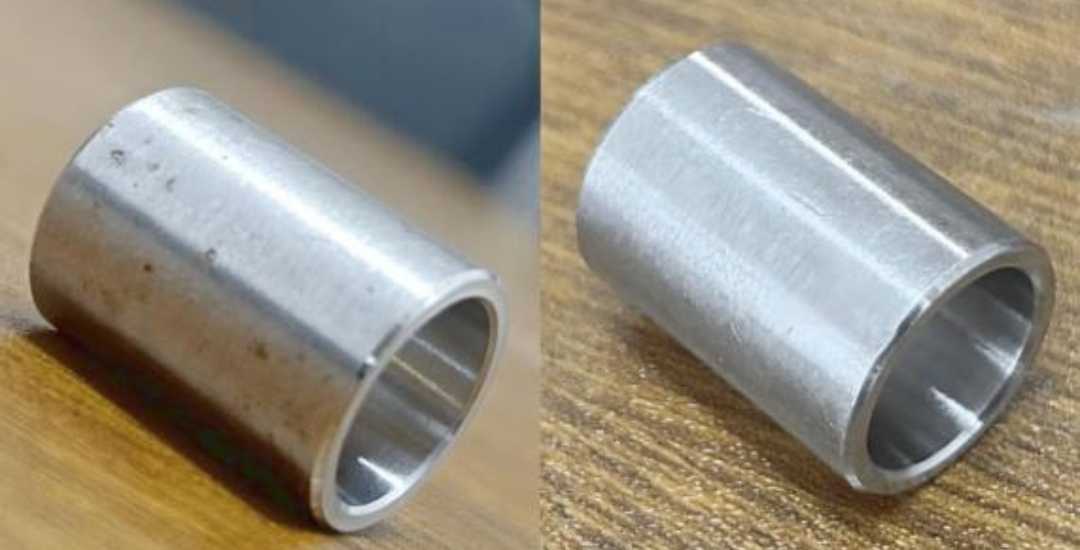
At its core, passivation is a type of controlled corrosion. Under the right conditions, the metal reacts with its environment to form an oxide film—usually only nanometers to micrometers thick. Despite being thin, this film bonds tightly to base metal and resists damage.
Unlike coatings or platings, the passive film is not added from the outside. It’s formed directly from the metal itself. This means it won’t peel or flake, even when exposed to heat or mechanical stress.
Passivated surfaces also show clear electrochemical changes. The electrode potential moves in a more positive direction—often by 0.5 to 1 volt—closer to that of noble metals. At the same time, corrosion current density drops sharply, improving durability.
Many passivated metals also take on a clean, uniform look. Stainless steel appears silvery-white, while aluminum may turn light gray. These changes often indicate a stable, corrosion-resistant surface.
2. How Passivation Works
Although specific chemicals vary by material, the general steps of passivation remain consistent:
- Cleaning: The surface is thoroughly cleaned to remove grease, oil, dust, and machining residues. This ensures that the passivation chemicals can interact directly with the metal.
- Chemical Treatment: The part is treated with a passivating solution—usually an acid—that removes free iron and other impurities. It also promotes the formation of a uniform oxide layer.
- Rinsing and Drying: After treatment, the part is rinsed with water and dried. The passive layer continues to stabilize as it is exposed to air.
Unlike coatings or paints, passivation doesn’t add any material to the surface. It modifies the existing surface in a controlled, precise way. As a result, the appearance and dimensions of the part remain essentially unchanged, which is crucial in tight-tolerance applications.

3. Key Benefits of Passivation
Passivation offers several important advantages, especially for components that demand high durability, stability, and cleanliness. Here are some of its key benefits:
Improved Corrosion Resistance
The oxide layer formed during passivation acts as a shield against rust, oxidation, and chemical attack. This is especially valuable in harsh or reactive environments, such as marine, aerospace, or chemical processing industries.
Extended Service Life
By minimizing corrosion, passivated components maintain their performance over time. This helps reduce unplanned downtime, lowers maintenance costs, and supports long-term reliability in critical systems.
Enhanced Cleanliness
The process removes contaminants like free iron or residues left from machining or handling. In industries like medical devices, food equipment, and semiconductors, surface purity is essential to meet safety and performance standards.
No Dimensional Change
Passivation does not add any material to the surface. As a result, it preserves tight tolerances and exact dimensions—ideal for precision parts used in CNC machining and microfabrication.
Better Product Aesthetics
Passivated surfaces often appear brighter and more uniform. This clean look not only reflects high manufacturing quality but also reduces the chance of surface flaws that can trap contaminants.
These benefits make passivation a reliable and widely used finishing process for components that operate in demanding environments or require high performance over time.

4. Types of Passivation
There are several types of passivation processes, each suited to different materials and performance requirements. Here are some of the most common ones:
Oxide Film Passivation
This is a natural process where a thin oxide layer forms on the surface of metals such as stainless steel and aluminum. In manufacturing, this process is often enhanced through controlled oxidation or acid treatment. The resulting film is stable, tightly bonded, and highly resistant to corrosion.
| Passivation Type | Applicable Materials | Oxide Layer Thickness | Typical Color | Typical Applications |
| Natural Oxide Formation | Aluminum, Zinc, Titanium, Stainless Steel | 1–10 nm (nanometers) | Colorless; light gray (aluminum); dark gray (titanium) | Natural corrosion resistance in daily environments, such as aluminum window frames or titanium medical tools |
| Chemical Oxidation | Iron, Aluminum, Copper, Stainless Steel | 10–500 nm | Gray-white (iron); gold / deep blue (aluminum); reddish-brown (copper) | Cost-effective short-term corrosion resistance for components like steel parts or colored aluminum nameplates |
| Anodizing (Electrochemical) | Aluminum alloys (including Al-Mg, Al-Cu) | 5–20 μm (up to 50 μm for hard anodizing) | Uncolored: gray-white / light gray; dyed: black, red, blue, etc. | High corrosion resistance with aesthetic value, used in smartphone casings, aerospace components, and architectural profiles (requires sealing) |
Phosphate Passivation
Also known as phosphating, this method creates a crystalline phosphate layer on metals like steel and zinc. It improves corrosion resistance and serves as a good base for coatings or painting. Phosphate passivation is widely used in automotive and machinery applications.
| Passivation Type | Applicable Materials | Coating Thickness | Typical Color | Common Applications |
| Zinc Phosphating | Cold-rolled steel, cast iron | 1–5 μm | Light gray, silver-gray | Pre-treatment for automotive body panels and home appliance housings to improve paint adhesion and prevent under-coating corrosion |
| Manganese Phosphating | High-strength steel, bearings | 3–10 μm | Dark gray, black-gray | Wear-resistant applications, such as gear and piston ring surfaces; phosphate layer includes lubricating components to reduce friction |
| Black Phosphating | Steel parts | 2–8 μm | Pure black | Decorative corrosion resistance, often used on tools and firearms as an alternative to traditional blackening with better corrosion protection |
Chromate Passivation
This type uses hexavalent or trivalent chromium compounds to create a protective film on aluminum, zinc, and magnesium alloys. It offers excellent corrosion protection and good paint adhesion. However, hexavalent chromium poses health and environmental concerns, and its use is increasingly restricted.
| Passivation Type | Applicable Materials | Coating Thickness | Typical Color | Common Applications |
| Rainbow Chromate Passivation | Zinc plating, cadmium plating, magnesium alloys | 0.1–0.5 μm | Iridescent rainbow (yellow–red–blue gradient) | Short-term outdoor corrosion protection for galvanized parts such as power towers and fences (cost-effective, moderate corrosion resistance) |
| Golden Chromate Passivation | Zinc plating, aluminum alloys | 0.2–1 μm | Uniform golden yellow | Decorative corrosion resistance for small automotive hardware and furniture fittings (better corrosion resistance than rainbow passivation) |
| Silver-white Passivation | Zinc-nickel alloy plating | 0.1–0.3 μm | Silver-white (close to metal color) | High-decorative applications like electronic connectors and precision components (consistent appearance) |
Chromium-Free Passivation
In response to environmental regulations, many manufacturers now use chromium-free alternatives. These methods use organic or inorganic compounds to achieve similar protection without toxic heavy metals. They are commonly used in electronics, automotive, and environmentally sensitive industries.
| Passivation Type | Applicable Materials | Coating Thickness | Typical Color | Common Applications |
| Zirconium Passivation | Stainless steel, galvanized coatings, aluminum alloys | 0.1–1 μm | Colorless, light gray | Food contact materials (e.g., stainless steel utensils, galvanized pipes), electronic components (environmentally compliant, stable corrosion resistance) |
| Titanium Passivation | Magnesium alloys, aluminum alloys | 0.2–2 μm | Blue-white, pale yellow | Aerospace magnesium alloy parts (lightweight with high corrosion resistance, replaces toxic chromates) |
| Silane Passivation | Steel, galvanized coatings | 50–500 nm | Colorless, transparent | Pretreatment for coatings (phosphate replacement, eco-friendly, improves paint adhesion), e.g., EV battery housings |
Nitric Acid Passivation for Stainless Steel
Stainless steel is commonly passivated using nitric acid or a citric acid alternative. Nitric acid not only removes free iron but also accelerates the formation of the chromium oxide layer. It is widely accepted in aerospace, food-grade, and high-purity applications where strict standards apply.
| Applicable Materials | Coating Thickness | Typical Color | Common Applications |
| Austenitic stainless steel (e.g., 304, 316) | 5–50 nm | Metal natural color (no significant discoloration) | Medical instruments, food processing equipment, chemical pipelines (removes free iron residues, ensures corrosion resistance, meets hygiene standards) |
5. Common Misconceptions About Passivation
Passivation is widely used, but some misunderstandings remain:
1. “Passivation makes metal completely corrosion-proof.”
No metal is entirely immune to corrosion. Passivation significantly improves corrosion resistance by forming a protective oxide layer, but in harsh conditions. For instance, high chloride environments or extreme acidity—corrosion can still occur.
2. “All stainless steel is already passivated.”
Stainless steel naturally forms a thin oxide layer, but processes like machining, welding, or handling can introduce contaminants or damage this layer. Chemical passivation restores the protective film, ensuring consistent corrosion resistance.
3. “Passivation is just a cleaning process.”
Cleaning removes surface contaminants, but passivation involves a controlled chemical reaction that forms a stable oxide film on the metal surface. This film is the key to improved corrosion resistance.
4. “Passivation is the same as coating.”
Unlike coatings, which add an external layer, passivation chemically modifies the metal surface itself. The resulting passive film is extremely thin—usually nanometers thick—and tightly bonded to the base metal, avoiding issues like peeling or cracking.
Conclusion
Passivation is a highly effective way to enhance the corrosion resistance of metal components without altering their appearance or dimensions. From simple oxide film formation to more advanced chemical treatments, this process is essential in extending product lifespan and maintaining performance in demanding environments.
Whether you’re working with stainless steel fasteners, precision CNC parts, or aluminum enclosures, understanding and applying the right type of passivation can significantly improve your product’s reliability and durability.
If for a precision machining solution with passivation, feel free to reach out. The Beska team is here to help ensure your parts meet both quality and longevity expectations.
Dive Deeper Into Our Resources
For some insightful reads, we’ve curated a list of recommended articles just for you:
- CNC Post-processing
- What is Sandblasting
- What is Deburring
- How to Polish Bronze
- Surface Finishing
- CNC Machining Service
- Sheet Metal Fabrication Service
 English
 Hebrew
 Turkish
 French
 Russian
 German
 Spanish
 Portuguese