


In today’s rapidly evolving automotive industry, sheet metal fabrication remains a cornerstone of vehicle production, quietly undergoing a technological transformation. From gleaming hoods to sturdy doors, from smooth roof lines to intricate chassis components, sheet metal parts form both the skeleton and skin of modern vehicles.
The demand for precise, high-quality sheet metal components continues to grow worldwide, reflecting the increasing complexity and performance requirements of modern automobiles.
In the sections that follow, we will explore the key types of automotive sheet metal parts, the technologies and machines used to produce them, and the precision standards that ensure both safety and performance in modern vehicles.
1. Sheet Metal Fabrication in Modern Automotive Production

Sheet metal fabrication is a fundamental part of automotive manufacturing. It involves converting flat metal sheets into components through processes such as cutting, stamping, bending, and forming. These components affect the vehicle’s appearance as well as its structural integrity, performance, and durability.
A modern vehicle can include more than 1,500 individual sheet metal parts, representing a significant portion of the overall weight. These range from large components, such as body frames, doors, hoods, and trunk lids, to smaller elements like brackets and connectors. Each part is produced through precise manufacturing processes to meet design and functional requirements. Together, they contribute to occupant protection, aerodynamic performance, fuel efficiency, and overall vehicle design.
The automotive sheet metal market also varies by region. Asia is generally associated with cost-effective, large-scale production; Europe focuses on advanced technologies and precision manufacturing; and North America emphasizes automation and the application of innovative materials. This regional variation provides automotive manufacturers with a broad range of sourcing and production options.
2. Advances in Sheet Metal Fabrication for Modern Vehicles
With the growing complexity and precision requirements of modern vehicles, sheet metal fabrication is evolving through advanced technologies. Computer-aided design (CAD) and computer-aided manufacturing (CAM) allow engineers to create complex part geometries and translate them accurately into production instructions.
Key cutting and forming technologies include:
| Technology | Purpose / Application | Benefits |
| Laser Cutting | High-precision cutting of sheet metal parts | Sub-millimeter accuracy, suitable for complex shapes |
| Waterjet Cutting | Cutting high-strength and composite materials | No heat distortion, handles tough materials |
| CNC Stamping | Efficient small-batch production | Cost-effective, consistent part quality |
| Automation & Robotics | Material handling, forming, assembly | Improves efficiency, reduces errors, safe human-robot collaboration |
| Industry 4.0 Tools | IoT monitoring, AI optimization, digital twins | Reduces trial-and-error, optimizes material use and production flow |
These technologies improve material utilization, reduce waste, and help meet tight production schedules. They also provide the foundation for the key machines and equipment that are central to automotive sheet metal fabrication, which will be detailed in the next section.
3. Key Equipment in Automotive Sheet Metal Fabrication
Producing automotive sheet metal parts—such as body panels, structural components, and chassis elements—requires high-precision equipment, standardized workflows, and strict accuracy control. The production process can generally be divided into five main stages: cutting, forming, joining, finishing, and inspection. Each stage relies on specialized machines to meet precision and efficiency requirements.
Cutting and Pre-Forming

CNC laser cutting (fiber/CO₂) and CNC punch presses handle the initial shaping of sheet metal parts. Laser cutting provides sub-millimeter accuracy (±0.1mm) and efficiently handles reflective materials like aluminum. CNC punch presses enable batch processing of holes and shallow forming, combining cutting and simple forming to save time and reduce errors.
| Core Machines | Key Functions & Features |
| CNC Laser Cutting (Fiber/CO₂) | High-precision cutting for complex contours |
| CNC Punch Press | Batch hole processing and shallow forming |
Forming

Forming equipment includes CNC press brakes, large mechanical/hydraulic presses, roll forming machines, and 3D 5-axis laser cutting for post-form trimming. These machines ensure precise bends, deep drawing, and consistent dimensions for body panels and linear structural components.
| Core Machines | Key Functions & Features |
| CNC Press Brake (Hydraulic/Electric Servo) | Linear bending with high angle accuracy (±0.1°) |
| Large Mechanical/Hydraulic Press | Deep drawing, bending, flanging for hoods, roofs, doors |
| Roll Forming Machine (CNC) | Long linear parts with tight dimensional tolerance (±0.2mm) |
| 3D 5-Axis Laser Cutting | High-precision trimming and hole punching on complex surfaces |
Joining
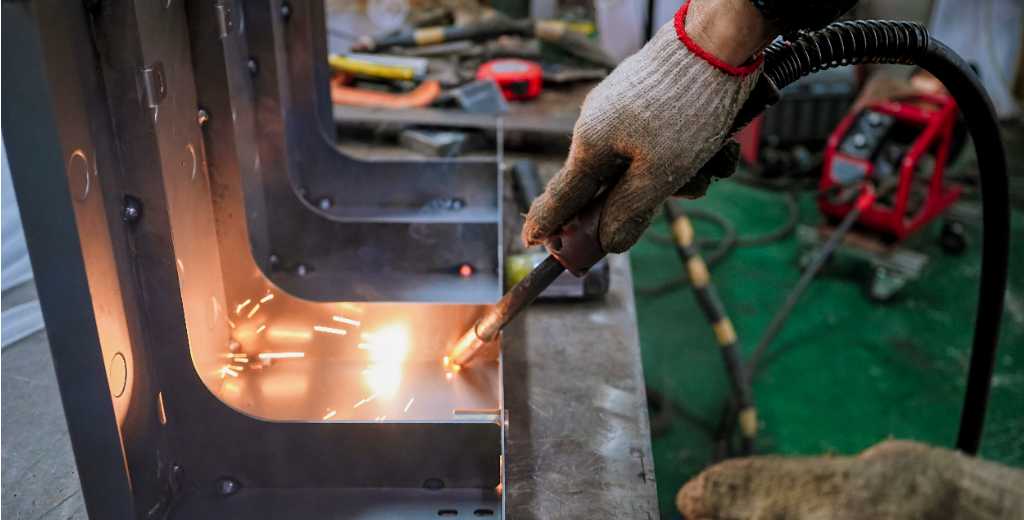
Body assembly relies on resistance spot welding, CO₂/MIG welding, riveting, and structural adhesives, often assisted by robots to improve consistency and reduce material deformation.
| Core Machines | Key Functions & Features |
| Resistance Spot Welding (MDC) | Minimal deformation, often robot-assisted |
| CO₂/MIG Welding (CNC) | Continuous welding for chassis assemblies |
| Riveting Machines | High-strength connections without pre-drilling |
| Structural Adhesive Application | Enhances joint strength and sealing (±0.5mm) |
Finishing and Inspection
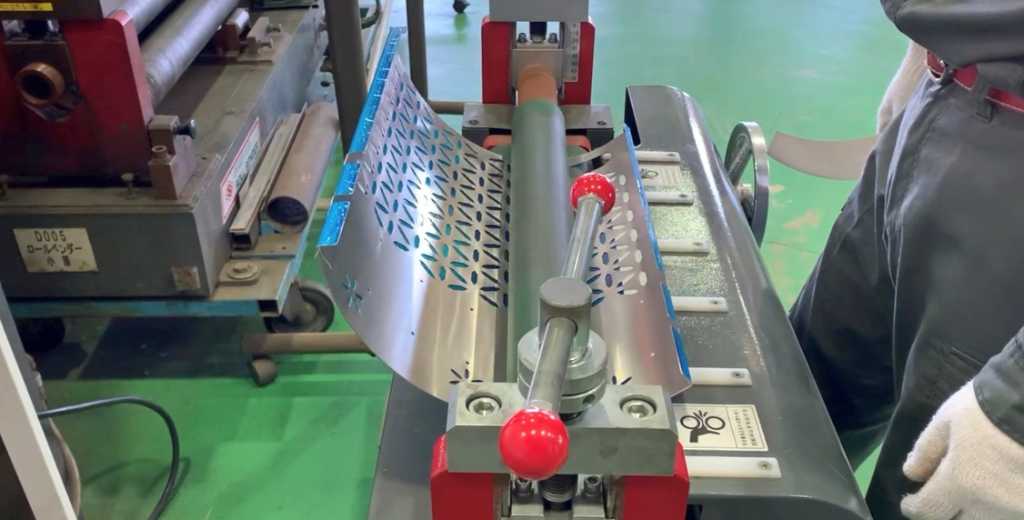
Finishing and inspection equipment ensure surface quality, dimensional accuracy, and proper assembly fit.
| Core Machines | Key Functions & Features |
| CNC Grinding (Robot/Manual) | Removes spatter and burrs, Ra ≤3.2μm |
| Straightening Machines | Corrects spring-back or local deformations |
| Coordinate Measuring Machine (CMM) | High-precision 3D measurement (0.003mm + L/1000) |
| 3D Laser Scanners | Surface contour comparison |
| Gap & Flush Gauges | Verify assembly fit and alignment (±0.05mm) |
These machines and technologies form the backbone of modern automotive sheet metal fabrication, ensuring precision, efficiency, and consistency throughout the production process.
4. Standardized Fabrication Workflow
The fabrication of automotive sheet metal components, such as body panels, generally follows a standardized workflow: Design → Material Preparation → Forming → Joining → Post-Processing → Inspection. Each stage takes into account material characteristics, mold precision, and equipment parameters to ensure smooth downstream assembly and high-quality results.
Preparation: Design and Material Preprocessing
The process begins with 3D modeling using CAD software like CATIA or UG, while CAE tools such as ABAQUS simulate forming to predict spring-back or potential cracking. Sheet metals—including cold-rolled steel, high-strength steel, and aluminum—are then flattened, stress-relieved, and thoroughly cleaned to optimize forming accuracy and subsequent coating quality.
Core Process: Example of a Door Outer Panel
- Cutting: Fiber lasers trim the blank, leaving 2–5mm extra for forming.
- Stamping: The blank is deep-drawn using dedicated dies, with careful control of speed and pressure to prevent wrinkles or defects.
- Trimming & Punching: 5-axis lasers create precise holes, achieving ±0.1mm accuracy.
- Flanging & Shaping: Edges are folded and any spring-back is corrected to maintain exact dimensions.
- Joining: Robotic spot welding, often combined with structural adhesives, ensures strong, sealed joints.
- Post-Processing: Robotic grinding removes imperfections, followed by electro-coating and final painting for protection and appearance.
- Inspection: CMMs measure critical points, while laser gap gauges verify assembly fit with a tolerance of ≤1.5mm.
Special Processes for High-Strength or Complex Parts
For components requiring extreme strength or complex geometries, additional processes are applied:
- Hot Forming: High-strength steel is heated to 900–950°C, stamped, then quenched to achieve ultra-high strength (≥1500 MPa).
- Hydroforming: Tubular or hollow parts are formed using high-pressure liquid (100–400 MPa), reducing welds and enhancing structural integrity.
This workflow ensures that each part meets the stringent safety, durability, and quality standards expected in modern automotive production.
5. Ensuring Precision in Sheet Metal Fabrication
Precision is essential in automotive sheet metal production, as it directly impacts assembly compatibility, structural safety, and the vehicle’s overall appearance. Maintaining tight tolerances requires careful attention to several key factors:
- Material Properties: High-strength steel and aluminum can experience spring-back after forming. This is managed through CAE simulations and, when necessary, heat-forming processes to ensure parts maintain their intended shape.
- Die Accuracy: Molds and dies must be manufactured with tolerances tighter than the finished part—typically 1–2 levels higher (for example, a ±0.05mm mold for a part with ±0.1mm tolerance).
- Equipment Calibration: Regular calibration of CNC press brakes, laser cutters, and measurement instruments ensures consistent dimensional accuracy.
- Process Stability: Statistical process control (SPC) monitors each production batch, allowing for real-time adjustments to maintain precise tolerances and reduce variability.
By carefully controlling these factors, manufacturers can achieve consistent quality, ensuring that each sheet metal component meets the demanding requirements of modern automotive production.
6. Choosing the Right Sheet Metal Fabrication Partner

Selecting a reliable partner is crucial for automotive sheet metal production. Key factors include:
- Technology & Capabilities: Advanced equipment and skilled engineers for complex parts.
- Quality & Reliability: Strong quality control systems and dependable delivery.
- Sustainability & Cost: Environmentally responsible practices with competitive pricing.
- Communication & Collaboration: Transparent exchanges, factory audits, and efficient coordination to address technical or urgent issues.
A good partner not only supplies components but also brings expertise to tackle manufacturing challenges efficiently.
Conclusion
Modern automotive sheet metal fabrication is more than shaping metal—it combines advanced technology, precise workflows, and strict quality control to deliver components that ensure safety, performance, and design integrity. Every stage, from design and material preparation to forming, joining, and finishing, requires careful attention to detail.
Consulting a fabrication partner like the Beska team with proven expertise and reliable processes can make the difference between meeting production goals smoothly or facing costly delays and quality issues.
Deeper into Our Resources
For some insightful reads, we’ve curated a list of recommended articles just for you:
- How to Stamp Stainless Steel
- Sheet Metal Forming
- How to Spot Weld Sheet Metal
- Punching Process in Sheet Metal
 English
 Hebrew
 Turkish
 French
 Russian
 German
 Spanish
 Portuguese