


TPE and TPU are often grouped together as flexible materials for applications requiring elasticity, soft touch, or overmolding compatibility. From a material classification standpoint, TPU is technically a type of thermoplastic elastomer, which partly explains why the two are frequently discussed side by side.
In engineering practice, however, this relationship can be misleading. Once factors such as wear resistance, chemical exposure, temperature stability, and long-term durability are introduced, TPE and TPU begin to show distinctly different performance behaviors.
This article explores those differences from a practical engineering perspective, breaking down how TPE and TPU compare in structure, performance, and application suitability to help you make informed material choices.
1. What Is TPE?

Thermoplastic elastomers (TPE) refer to a broad class of polymers that combine rubber-like elasticity with thermoplastic processability. They remain flexible at room temperature and soften when heated, allowing them to be molded, extruded, and recycled using standard thermoplastic equipment.
Rather than a single material, TPE represents a family of elastomers built on different base chemistries. These variations explain why TPE materials can behave very differently in terms of strength, durability, and environmental resistance.
TPE Material Categories
The most common TPE families used in industrial and consumer applications include the following:
| TPE Category | Typical Base Chemistry | Common Characteristics | Typical Use Focus |
| SBC (SBS / SEBS) | Styrenic block copolymers | Soft, flexible, easy to process, cost-efficient | Grips, seals, soft-touch parts |
| TPO / TPV | Polyolefin-based elastomers | Better heat resistance and aging stability | Automotive trims, housings |
| TPU | Polyurethane-based elastomer | High strength, abrasion resistance, elasticity | Wear-resistant and dynamic parts |
| TPEE | Polyester-based elastomer | High mechanical strength, fatigue resistance | Mechanical and industrial components |
| TPAE | Polyamide-based elastomer | Chemical resistance, structural stability | Technical and chemical environments |
In practice, SEBS-based TPEs and TPVs account for a large share of general-purpose applications, mainly due to their balance between flexibility, cost, and processing stability. TPU, while classified under the TPE umbrella, is often evaluated separately because of its distinct mechanical and durability characteristics.
Key Characteristics of TPE
From an engineering perspective, TPE materials are commonly selected for several practical reasons:
- They can be processed without vulcanization, simplifying manufacturing workflows
- Their softness and elasticity support ergonomic and soft-touch designs
- They offer recyclability advantages compared to thermoset rubber
- A wide hardness range allows tuning of tactile feel and functional performance
As a result, TPEs are widely used in consumer products, seals, grips, enclosures, and flexible components where moderate mechanical demands, design freedom, and cost control are equally important.
2. What Is TPU?

Thermoplastic polyurethane (TPU) is a specific subclass of TPE with a segmented molecular structure composed of soft and hard segments connected by covalent bonds. This microphase-separated structure gives TPU a combination of elasticity, strength, and durability that approaches traditional rubber while retaining thermoplastic processability.
TPU Structural Variants
TPU grades are typically classified based on soft segment chemistry:
- Polyester-based TPU, offering higher mechanical strength and oil resistance
- Polyether-based TPU, providing superior hydrolysis resistance and low-temperature flexibility
TPU materials also cover a wide hardness range, from soft elastomeric grades (Shore A) to rigid, engineering-grade materials (Shore D).
Distinctive TPU Properties
Compared with general TPE grades, TPU is characterized by:
- Higher tensile and tear strength
- Excellent abrasion and fatigue resistance
- Improved chemical and oil resistance
- Good transparency and colorability in selected grades
These attributes position TPU closer to engineering applications where durability and long-term stability are critical.
3. TPE vs TPU: Core Performance Differences

Although TPE and TPU both exhibit elastic behavior, their performance separates quickly once load, wear, and environmental exposure are considered.
Mechanical Strength and Load Capacity
TPU typically offers tensile strength in the range of 25–70 MPa, while most common TPE grades fall between 2 and 20 MPa. As a result, TPU tolerates higher sustained loads and repeated deformation with a lower risk of tearing or permanent set. TPE is better suited to low-stress applications where softness is prioritized over strength.
Abrasion and Surface Durability
TPU provides substantially better abrasion resistance, maintaining surface integrity under sliding or repeated contact. TPE performs adequately in static or low-contact conditions but shows faster surface wear in dynamic use.
Environmental and Chemical Resistance
TPU maintains mechanical stability in the presence of oils, fuels, and many chemicals. TPE performs well in mild environments but is more sensitive to aggressive media and elevated temperatures.
Elastic Recovery and Long-Term Stability
Under cyclic loading or long-term compression, TPU shows more consistent elastic recovery and lower compression set. TPE materials are more likely to lose rebound performance over time under similar conditions.
Overall, TPU is favored for mechanically demanding or wear-intensive components, while TPE remains suitable for soft-touch, consumer-facing, and cost-sensitive designs.
4. TPE vs TPU Processing and Manufacturing Differences
Both TPE and TPU can be processed using standard thermoplastic methods, but their manufacturing behavior differs in ways that directly affect production stability and cost control.
TPE materials are generally processed at lower temperatures and show lower sensitivity to moisture. They are more tolerant of variation in processing conditions and offer broader compatibility with overmolding substrates. This makes TPE well suited for high-volume production environments where flexibility and cycle efficiency are priorities.
TPU, by contrast, requires tighter process control. Pre-drying is typically necessary to avoid hydrolysis-related defects, and higher processing temperatures demand careful control of mold design, cooling rates, and residence time. These requirements increase setup complexity but allow TPU to achieve more consistent mechanical performance in demanding applications.
From a manufacturing perspective, TPE favors robustness and throughput, while TPU prioritizes performance consistency at the expense of tighter process discipline.
5. Evaluating Cost and Sustainability When Choosing TPE vs TPU
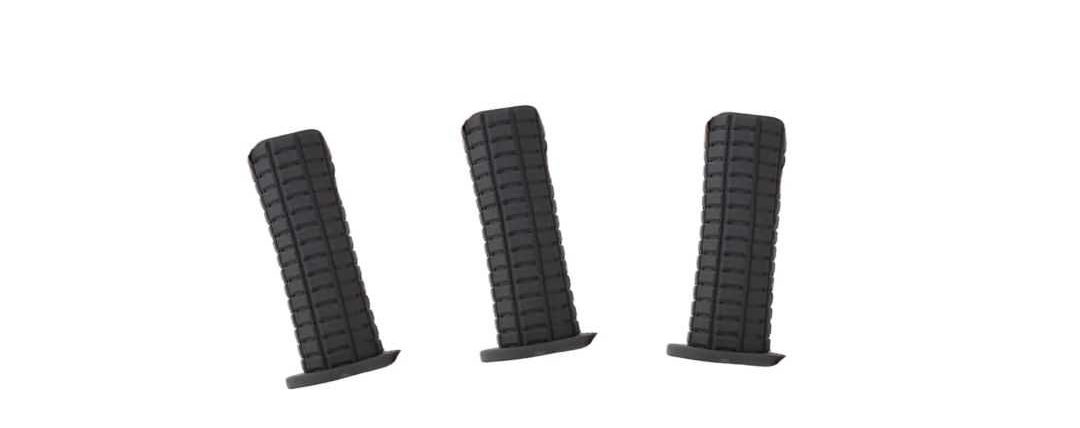
Material cost alone rarely reflects the total expense of producing a finished component. TPE materials are generally more cost-effective and more tolerant of processing variation, which leads to lower scrap rates and simpler production in high-volume manufacturing. This makes TPE attractive for consumer products and components where moderate mechanical performance is sufficient.
TPU usually carries a higher raw material cost, but its superior durability, wear resistance, and environmental stability can reduce part failure and maintenance over time. For load-bearing or high-performance applications, the long-term savings and product reliability often justify the higher upfront expense.
Both materials are recyclable. TPE retains a higher proportion of its original mechanical properties after reprocessing, whereas TPU may experience some performance degradation. Designers should weigh initial cost, expected service life, and recyclability when selecting the optimal material for a given application.
6. Typical Application Scenarios of TPE and TPU
Rather than competing directly, TPE and TPU often serve complementary roles:
Consumer Products
TPE is common in items requiring soft touch and comfort, such as phone cases, wearable bands, toys, and kitchen grips. TPU is used when higher wear resistance or durability is needed, like in protective cases or sports gear.
Automotive Components
TPU suits high-strength, chemical-resistant parts, including seals, bushings, and cable jackets. TPE is preferred for interior soft-touch parts like steering wheel covers and shift lever grips.
Industrial and Mechanical Uses
TPU is chosen for abrasion-resistant components such as rollers, tubing, and vibration-damping parts. TPE is applied to auxiliary parts needing flexibility or cushioning without heavy wear.
Medical and Food-Contact Applications
TPU dominates high-performance medical and food-contact parts, including IV tubing, catheters, and food-grade seals. TPE is used for secondary components like instrument handles or armrests, balancing safety, comfort, and cost.
Both TPE and TPU have clear strengths, and the best choice depends on how the material will perform in real-world use.
7. Common Misunderstandings of TPE and TPU
Even experienced engineers sometimes misinterpret the relationship and performance of TPE and TPU. Some frequent misconceptions include:
Misunderstanding 1: TPU is always superior to TPE
TPU is a high-performance thermoplastic elastomer with superior strength, wear resistance, and chemical stability, but it is a subset of the broader TPE family. For many applications, standard TPE grades provide sufficient performance at a lower cost.
Misunderstanding 2: All TPEs are identical
TPE includes multiple chemistries and grades, including TPU. Properties such as hardness, elasticity, and environmental resistance vary widely, so specifying “TPE” without considering the specific formulation can result in unsuitable material selection.
Misunderstanding 3: Higher material cost guarantees better performance
Paying more for TPU or specialized TPE does not automatically improve part performance. The best choice balances mechanical needs, environmental conditions, and manufacturability.
TPU and other TPEs are related materials with overlapping but distinct properties; understanding the differences ensures each material is used where its strengths matter most.
Conclusion
TPE excels in flexibility, soft touch, and cost-effective production, making it ideal for consumer products and non-load-bearing components. TPU stands out for strength, wear resistance, and stability under challenging conditions, fitting applications with higher mechanical or environmental demands.
In practice, success depends on aligning material properties with the actual performance requirements of each part. Consulting an experienced injection molding partner like the Beska team ensures the material is processed correctly and delivers consistent results throughout production.
Dive Deeper Into Our Resources
For some insightful reads, we’ve curated a list of recommended articles just for you:
 English
 Hebrew
 Turkish
 French
 Russian
 German
 Spanish
 Portuguese