


Annealing is a controlled heat treatment process in which a material is heated to a specific temperature, held for a defined period, and then cooled under controlled conditions. The process is commonly used to reduce internal stress, lower hardness, restore ductility, or improve material stability.
Manufacturing processes such as rolling, forging, welding, and cold forming can leave metals with residual stress or a work-hardened structure. If these conditions are not controlled, they may contribute to distortion, poor formability, or dimensional changes during later manufacturing operations.
Annealing helps adjust the material condition before further forming, machining, or heat treatment. This article explains how annealing works, the main types of annealing, how different metals respond, and when the process is useful in manufacturing.
1. How the Annealing Process Works?
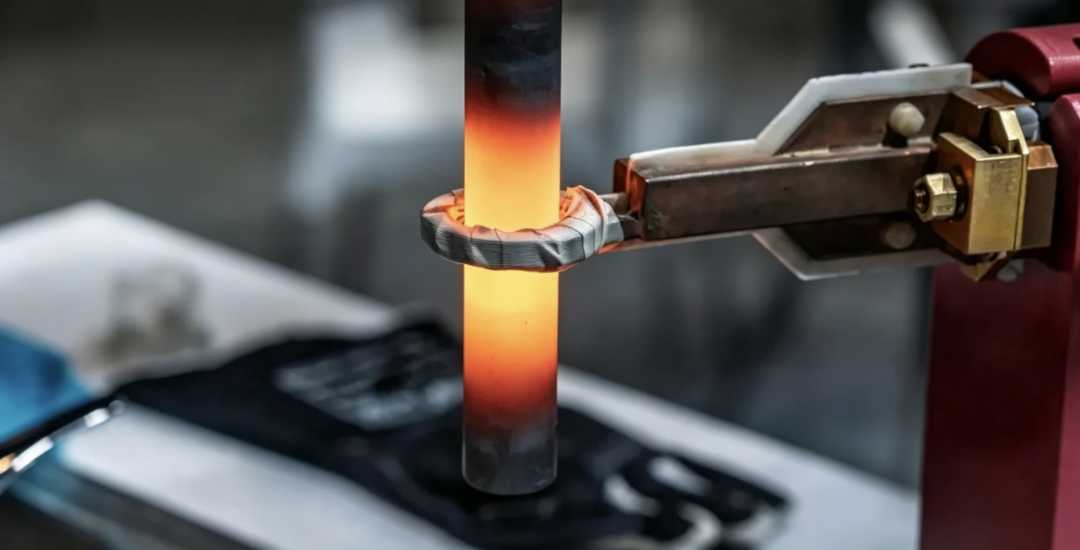
Annealing generally involves three stages: heating, holding at temperature, and controlled cooling. The exact temperature, holding time, and cooling rate depend on the material and the type of annealing being performed.
- Heating. The material is heated to a target temperature selected for the required metallurgical change. For steel, this temperature may be above or below the critical transformation range depending on whether the goal is full annealing, stress relief, spheroidizing, or another treatment. Heating should be sufficiently controlled to avoid excessive temperature differences within the part.
- Soaking. Once the target temperature is reached, the material is held long enough for the required microstructural changes to occur throughout the section. The necessary holding time depends on the alloy, section thickness, furnace conditions, and intended result.
- Cooling. The material is then cooled under controlled conditions. Full annealing of steel commonly uses slow furnace cooling to produce a softer structure, while other metals and annealing processes may use different cooling methods. The correct cooling rate therefore depends on the material and the purpose of the treatment.
What Happens Inside the Metal?
Depending on temperature and prior processing history, three important changes can occur during annealing.
- Recovery. Dislocations introduced by cold working begin to rearrange and reduce in density. This can relieve residual stress and restore some ductility without major changes to the existing grain structure.
- Recrystallization. At a sufficiently high temperature, new strain-free grains form and replace the deformed grains created by cold working.
- Recrystallization temperature is often estimated as a fraction of the material’s absolute melting temperature, but the actual value depends strongly on alloy composition, prior deformation, and holding time.
- Grain growth. After recrystallization is complete, continued exposure to high temperature can cause the newly formed grains to grow. Excessive grain growth may reduce strength or negatively affect other mechanical properties, so temperature and holding time need to be controlled.
Annealing therefore does more than simply soften a metal. It changes the internal structure and material condition, which is why the process must be matched to the alloy, prior manufacturing history, and final application.
2. Common Types of Annealing
Annealing can be performed in different ways depending on the material condition and the required result. Some processes focus on reducing hardness, while others restore ductility, relieve residual stress, or prepare the material for further machining and forming.
| Process | Main Purpose | Typical Microstructural Effect |
| Full Annealing | Reduce hardness and improve ductility | Produces a softer, more stable structure after transformation and controlled cooling |
| Stress Relieving | Reduce residual stress | Usually causes little change to the existing microstructure |
| Recrystallization Annealing | Remove the effects of cold working | Forms new, strain-free grains |
| Spheroidizing Annealing | Improve machinability and formability of high-carbon steels | Converts carbides into a more rounded, spheroidal form |
Full Annealing
Full annealing is commonly used for steels when a softer and more ductile condition is required before machining or forming. The steel is heated into the austenitic range, held long enough for the required transformation, and then cooled slowly, typically in the furnace.
The exact temperature and cooling rate depend on the steel grade and section size.
Stress Relieving
Stress relieving is used to reduce residual stresses introduced by processes such as welding, casting, forming, or machining. For steels, it is normally performed below the transformation temperature so that internal stress can be reduced without significantly changing hardness or microstructure.
Although stress relieving is often discussed alongside annealing, it is also treated as a separate heat treatment process in many manufacturing specifications.
Recrystallization Annealing
Recrystallization annealing is mainly used after cold working. Heating allows new, strain-free grains to form and replace the elongated or deformed grains created during rolling, drawing, stamping, or other forming operations.
This reduces work hardening and restores ductility, allowing the material to undergo additional forming without cracking.
Spheroidizing Annealing
Spheroidizing annealing is primarily used for high-carbon and alloy steels. During the process, carbides develop a more rounded, spheroidal shape within the ferritic matrix, reducing hardness and improving machinability or cold formability.
It is commonly used when steels need substantial machining or forming before subsequent hardening.
The appropriate annealing process depends on the alloy, its previous manufacturing history, and the properties required in the next production stage.
3. How Annealing Affects Different Materials
Different metals respond to annealing in different ways. The required temperature, holding time, cooling method, and resulting properties depend on the alloy and its previous processing condition.
Steel
Annealing is commonly used to reduce hardness, improve ductility, and relieve internal stress in carbon and alloy steels. Full annealing typically involves heating the steel into the austenitic range followed by slow cooling to produce a softer and more workable structure.
The resulting microstructure depends on the steel composition and annealing process. For many carbon steels, annealing produces a ferrite-and-pearlite structure that can improve formability or prepare the material for subsequent machining.
Aluminum
Aluminum alloys are often annealed to restore ductility after cold working. The softening primarily occurs through recovery and recrystallization rather than through the same phase transformations involved in steel annealing.
Both heat-treatable and non-heat-treatable aluminum alloys can be annealed, although the purpose differs. Alloys such as 1100 and 3003 are commonly annealed to improve formability, while heat-treatable grades such as 6061 can be annealed to an O condition when a softer state is required before further processing.
Copper and Brass
Copper and brass become progressively harder and less ductile during rolling, drawing, stamping, and other cold-working operations. Annealing can restore ductility and allow additional forming without cracking.
Intermediate annealing is therefore common in multi-stage forming processes. The required cycle varies considerably with alloy composition, amount of cold work, section thickness, and the desired final properties.
Titanium Alloys
Titanium alloys require carefully controlled annealing because relatively small changes in temperature and cooling conditions can produce different microstructures and mechanical properties.
For alloys such as Ti-6Al-4V, different treatments may be used for stress relief, general annealing, or specific combinations of strength, ductility, and fracture toughness. The annealing cycle should therefore be selected according to the alloy specification and final performance requirements.
A heat treatment suitable for one alloy should not be applied directly to another. Annealing conditions should always be based on the specific material grade, starting condition, and required properties.
4. Annealing vs. Other Heat Treatments
For steels, annealing is often compared with normalizing, tempering, and stress relieving. Although these processes all use controlled heating and cooling, they are selected for different material conditions and manufacturing goals.
- Annealing vs. normalizing. Full annealing and normalizing both heat steel into the austenitic range, but they differ mainly in cooling. Full annealing typically uses slow furnace cooling, while normalizing uses air cooling. Normalizing generally produces a finer grain structure with higher strength and hardness, while annealing produces a softer and more ductile condition.
- Annealing vs. tempering. Annealing is commonly used to reduce hardness, restore ductility, or relieve internal stress. Tempering is usually performed after hardening and reheats the steel below the critical transformation temperature to reduce brittleness and achieve a suitable balance between hardness and toughness.
- Annealing vs. stress relieving. Stress relieving primarily reduces residual stress from welding, machining, or forming while minimizing changes in hardness and microstructure. Annealing can produce more substantial changes in hardness, ductility, and grain structure depending on the specific process.
The appropriate treatment depends on the required material condition. Full annealing may be suitable when greater softness or ductility is needed, while stress relieving is often preferred when residual stress needs to be reduced without significantly changing hardness.
5. Risks and Limitations in Production
Annealing can improve material condition, but it also adds process time, cost, and several manufacturing risks that need to be considered.
- Surface oxidation and decarburization. Heating metals in air can produce oxide scale, while carbon steels may also lose carbon from the surface at elevated temperatures. Protective, reducing, or vacuum atmospheres can help limit these effects when surface condition is important.
- Longer processing time. Full annealing can require extended heating, holding, and cooling periods. For large parts or heavy sections, the heat-treatment cycle may become an important part of the overall production lead time.
- Energy consumption. Annealing requires heating and maintaining material at elevated temperatures, so furnace time and energy use add to manufacturing cost, particularly for large components or long cycles.
- Distortion risk. Uneven heating, cooling, or residual stress can cause dimensional changes during heat treatment. Thin sections, large components, and complex geometries may be more sensitive to distortion.
- Excessive grain growth. Excessive temperature or holding time can allow grains to grow beyond the desired size. This may reduce strength and negatively affect toughness or other mechanical properties.
These risks do not mean annealing should be avoided. They mean that temperature, time, atmosphere, and cooling conditions should be selected according to the material, part geometry, and required final properties.
6. Annealing Before CNC Machining
Annealing can be useful before CNC machining when excessive hardness, work hardening, or residual stress makes the material difficult to cut or dimensionally unstable. However, whether annealing is necessary depends on the alloy, starting condition, geometry, and final property requirements.
Improving Machinability
For some high-carbon and alloy steels, annealing reduces hardness and produces a structure that is easier to machine before subsequent hardening. This can reduce cutting forces and tool wear during rough machining.
Softer is not always better, however. Low-carbon steels can become too soft and produce long, stringy chips, so the most machinable condition depends on the specific material rather than hardness alone.
Improving Dimensional Stability
Residual stresses from forging, rolling, welding, cold working, or previous machining can be released as material is removed. Thin walls, long components, and parts with strongly asymmetric material removal are particularly sensitive to this effect.
When residual stress is the main concern, stress relieving may be more appropriate than full annealing. In some precision machining workflows, parts are rough-machined first, stress-relieved, and then finish-machined so that dimensional changes occur before the final tolerances are produced.
Matching Heat Treatment to the Final Properties
The required final material condition also affects the machining sequence. Hardenable steels may be machined in a softer condition before hardening and tempering, followed by finish machining or grinding where necessary.
For aluminum alloys such as 6061-T6 and 7075-T6, the existing temper provides much of the required strength and machinability, so full annealing is generally not added simply to make machining easier when the final part must retain high strength.
Annealing should therefore be treated as part of the overall manufacturing route rather than an automatic step before CNC machining. The material condition, machining strategy, heat treatment, and final mechanical requirements need to be considered together.
7. Applications of Annealing in Manufacturing
Annealing is used across manufacturing whenever material hardness, ductility, residual stress, or work hardening needs to be controlled before the next production step.
| Application | Typical Parts or Materials | Why Annealing Is Used |
| CNC Machining | Steel forgings, machined blanks, precision components | Reduce hardness or residual stress before machining and improve dimensional stability |
| Automotive Manufacturing | Gear blanks, shafts, formed steel components | Improve machinability and prepare material for subsequent machining or heat treatment |
| Stamping and Forming | Copper, brass, aluminum sheet, steel strip | Restore ductility after cold working and reduce the risk of cracking during further forming |
| Electronics | Copper alloy connectors and lead-frame materials | Restore ductility between forming stages and control work hardening |
| Welded Structures | Steel weldments and fabricated assemblies | Reduce residual stress when required by the material or application |
| Castings and Forgings | Large steel or alloy components | Improve material condition and reduce residual stress before machining or further processing |
The role of annealing depends on the manufacturing sequence. A gear blank may be annealed to improve machinability, while a copper component may undergo intermediate annealing simply to restore enough ductility for the next forming stage.
Annealing is therefore not tied to one industry or one type of component. It is selected when the material condition needs to be adjusted so that the next machining, forming, welding, or heat-treatment operation can be performed more reliably.
Conclusion
Annealing matters when material condition directly affects how a part can be formed, machined, or held within tolerance. In precision manufacturing, the right heat-treated condition can make the difference between stable machining and unexpected dimensional change.
Beska supports CNC machining, sheet metal fabrication, and mechanical assembly for custom components. For parts with specified annealed conditions, hardness ranges, or other heat-treatment requirements, we can manufacture according to the drawing and integrate those requirements into the overall production process.
 English
 Hebrew
 Turkish
 French
 Russian
 German
 Spanish
 Portuguese