


ABS and Nylon are two of the most widely used engineering plastics, appearing in everything from LEGO bricks and automotive components to running shoe soles. For product designers and manufacturers, deciding which material to use is a key step that affects not only the performance of the final product but also manufacturing efficiency and cost.
In this article, we’ll break down the essential differences between ABS and Nylon, covering their material properties, processing methods, typical applications, and reinforced variants. You’ll also find guidance on how to select the right material for your specific project, helping you make informed decisions with confidence.
1. What Are ABS and Nylon Plastics?
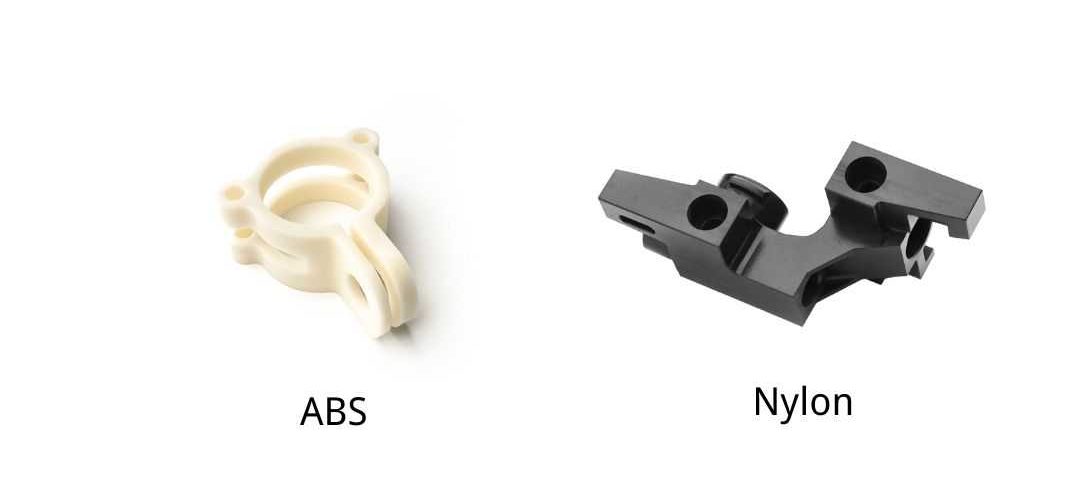
ABS and Nylon each offer a unique mix of strength, toughness, and processability, making them suitable for different applications.
ABS: The Versatile All-Rounder
ABS (Acrylonitrile Butadiene Styrene) is a copolymer that combines the strengths of three different monomers:
- Acrylonitrile (A) provides hardness, heat resistance, and chemical stability.
- Butadiene (B) contributes excellent toughness and high impact resistance.
- Styrene (S) offers a glossy finish, rigidity, and ease of processing.
This combination makes ABS a well-balanced material with no major weaknesses. Since its introduction in the 1940s, ABS has become a cornerstone in injection molding and 3D printing, valued for its consistent performance and relatively low cost.
Nylon: The High-Performance Pioneer
Nylon (Polyamide) was the world’s first fully synthetic fiber and represents a true materials revolution. Although the Nylon family includes variants such as Nylon 6, Nylon 66, and Nylon 12, they all share key characteristics:
- Outstanding mechanical strength: Its polymer chains form strong hydrogen bonds, resulting in high molecular interaction and structural integrity.
- Excellent wear resistance and toughness: Nylon is known for its durability under stress and its ability to withstand repeated mechanical forces.
- Chemical resistance: It shows strong resistance to oils and greases, making it suitable for demanding industrial applications.
From its inception, Nylon has been recognized as a high-performance engineering plastic and is widely used to replace metal parts in challenging mechanical and automotive applications.
2. ABS vs Nylon: Key Performance Differences at a Glance
Before comparing ABS and Nylon side by side, it’s important to highlight that each material excels in different areas, influencing their suitability for specific applications and production methods. The following table summarizes their key properties:
| Property | ABS | Nylon (6/66) | Winner & Insights |
| Mechanical Strength | Good | Excellent | Nylon has higher tensile and flexural strength, suitable for load-bearing structures. |
| Toughness/Impact Resistance | Excellent | Good | ABS shows better impact resistance, especially at low temperatures. |
| Heat Resistance (HDT) | ~90-105°C | ~180-220°C | Nylon can withstand higher temperatures without deformation. |
| Wear Resistance/Friction | Average | Excellent | Nylon excels in wear resistance, ideal for gears and bearings. |
| Chemical Resistance | Resistant to mild acids and bases; soluble in ketones | Resistant to oils, hydrocarbons; sensitive to strong acids/oxidizers | Depends on environment: ABS avoids ketones; Nylon avoids strong acids. |
| Moisture Absorption | Very low | Very high | ABS is more dimensionally stable; Nylon requires careful drying. |
| Suitable Processing | Injection molding, FDM 3D printing, extrusion, CNC | Injection molding, FDM/SLS 3D printing, extrusion, CNC | ABS is more forgiving; Nylon requires a controlled environment and experienced handling. |
| Processing Difficulty | Moderate (mainly warping) | High (moisture, adhesion) | ABS is easier for beginners; Nylon demands precise conditions. |
| Post-Processing | Easy (acetone vapor smoothing) | Difficult (mechanical finishing only) | ABS can achieve smooth, polished surfaces. |
| Material Cost | Lower | Higher | ABS is cost-effective; Nylon raw materials and processing are more expensive. |
Overall, while ABS offers a balanced combination of toughness, ease of processing, and cost-effectiveness, Nylon stands out in strength, heat resistance, and wear performance, making the choice highly dependent on the application requirements.
3. Processing Methods Compared: ABS vs Nylon
When selecting a material, understanding how ABS and Nylon behave across different manufacturing methods is crucial. Each material interacts differently with specific processes, affecting part quality, production efficiency, and cost.
Injection Molding
- ABS: ABS is widely used for injection molding because it flows well, has short cycle times, and tolerates a broad processing window. It is ideal for automotive interiors, electronics housings, and other high-volume applications.
- Nylon: Nylon requires careful pre-drying due to its high moisture absorption. Its melt viscosity is sensitive to temperature fluctuations, making precise control essential. Nylon performs exceptionally well for thin-wall components and parts that demand high strength and wear resistance.
3D Printing
- ABS: In FDM 3D printing, ABS is a popular choice, though warping can be an issue. Using a heated bed and enclosed printing environment helps maintain dimensional accuracy. Post-processing is straightforward, including acetone vapor smoothing or sanding.
- Nylon: Nylon can be printed using FDM or SLS techniques. FDM Nylon demands thoroughly dried filament and strong bed adhesion to avoid warping or poor layer bonding. SLS Nylon excels in producing complex, high-strength functional parts without requiring support structures.
Extrusion
- ABS: ABS is commonly extruded into sheets, rods, tubes, and panels. Its dimensional stability makes it suitable for structural panels and pipes.
- Nylon: Nylon is preferred for extruded parts that require high wear resistance, such as sliding components, bushings, and protective sleeves.
CNC Machining
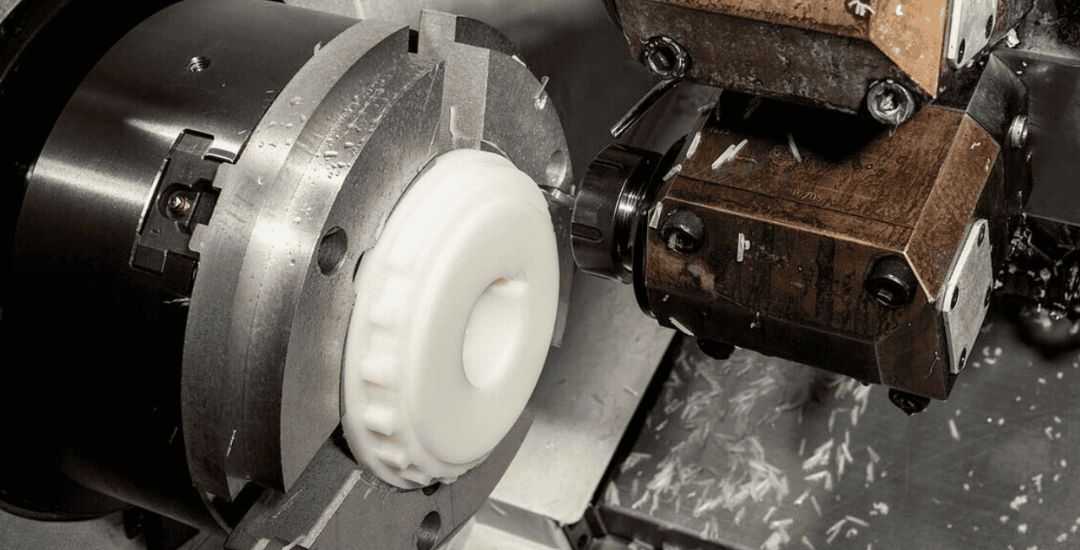
- ABS: ABS can be easily machined from rods or sheets, producing smooth surfaces ideal for prototypes and small-batch parts.
- Nylon: Due to its toughness, Nylon requires sharper tools and optimized cutting parameters to prevent material sticking. When machined correctly, it delivers durable and functional components for demanding applications.
ABS generally offers easier handling and processing flexibility, making it suitable for general-purpose parts, while Nylon demands stricter process control but provides superior mechanical strength, wear resistance, and thermal performance for high-performance applications.
4. Applications of ABS and Nylon Parts

ABS and Nylon each have unique strengths that make them better suited for certain applications. Understanding where they excel can help guide material selection.
ABS
- Consumer electronics: ABS is used for TV and monitor housings, as well as keyboards, because it provides rigidity and a smooth surface finish.
- LEGO bricks: It offers excellent dimensional stability, bright colors, and strong impact resistance, making it ideal for precision toys.
- Automotive interiors: ABS is suitable for dashboards, steering components, and vent grilles due to its toughness and ease of molding complex shapes.
- Home appliances: Vacuum cleaner housings and kitchen appliances benefit from ABS’s durability and cost-effectiveness.
- Prototyping: ABS is commonly used in 3D printing or CNC machining for functional prototypes and housing models.
Nylon
- Mechanical components: Nylon is ideal for gears, bearings, sliders, and cams because of its high wear resistance and toughness.
- Automotive parts: Engine covers, door locks, and fuel system components use Nylon for its heat resistance, strength, and chemical stability.
- Sports equipment: Nylon is used in ski bindings, bike gears, and shoe soles because it withstands repeated stress and wear.
- Industrial tools: Fixtures, jigs, and custom tools rely on Nylon’s durability for demanding applications.
- Durable consumer products: Nylon ensures long-lasting performance in power tool housings, door hinges, and zippers.
ABS is well-suited for parts that require dimensional stability, surface finish, and easy processing, while Nylon is better for applications demanding strength, wear resistance, and heat tolerance.
5. Advanced Forms: Reinforced Materials
Reinforcing ABS and Nylon can significantly enhance their mechanical and thermal performance, opening new possibilities for demanding applications.
- Carbon Fiber Reinforced: Adding carbon fiber increases the stiffness, strength, and heat resistance of both ABS and Nylon. Carbon fiber reinforced Nylon can achieve strength-to-weight ratios close to metal, making it ideal for drone frames, high-performance automotive components, and structural prototypes.
- Glass Fiber Reinforced: Incorporating glass fiber improves rigidity and strength while being more cost-effective than carbon fiber. GF ABS or GF Nylon is commonly used in mechanical components, housings, and industrial tools where additional stiffness is required.
Reinforced ABS and Nylon provide enhanced strength, rigidity, and thermal stability, but they may reduce toughness and accelerate wear on machining tools or molds. Selecting the appropriate reinforcement depends on balancing performance needs with processing considerations.
6. Cost and Availability: ABS vs Nylon

When planning a project, the cost and accessibility of ABS and Nylon are important factors that influence both production efficiency and overall budget.
ABS: ABS generally has a lower raw material cost compared to Nylon. It is widely available from multiple suppliers worldwide, making it easier to source in various grades and colors. Lower processing complexity also contributes to cost savings, especially for high-volume injection molding or 3D printing projects.
Nylon: Nylon tends to be more expensive, both in raw material price and in processing. Its high moisture sensitivity and precise temperature requirements can increase manufacturing costs. Certain reinforced grades, like carbon fiber or glass fiber Nylon, can further raise costs. Supply may also be slightly less flexible than ABS in some regions, requiring careful planning for bulk orders.
ABS is more cost-effective and easier to source, while Nylon offers superior performance but usually at higher material and processing costs. Balancing performance needs with budget and supply availability is key to successful project planning.
7. ABS vs Nylon: Key Considerations
Both ABS and Nylon require attention to specific material characteristics to ensure reliable performance during manufacturing and in end-use applications.
- Moisture Absorption: Nylon has high moisture absorption, which can cause dimensional changes, reduced mechanical strength, or printing defects if not properly dried before processing. ABS has very low moisture absorption and is more dimensionally stable.
- Dimensional Stability: ABS maintains its shape under most conditions, while Nylon may expand or warp slightly due to humidity or thermal changes. Designers need to account for this in tight-tolerance applications.
- Post-Processing: ABS is easier to finish, including techniques like acetone vapor smoothing for a polished surface. Nylon typically requires mechanical finishing, and reinforced grades may increase tool wear.
Careful handling and appropriate equipment are important for both materials to maintain quality. ABS and Nylon require careful attention to humidity, dimensional stability, and finishing methods to ensure consistent quality in manufacturing.
8. How to Decide Between ABS and Nylon for Your Project
When deciding between ABS and Nylon, it helps to consider your project’s mechanical, thermal, and environmental requirements.
Choose ABS if:
- The budget is limited.
- You are new to 3D printing and need easy-to-handle material.
- Appearance is important; acetone smoothing is required.
- Operating temperature is moderate (<60°C).
- Impact resistance and toughness are key.
Choose Nylon if:
- Parts must withstand high mechanical stress (gears, load-bearing structures).
- Wear resistance is critical.
- High-temperature environment (>80°C).
- Components may contact oils or lubricants.
Assessing these factors carefully will help you choose the material that delivers the best balance of performance, durability, and cost.
Conclusion
ABS and Nylon each excel in different ways. ABS offers balanced performance, ease of processing, and cost-effectiveness. Nylon provides superior strength, wear resistance, and high-temperature capability. The right choice depends on your specific project requirements, including mechanical demands, operating environment, and budget. Selecting the material that fits these conditions ensures your components achieve the reliability and consistency your application needs.
For projects that require precision CNC machining, 3D printing, or injection molding, working with an experienced manufacturing partner like the Beska team can help turn the right material choice into a high-quality end product.
Dive Deeper Into Our Resources
For some insightful reads, we’ve curated a list of recommended articles just for you:



 English
  Hebrew
  Turkish
  French
  Russian
  German
  Spanish
  Portuguese