


Ceramic coating and hard anodizing are often considered for the same aluminum component, yet they are designed to solve different problems. One prioritizes extreme hardness, temperature resistance, and long-term durability. The other offers a practical balance of performance, appearance, and cost.
Choosing the wrong process can lead to unnecessary expense, premature wear, or performance limitations in service. This article compares Plasma Electrolytic Oxidation (PEO) and Type III hard anodizing across hardness, wear resistance, thermal limits, corrosion protection, fatigue performance, and manufacturing considerations.

1. What Is Ceramic Coating?
The term “ceramic coating” can describe several different surface treatments. In this comparison, it refers to Plasma Electrolytic Oxidation (PEO), also known as Micro-Arc Oxidation (MAO), an electrochemical process that converts the aluminum surface into a hard, oxide-based ceramic layer. Unlike paints or sprayed coatings, the ceramic layer grows from the aluminum substrate itself rather than being applied as a separate layer.
PEO is performed by immersing the part in an alkaline electrolyte bath and applying high-voltage AC current. The resulting micro-plasma discharges oxidize the aluminum surface, forming a ceramic layer that is metallurgically bonded to the substrate.
PEO coatings typically range from 8 to 200 µm in thickness and are significantly harder than conventional anodized layers. The coating consists of a dense inner barrier layer that provides protection and a more porous outer layer that can retain lubricants. This combination gives PEO excellent wear resistance, corrosion protection, and high-temperature stability.
These characteristics are the reason PEO is often compared with hard anodizing when wear resistance, temperature capability, and long-term durability are important considerations.
2. What Is Anodizing?
Anodizing is one of the most widely used surface treatments for aluminum and is often selected when corrosion resistance, appearance, and cost are important considerations. The process thickens the natural oxide layer on the aluminum surface through an electrochemical reaction. During processing, the aluminum part acts as the anode in an acid electrolyte, causing oxygen to combine with the surface and form aluminum oxide.
For engineering applications, the most relevant version is Type III hard anodizing. Compared with conventional decorative anodizing, hard anodizing uses lower operating temperatures and higher current densities to produce a thicker and harder oxide layer. The resulting coating provides improved wear resistance and corrosion protection while remaining relatively economical for production use.
Like PEO, hard anodizing becomes part of the aluminum surface rather than being applied as a separate coating. However, the two processes differ significantly in hardness, temperature capability, fatigue performance, and long-term durability. These differences are explored in the following comparison.
3. PEO Ceramic Coating vs Hard Anodizing

For most CNC-machined aluminum components, decorative anodizing is rarely considered alongside PEO. The more relevant comparison is PEO versus Type III hard anodizing, since both are used when wear resistance, corrosion protection, and service life become important design considerations.
The table below highlights the most important differences between the two processes.
Property | Ceramic Coating (PEO/MAO) | Hard Anodizing (Type III) |
Hardness | Up to 2,400–2,500 HV | ~600 HV |
Max service temperature | Up to 2,000°C | 300–400°C |
Coating thickness | 8–200 µm | 25–75 µm |
Corrosion resistance | 2,000 hours salt spray | Good, limited against chemicals |
Fatigue impact | No detrimental impact | It can reduce fatigue strength 8–62% |
Process | AC, high voltage, alkaline bath | DC, low voltage, sulfuric acid bath |
Color consistency | Delta E ≤ 1 | Prone to batch variation |
4. Performance Differences That Matter: Ceramic Coating vs Anodizing
The comparison table provides a useful overview, but the practical impact of these differences depends on how the part is used. The following areas are often the most important when evaluating ceramic coating and hard anodizing.
Hardness and Wear Resistance
Both processes improve the surface hardness of aluminum, but ceramic coating generally provides greater wear resistance. For components exposed to sliding contact, abrasive particles, or repeated friction, the difference can translate into longer service life.
Thermal Limits
Operating temperature is one of the clearest dividing lines between the two processes. Hard anodizing performs well in most industrial environments but begins to degrade at elevated temperatures. Ceramic coating remains stable at much higher temperatures, making it more suitable for heat-exposed components.
Corrosion Protection
Both ceramic coating and anodizing improve corrosion resistance compared with untreated aluminum. The difference becomes more apparent in aggressive environments such as saltwater exposure, chemical processing equipment, or outdoor applications with prolonged moisture exposure.
Fatigue Performance
For structural components, fatigue behavior can be just as important as hardness or corrosion resistance. Hard anodizing may reduce fatigue strength because of residual tensile stresses and micro-cracks within the coating. Ceramic coating is generally less detrimental to fatigue life, which is one reason it is often considered for aerospace and other cyclic-load applications.
5. Practical Considerations Before Choosing a Finish
Beyond performance, the practical aspects of manufacturing and processing often influence the final decision. This section addresses the key factors that affect production feasibility, dimensional control, and cost.
Coating Thickness and Tolerances
PEO coatings typically range from 8 to 200 µm, while hard anodizing is usually 25 to 75 µm. Both processes add thickness to the surface and can affect bearing seats, threaded holes, sealing grooves, and other precision features.
For aluminum oxide coatings, the buildup is not entirely outward. Part of the coating grows into the substrate, while part builds above the original surface. As a general guideline, about half of the coating thickness affects the final dimension. This means external diameters may become larger, while internal bores may become smaller after coating.
For tight-tolerance CNC parts, coating requirements should be confirmed before machining begins. Critical dimensions may need machining allowance, masking, or post-coating finishing to maintain the required fit.
Substrate Alloy Considerations
PEO is generally more tolerant of alloying elements like copper and silicon than hard anodizing. This makes it a more viable option for high-copper alloys such as 2024 and 7075, as well as high-silicon casting alloys like A356 and A380, which are often difficult to anodize uniformly. However, very high concentrations of these elements may still require process optimization.
6. Application Scenarios: Ceramic Coating vs Anodizing
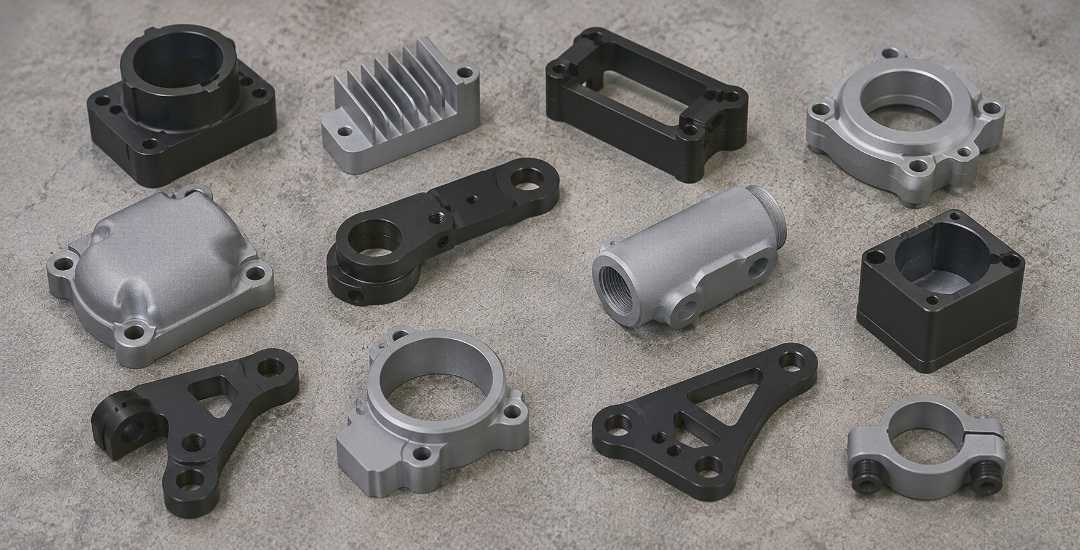
The best surface treatment depends on the operating environment and performance requirements. While both processes improve the properties of aluminum components, they excel in different applications.
High-Temperature Components
PEO is often selected for engine pistons, brake components, and other parts exposed to elevated temperatures. Hard anodizing begins to lose effectiveness above approximately 300–400°C, while PEO coatings remain stable at much higher temperatures. When heat resistance is the primary concern, PEO is generally the better choice.
Aerospace and Fatigue-Critical Parts
For aerospace brackets, UAV components, and structural parts subjected to cyclic loading, fatigue performance can be more important than hardness alone. Because PEO has little to no negative impact on fatigue life, it is often preferred for components that must withstand repeated stress over long service periods.
Decorative and General Industrial Components
When appearance, color options, and cost are more important than extreme performance, hard anodizing remains a practical solution. Electronic housings, industrial enclosures, and general-purpose aluminum parts commonly use anodizing because it provides good corrosion resistance at a lower cost while allowing a wider range of colors and finishes.
The most important consideration is usually the harshest condition the part will experience. If heat, wear, or fatigue performance drives the design, PEO often provides the greater long-term benefit. If appearance and budget are the primary concerns, hard anodizing is usually the more economical choice.
7. Cost Considerations
The cost difference between ceramic coating and hard anodizing is often larger than many engineers expect. In most cases, PEO costs two to four times more than hard anodizing.
The reason is not simply coating thickness. PEO requires high-voltage equipment, longer processing cycles, and tighter control of the electrolyte and electrical parameters. Production capacity is also generally lower than hard anodizing, which increases processing cost.
For many industrial components, hard anodizing provides sufficient wear and corrosion resistance at a significantly lower price. This makes it the more common choice for housings, brackets, and general-purpose aluminum parts.
PEO becomes easier to justify when the operating environment exceeds the limits of hard anodizing. Applications involving high temperatures, severe wear, aggressive chemicals, or fatigue-critical loading may benefit from the additional performance despite the higher cost.
8. Selection Guide: Ceramic Coating vs Anodizing
If the application involves high temperatures, severe wear, aggressive chemical exposure, or fatigue-critical loading, PEO is generally the stronger option. These are the conditions where the additional performance of the ceramic coating can justify the higher processing cost.
Hard anodizing is often the better choice when appearance, moderate wear resistance, and cost are the primary considerations. For many industrial housings, brackets, and general-purpose aluminum components, it provides a practical balance between performance and affordability.
When the requirements fall between these extremes, factors such as part geometry, expected service life, and budget often determine the final decision.
Conclusion
The choice between ceramic coating (PEO) and hard anodizing ultimately depends on the operating environment and performance demands. PEO provides superior hardness, heat resistance, corrosion protection, and is far less detrimental to fatigue life. Hard anodizing, on the other hand, offers a cost-effective solution for moderate-performance applications where extreme temperatures or cyclic loading are not factors.
For components facing high temperatures, severe wear, chemical exposure, or cyclic loads, PEO is generally the better long-term choice. For decorative, light-duty, or cost-sensitive applications, hard anodizing remains a practical and widely used solution.
At Beska, we evaluate surface treatment requirements alongside factors such as part geometry, tolerances, and manufacturing constraints. For precision CNC-machined components, coating performance is only part of the decision. Features such as threaded holes, bearing seats, and sealing surfaces may also influence the most suitable finishing process.
 English
 Hebrew
 Turkish
 French
 Russian
 German
 Spanish
 Portuguese