


Metal components are everywhere, from the surgical tools that save lives to the engines powering aircraft and even the food processing equipment in your kitchen. But behind their reliable performance lies a critical challenge: how to protect these metals from corrosion and wear while maintaining a smooth, clean surface.
Two surface treatment methods, passivation and electropolishing, stand out as industry favorites for tackling this challenge. Though they share the goal of enhancing durability and appearance, each takes a distinct approach that can make all the difference in your product’s quality and lifespan.
In the following sections, we will explore how these processes work, their strengths and limitations, and how to choose the right one for your application.

1. What is Passivation?
Passivation is a chemical or electrochemical process that transforms an active metal surface into a passive one by forming a thin oxide film. This protective layer, typically 1 to 10 nanometers thick, acts as a barrier, preventing corrosive agents like oxygen and moisture from reaching the metal beneath. Thanks to its strong adhesion and high resistance, passivation is essential for preventing rust, especially on stainless steel surfaces.
This process is widely used in industries where corrosion resistance is critical, such as medical devices, food processing, and aerospace components.
1.1 Main Benefits of Passivation
The benefits of passivation extend beyond just corrosion protection:
- Enhanced corrosion resistance: The oxide layer effectively isolates the metal from corrosive elements, significantly reducing oxidation and surface degradation.
- Removal of surface contaminants: Passivation removes free iron, oxides, and other impurities left from machining or handling, which could otherwise promote corrosion.
- Improved surface condition: It produces a uniform and smooth base that not only protects the metal but also improves adhesion for subsequent coatings or finishes.
Together, these effects contribute to improved durability and longevity of metal parts, reducing maintenance and replacement costs.

1.2 Common Passivation Methods
Several methods are standardized for passivating stainless steel, each with its own advantages:
| Passivation Method | Descripción | Ventajas | Aplicaciones típicas |
| Pasivación con ácido nítrico | Immersion in nitric acid-based solution to chemically form the oxide layer. | Fast, effective oxide formation | General stainless steel parts |
| Pasivación con ácido cítrico | Uses citric acid solutions to clean and form a uniform protective layer with less environmental impact. | Environmentally friendly, residue-free | Food and medical industries |
| Electrochemical Passivation | Applies electric current to accelerate oxide film formation, allowing precise control. | High uniformity and thickness control | Precision components |
1.3 Testing Passivation Quality
Ensuring passivation quality requires reliable testing methods. Common tests include:
- Salt Spray Test: Simulates harsh, corrosive environments by exposing samples to a salt mist, measuring how long the passive layer can protect before rust appears.
- Copper Sulfate Spot Test: Detects any remaining free iron on the surface; copper deposits indicate incomplete passivation.
- Electrochemical Analysis: Provides detailed insights into the corrosion resistance and integrity of the passive film through advanced measurement techniques.
For example, stainless steel parts treated with citric acid passivation typically withstand over 500 hours in neutral salt spray tests without visible corrosion. This level of performance aligns with stringent standards in food processing and medical applications, where safety and hygiene are paramount.
2. What Is Electropolishing?
Electropolishing is an electrochemical process that removes microscopic surface peaks by dissolving metal selectively. This results in an ultra-smooth, bright finish that goes beyond just improving appearance. It also enhances corrosion resistance and surface cleanliness, making it a preferred choice for high-end and precision applications such as medical implants, aerospace components, and food processing equipment.
2.1 How Electropolishing Works

During electropolishing, the metal part serves as the anode submerged in an electrolyte bath, typically made of phosphoric and sulfuric acids. A controlled electrical current dissolves the microscopic peaks on the surface more rapidly than the valleys, smoothing out roughness to achieve a surface finish typically below Ra 0.2 micrometers—close to a mirror finish.
This selective dissolution not only improves aesthetics but also eliminates micro-burrs and reduces sites prone to corrosion, enhancing the part’s overall durability.
2.2 Benefits of Electropolishing
This process offers several key benefits that improve both the performance and longevity of metal parts:
Ultra-smooth surfaces:
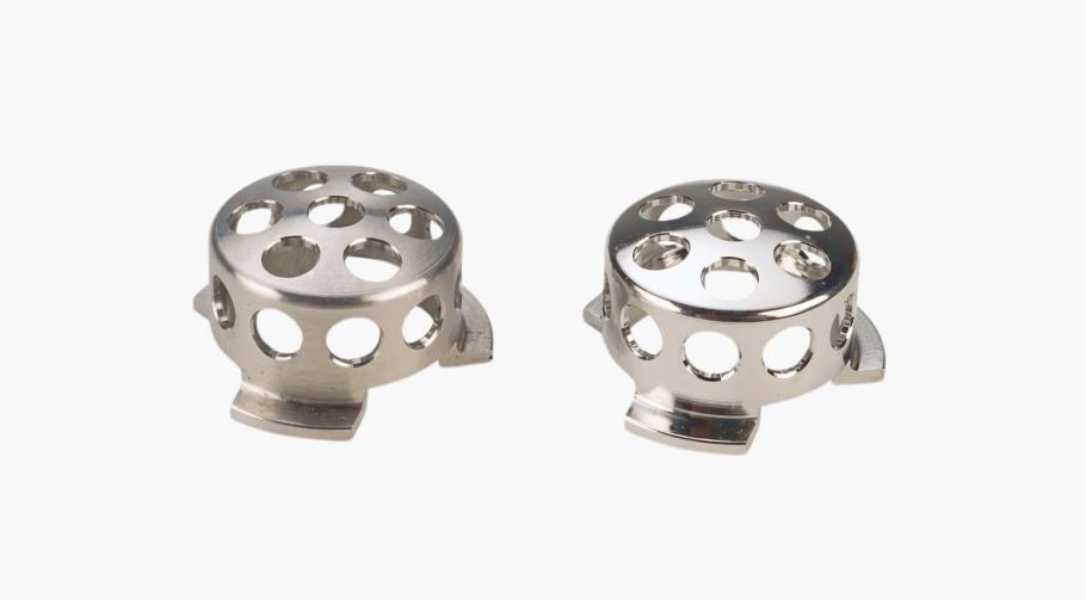
- Achieves surface roughness as low as Ra 0.1 μm, far smoother than mechanical polishing.
- Removal of microscopic burrs: Effectively eliminates tiny burrs and irregularities that mechanical polishing can miss.
- Improved corrosion resistance: Creates a dense and uniform oxide layer that reduces corrosion risk, especially in harsh environments.
- Enhanced biocompatibility: Produces surfaces ideal for medical implants by minimizing bacterial adhesion and facilitating sterilization.
2.3 Equipment and Quality Control
Electropolishing relies on specialized equipment to ensure consistent and high-quality results. The process typically uses corrosion-resistant tanks, such as PTFE-lined vessels, to safely contain the acidic electrolyte. Precise power supplies deliver controlled current, while temperature control systems maintain the bath within an optimal range of 50 to 70°C.
Operators carefully monitor key factors—including current density, voltage, temperature, and processing time—to prevent defects like uneven polishing or over-etching.
Quality control is equally important. Surface roughness is measured with profilometers to confirm it meets the required smoothness, usually below Ra 0.1 μm. Visual inspections assess the brightness and uniformity of the finish, and microscopic analysis ensures that burrs and surface imperfections have been effectively removed.
These controls are critical, especially in fields such as medical device manufacturing, where surface integrity directly impacts product safety and performance.
3. Passivation vs Electropolishing: Choosing the Right Process
The table below summarizes their main features and typical applications:
| Característica | Pasivación | Electropulido |
| Proceso | Forms a thin, protective oxide layer | Electrochemical dissolution that smooths the surface |
| Acabado de la superficie | No significant change; surface remains mostly unchanged | Mirror-like, ultra-smooth, and bright finish |
| Applicable Metals | Stainless steel, titanium, aluminum | Stainless steel, copper, nickel, titanium |
| Resistencia a la corrosión | Strong protection through oxide film | Improved by smoothing surface irregularities, reducing corrosion sites |
| Costo | Lower cost; simpler equipment and process | Higher cost due to specialized tanks, power supplies, and controls |
| Common Industries | Medical devices, food processing, general manufacturing | Semiconductor, aerospace, high-end manufacturing, medical implants |
- When to choose passivation: If cost-effective corrosion resistance is the priority.
- When to choose electropolishing: When a high-gloss finish and superior cleanliness are also needed.
4. Industry Standards and Certifications
Ensuring consistent quality in passivation and electropolishing processes relies on adhering to widely recognized standards:
- ASTM A967 — Standard for passivation of stainless steel
- ASTM B912 — Standard for electropolishing of stainless steel
- ISO 15730 — International specification for electropolishing of metals
- FDA 21 CFR — Regulatory requirements for food and medical device materials
Following these guidelines helps maintain compliance, especially when serving regulated industries like medical and food processing.
5. Combined Effects of Passivation and Electropolishing
To maximize their benefits, it’s important to follow the right process sequence.
5.1 Recommended Process Sequence
Typically, the best surface treatment approach involves electropolishing followed by passivation. Electropolishing smooths and cleans the surface, removing impurities and free iron that can interfere with oxide film formation. Passivation then forms a more uniform, adherent protective layer on this polished surface, resulting in enhanced corrosion resistance and surface finish.
Avoid performing passivation before electropolishing, as the latter can damage the oxide layer created during passivation, reducing its effectiveness.
5.2 Synergistic Benefits
Combining these processes provides “double-layer” protection:
- Improved corrosion resistance: Electropolishing removes surface defects and contaminants, while passivation seals the surface with a robust oxide film. This combination greatly extends metal durability in harsh environments.
- Optimized surface properties: The mirror-like finish from electropolishing paired with passivation’s protective barrier enhances both aesthetics and functional performance, especially critical for high-end or medical components.
For example, medical instruments treated with electropolishing and then passivation can resist salt spray corrosion for thousands of hours, meeting stringent quality demands.
6. Emerging Trends in Surface Treatment Technologies
Surface treatment technologies continue to evolve, driven by stricter environmental regulations and the demand for more sustainable manufacturing processes. Two key areas of innovation stand out:
- Chromium-free passivation: As environmental regulations tighten, chromium-free passivation methods using molybdates or silicates are becoming mainstream, reducing toxic waste.
- Green electropolishing electrolytes: Research into biodegradable, low-toxicity electrolytes (such as citric acid-based solutions) aims to minimize environmental impact while maintaining performance.
These innovations support sustainable manufacturing without compromising corrosion resistance or surface quality.
Conclusión
Passivation and electropolishing are both valuable surface treatments with distinct advantages. Your choice should align with your specific goals—whether prioritizing cost-effective corrosion resistance or seeking a flawless, highly polished surface with enhanced durability. Often, a combined approach delivers the best results.
If you’re considering these treatments for your next project or want to learn which option suits your needs best, feel free to extender la mano to the Beska team for expert advice and tailored solutions.
Profundice en nuestros recursos
Para que disfrutes de lecturas interesantes, hemos preparado una lista de artículos recomendados solo para ti:
- What Is Passivation
- How to Polish Bronze
- Alodine VS Anodize
- CNC Post-Processing
- Servicio de mecanizado CNC
 Spanish
 English
 Hebrew
 Turkish
 French
 Russian
 German
 Portuguese