
CNC Machining Monel
- Precision CNC machining for Monel 400 & K500
- Complex geometries & thin-wall parts handled reliably
- Multi-axis CNC milling & turning

Beska – La mejor calidad a un precio competitivo.
Con experiencia en fabricación de chapa metálica y mecanizado CNC, estamos aquí.
Our Monel Machining Capabilities
This nickel-copper alloy demands machine rigidity, precise cutting control, and experienced operators. At Beska, our capabilities are designed around these challenges, enabling us to deliver high-precision Monel components consistently.
Tough Alloy Expertise: Monel 400 and K500 harden quickly during cutting. Our optimized cutting strategies reduce tool wear and maintain dimensional stability.
Advanced CNC Equipment: 3-axis, 4-axis, 5-axis machining centers and Mazak turning machines handle high-strength materials and complex geometries
Grade-Specific Experience: We machine both Monel 400 for corrosion-resistant components and K500 for high-strength applications, advising on the right grade for your needs.
Tight Tolerance Control: Maintain tolerances down to ±0.005 mm for critical components in demanding environments.
Complex Geometry Handling: Precision bores, thin walls, deep channels, and intricate features are machined reliably.
Prototyping & Production: From small prototypes to full production runs, with material verification and in-process QC for consistent quality.
Why Monel Requires Specialized CNC Machining
Monel behaves differently from standard steels or aluminum alloys, and improper machining may lead to dimensional inaccuracy, poor surface finish, or rapid tool wear. The following characteristics make CNC machining Monel highly specialized:
- High strength and hardness: Monel 400 and Monel K500 both exhibit high tensile strength, which results in high cutting forces. This requires rigid machines, optimized tool paths, and carbide tooling designed for difficult alloys.
- Severe work hardening: Once the surface begins to harden during cutting, machining becomes more difficult. Controlling feed rate, speed, and tool engagement is crucial to preventing excessive hardening.
- Low thermal conductivity: Heat tends to accumulate at the cutting edge, which increases tool wear and affects surface finish. Proper coolant application and stable cutting parameters are essential.
- Tool wear and slower machining speed: Compared with stainless steel or aluminum, Monel requires slower speeds and more frequent tool replacement. Only experienced CNC machinists can maintain consistent accuracy while balancing tool life.
Due to these characteristics, selecting a supplier with professional Monel machining experience is critical. At Beska, our long-term machining strategies and process controls ensure stable results for both Monel 400 and Monel K500 parts.
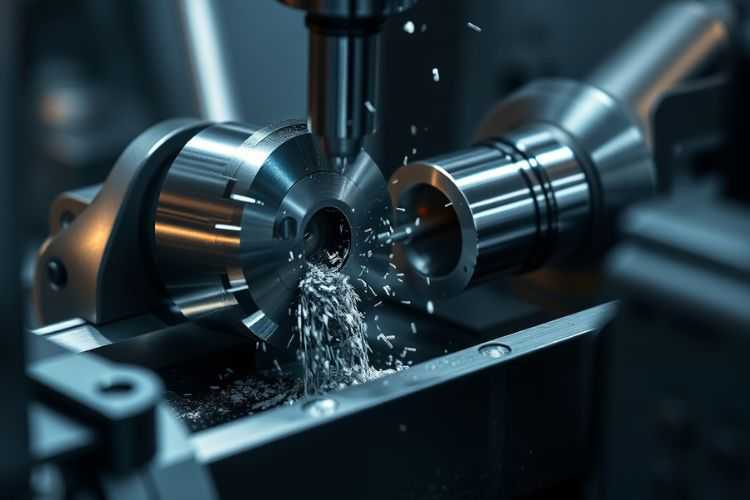
Material Comparison: Monel 400 vs Monel K500
Selecting the right Monel grade is essential for balancing corrosion resistance, mechanical performance, and machinability. Both Monel 400 and Monel K500 offer excellent corrosion resistance, but they differ in strength, hardness, and work-hardening behavior, which directly affects machining strategy. The table below summarizes key, measurable differences:
| Característica | Monel 400 | Monel K500 |
| Resistencia a la tracción | ~550 MPa | ~690 MPa (age-hardened) |
| Fuerza de fluencia | ~240 MPa | ~380 MPa |
| Hardness (HRB) | ~70 | ~95–100 (after aging) |
| Elongation | ~40% | ~20% |
| Resistencia a la corrosión | Excellent in seawater, acids, and alkalis | Excellent, slightly better in high-load marine environments |
| Maquinabilidad | Moderate; responds well to standard carbide tooling | Difficult; requires slower speeds, optimized tool paths, and frequent tool replacement |
| Aplicaciones típicas | Fittings, valves, connectors, pump shafts, marine hardware | High-load fasteners, structural components, pump impellers, aerospace fittings |
Both grades demand specialized CNC machining strategies, but Beska’s experience allows us to optimize tool selection, cutting parameters, and inspection methods for each material. Based on your design and environmental requirements, we can recommend the grade that ensures durable performance, precise dimensions, and reliable manufacturability.
Common Applications of Machined Monel Parts
Monel is a preferred material when corrosion resistance and mechanical strength are critical. Parts we produce for customers include:

Beska – La mejor calidad a un precio competitivo.
Con experiencia en fabricación de chapa metálica y mecanizado CNC, estamos aquí.
- Marine engineering components: Shafts, bushings, and fasteners exposed to seawater, designed for long-term durability without corrosion or dimensional drift.
- Pump and valve parts: Impellers, valve seats, and housings that withstand high pressure, chemical exposure, and work-hardening challenges during operation.
- Chemical processing fittings: Flanges, couplings, and connectors resistant to acids, alkalis, and high-temperature fluids.
- High-corrosion fasteners: Bolts, screws, and studs engineered for long-term performance in aggressive chemical or marine environments.
- Aerospace brackets and components: Lightweight yet strong Monel parts that maintain precise tolerances under vibration, heat, and stress.
By combining our CNC expertise with material knowledge, we produce Monel parts that are precise, durable, and ready for demanding industrial applications.
Factors Affecting the Cost of CNC Machining Monel
The cost of machining Monel components depends on several critical factors, each influencing cycle time, tool wear, and the level of precision required.
- Material grade. Monel 400 vs K500: K500 is harder and requires slower cutting, increasing cost compared with Monel 400.
- Part geometry and complexity. Deep cavities, thin walls, or intricate profiles increase setup and machining time.
- Tolerance requirements: Tighter tolerances (e.g., ±0.005 mm) require more careful cutting and inspection.
- Surface finish: Polished surfaces or fine threads may need extra passes or secondary operations.
- Quantity. Prototype vs production: Small batches have higher per-piece costs; larger runs benefit from optimized processes.
Machining time and tool wear: Monel’s high strength and work-hardening behavior lead to longer cutting times and faster tool wear, which require careful planning and tool management.
Monel’s strength and work-hardening behavior make these factors particularly important when planning machining operations.
Preguntas frecuentes
While Monel offers excellent corrosion resistance and strength, it is more difficult to machine than common metals, tends to work-harden quickly, and may require specialized tooling and careful process control.
Monel’s cost is higher due to its high nickel content, complex alloying, and challenging machinability. Its properties, such as corrosion resistance and high strength, make it a premium material for demanding applications.
Monel can be welded using specialized techniques such as TIG or MIG welding, but it requires skilled operators to prevent cracking or distortion because of its high strength and thermal conductivity characteristics.
Monel maintains excellent resistance to seawater, salt spray, and many acidic or alkaline solutions, which makes it ideal for marine and chemical applications.
Monel alloys are generally non-magnetic, though slight magnetism may appear depending on specific grades or cold working conditions.
Some Monel grades, like K500, can be age-hardened to increase strength, but machining is usually performed before heat treatment to avoid dimensional distortion.
Yes, but care must be taken to avoid galvanic corrosion when Monel is in direct contact with metals like aluminum or steel. Appropriate coatings or isolation methods may be required.
Get A CNC Machining Monel Quote!
Beska – La mejor calidad a un precio competitivo.
Con experiencia en fabricación de chapa metálica y mecanizado CNC, estamos aquí.
 Spanish
 English
 Hebrew
 Turkish
 French
 Russian
 German
 Portuguese