


Maraging steel has an unusual manufacturing advantage: it can be machined in the solution-treated condition and then aged to achieve ultra-high strength with relatively small dimensional change.
This makes it different from many conventional high-strength steels, where hardening can introduce greater distortion and require more extensive finishing after heat treatment. For precision components, the machining sequence can therefore be just as important as the final mechanical properties.
This article explains what maraging steel is, how aging changes its strength and hardness, how it behaves during CNC machining, and when its combination of strength, toughness, dimensional stability, and higher material cost makes practical sense.
1. What Is Maraging Steel?
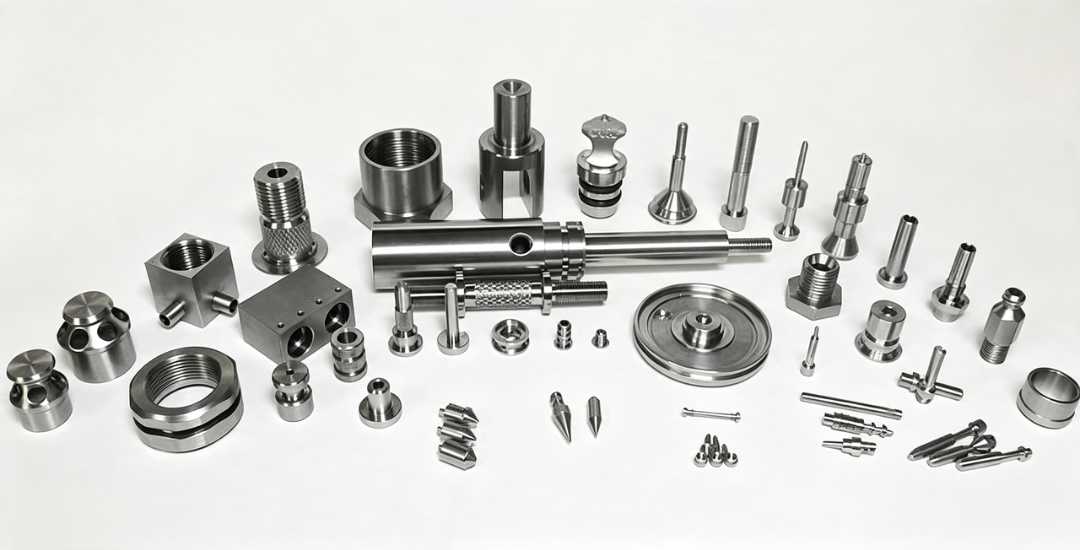
Maraging steel is a family of ultra-high-strength steels that contains very little carbon and gains most of its strength through precipitation aging rather than conventional carbon hardening.
After solution treatment and cooling, the material forms a relatively tough martensitic structure that can still be machined before final hardening. During aging, fine intermetallic precipitates form within the martensitic matrix, increasing strength and hardness without requiring the same quench-hardening process usef stainless steeld for many conventional alloy and tool steels.
This combination is what makes maraging steel distinctive: it can be machined before aging, then strengthened afterward with relatively small dimensional change. Its final properties depend on the specific grade and heat-treatment condition.
2. Composition and Common Maraging Steel Grades
Maraging steel uses a nickel-rich, very low-carbon composition. Instead of relying on carbon and carbide formation for hardness, it is strengthened mainly by fine intermetallic precipitates that form during aging.
Nickel supports the martensitic matrix, while molybdenum, titanium, and, in many traditional grades, cobalt contribute to precipitation hardening. The exact chemistry varies by grade, but carbon is intentionally kept very low compared with conventional alloy and tool steels.
Common Maraging Steel Grades
Traditional 18Ni maraging steels are commonly identified by strength classes such as 200, 250, 300, and 350. The number refers approximately to the nominal tensile strength level in ksi after aging, rather than to composition alone.
| Calificación | General Characteristic |
| 18Ni200 | Lower strength within the traditional maraging family, with relatively higher toughness |
| 18Ni250 | High strength with a useful balance of toughness and ductility |
| 18Ni300 | Higher strength grade widely used for tooling and high-performance mechanical parts |
| 18Ni350 | Highest-strength traditional grade, with greater alloying and more demanding processing requirements |
Among these, 18Ni300 is one of the most commonly referenced grades. It is also known as 1.2709 in European material designations and is widely used in high-strength tooling and precision engineering applications.
The specific grade matters because chemical composition influences the final strength, toughness, hardness, aging response, and material cost. These properties should therefore be evaluated using the applicable material specification rather than treating all maraging steels as interchangeable.
3. How Maraging Steel Heat Treatment Works
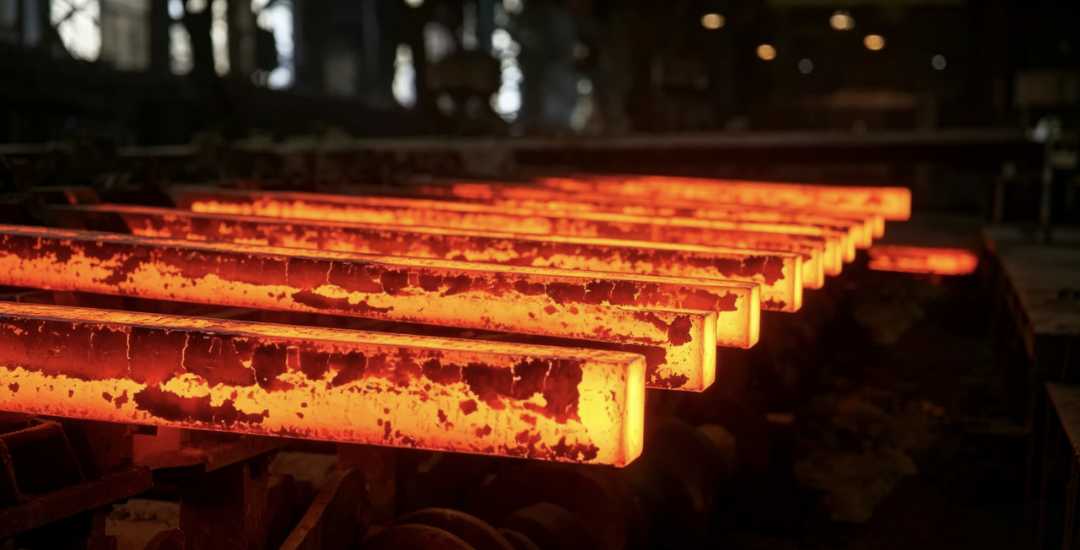
Maraging steel develops its final strength through two main heat-treatment stages: solution treatment followed by aging. Unlike conventional quench-hardened steels, its strength increase comes mainly from precipitation within a low-carbon martensitic matrix.
Solution Treatment
During solution treatment, the alloy is heated to a temperature high enough to dissolve the strengthening elements into a uniform solid solution. For traditional 18Ni maraging steels, this is commonly around 815°C, although the required temperature and holding time depend on the grade, product form, and applicable specification.
After cooling, the material forms a relatively tough martensitic structure that remains suitable for machining. Most major material-removal operations are therefore commonly completed before final aging.
Aging
The machined part is then reheated to a lower temperature, typically around 480°C for many traditional 18Ni grades. During this stage, fine intermetallic precipitates form within the martensitic matrix and significantly increase strength and hardness.
Because aging takes place at a much lower temperature than the original solution treatment, dimensional change is generally smaller than in conventional quench-and-temper hardening. Critical dimensions may still require compensation or final finishing, especially on thin, asymmetric, or tightly toleranced parts.
Overaging
Aging time and temperature must still be controlled. Excessive temperature or prolonged holding can cause the strengthening precipitates to coarsen and may promote austenite reversion, reducing hardness and strength.
For this reason, the heat-treatment cycle should follow the specified maraging steel grade and required final properties rather than using one standard aging condition for every part.
4. Mechanical Properties and Dimensional Stability
After aging, maraging steel can reach very high strength while retaining useful toughness. The exact properties depend on the grade and heat-treatment condition, so published values should be treated as grade-specific rather than universal.
Strength, Hardness, and Toughness
For 18Ni300, aged material commonly reaches tensile strength around 2,000 MPa, yield strength around 1,800 MPa, and hardness near 50 HRC. Lower-strength grades generally provide more toughness and ductility, while higher-strength grades such as 18Ni350 increase strength at the expense of some ductility and processing flexibility.
This combination of high strength and usable toughness is one of the main reasons maraging steel is selected for heavily loaded precision components and tooling.
Dimensional Stability After Aging
Another important advantage is the relatively small dimensional change during aging. Because strengthening occurs at a lower temperature and does not rely on conventional quench hardening, distortion is generally easier to control than with many hardened tool steels.
Dimensional change is still not zero. Thin walls, asymmetric geometry, residual machining stress, and tight tolerance requirements can all influence the final result. Critical features may therefore require compensation before aging or light finishing afterward.
The practical benefit is that most machining can often be completed before aging, with only limited post-aging correction needed when the process is properly planned.
5. CNC Machining Maraging Steel
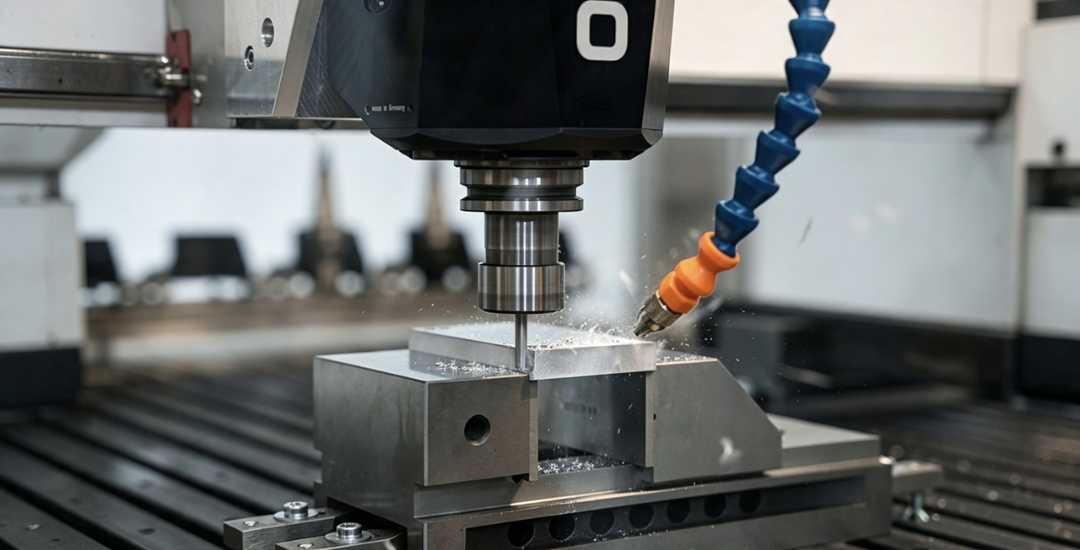
Maraging steel is generally easier to machine before aging than after it reaches its final hardened condition. For this reason, machining sequence is an important part of the manufacturing plan.
Machining Before Aging
Most roughing, drilling, threading, and general finishing operations are typically completed in the solution-treated condition. At this stage, maraging steel is still relatively machinable compared with the aged condition, and carbide tooling can be used with appropriate cutting parameters and coolant control.
Completing most material removal before aging helps reduce tool wear and avoids unnecessary machining at the final high-hardness condition.
Machining After Aging
After aging, maraging steel becomes significantly harder and more demanding to machine. Cutting forces increase, tool wear becomes more important, and maintaining surface finish requires greater control of rigidity, heat, and tool condition.
Post-aging machining is still possible, but it is usually reserved for critical features, final sizing, grinding, or other operations that cannot be completed before heat treatment.
Machining Sequence and Final Finishing
A practical approach is to rough and semi-finish the part before aging, then determine whether critical dimensions need additional finishing afterward.
The amount of finishing allowance should be based on part geometry, tolerance requirements, expected dimensional change during aging, and the final machining process rather than a fixed value.
For tight-tolerance components, final inspection should be completed after aging and any required finishing operations so that the measured dimensions represent the finished condition of the part.
6. Maraging Steel vs Tool Steel and Stainless Steel
Maraging steel is often compared with tool steels and stainless steels because all three can be used for demanding mechanical components, but they solve different engineering problems.
The table below uses 18Ni300, H13, and 316L as representative examples. Their properties should not be treated as universal values for all maraging, tool, or stainless steels.
| Factor | 18Ni300 Maraging Steel | H13 Tool Steel | 316L Stainless Steel |
| Main Strength | Ultra-high strength after aging | High hardness and hot-work performance | Corrosion resistance and ductility |
| Tratamiento térmico | Solution treatment followed by aging | Hardening and tempering | Normally used without hardening heat treatment |
| Estrategia de mecanizado | Most machining before aging | Often machined before hardening, then finished as needed | Machined in supplied condition |
| Dimensional Change During Hardening | Relatively small | Greater distortion risk from hardening cycle | No comparable hardening cycle |
| Resistencia a la corrosión | Limited to moderate | Limited | Alto |
| Typical Reason to Choose | High strength with good dimensional stability | Wear, hardness, and elevated-temperature tooling | Corrosion resistance |
Maraging steel becomes attractive when a part needs very high strength but dimensional change during tratamiento térmico must remain manageable. H13 is better suited to applications where wear resistance, hot hardness, or thermal cycling are more important, while 316L is typically selected when corrosion resistance takes priority over maximum strength.
The better choice therefore depends on which property controls the design. Maraging steel is not automatically superior to tool steel or stainless steel; its main advantage appears when ultra-high strength, toughness, and relatively stable aging behavior are required together.
7. When Should You Use Maraging Steel?
Maraging steel is most useful when very high strength, good toughness, and dimensional stability during heat treatment are required together.
High-Load Precision Components
Aerospace fittings, shafts, structural parts, fixtures, and other highly loaded components can benefit from the high strength achieved after aging. Maraging steel becomes especially useful when these parts also contain critical dimensions that need to remain stable through heat treatment.
Tooling and Mold Components
Maraging steel is also used for dies, tooling inserts, mold components, and other precision tooling. Its ability to be machined before aging makes it useful for complex geometries that would be more difficult to finish after conventional hardening.
When Other Materials May Be More Suitable
Maraging steel is harder to justify when ultra-high strength is not required. Conventional alloy or tool steels may provide adequate performance at lower cost.
If corrosion resistance or sustained high-temperature performance is the main requirement, stainless steels or high-temperature alloys may be more appropriate.
Conclusión
Maraging steel is most valuable when ultra-high strength, useful toughness, and dimensional stability during heat treatment are required together. Its ability to undergo most machining before aging makes it particularly useful for precision components and tooling where post-hardening distortion would otherwise complicate manufacturing.
For custom maraging steel parts, Beska can support Mecanizado CNC, heat-treatment coordination, final finishing, and dimensional inspection from prototype through production.
 Spanish
 English
 Hebrew
 Turkish
 French
 Russian
 German
 Portuguese