


When you start a prototyping project, one of the first decisions is which filament to load into the printer. PLA and abdominales are the two most common choices. Both are widely available and relatively inexpensive. But they behave very differently.
PLA prints easily and produces clean, detailed parts. It is a good choice for visual models and form studies. ABS is harder to print, but it offers better strength, toughness, and heat resistance. It is better suited for parts that need to survive handling, assembly, or elevated temperatures.
The choice is not about which material is better. It is about which one fits the purpose of your prototype. This article compares PLA and ABS across mechanical properties, printability, post‑processing, and environmental factors. The goal is to help you pick the right material for your specific prototyping need.
1. What Is PLA?

PLA is one of the most widely used materials in FDM 3D printing, particularly for concept models, design validation, and early-stage prototypes. Its popularity comes largely from its ease of printing. Compared with many engineering-grade filaments, PLA requires less process control and produces consistent results on a wide range of printers.
Made from renewable resources such as corn starch or sugarcane, PLA typically prints at 190–220°C and often requires little more than a stable printing environment to achieve good results. Its low warping tendency and ability to reproduce fine details make it a practical choice when appearance, dimensional verification, or rapid iteration is the primary goal.
The limitation of PLA is not printability but performance. The material is relatively stiff, which helps maintain dimensional accuracy, but it is also more brittle than ABS and offers limited heat resistance. For concept models, display parts, and fit-check prototypes, PLA is often sufficient. For components expected to withstand repeated handling, impact, or elevated temperatures, its limitations become more apparent.
2. What Is ABS?
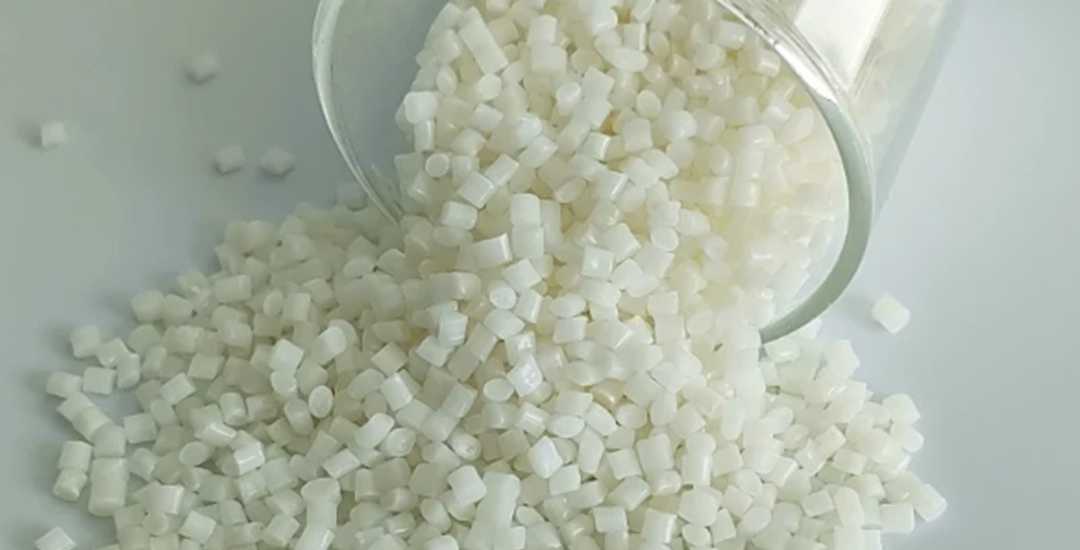
ABS is one of the most common engineering thermoplastics used in Impresión 3D. Compared with PLA, it offers better impact resistance, higher heat resistance, and greater durability, making it a popular choice for functional prototypes and end-use parts.
ABS typically prints at 230–260°C and requires a heated bed in the range of 90–110°C. Because the material shrinks as it cools, controlling the printing environment becomes more important. An enclosed chamber is often recommended to reduce warping and layer separation, particularly for larger parts. Ventilation is also advisable due to the fumes generated during printing.
The additional processing requirements are balanced by improved mechanical performance. ABS parts are generally tougher than PLA and are less likely to crack under repeated handling or impact. They also maintain their shape at temperatures that would cause PLA to soften. For prototypes that need to withstand functional testing, assembly evaluation, or moderate heat exposure, ABS is often the more suitable option.
3. Mechanical Performance: Where PLA and ABS Differ Most

When choosing between PLA and ABS, mechanical performance is often the first thing to check. The question is not which material is stronger overall, but which one matches the demands of your prototype.
Some prototypes stay on a desk and only need to look right. Others get handled, dropped, assembled, or exposed to heat. These different use cases place very different demands on the material.
Propiedad | EPL | abdominales |
|---|---|---|
Tensile strength | Higher (~49–60 MPa) | Lower (~34–44 MPa) |
Stiffness (Elastic Modulus) | Higher (~2.5 GPa) | Lower (~1.8 GPa) |
Toughness / Impact resistance | Lower (brittle) | Higher (absorbs impact) |
Heat deflection temperature (HDT) | ~53–55°C | ~80–100°C |
Fatigue resistance (bending) | Higher (up to 11× longer) | Más bajo |
Densidad | ~1.24 g/cm³ | ~1.05 g/cm³ |
PLA gives you higher strength and stiffness, but it is brittle and softens at relatively low temperatures around 55°C. In prototype projects, we occasionally see PLA housings perform well during initial fit checks but crack after repeated assembly and disassembly. ABS generally tolerates this type of handling better, especially when clips, snap fits, or thin walls are involved.
4. How PLA and ABS Behave During Printing
Although PLA and ABS can both be printed using FDM technology, their processing requirements are quite different. PLA is generally easier to print and produces consistent results with relatively little process control. Meanwhile, ABS requires higher temperatures and is more sensitive to cooling conditions, making warping and layer separation more common if the printing environment is not properly controlled.
Aspecto | EPL | abdominales |
|---|---|---|
Print failure rate | Bajo | Higher (requires tuning) |
Nozzle temperature | 190–220°C | 230–260°C |
Heated bed | Not required (optional, 45–60°C) | Required (90–110°C) |
Enclosed chamber | Not needed | Strongly recommended |
Pandeo | Muy bajo | High (cools unevenly) |
Odor | Low, pleasant | Strong, requires ventilation |
The difference comes down to this: PLA is reliable and forgiving; ABS requires more control but rewards it with better performance.
5. How PLA and ABS Respond to Post-Processing
Parts rarely come off the printer ready for final use. Some require sanding, painting, or chemical treatment to achieve the desired surface quality. PLA and ABS behave very differently in this stage, and the differences matter when the prototype needs to look finished or presentable.
5.1 Acetone Vapor Smoothing
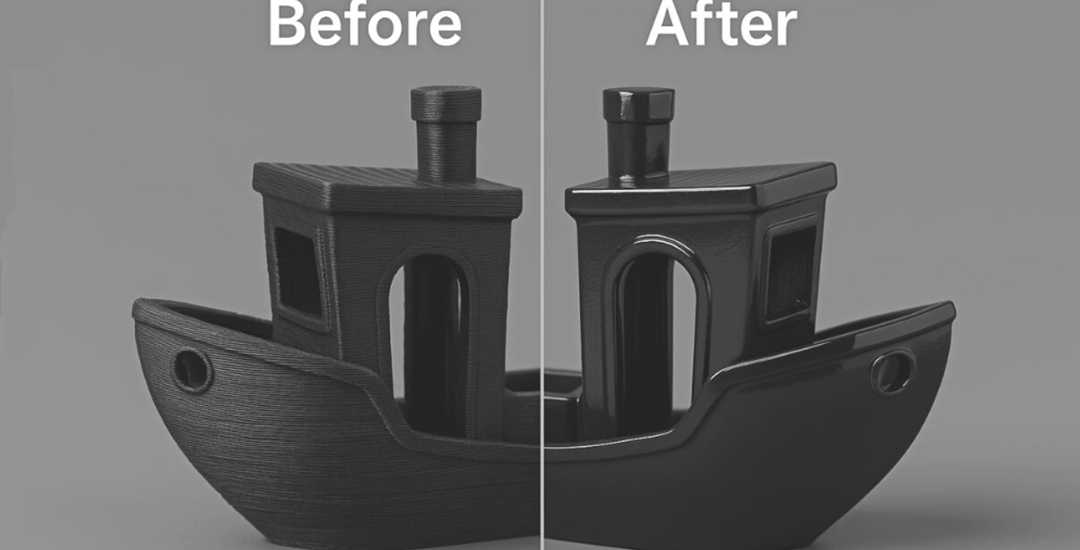
Acetone vapor smoothing is one of the biggest differences between the two materials. ABS responds well to acetone vapor. The vapor melts the outer layer slightly and produces a glossy, smooth surface with layer lines almost completely removed. PLA does not respond to acetone. Contact with acetone degrades the material rather than smoothing it. For parts that need a polished, professional appearance, this difference alone can decide which material to choose.
5.2 Sanding and Mechanical Finishing
Sanding also differs between the two. PLA heats up quickly under friction, so it can melt or gum up sandpaper rather than forming clean dust. Slower sanding speeds and wet sanding help. ABS is easier to sand and does not heat up as quickly, making post‑processing less tedious. For parts that require extensive hand finishing, ABS is the more practical choice.
5.3 Painting and Priming
Painting and priming are possible with both materials, though ABS generally takes paint more readily. PLA often requires a primer coat to get good adhesion. If the prototype needs a painted finish, ABS reduces the amount of preparation work required.
6. Environmental and Storage Considerations
While mechanical performance and printability are usually the primary factors when choosing between PLA and ABS, storage conditions and environmental impact may also influence the decision in certain applications.
PLA is produced from renewable resources such as corn starch or sugarcane. Under industrial composting conditions, it can break down more readily than conventional plastics. However, it does not rapidly biodegrade in typical outdoor environments or landfills, so its environmental advantages are often overstated.
From a practical standpoint, storage behavior is usually more relevant to prototype projects. PLA absorbs moisture more readily, which can affect print quality and mechanical performance if filament is stored improperly. ABS is generally less sensitive to moisture and tends to be more stable during long-term storage.
For most engineering prototypes, these considerations are secondary to strength, durability, and heat resistance. However, they may become important when sustainability goals or long storage periods are part of the project requirements.
7. Cost and Durability Comparison: PLA vs ABS
PLA looks cheaper on the shelf, but the real cost difference shows up in how the parts behave over time.
Factor | EPL | abdominales |
|---|---|---|
Material cost per kg | ~$20–28 | ~$22–35 |
Failure rate (printing) | Low (~1–2%) | Higher (warping without enclosure) |
Effective cost per part | Close to material cost | Higher than material cost |
UV resistance | Poor (degrades over time) | Bien |
Moisture absorption | High (~16%) | Low (~0.65%) |
Long‑term storage stability | Poor (warping, brittleness) | Good (dimensionally stable) |
PLA is cheaper and more forgiving to print, making it the more economical choice for quick prototypes. ABS costs more to run effectively and demands better equipment, but it holds up longer under UV and moisture exposure. For functional parts that need to last, ABS justifies the extra cost.
The material itself is only part of the cost. In practice, failed prints, rework, and repeated testing cycles often have a bigger impact on prototype budgets than the filament price difference itself.
For early-stage concept models, PLA usually minimizes these hidden costs because successful prints are easier to achieve.
8. When to Use Which: A Decision Framework
PLA and ABS are both good materials, but they serve different purposes in prototyping. One is easy and forgiving. The other is tougher and more heat‑resistant. The right choice depends on what the prototype actually needs to do.
If your priority is | Choose |
|---|---|
Quick, cheap visual prototypes | EPL |
Fine detail and good surface finish | EPL |
Impact resistance | abdominales |
Heat resistance (car interiors, motors) | abdominales |
Glossy finish with less sanding | abdominales |
Renewable / plant‑based material | EPL |
Long‑term durability | abdominales |
A common approach is to begin with PLA for rapid design validation, then move to ABS once the design reaches functional testing. This reduces iteration cost early in the project while still allowing performance evaluation before production decisions are made.
9. Why Many Prototype Projects Use Both PLA and ABS Materials
Many engineers compare PLA and ABS as if one material must be chosen from the beginning and used throughout the entire project. In reality, that is often not how prototype development works.
A common workflow is to start with PLA during the early design stage. At this point, the goal is usually to verify dimensions, check assembly fit, and evaluate the overall appearance of the part. Since design changes are frequent, print speed, ease of use, and low material cost are often more important than long-term durability. If a housing needs three design revisions in one week, PLA is usually the faster and more economical option.
Once the design becomes more stable, attention often shifts from appearance to performance. This is where ABS becomes valuable. For example, an electronics enclosure may need to be opened and closed dozens of times during testing. A fixture may be repeatedly mounted and removed from equipment. A prototype may also be left inside a vehicle or tested near heat-generating components. These situations often expose the limitations of PLA long before they reveal the limits of ABS.
For this reason, many development teams do not treat PLA and ABS as competing materials. Instead, they use each material at different stages of the project. PLA helps accelerate design validation, while ABS helps evaluate how the design performs under more realistic operating conditions.
Conclusión
PLA and ABS are not about which material is better. They are about which one fits the stage of prototyping you are in. Concept work and visual models call for PLA’s ease and speed. Functional testing and parts that need to endure heat or handling call for ABS’s toughness and durability. The choice is not permanent; and many projects start with one and switch to the other as the design matures.
En Beska, we often see prototype projects evolve through several stages rather than relying on a single material from start to finish. Early prototypes are frequently produced in PLA to verify dimensions, assembly fit, and overall design intent. As the design becomes more stable, teams often move to ABS when evaluating durability, repeated assembly, impact resistance, or moderate heat exposure. The material choice typically changes as the questions being asked of the prototype change.
 Spanish
 English
 Hebrew
 Turkish
 French
 Russian
 German
 Portuguese