


Many automation systems, test fixtures, and machine enclosures are built from what engineers commonly call 80/20 aluminum. Despite the name, 80/20 is not an aluminum alloy. It refers to a modular T-slot framing system that uses aluminum extrusions and standardized hardware to create machine structures.
For engineers, the real question is not what 80/20 aluminum is, but whether it is the right choice for a particular application. A frame that works well for a robotic work cell may be completely unsuitable for a heavy welding fixture. Load capacity, rigidity, vibration, thermal expansion, and future modifications all affect the decision.
This article explains how 80/20 framing works, how common extrusion profiles and material grades compare, where it performs well, how it differs from welded steel, and the practical issues that can affect long-term frame performance.
1. What Is 80/20 Aluminum?
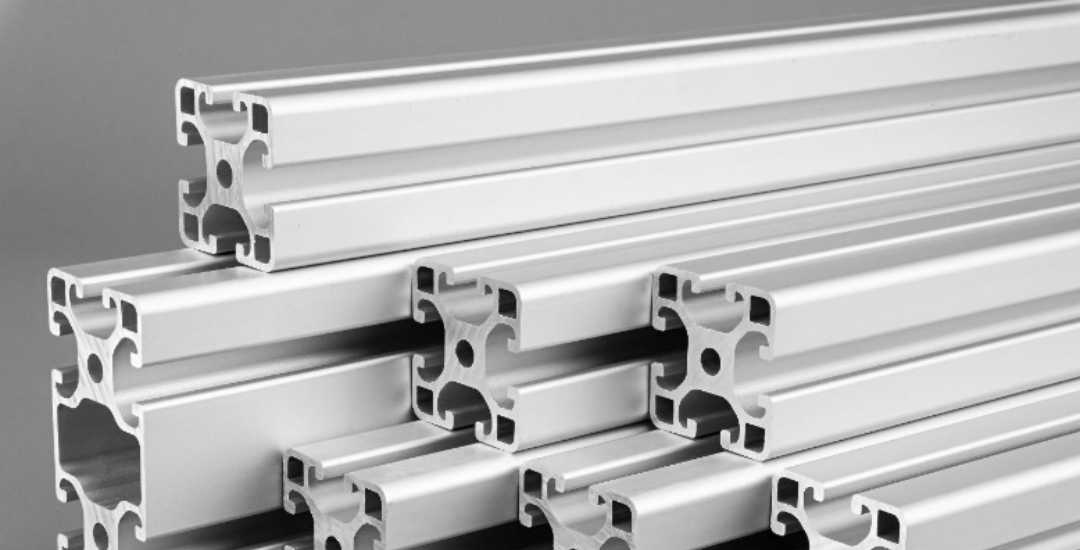
80/20 refers to a specific brand, but in practice the term has become shorthand for modular T-slot aluminum framing. The extrusion is typically a rectangular or square profile with T-shaped slots running along each face. Sliding nuts fit into those slots, while brackets and fasteners create the connections. Most structures can be assembled with basic tools and little or no welding.
The T-slot design is what makes the system popular in automation equipment, test fixtures, machine enclosures, and workstations. Components can be mounted, repositioned, or replaced without modifying the entire frame, making the system far more flexible than many traditional welded structures.
That flexibility is not always necessary. A frame that will never be modified and must carry extremely high loads may be better suited to welded steel.
2. From 2020 to 80160: Choosing the Right Profile Size
Profile size affects far more than appearance. It influences how much load a frame can support, how much it deflects under load, and ultimately whether the structure remains stable over time. The profiles below represent the most common size ranges used in T-slot framing systems.
Small Profiles: 2020 and 2040
2020 and 2040 profiles are commonly used for sensor mounts, camera supports, light-duty guarding, and compact enclosures. Their low weight makes them easy to work with, but they are generally not intended for machine frames carrying significant loads.
Medium Profiles: 3030 and 3060
3030 and 3060 profiles provide additional rigidity and are often used for test fixtures, inspection stations, and assembly workstations. They offer a practical balance between strength, weight, and cost for many light industrial applications.
Common Machine Frame Profiles: 4040, 4080, and 4545
For automation equipment, machine enclosures, and general industrial structures, 4040, 4080, and 4545 profiles are among the most common choices. These sizes provide substantially greater stiffness while remaining relatively easy to assemble and modify.
Heavy-Duty Profiles: 80160 and 9090
Large profiles such as 80160 and 9090 are typically reserved for robotic work cells, welding fixtures, and structures supporting substantial loads. The additional stiffness comes with higher material costs, larger hardware, and increased assembly effort.
A well-sized frame is usually lighter, less expensive, and easier to assemble than one that is simply overbuilt.
3. How 80/20 Frames Are Assembled
One reason 80/20 framing is widely used is that assembly is relatively straightforward. Most structures are built using T-nuts, bolts, brackets, and a few basic tools rather than welding or specialized fabrication equipment.
T-nuts and bolts form the foundation of most connections. The T-nut slides into the slot, a bolt passes through a bracket or mating component, and tightening locks the joint in place. Corner brackets and gussets are then used to reinforce right-angle connections, particularly in frames that experience vibration or repeated side loading.
For applications where a cleaner appearance is required, end fasteners and anchor fasteners can connect profiles without external brackets. These connections require additional machining, such as drilled access holes and tapped ends, but they keep hardware hidden inside the structure.
Asamblea technique matters as much as the hardware itself. The base frame should be assembled and checked for square before vertical members are added. Alignment should be verified before final tightening, since small errors at the base become much more noticeable as the structure grows. A machinist’s square is usually a better choice than a carpenter’s square when frame alignment is critical.
4. Why Do Most 80/20 Profiles Use 6105-T5 Aluminum?
Not all T-slot profiles are made from the same aluminum alloy. While 6105-T5, 6063-T6, and 6061-T6 are all used in extrusion applications, most commercial 80/20 framing systems rely on 6105-T5.
6105-T5: The Most Common Choice
6105-T5 offers a practical balance between strength, extrudability, and cost. It provides better mechanical properties than 6063-T6 while remaining easier and more economical to extrude than 6061-T6. For machine frames, enclosures, and automation equipment, it delivers sufficient rigidity without significantly increasing manufacturing cost.
6063-T6: Better Extrudability
6063-T6 is sometimes used for profiles with more complex cross-sections because it flows more easily during extrusion and produces a smooth surface finish. The trade-off is lower strength, which makes it less attractive when structural performance becomes a priority.
6061-T6: Higher Strength, Higher Cost
6061-T6 offers the highest strength of the three alloys and is occasionally specified for higher-stress components. However, it is more difficult to extrude into complex profiles and generally costs more, which is why it is less common in standard T-slot framing systems.
All three alloys respond well to anodizing, making clear anodized finishes common across most profile series. The effect of anodizing on slot dimensions and hardware fit will be discussed later in the manufacturing section.
5. Machine Frame Applications: When 80/20 Framing Fits
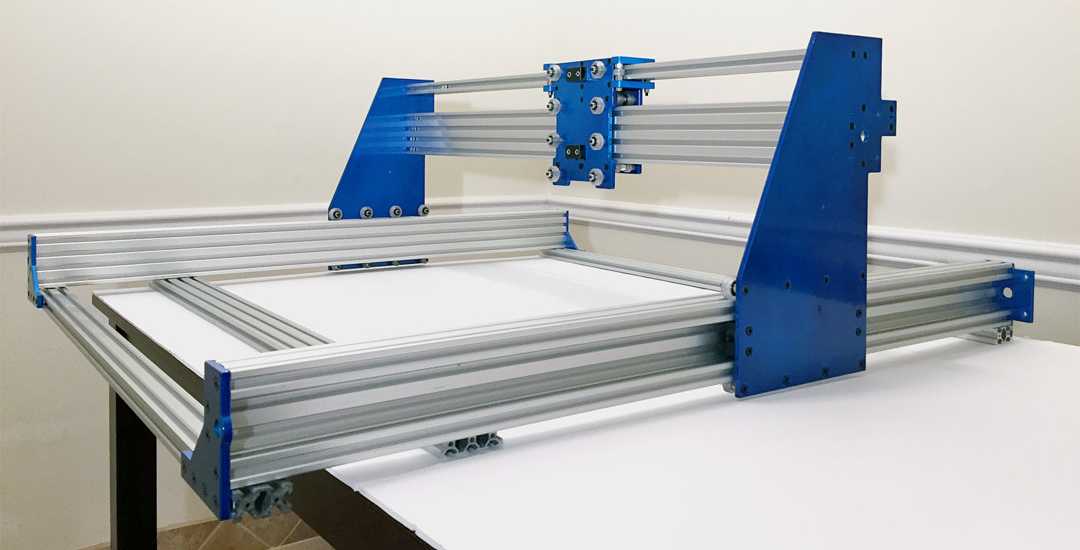
One reason 80/20 framing is widely used is its versatility. The same T-slot system can be found in automation equipment, test fixtures, machine enclosures, conveyor systems, and robotic work cells. The profile size, load requirements, and rigidity targets may change, but the underlying design approach remains largely the same.
| Solicitud | Typical Profile Size | Primary Requirement |
| CNC Router Frames | 4080, 80160 | Rigidity under cutting loads |
| Pick-and-Place Cells | 4545, 9090 | Positioning accuracy and stiffness |
| Inspection Stations | 4040 | Stability and vibration control |
| Machine Guarding | 4040 | Panel support and impact resistance |
| Conveyor Frames | 3030, 3060 | Load capacity across longer spans |
Automotive test fixtures are another common use case. Seat adjustment gear testing systems often rely on 80/20 frames because motors, sensors, and mounting points can be repositioned as test requirements evolve. The flexibility is valuable during development, although repeated assembly and disassembly can eventually introduce wear in frequently used connection points.
Laboratory equipment racks are another area where T-slot framing performs well. Profiles such as 3030 and 4040 provide a clean, modular structure that is easy to expand and maintain. The anodized surface is also easier to clean than many welded steel alternatives. In environments where aggressive cleaning chemicals are used, however, additional surface protection may be required.

Across these applications, the appeal of 80/20 framing is rarely maximum strength. The real advantage is the ability to modify, expand, and reconfigure a structure without rebuilding it from scratch.
6. 80/20 vs. Welded Steel: A Shop-Floor Comparison
Welded steel frames have been the default for decades. They are strong and low in material cost. But 80/20 framing changes the equation when reconfigurability and assembly speed matter. The table below compares the two approaches head-to-head.
| Factor | 80/20 Framing | Welded Steel |
| Rigidez | Suitable for most automation equipment and enclosures | Better for very high loads and long spans |
| Modification | Easy to reconfigure and expand | Requires cutting and re-welding |
| Asamblea | Fast assembly with basic tools | More fabrication and finishing required |
| Weight | Ligero | Heavier |
| Resistencia a la corrosión | Naturally corrosion resistant; anodizing improves it | Requires protective coating |
| Mantenimiento | Components can be adjusted or replaced individually | Repairs often require fabrication work |
In practice, the choice often comes down to flexibility. Welded steel is a strong option for structures that will never change and must carry heavy loads. 80/20 framing is often the more practical choice for automation equipment, test stations, machine enclosures, and other systems that may need to be modified over time.
The biggest advantage of 80/20 is not lower material cost but the ability to assemble, adjust, and expand a structure without starting over.
7. Manufacturing Factors That Affect Frame Fit and Alignment
Frame accuracy is influenced by more than profile selection. Small manufacturing details can affect how easily a frame assembles and whether it remains square after installation.
Cutting Accuracy
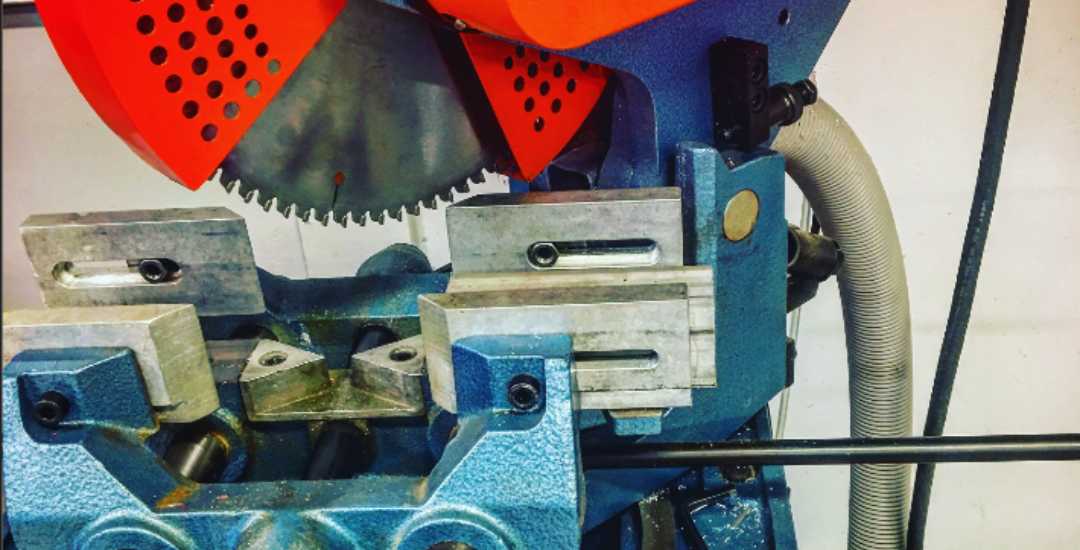
Most 80/20 extrusions are cut on a cold saw or CNC saw with a carbide-tipped blade. Length tolerances are usually predictable, but burr removal is often overlooked. Even a small burr on the cut face can affect joint squareness and create alignment problems during assembly.
Drilling and Tapping
Many hidden fastener systems require drilled access holes and tapped ends. Hole location matters. If the access hole does not align correctly with the T-slot centerline, bolts may bind during assembly instead of seating properly against the T-nut.
Anodizing and T-Slot Clearance
Anodizado improves corrosion resistance, but it also adds material to exposed surfaces, including the inside of the T-slot. Most hardware is designed to accommodate this buildup, although tighter-fitting T-nuts can occasionally bind. Testing hardware fit before full production helps avoid surprises during assembly.
Tolerance Stack-Up
Large frames often contain dozens of connections. Small alignment errors at each joint can accumulate and become noticeable at the far end of the structure. In many cases, proper assembly sequence has a greater impact than tighter individual part tolerances. Building on a flat surface, checking squareness regularly, and tightening hardware progressively usually produces better results than chasing increasingly tight machining tolerances.
8. Problems That Often Appear After Installation
Most 80/20 frames perform well when properly designed and assembled. The challenges usually appear later, after the frame has been exposed to temperature changes, vibration, or years of service.
Expansión térmica
Aluminum expands more than steel as temperature increases. In large frames, daily temperature changes can be enough to affect the alignment of linear rails, sensors, or precision fixtures. The effect becomes more noticeable when the frame is located near ovens, molding machines, or other heat sources that create uneven temperature distribution.
For applications operating at elevated temperatures, thermal expansion should be considered during the design stage rather than treated as an assembly problem later.
Vibration Loosening
Most 80/20 connections rely on bolt preload to keep joints secure. Under continuous vibration, that preload can gradually decrease, allowing the joint to shift. Once movement begins, frame alignment and positioning accuracy may suffer.
Thread-locking compounds, periodic torque checks, and secondary retention methods can significantly reduce the risk of loosening in vibration-prone environments.
Tolerance Accumulation
Even when individual components are manufactured within tolerance, small errors can accumulate across a large frame. The result may be a structure that is noticeably out of square despite every individual part meeting specification.
This is one reason assembly procedure matters as much as machining accuracy. Building on a flat surface, checking alignment regularly, and tightening hardware progressively often produces better results than chasing increasingly tight tolerances on every component.
Conclusión
80/20 aluminum framing remains a popular choice because it combines structural capability with flexibility. For automation equipment, test fixtures, machine enclosures, and similar applications, the ability to modify and expand a frame often matters as much as its initial strength.
Successful frame design depends more on selecting a profile size. Material choice, connection methods, manufacturing accuracy, and long-term operating conditions all influence how the structure performs over time.
En Beska, we regularly machine aluminum extrusion components used in custom equipment and industrial assemblies. Beyond cutting profiles to length, projects often include drilling, tapping, mounting plates, brackets, and other machined features that affect final assembly. Paying attention to these details early usually makes the difference between a frame that simply goes together and one that remains accurate and reliable throughout its service life.
 Spanish
 English
 Hebrew
 Turkish
 French
 Russian
 German
 Portuguese