


Arc welding is a fundamental technique used widely across industries, from large-scale construction, shipbuilding, and automotive manufacturing to the precise assembly of sheet metal parts.
In precision fabrication, including custom enclosures, control panels, and CNC machined components, arc welding provides strong, reliable joints while allowing for flexibility in production volume and complexity.
This guide explores how to do arc welding, from how it works to where it’s most effective and what’s needed to ensure your project with strong, clean results.
1. What Is Arc Welding?

Arc welding is a type of fusion welding that joins metals by generating heat through an electric arc. The arc forms between an electrode and the metal workpiece, creating temperatures high enough to melt the base material. As molten metal cools, it solidifies into a durable, metallurgical bond.
This process relies on converting electrical energy into heat energy and is suitable for joining similar or compatible metals. Different arc welding methods vary in how they create and shield the arc, control the heat input, and handle the filler materials.
2. Common Types Of Arc Welding
Arc welding includes several subtypes, each with its advantages:
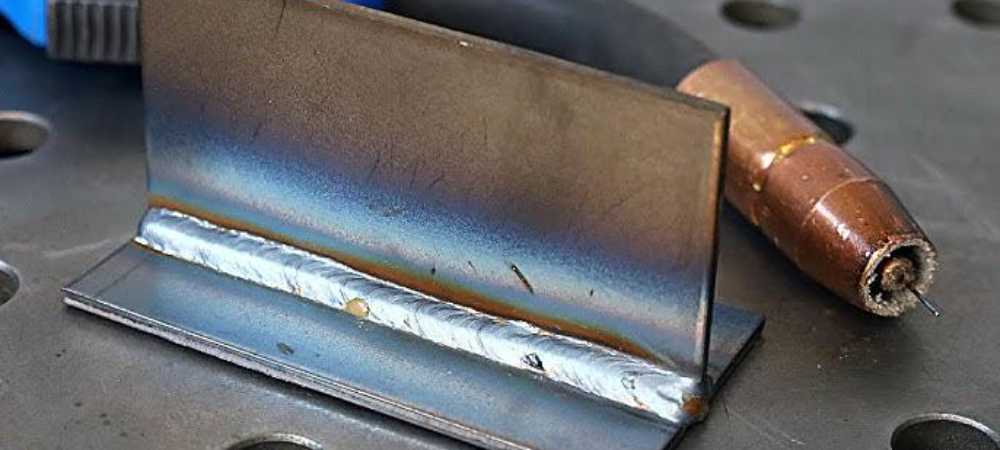
| Welding Method | Electrode Type | Shielding Type | Typical Materials | Épaisseur du matériau | Applications courantes |
| SMAW (Shielded Metal Arc Welding) | Consumable, flux-coated stick | Self-shielding via flux | Carbon steel, cast iron | 3–25 mm | Structural steel, pipeline repair, field construction |
| SAW (Submerged Arc Welding) | Continuous wire | Granular flux (fully submerged) | Carbon steel, low alloy steel | >10 mm | Long straight seams, heavy plate welding, pressure vessels |
| GMAW/MIG (Gas Metal Arc Welding) | Continuous wire | External shielding gas (e.g. CO₂ or Ar mix) | Mild steel, aluminum, stainless steel | 1–10 mm | Automotive parts, sheet metal fabrication, production welding |
| GTAW/TIG (Gas Tungsten Arc Welding) | Non-consumable tungsten | Inert gas (usually argon) | Stainless steel, aluminum, titanium, copper | 0.5–6 mm | Aerospace, food-grade equipment, thin-walled tubes, precision parts |
3. The Advantages and Limits of Arc Welding
Here’s a closer look at where arc welding excels and where it demands more consideration.
Avantages
- Material versatility: Works with a broad range of metals, including carbon steel, stainless steel, low-alloy steels, aluminum, and copper—all common in sheet metal fabrication.
- Position flexibility: Suitable for welding in flat, vertical, horizontal, and overhead positions, making it adaptable to complex part geometries.
- High joint strength: When properly performed, the weld can match or exceed the strength of the parent material, even under dynamic loading.
- Low equipment cost: Compared to automated welding systems, arc welding setups are relatively affordable and easier to maintain.
- Process variety: With multiple arc welding types available, it can accommodate different thicknesses, tolerances, and production conditions.
Limites
- Operator-dependent quality: Manual arc welding requires training and consistency; poor technique can lead to defects like porosity or lack of fusion.
- Spatter and fume generation: Especially in open-air environments, arc welding can produce visible spatter and harmful fumes—making proper ventilation essential.
- Heat-affected zone (HAZ): Intense localized heat may lead to warping, internal stress, or changes in material properties near the weld.
- Slower cycle times: Compared to robotic or high-speed automated welding, manual arc welding is time-consuming, especially for large quantities.
- Limited use for thin or reactive materials: Welding very thin gauges or metals like magnesium and titanium requires special precautions and often different methods.
For low- to mid-volume production runs, prototyping, or repair tasks involving steel or aluminum, arc welding is often more cost-effective and adaptable than fully automated systems—provided the operator is properly trained.
4. Materials That Present Challenges in Arc Welding
While arc welding is versatile, certain materials require alternative processes:
| Matériel | Raison |
| Acier à haute teneur en carbone | Prone to cracking; needs controlled heating/cooling. |
| Titanium, Zirconium | Reacts easily with air; requires inert atmosphere or vacuum welding. |
| Ultra-thin sheets (<0.5 mm) | Easily warped or burned through; better with laser or resistance welding. |
| Glass, ceramics, plastics | Non-conductive and cannot be fused by electric arc. |
| Hard alloys or white cast iron | Extremely brittle; typically brazed or joined mechanically. |
5. Arc Welding Equipment
To perform arc welding, you’ll need the following:
Welding Machine: Provides AC or DC current, chosen based on welding type and material. DC offers stable arcs for thinner metals; AC is often used for aluminum and specific electrodes.
Electrodes or Welding Wire: Acts as filler material. Selection depends on the base metal and welding method to ensure proper fusion and strength.
Protective Gear: Includes a welding helmet, gloves, jacket, and safety glasses to protect against heat, sparks, and harmful radiation.
Clamps and Fixtures: Secure workpieces firmly to maintain alignment and ensure weld accuracy.
Brushes and Grinders: Used for cleaning surfaces before welding and smoothing welds afterward to improve quality.
6. Arc Welding Process: Step by Step

Let’s take the example of welding a medium-thickness carbon steel sheet metal part to illustrate the manual arc welding process:
1. Surface Preparation:
Begin by thoroughly cleaning the weld area. Remove rust, oil, paint, and any dirt using a wire brush or grinder. A clean surface ensures better weld penetration and reduces defects.
2. Clamp the Workpiece:
Securely fix the components with clamps or fixtures. Proper alignment prevents distortion and ensures the weld joint is accurate.
3. Set the Welding Parameters:
Adjust the welding machine’s current, voltage, and polarity based on the electrode type and material thickness. For medium-thickness carbon steel, a current of around 80–120 amps is typical.
4. Strike the Arc:
Initiate the arc by gently tapping or scratching the electrode against the metal surface. Maintaining control here is crucial to avoid sticking the electrode.
5. Maintain Arc Length:
Keep a consistent distance—usually about the diameter of the electrode—between the electrode tip and the workpiece. This stability provides uniform heat input and prevents weld defects.
6. Travel at Constant Speed:
Move the electrode steadily along the joint to create a smooth, even weld bead. Irregular speed can cause undercut or excessive buildup.
7. Finish and Cool Down:
Once the weld is complete, break the arc carefully. Remove the slag with a chipping hammer or wire brush, then visually inspect the weld for quality. Allow the part to cool naturally to avoid cracking.
7. Common Challenges and How We Solve Them
Even with experience, arc welding can present issues. Here are a few examples and our typical solutions:
- Porosity in the weld: Caused by trapped gases from moisture or surface contaminants. We ensure thorough cleaning of the workpiece and use properly dried electrodes to minimize this risk.
- Cracks or lack of fusion: Often due to improper heat input or incorrect welding parameters. Careful adjustment of amperage and consistent travel speed help achieve proper penetration and joint integrity.
- Distortion: Heat from welding can cause warping or shrinkage. Techniques like backstepping, strategic clamping, and alternating weld passes help control and reduce distortion.
- Electrode sticking: Happens when the current is too low or the electrode angle is incorrect. We adjust machine settings and employ anti-stick functions when available to maintain a smooth arc.
8. The Applications of Arc Welding in Industries
Arc welding supports a wide range of industrial applications:
- Machinery Manufacturing: Commonly used for fabricating frames, casings, and repairing mechanical parts. Its flexibility suits both prototype and production environments.
- Construction and Steel Structures: Essential for joining steel beams and components in bridges, high-rise buildings, and industrial platforms, ensuring structural integrity.
- Pipeline and Pressure Vessels: Widely applied in oil, gas, and water infrastructure to create strong, leak-proof joints capable of withstanding high pressure.
- Automotive and Transportation: Used in assembling vehicle bodywork, chassis, and axles, supporting both mass production and custom fabrication.
- Shipbuilding and Offshore Engineering: Critical for hull construction and reinforcing structures exposed to harsh marine conditions, where durable welds are crucial.
- Aerospace and Defense: Precision TIG welding is used to join aluminum and nickel alloys in aircraft and defense equipment, where weld quality and strength are paramount.
- Emergency Repair: Portable welding setups enable on-site repairs for equipment failures or urgent structural reinforcements, minimizing downtime.
Conclusion
From workshop fabrication to on-site repairs, arc welding plays a central role in creating strong, lasting metal connections. Its versatility in handling various metals and thicknesses allows it to meet the demands of many industries, from automotive to aerospace. Although skill and attention to detail remain crucial, mastering arc welding techniques can lead to improved efficiency and quality in manufacturing processes.
With the right equipment and careful control of parameters, arc welding delivers dependable results that stand up to rigorous standards. For complex projects or specialized materials, consulting with experienced welding expert like the Beska team can help ensure optimal outcomes and avoid costly mistakes.
FAQ
Q1: Can arc welding be done outdoors?
Yes. Stick welding (SMAW) is particularly suited for outdoor environments due to its flux-coated electrodes that shield the weld from wind.
Q2: Is arc welding suitable for aluminum?
Only with specific processes like MIG or AC TIG welding. Standard SMAW is not recommended for aluminum due to oxide layer challenges.
Q3: What’s the best arc welding type for beginners?
SMAW (stick welding) is commonly recommended for learning because of its low equipment cost and wide material compatibility.
Q4: How do I prevent weld spatter?
Use proper current settings, maintain the correct arc length, and consider anti-spatter sprays if needed.
Q5: Can I weld different metals together?
Some dissimilar metals can be welded with special electrodes or filler materials, but results vary depending on the combination.
Deeper into Our Resources
Pour des lectures enrichissantes, nous avons sélectionné pour vous une liste d'articles recommandés :
 French
 English
 Hebrew
 Turkish
 Russian
 German
 Spanish
 Portuguese