


With so many stainless steel grades available, choosing the right one for high-performance applications can be daunting. Austenitic steels like 304 or 316 offer excellent corrosion resistance but can’t match the strength of hardened alloys. Martensitic steels provide strength but often compromise corrosion performance.
This is where 17-4 stainless steel stands out: it delivers both high strength and corrosion resistance, and its properties can be precisely tailored through heat treatment.
In the following sections, we’ll explore what makes 17-4 stainless steel unique, how its composition and heat treatment influence performance, and why it continues to be a preferred material for demanding applications.
1. What is 17-4 Stainless Steel?
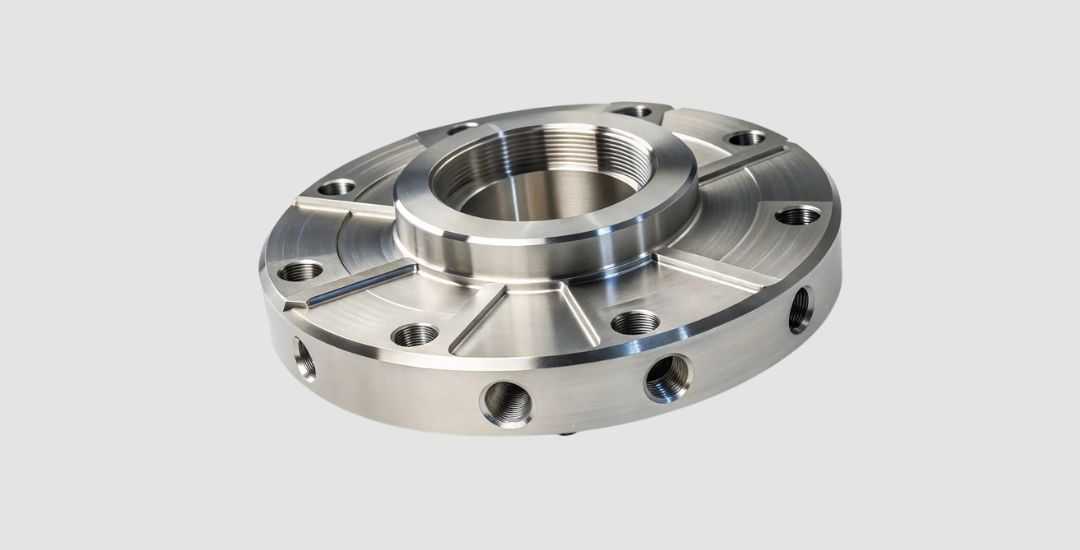
17-4 stainless steel, also known as 630 stainless steel or UNS S17400, is precipitation-hardening martensitic stainless steel. Its combination of high strength, corrosion resistance, and toughness has made it a staple material across industries such as aerospace, chemical processing, medical devices, and defense. Developed in the 1960s by Allegheny Ludlum (now ATI Metals), 17-4 stainless steel has proven its reliability over decades of practical applications.
This alloy’s name comes from its approximate 17% chromium and 4% nickel content, providing a balance of corrosion resistance and the ability to attain high strength through heat treatment. Unlike austenitic stainless steels like 304 or 316, 17-4 belongs to a “hardenable” stainless steel series, allowing engineers to tailor its mechanical properties to suit specific applications.
2. Chemical Composition and Metallurgical Basis
The chemical composition of 17-4 stainless steel under ASTM A564 standards is as follows:
| Élément | Cr | Ni | Cu | Mn | Si | C | P | S | Nb+Ta |
| Content | 15–17.5% | 3–5% | 3–5% | ≤1% | ≤1% | ≤0.07% | ≤0.04% | ≤0.03% | 0.15–0.45% |
Key points:
- Copper (3–5%) plays a critical role in precipitation hardening by forming extremely fine ε-copper particles during aging, which effectively block dislocation movement and increase the material’s strength and hardness.
- Niobium or tantalum (0.15–0.45%) helps stabilize carbides, preventing chromium depletion at grain boundaries that could lead to corrosion, while also contributing to overall strengthening.
- Chromium (17%) provides reliable corrosion resistance by forming a dense passive oxide layer on the surface, a hallmark of stainless steels.
- Nickel stabilizes the austenite phase, enhancing toughness, ductility, and corrosion resistance, particularly in certain harsh or variable environments.
The microstructure of 17-4 stainless steel evolves with heat treatment, offering engineers flexibility in tailoring its properties. In the solution-annealed (A) condition, the alloy is primarily martensitic, providing a good balance of strength and formability. Aging at temperatures below approximately 480°C maintains this martensitic structure, while higher aging temperatures can partially convert martensite back to austenite, allowing for precise control of strength, hardness, and toughness to meet different application needs.
3. Physical Properties of 17-4 stainless steel
17-4 stainless steel has physical properties comparable to most stainless steels, making it versatile in engineering applications:
| Propriété | Value |
| Densité | 7.8 g/cm³ |
| Melting Range | 1400–1450°C (2550–2640°F) |
| Thermal Conductivity (20°C) | 18.4 W/(m·K) |
| Specific Heat (20°C) | 460 J/(kg·K) |
| Electrical Resistivity | 0.80 μΩ·m |
| Thermal Expansion (20–100°C) | 10.8×10⁻⁶ /K |
Compared to austenitic stainless steels, 17-4 has slightly lower thermal expansion, improving dimensional stability in changing temperatures. Its combination of density, thermal conductivity, and electrical resistivity also makes it suitable for certain electrical and heat exchange applications.
4. Mechanical Properties and Heat Treatment
The mechanical performance of 17-4 stainless steel depends heavily on heat treatment, which consists of solution annealing followed by aging. Different aging temperatures produce distinct strength and toughness combinations:
| Condition | Yield Strength (MPa) | Tensile Strength (MPa) | Elongation (%) | Hardness (HRC) |
| A (Solution Annealed) | 500 | 900 | 15 | 28 |
| H900 | 1170 | 1310 | 10 | 40 |
| H1025 | 1000 | 1070 | 12 | 35 |
| H1075 | 850 | 1000 | 13 | 31 |
| H1150 | 725 | 900 | 16 | 28 |
Notes:
- In the H900 condition, 17-4 stainless steel reaches its highest strength while exhibiting lower toughness, making it ideal for aerospace structural components.
- H1025 provides a balanced combination of strength and toughness, suitable for applications requiring both properties.
- The H1075 condition reduces strength but increases toughness, which is advantageous for parts subjected to impact loads.
- H1150 offers the best toughness and stress corrosion resistance, although its strength is lower, and is recommended for use in corrosive environments.
5. Manufacturing of 17-4 stainless steel
The machinability and manufacturing options for 17-4 stainless steel depend heavily on its heat treatment state:
Usinage CNC

Cutting 17-4 stainless steel is generally easier in the solution-annealed (A) condition, where its behavior is similar to 304 stainless steel. After aging, particularly in the H900 condition, the alloy’s increased hardness makes machining more challenging.
For precision components, it is recommended to perform rough and finish machining in the A state, followed by aging to achieve the final desired mechanical properties.
Soudage
This stainless steel can be welded in any heat treatment condition. However, to restore the full strength and corrosion resistance, a post-weld heat treatment—including solution annealing and aging—is necessary.

Formation
Forming operations are best carried out in the solution-annealed condition. Bending, stamping, and deep drawing are all feasible, although intermediate annealing may be required for complex shapes to prevent cracking and ensure dimensional accuracy.
Traitement de surface
Various surface treatments can significantly enhance performance. Polishing, passivation, or chemical finishing improves corrosion resistance, while shot peening can enhance fatigue strength for components under cyclic loads.
Fabrication additive
Modern manufacturing methods like Selective Laser Melting (SLM) or Direct Metal Laser Sintering (DMLS) allow production of complex geometries that would be difficult or impossible with traditional methods. These techniques expand design possibilities for applications such as custom medical implants or lightweight aerospace components.
6. Typical Applications of 17-4 stainless steel
17-4 stainless steel’s combination of high strength and corrosion resistance makes it suitable for a wide range of industries:
- Aerospace: Used in critical components such as landing gear parts, engine mounts, turbine casings, fasteners, and flight control elements. Its ability to withstand high loads and resist corrosion in variable environments makes it ideal for both commercial and military aircraft.
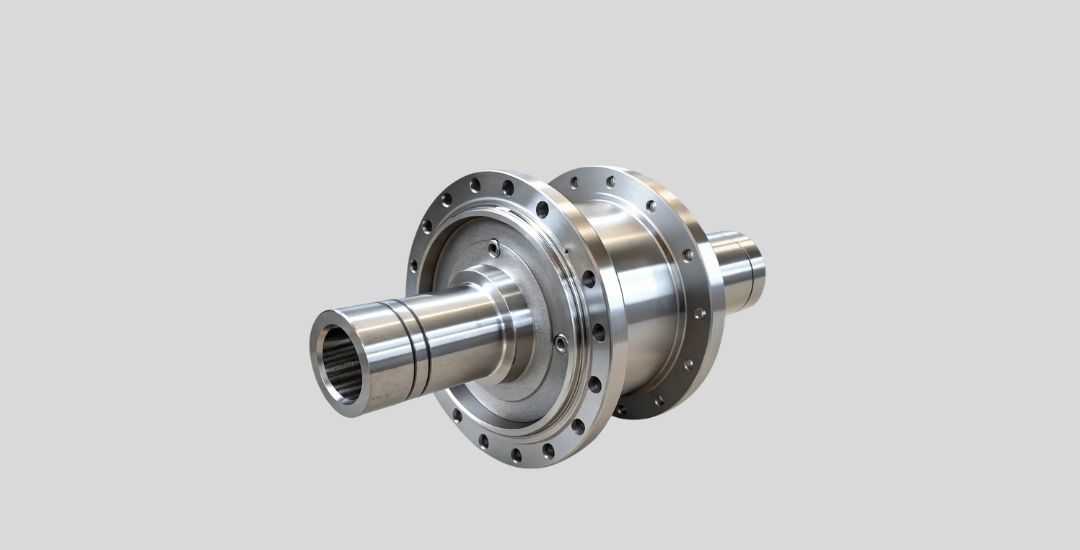
- Medical Devices: Commonly applied in surgical instruments, orthopedic implants, dental equipment, and robotic components. The material’s biocompatibility, strength, and precision machinability support the production of safe and reliable medical devices.
- Nuclear Industry: Components like reactor internals, control rod drives, and auxiliary systems benefit from 17-4 stainless steel’s stability under neutron irradiation and moderate corrosive conditions.
- Chemical Processing: Mixer shafts, centrifuge baskets, valves, and pumps made from 17-4 stainless steel offer long service life in moderately corrosive chemical environments, combining strength with resistance to wear and chemical attack.
- Defense: Firearm components, missile parts, and armored vehicle elements leverage the alloy’s high strength, impact resistance, and durability under harsh conditions.
- Marine Engineering: Propeller shafts, rudder stocks, and submersible components are often fabricated from 17-4 stainless steel due to its ability to resist seawater corrosion while maintaining mechanical performance.
- Energy: Wind turbine components and hydroelectric equipment utilize this alloy to ensure longevity and reliability under dynamic mechanical loads and varying environmental conditions.
Emerging applications include 3D-printed complex geometries for medical implants and lightweight aerospace structures. High-purity and micro-alloyed variants are also being developed for stricter performance requirements.
7. Common Issues and Solutions
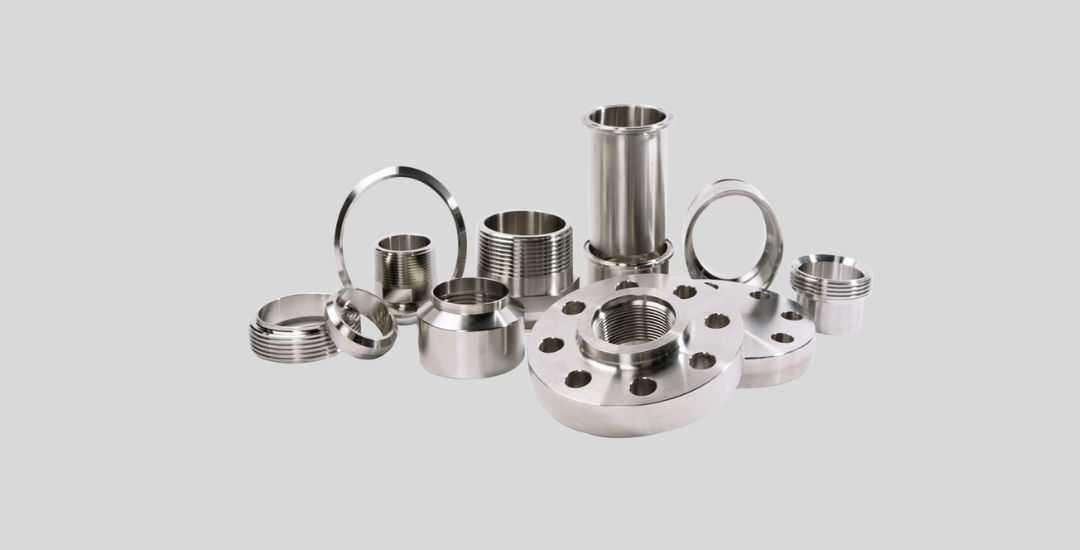
When working with 17-4 stainless steel, engineers and machinists may encounter certain challenges. The following table summarizes frequent issues and recommended approaches to address them:
| Common Issue | Solution recommandée |
| Cracking during or after machining | Ensure the material is in the correct heat treatment state. For heavy cutting, machine in solution-annealed (A) condition and then perform age-hardening. |
| Dimensional changes after heat treatment | For precision components, leave machining allowances to compensate for expected distortion after aging. |
| Insufficient corrosion resistance | Apply surface treatments such as PVD coating or electroplating to enhance corrosion protection. |
| Ensuring material quality during procurement | Specify recognized standards like AMS 5643, ASTM A564, or UNS S17400 to avoid ambiguity from commercial names. |
Conclusion
Working with 17-4 stainless steel is as much about strategy as it is about material choice. Its strength and corrosion resistance make it a versatile candidate, but the true potential emerges when you align heat treatment, machining, and surface finishing with your specific application. For instance, an H900-aged component might excel in aerospace structures but could be unnecessarily brittle for certain marine or medical parts.
In practice, tailoring 17-4 stainless steel parts requires collaboration: engineers, machinists, and materials specialists each bring critical insight. Consulting an expert like the Beska team can help you determine the ideal combination of heat treatment state, machining sequence, and post-processing to meet the standard.
Deeper into Our Resources
Pour des lectures enrichissantes, nous avons sélectionné pour vous une liste d'articles recommandés :
- Alloy Steel VS Stainless Steel
- How to Weld Stainless Steel
- Case Study: Stainless Steel CNC Machining
- Titanium vs Stainless Steel
- Galvanized Steel VS Stainless Steel
- CNC Machining Stainless Steel
- Formage de tôles
 French
 English
 Hebrew
 Turkish
 Russian
 German
 Spanish
 Portuguese