


When a part fails, the cause often comes down to a single mistake: choosing a material for the wrong property. A shaft bends permanently because the engineer prioritized hardness over yield strength. A bearing race scores because the designer specified strength without considering surface durability. The core distinction is simple: hardness measures resistance to surface indentation and wear, while strength measures resistance to bulk deformation and fracture. One protects the surface; the other carries the load.
The following sections compare hardness and strength in practical engineering terms, explain how they influence machining and heat treatment, and show how to select the right property for different components and service conditions.
1. What Is Hardness?
Hardness describes a material’s resistance to localized surface deformation such as indentation, scratching, and abrasion. In engineering, it is primarily used to evaluate how well a surface resists wear and damage during service.

Hardness testing is widely used because it is fast, inexpensive, and largely non-destructive. Rockwell and Brinell tests provide results within seconds, making hardness one of the most commonly specified material properties on engineering drawings and material data sheets. For many steels, hardness also provides a useful indication of tensile strength, although the relationship does not apply to all materials.
Hardness is an effective way to verify heat treatment consistency and surface durability, but it should not be used to judge a component’s load-bearing capacity. It is a surface property, not a measure of structural strength.
2. What Is Strength?
Strength answers a different engineering question: how much load can a material withstand before it permanently deforms or fractures? This is the property that determines whether a structural component will maintain its shape under load or ultimately fail.
Depending on the application, engineers may evaluate yield strength, tensile strength, or compressive strength. For most structural components, yield strength is the primary design criterion because it defines the point at which permanent deformation begins.
Unlike hardness, strength is determined through mechanical testing that applies controlled loads until the material yields or fractures. Because these tests are destructive and more time-consuming, strength data is typically obtained from material standards rather than routine production inspection.
For load-bearing components such as shafts, brackets, and fasteners, yield strength is usually the first property engineers evaluate because it determines whether the part can carry the required load without permanent deformation. In simple terms, strength determines whether a component can safely support the loads it was designed to carry.
3. Hardness vs Strength: The Core Difference
Although hardness and strength are often discussed together, they describe different aspects of material behavior. The simplest way to distinguish them is:
- Hardness = resistance to surface indentation, scratching, and wear.
- Strength = resistance to permanent deformation and fracture under load.
A material can be hard without being strong. Ceramic cutting tools, for example, resist scratching extremely well but have relatively low tensile strength and can fracture under tension. Likewise, a material can be strong without being particularly hard. Annealed 1018 steel provides adequate yield strength for many structural applications, but its relatively low hardness limits its wear resistance.
For many steels, hardness and tensile strength show a useful correlation, particularly after heat treatment. However, this relationship should not be applied to materials such as aluminum, copper, polymers, or ceramics, where hardness is not a reliable indicator of strength.
The practical rule is simple: prioritize hardness when surface wear is the dominant failure mode, and prioritize strength when the component must resist bending, yielding, or fracture. Many engineering components require both, making material selection a balance rather than choosing one property over the other.
4. Engineering Reference: Hardness vs Strength
Engineers rarely evaluate hardness and strength in the same way. They are measured, specified, and verified using different methods depending on the application. The following reference summarizes the key differences encountered in design, manufacturing, and quality control.
| Engineering Aspect | Hardness | Strength |
| Primary purpose | Evaluate resistance to surface wear, indentation, and abrasion | Evaluate resistance to yielding, deformation, and fracture under load |
| Typical unit | HRC, HRB, HB, HV | MPa, ksi |
| Common test methods | Rockwell, Brinell, Vickers | Tensile test (ASTM A370, ISO 6892) |
| Test type | Largely non-destructive | Destructive |
| Typical inspection time | Seconds | Several minutes or longer |
| Production quality control | Frequently used to verify heat treatment and process consistency | Usually verified through material certification or sample testing rather than routine production inspection |
| Engineering drawings | Commonly specified as a hardness range (e.g. HRC 58–62) | Commonly specified as minimum yield or tensile strength (e.g. Yield Strength ≥ 450 MPa) |
| Typical failure mode addressed | Surface wear, scratching, galling, indentation | Yielding, bending, buckling, fracture |
| Most suitable applications | Bearings, gears, cutting tools, wear surfaces | Shafts, brackets, fasteners, structural components |
This comparison serves as a practical engineering reference rather than a selection rule. Hardness and strength describe different aspects of material performance, and neither property should be considered in isolation. The correct choice always depends on the component’s function, expected loading conditions, wear environment, and service life requirements.
Sources: ASTM A370; ASTM E18; ASTM E10; ISO 6892-1; ASM Handbook Volume 1; MatWeb Material Database.
Note: The information above is intended as a general engineering reference. Actual values and specifications vary with material grade, heat treatment, manufacturing process, and applicable industry standards.
5. How Hardness and Strength Affect CNC Machining
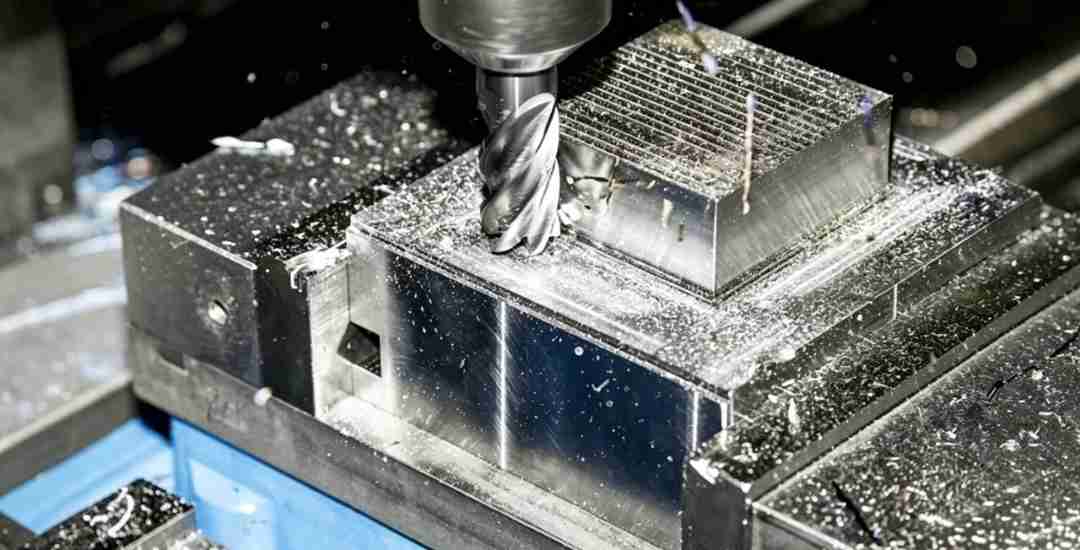
Hardness and strength influence not only part performance, but also how efficiently a material can be machined. Their effects are most evident in tool wear, cutting forces, and achievable surface finish.
Tool Wear
Harder materials generally accelerate tool wear because they place greater stress on the cutting edge. Machining hardened steel often requires lower cutting speeds, wear-resistant carbide tools, or even ceramic and CBN inserts for very hard materials. By contrast, very soft materials may form built-up edges on the tool, reducing cutting stability and surface quality.
In practice, hardness has a greater influence on tool life than strength, making it one of the first material properties considered when selecting cutting tools and machining parameters.
Cutting Forces
Higher-strength materials require greater cutting forces, increasing spindle load, fixture requirements, and the risk of part deflection. Thin-walled features are particularly sensitive because cutting forces can push the workpiece away from the tool, leading to chatter, dimensional errors, or even scrap. Stable fixturing becomes increasingly important as material strength increases.
Surface Finish
Material properties also influence the achievable surface finish. Harder materials generally produce cleaner surfaces because they are less likely to smear or tear during cutting. Softer materials often require sharper tools, optimized cutting parameters, and effective chip control to achieve the same finish quality.
Before machining, always verify the actual hardness range of the supplied material rather than relying only on the nominal material grade. Even within the same alloy, hardness variations can significantly affect tool life, cutting parameters, and machining consistency.
6. How Heat Treatment Affects Hardness and Strength
Heat treatment changes the relationship between hardness, strength, and toughness. Different processes produce different property combinations, so the appropriate choice depends on how the component will be used.
Increasing hardness usually improves wear resistance, but it also reduces toughness. Steel hardened to more than 60 HRC performs well in abrasive environments, yet it becomes more vulnerable to cracking under impact or shock loading. For many components, excessive hardness creates more problems than it solves.
Gear teeth illustrate this balance well. The tooth surface must resist continuous wear, while the core must absorb repeated impact without cracking. Processes such as carburizing solve this problem by hardening only the outer layer and leaving the core relatively tough. Bearings, transmission components, and many powertrain parts use the same approach for the same reason.
Heat treatment should be selected according to the component’s operating conditions rather than a target hardness value alone. Wear resistance, load, impact, fatigue life, and service environment all need to be considered before deciding which hardness level is appropriate.
7. Material Selection Based on Failure Mode
Before comparing material properties, first identify how the component is most likely to fail. The dominant failure mode usually determines which property deserves the highest priority during material selection.
Condition | Priority | Rationale |
Part carries tensile or bending loads | Strength | Prevents yielding or fracture under load |
Part experience sliding contact or abrasion | Hardness | Resists surface wear and galling |
Part experiences impact loads | Toughness | Absorbs energy without fracture |
Part requires both wear resistance and load capacity | Case hardening | Hard surface plus tough core |
The principle is straightforward: first identify how the part is most likely to fail, then choose the material property that best prevents that failure. Material data sheets are useful references, but they should support the application, not determine it.
8. Common Misconceptions About Hardness and Strength
Hardness equals strength.
Hardness equals wear resistance.
Strength equals toughness.
A strong material is automatically wear-resistant.
9. Hardness and Strength in Real Engineering Applications
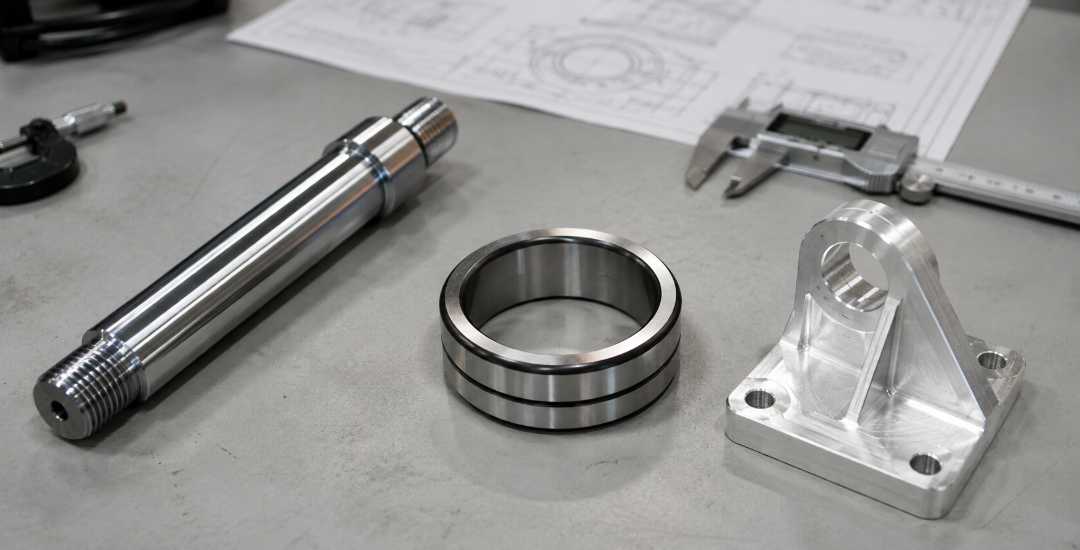
Hydraulic Piston Rod
Bearing Race
Aluminum Mounting Bracket
Conclusion
Deeper into Our Resources
For some insightful reads, we’ve curated a list of recommended articles just for you:
 English
 Hebrew
 Turkish
 French
 Russian
 German
 Spanish
 Portuguese