

שירות יציקת יתר
למה לבחור בבסקה?
At Beska, we offer a custom overmolding service according to your 2D & 3D files. Do you need any help? We’d like to assist!
אפשרויות חומר
We support 100+ kinds of materials for your overmolding projects, ranging from thermoplastics to elastomers. If you get any demand, we would customize it for your project.
הדרכה הנדסית
מתלבטים לגבי החומר המתאים? אנחנו כאן בשבילכם. צוות ההנדסה שלנו מוכן להציע הצעות בנוגע לעיצוב, בחירת חומרים ובעיות אחרות.
זמן הובלה קצר
We’re fully equipped to offer a custom overmolding solution from molding to delivery. With well-managed schedules and professionals, we’re capable of delivering the parts as estimated.
Applicable Materials for Overmolding
We usually combine 2+ kinds of materials to create overmolded parts. There are a few materials that we often apply for overmolding.
Substrate Materials:
ניילון (PA)
אקרילוניטריל בוטדיאן סטירן (ABS)
פוליקרבונט (PC)
פוליפרופילן (PP)
פוליאתילן (PE)
Glass-reinforced plastics
Soft Overmolding Materials:
Thermoplastic Elastomers (TPEs)
Thermoplastic Polyurethanes (TPUs)
Silicone Rubber
פוליוויניל כלוריד (PVC)
מהו Overmolding?
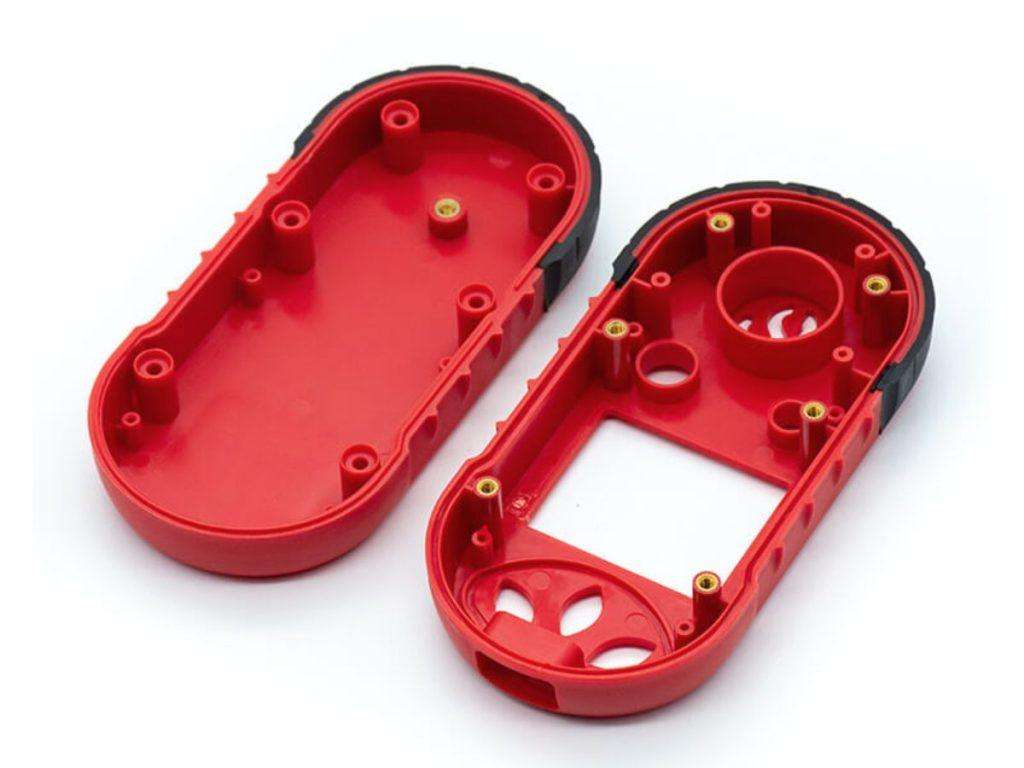
As one of the plastic injection molding techniques, overmolding is a two-step molding process. We usually apply a soft, flexible material like silicone to be molded over a rigid plastic base like ABS. This process is used to create parts with enhanced grip, added comfort, and protected surfaces. Or we just used to combine multiple functions into one part.

Step 1: Create the Base
We start by making the hard inner component, which is also called the substrate. This substrate is usually produced using a standard injection molding process and works as the foundation of the component. For example, a tool handle to an electronic shell.
Step 2: Overmold the Soft Layer
After the base is molded and cooled, it’s carefully placed into a second mold. Then, we would inject a softer material over or around specific areas. The process doesn’s need adhesive. Heat and pressure help the materials fuse together, either through a mechanical lock or a chemical bond.
The result is a clean, durable, and ergonomic plastic product. This overmolding process is widely used in various industries where both function and feel matter.
מושלם שלך יציקת יתר צרכים איתנו
Features of Overmolding
תאימות חומרים
Precise Layer Adhesion
Custom Mold Design

Overmolding VS Insert Molding
Overmolding and insert molding are two plastic injection molding techniques that we applied to combine materials in one part. But they serve different purposes. Let’s see their difference!

In the overmolding process, we mold a soft material like silicone or rubber over a rigid plastic base. The silicone overmolding parts are commonly for medical grips; rubber overmolding parts are often applied for tool handles. They improve the grip, comfort, or sealing of the parts. We also apply it in creating plastic overmolding parts where aesthetics or vibration dampening is key.
As for insert molding, it starts by placing a pre-made metal or plastic component (like a threaded insert or a pin) into the mold before injecting plastic around it. The integration makes a strong mechanical bond. It is widely used in electronics, such as overmolded connectors, where the insert remains functional and protected inside the plastic shell.
So, how to choose from them? If you want enhanced grip or dual-material function, overmolding is your top choice. If you’re looking to integrate structural or conductive inserts, insert molding is the better choice.
Definition of Overmolding
היתרונות של Overmolding
Enhanced Product Durability
Improved User Experience
Increased Design Flexibility
Types of Overmolding Services
Insert Overmolding
Two-Shot Overmolding
Multi-Material Overmolding
Application of Overmolding Services
מוצרי אלקטרוניקה
מכשירים רפואיים
רכיבי רכב
3 Tips to Consider When Choosing Overmolding Services
#1 Solid Track Record
#2 Proven Technical Expertise
#3 Advanced Overmolding Techniques
We usually don't. That's because overmolding works well when we choose the soft overmold and rigid base that are chemically or mechanically compatible. But if using the same materials, they may not bond well.
The alternatives include two-shot molding, adhesive bonding, or mechanical assembly. These manufacturing methods may work when the overmolding process isn't ideal for your material or budget.
It depends. It's expensive if you create low-volume plastic parts for its high tooling costs. If looking for high-volume production solution, overmolding is often a more cost-effective one in the long run.
1. Remenber to leave room for proper material flow.
2. Add undercuts or texture for better bonding.
3. You need to ensure the base material can handle the heat and pressure of the second molding cycle.
TPE and silicone are popular materials for rubber overmolding. They are ideal for producing handheld products and seals.
Overmolding is one of the popuar injection molding techniques. But they are not the same. Injection molding usually refers to making a single part in one cycle. Overmolding is a technique that builds a multi-material part in two or more steps by molding over a preformed piece.
צלול עמוק יותר לתוך המשאבים שלנו
מחפשים אפשרויות שירות מגוונות יותר? דפדף בין הבחירות הנבחרות שלנו:
עדיין לא מצאתם את מה שחיפשתם? אל תהססו פנה אלינו. אנחנו זמינים מסביב לשעון כדי לסייע לך.
 Hebrew
 English
 Turkish
 French
 Russian
 German
 Spanish
 Portuguese