
CNC Electronic Enclosures
- Precision CNC milling and turning
- Precise alignment for connectors, mounting points, and internal components
- Clean cutouts and consistent geometry for direct assembly
- Tolerances up to ±0.02 mm depending on material and design

Beska - האיכות הטובה ביותר עם מחיר תחרותי.
עם מומחיות בייצור מתכת ועיבוד CNC, אנחנו כאן.
CNC-machined Electronic Enclosures
Electronic enclosures directly affect assembly accuracy, thermal performance, and overall product stability. Small deviations in dimensions or feature alignment can lead to fitting issues and rework. At Beska, we machine custom enclosures based on your design, with close control over tolerances and critical features. The goal is straightforward: parts that assemble correctly and work as intended from the first build.

Machining Capabilities Overview
| Key Parameter | מִפרָט |
| גודל חלק מקסימלי | Up to 800 × 500 × 400 mm (depending on geometry and material) |
| Machining Tolerance | Up to ±0.02 mm |
| חומרים | Aluminum 6061/7075, Stainless Steel, ABS, PC, Acrylic |
| זמן אספקה | 5–7 days for prototypes |
| Machining Capability | 3-axis / 4-axis / 5-axis CNC milling |
Why CNC Machining for Electronic Enclosures
No tooling required for design changes
Unlike casting or injection molding, עיבוד CNC does not depend on fixed molds. Design updates can be implemented directly from CAD files, which makes it suitable for early-stage development and iterative testing.
High accuracy for precise assembly
CNC machining allows tight control over critical dimensions and feature alignment. This is especially important for enclosures that need to fit internal components, connectors, or mounting structures without adjustment.
Consistent quality for small to medium batches
For low to medium production volumes, CNC machining offers a balanced approach between cost and precision. It avoids upfront tooling costs while maintaining stable repeatability across parts.
Most projects end up being a balance between design requirements, accuracy, and how the part is actually going to be used.

Materials Used in Electronic Enclosure Machining
At Beska, we typically choose materials based on strength requirements, weight considerations, machining characteristics, and the final application of the enclosure. Below is a quick overview of commonly used materials in CNC machined electronic enclosures:
| חוֹמֶר | מאפיינים מרכזיים | Typical Use |
| אלומיניום 6061 | Good strength, lightweight, excellent machinability | General electronic enclosures, industrial housings |
| אלומיניום 7075 | Higher strength, better structural performance | Load-bearing or high-strength applications |
| נירוסטה | High durability, corrosion resistance | Harsh or outdoor environments |
| ABS | Lightweight, cost-effective, easy to machine | Prototypes, internal housings |
| PC (פוליקרבונט) | Impact resistance, dimensional stability | Protective covers, functional enclosures |
| אַקרִילִי | High transparency, good surface finish | Display or visual components |
It usually comes down to what the enclosure needs to do in its actual working environment and what trade-offs make the most sense for the design.
Surface Finishing for Electronic Enclosures
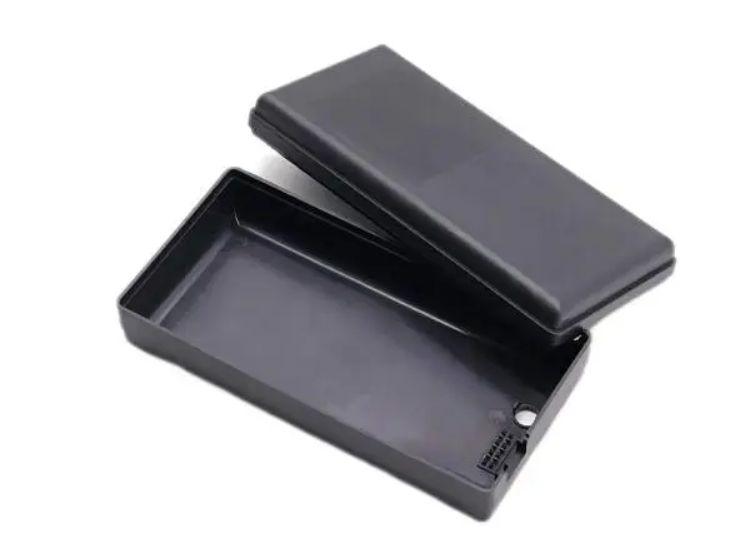
Surface finishing is usually decided together with material and the intended use of the enclosure. It affects not only how the part looks, but also how it holds up over time in real working conditions.
Aluminum parts
For aluminum enclosures, אילגון is the most commonly used process. It creates a stable surface that performs well in everyday handling and industrial environments. Before anodizing, sandblasting is often applied to keep the surface texture consistent, while polishing is used when a cleaner or more refined appearance is needed depending on the product design.
Stainless steel parts
With stainless steel, finishing is less about protection and more about controlling the final look and surface feel. Brushed finishes are often used for a technical appearance, while polishing is chosen when a smoother and more refined surface is required.
Plastic parts
For plastics such as ABS, PC, and acrylic, finishing is mainly about appearance and functional marking. Coating can be applied when color or extra surface strength is needed, while laser engraving is typically used for labels, logos, or part identification.
Finishing is usually part of the same design decision as material and function, rather than something considered separately.
Applications of CNC Machined Electronic Enclosures
CNC machined enclosures are used across industries where mechanical accuracy, structural stability, and consistent performance are required. Different applications place different demands on the design and machining process.
Industrial Control Systems
Enclosures used in industrial environments require precise alignment with internal modules, connectors, and mounting components.
Telecommunications Equipment
Telecom housings often focus on structural rigidity and thermal performance. Designs typically include heat dissipation features and internal support structures to maintain system stability during continuous operation.
מכשירים רפואיים
Medical applications require tight dimensional control and clean surface finishing. Enclosures must support precise assembly while maintaining consistent quality across production batches.
מוצרי אלקטרוניקה
For consumer-facing products, appearance becomes as important as function. Smooth surface quality, accurate edges, and consistent finishing are key requirements in addition to structural precision.
Different applications place different demands on enclosure design, but the requirements usually come down to how well the part fits, performs, and holds up in real use.
Manufacturing Considerations for Electronic Enclosures
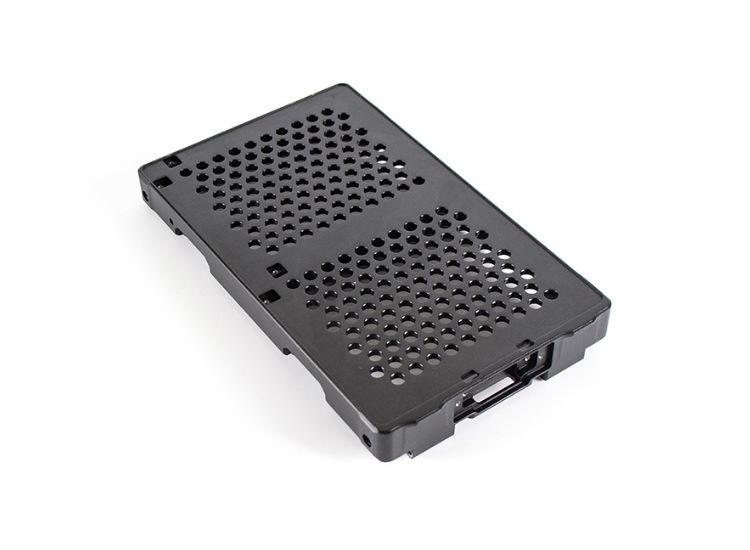
Electronic enclosures combine tight tolerances, multiple interfaces, and compact internal layouts, which makes machining more sensitive to small variations during production.
Feature Alignment
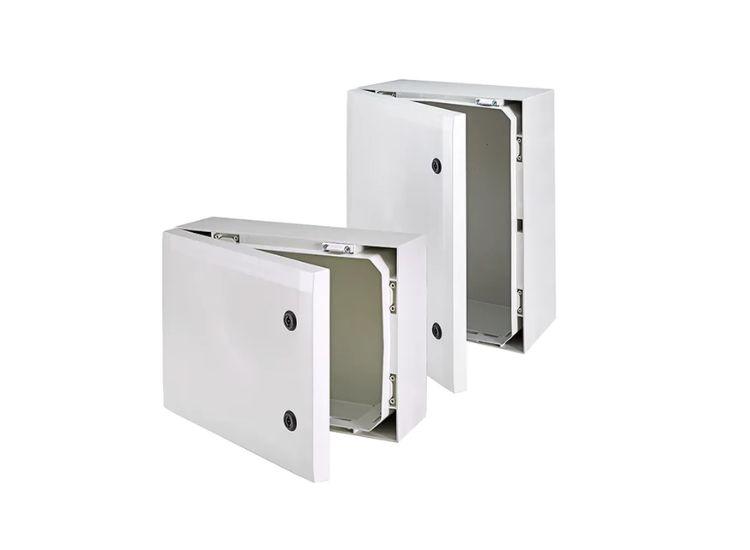
Electronic enclosures often include connectors, mounting points, and internal structures that need to align within a limited space. Small deviations can affect assembly fit, so positioning and reference control are kept consistent throughout machining.
Thin-Wall Deformation
Thin walls and deep cavities can lose stability during machining if material is removed unevenly or too aggressively. This is managed by controlling cutting paths, reducing stress during machining, and using stable fixturing to maintain rigidity.
Edge and Cutout Quality
Ports, openings, and functional cutouts require accurate dimensions and clean edges to ensure proper assembly and appearance. This is achieved by selecting appropriate tools and stable machining parameters from the start.
The focus is usually on keeping all these factors under control from the planning stage, so the final result stays consistent without requiring extra adjustment.
Case Study: CNC Machined Electronic Enclosure
A recent project involved a CNC machined aluminum enclosure for an industrial monitoring device.
The design required a compact housing with internal mounting points for a PCB, external connector openings, and a sealed interface between mating surfaces.
The part was machined from 6061 aluminum to balance strength and weight, with tight control over critical dimensions to ensure proper alignment between internal components and external interfaces. One of the key requirements was maintaining consistent positioning of connector cutouts relative to the PCB, as any deviation would directly affect assembly.
During machining, attention was focused on stabilizing thin wall sections around the internal cavity and maintaining clean edges around all functional openings. After machining, the enclosure was anodized to improve surface durability and provide a uniform finish suitable for industrial use.
The final result allowed direct assembly without modification, with all interfaces fitting as designed during the initial development stage.

גלריית מוצרים
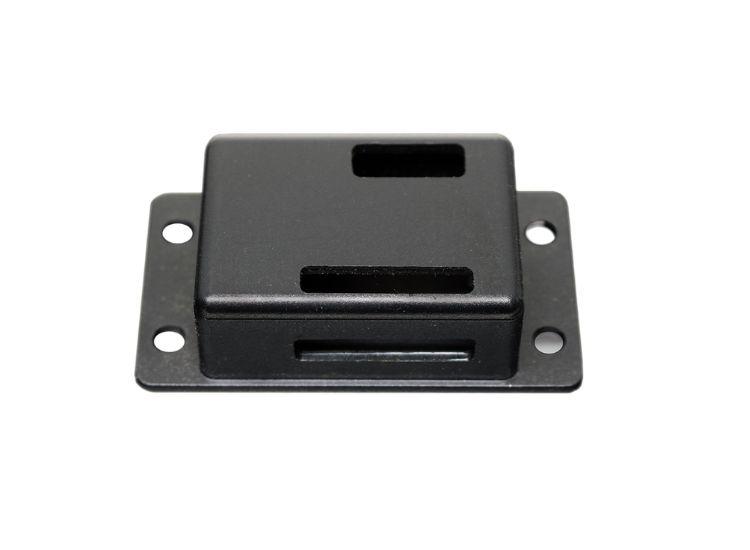
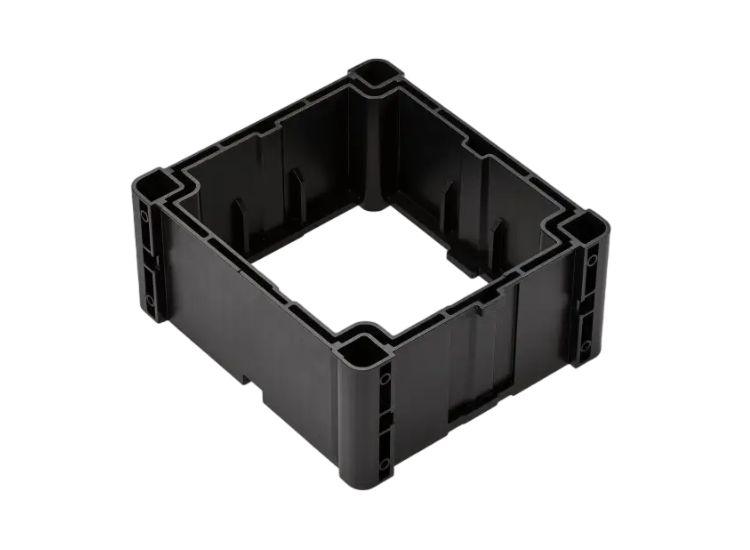
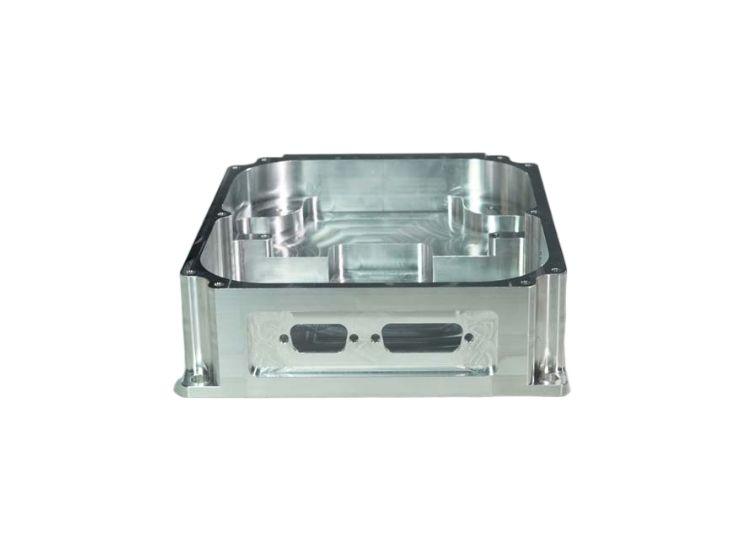
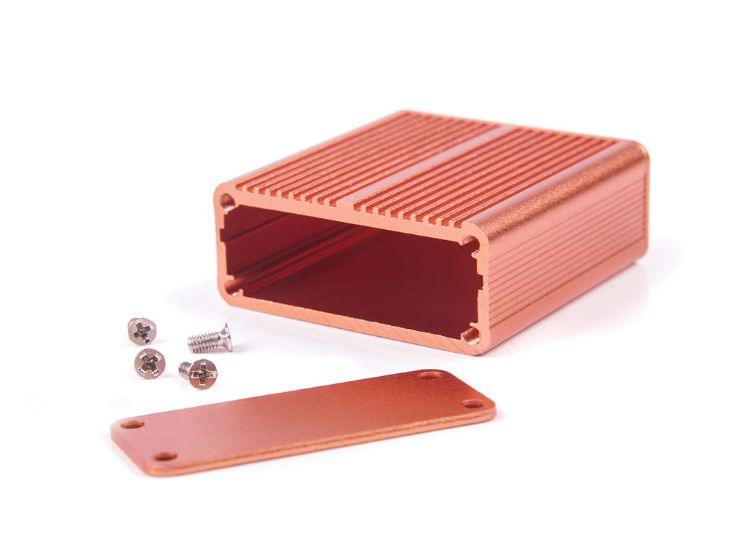
Here are a few examples of machined electronic enclosures in different applications.

שאלות נפוצות
Yes. We typically work directly from STEP or IGES files, and review the design before machining to ensure critical features such as mounting points, cutouts, and wall thickness are suitable for production.
A 3D model is usually enough to start. If there are tight tolerances, specific finishing requirements, or assembly constraints, 2D drawings or notes are helpful to clarify key details.
Critical dimensions such as mating surfaces, connector openings, and internal mounting features are carefully controlled during machining. These areas are verified against the drawing before finishing.
If any manufacturability issues are identified, feedback is provided before production starts. Adjustments are made at the design stage rather than during machining.
Yes. Surface finishing such as anodizing or powder coating can be controlled to maintain consistency across batches, especially when parts are used in the same assembly.
צלול עמוק יותר לתוך המשאבים שלנו
For more details, we’ve curated a few recommended pages and articles just for you:
Get a CNC Machining Electronic Enclosure Quote!
Beska - האיכות הטובה ביותר עם מחיר תחרותי.
עם מומחיות בייצור מתכת ועיבוד CNC, אנחנו כאן.
 Hebrew
 English
 Turkish
 French
 Russian
 German
 Spanish
 Portuguese