
CNC Machining Stainless Steel
- High-Precision Parts from 304, 316, 17-4 and More
- Multi-axis CNC Machining
- ISO9001:2015 Certified

Beska - האיכות הטובה ביותר עם מחיר תחרותי.
עם מומחיות בייצור מתכת ועיבוד CNC, אנחנו כאן.
Our Stainless Steel CNC Machining Capability
Stainless steel remains a top choice for industries that demand strength, corrosion resistance, and durability. At Beska, we specialize in custom stainless steel machining with capabilities that help you move smoothly from prototypes to full-scale production.

Beska - האיכות הטובה ביותר עם מחיר תחרותי.
עם מומחיות בייצור מתכת ועיבוד CNC, אנחנו כאן.
- Full range of stainless steels. We offer standard grades like 304 and 316, as well as performance alloys such as 17-4PH
- Multi-Axis CNC Machining. With 3-, 4-, and 5-axis equipment, we can handle parts with simple and complex geometries.
- High Precision Tolerance. The precision parts can achieve up to ±0.005mm for demanding applications.
- Flexible Production. We customize the parts from low-volume prototypes to mass production
- Comprehensive Finishing Options. At Beska, we offer polishing, passivation, and other surface treatments
- Strict Quality Control. Through CMM inspection, in-process checks, and detailed reports, we ensure the accuracy and quality of the parts.
With advanced עיבוד CNC equipment and an experienced engineering team, we ensure that every stainless steel part meets your design and performance requirements.
Stainless Steel Grades We Work With
Stainless steel comes in a wide range of grades, and each brings its own balance of strength, corrosion resistance, and machinability. Here are some of the grades most often used for CNC machining:
| צִיוּן | נכסים | יישומים אופייניים |
| 304 | Good corrosion resistance, tensile strength ~500–700 MPa, excellent formability, widely available, non-magnetic in annealed state | Enclosures, fixtures, structural parts |
| 316 | Superior resistance to chlorides and chemicals, tensile strength ~515–720 MPa, excellent toughness, marine grade | Medical devices, marine hardware, food processing equipment |
| 17-4 PH | High strength after heat treatment (up to ~1100 MPa), good corrosion resistance, excellent hardness and wear resistance | Aerospace, defense, heavy-duty components |
| 410 / 420 | Martensitic grades, high hardness (up to ~50 HRC), moderate corrosion resistance, good wear resistance, can be heat treated | Cutting tools, fasteners, pump shafts |
| נירוסטה דופלקס | Combination of high strength (~700–900 MPa) and corrosion resistance, good resistance to stress corrosion cracking, balanced austenitic/ferritic structure | Chemical processing, oil & gas, pressure vessels |
| 303 | Improved machinability due to added sulfur, tensile strength ~500–700 MPa, corrosion resistance slightly lower than 304 | Precision components, fittings, gears |
| 440C | Very high hardness (up to ~60 HRC), excellent wear and abrasion resistance, moderate corrosion resistance | Bearings, surgical instruments, valve components |
This range allows you to choose the right balance between machinability, performance, and cost.
Beska - האיכות הטובה ביותר עם מחיר תחרותי.
עם מומחיות בייצור מתכת ועיבוד CNC, אנחנו כאן.
Surface Finishing for Stainless Steel Parts
Stainless steel parts often require additional surface finishing to improve appearance, corrosion resistance, or functional performance. Common finishing options that we offer include:
Beska - האיכות הטובה ביותר עם מחיר תחרותי.
עם מומחיות בייצור מתכת ועיבוד CNC, אנחנו כאן.
- Polishing improves surface smoothness and enhances visual appearance, making it suitable for decorative or precision components.
- Passivation removes free iron from the surface and enhances corrosion resistance without affecting part dimensions.
- Bead blasting creates a uniform matte finish and reduces visible machining marks.
- Electropolishing removes microscopic surface irregularities and improves cleanliness, especially for medical or food-grade applications.
- Black oxide provides a dark, uniform appearance and offers mild corrosion resistance for industrial use.
- Powder coating adds a durable protective layer with customizable colors and improved environmental resistance.
The choice of surface finishing depends on the part’s function, operating environment, and appearance requirements. Early design decisions help ensure compatibility with machining processes and consistent final results.
Custom Manufacturing & Prototyping Solutions
At Beska, we deliver custom CNC machined stainless steel parts with using multi-axis CNC machines to the clients worldwide.


Milling and Turning Options
Engineering Support & Consultation
Guidance on material selection, machining parameters, and design feasibility for prototypes and low-volume production.
Global Shipping & Packaging
Custom packaging with corrosion protection and vibration support; lead times range from 5–10 days for prototypes and 2–4 weeks for production batches.
Key Advantages of CNC Machining Stainless Steel
Stainless steel offers an excellent balance of mechanical performance and cost. Its key benefits include:
- Corrosion resistance. 304 and 316 stainless steel maintain strength and surface quality even in humid, chemical, or marine environments.
- High strength. Grades like 17-4PH deliver exceptional tensile strength and hardness, making them suitable for aerospace and defense parts.
- Durability. Stainless steel components retain performance over long service cycles, reducing replacement costs and downtime.
- Versatility in grades. From cost-effective 304 to heat-treatable 17-4PH, a wide selection of alloys supports diverse design and functional requirements.
Because of these properties, stainless steel CNC parts are widely used in medical, aerospace, automotive, and industrial applications.

Beska - האיכות הטובה ביותר עם מחיר תחרותי.
עם מומחיות בייצור מתכת ועיבוד CNC, אנחנו כאן.
Common Industries We Serve
Stainless steel CNC machining supports many sectors where performance and reliability matter:

Beska - האיכות הטובה ביותר עם מחיר תחרותי.
עם מומחיות בייצור מתכת ועיבוד CNC, אנחנו כאן.
- מכשירים רפואיים—Surgical instruments, implants, and housings require tight tolerances, smooth surface finishes, and biocompatible grades like 316 and 17-4PH.
- תעופה וחלל—Structural brackets, interior fittings, and precision components demand high-strength materials, fatigue resistance, and precise dimensions.
- רכב – Exhaust systems, drivetrain components, and safety-critical fasteners benefit from wear-resistant stainless steel and tight dimensional control.
- אֶלֶקטרוֹנִיקָה—Enclosures and connectors need corrosion resistance, thermal stability, and accurate assembly fit, which CNC machining delivers for both prototypes and production runs.
- מכונות תעשייתיות—Pumps, valves, and wear-resistant tools require high-strength and corrosion-resistant grades, with precise tolerances for reliable operation in demanding environments.
Our CNC-machined stainless steel parts deliver reliable performance across demanding industries.
Common Challenges & How We Solve Them
While stainless steel offers excellent strength, corrosion resistance, and versatility, machining it can present specific challenges.
- Material Hardness and Tool Wear. Harder stainless steel grades, such as 17-4PH and 440C, can accelerate tool wear. We address this with high-quality carbide or coated tools, optimized cutting speeds, and proper coolant management to maintain precision.
- Thermal Expansion and Warping. Stainless steel can expand or warp under heat during machining. Controlled cutting parameters, stress-relief operations, and effective fixturing help us maintain dimensional stability.
- Surface Finish and Burr Formation. Burrs or rough edges can affect assembly and performance. We use targeted פירוק בור, polishing, and פסיביות techniques for each grade to achieve smooth, high-quality surfaces.
By anticipating these common challenges and applying precise machining strategies, we ensure that stainless steel parts meet stringent quality standards and retain durability.

גלריית מוצרים
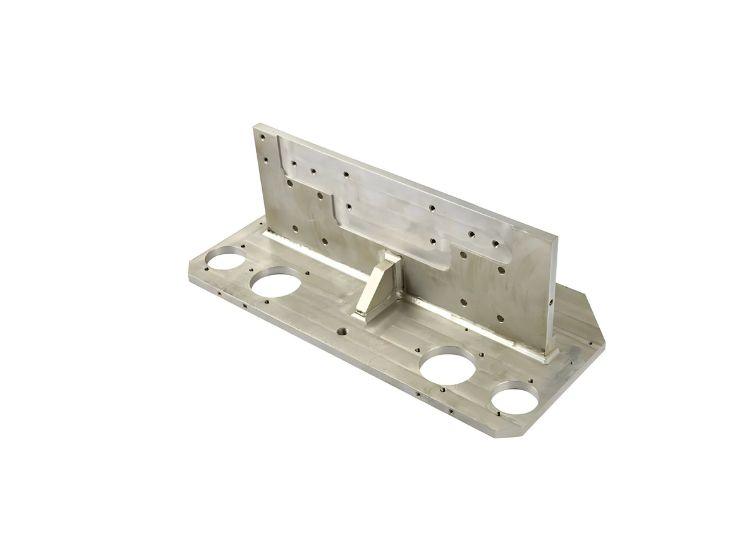
We have produced stainless steel components ranging from precision shafts and enclosures to equipment components. Each project demonstrates the combination of accurate machining, suitable material selection, and proper finishing


Beska - האיכות הטובה ביותר עם מחיר תחרותי.
עם מומחיות בייצור מתכת ועיבוד CNC, אנחנו כאן.
שאלות נפוצות
303 is the most machinable, but 304, 316, and 17-4 are more widely used due to their balance of strength and corrosion resistance.
Yes, passivation is available to improve corrosion resistance and surface cleanliness.
Typical tolerances are ±0.01 mm, depending on geometry and process.
It varies with complexity and volume. Prototypes can be completed in days, while production orders may take longer.
צלול עמוק יותר לתוך המשאבים שלנו
For more details, we’ve curated a few recommended pages and articles just for you:
Get A CNC Machining Stainless Steel Quote!
Beska - האיכות הטובה ביותר עם מחיר תחרותי.
עם מומחיות בייצור מתכת ועיבוד CNC, אנחנו כאן.
 Hebrew
 English
 Turkish
 French
 Russian
 German
 Spanish
 Portuguese