


When selecting an aluminum alloy for machining or structural applications, many engineers compare aluminum 6061 vs 6063, two of the most widely used choices in the 6xxx series. Both share an Al-Mg-Si base and offer good strength, corrosion resistance, and workability.
However, their differences in mechanical performance, surface finish, cost, and thermal/electrical properties can significantly impact design, manufacturing, and end-use results. בּוֹחֵן CNC machining aluminum sample pieces can help confirm material behavior, surface finish, and dimensional accuracy before moving forward with full-scale production.
This guide offers a detailed comparison of aluminum 6061 vs 6063, covering chemical composition, strength, formability, surface treatments, conductivity, typical applications, and more, so you can make the right material choice for your specific needs.
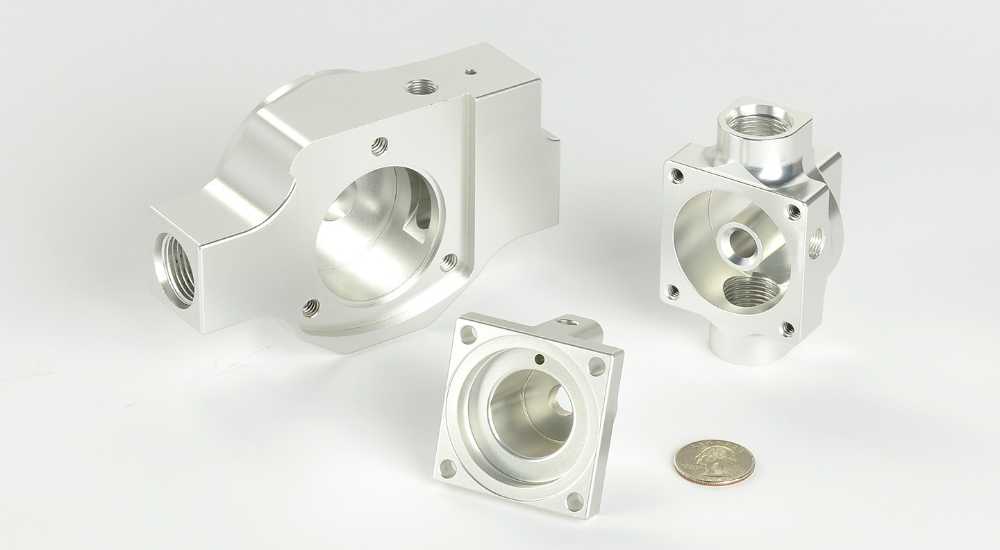
1. Aluminum 6061 vs 6063: Quick Comparison at a Glance
For engineers and designers who need a fast overview, here’s how aluminum 6061 and 6063 differ in key aspects:
| נֶכֶס | אלומיניום 6061 | אלומיניום 6063 |
|---|---|---|
| כּוֹחַ | High, suitable for structural parts | Medium, ideal for aesthetic components |
| יכולת עיבוד | Excellent, CNC-friendly | Good, mainly used for extrusion |
| עמידות בפני קורוזיה | גָבוֹהַ | גָבוֹהַ |
| גימור פני השטח | תֶקֶן | Excellent, ideal for anodizing |
| יישומים אופייניים | Aerospace, automotive, machinery | Building frames, decorative profiles, heat sinks |
6061 is best for strength and structural use; 6063 is better for appearance and extrusion projects.
2. Chemical Composition: Aluminum 6061 vs 6063
Before diving into the specific numbers, it’s useful to understand that even small differences in alloying elements can significantly influence an aluminum alloy’s strength, hardness, and surface finish.
| אֵלֵמֶנט | 6061 (% weight) | 6063 (% weight) |
| Magnesium (Mg) | 0.8–1.2 | 0.45–0.9 |
| Silicon (Si) | 0.4–0.8 | 0.2–0.6 |
| Iron (Fe) | ≤ 0.7 | ≤ 0.35 |
| נחושת (Cu) | 0.15–0.4 | ≤ 0.1 |
| Chromium (Cr) | 0.04–0.35 | ≤ 0.1 |
The higher magnesium and copper content in 6061 contributes to superior strength and hardness. 6063’s lower alloy content improves its surface finish quality and makes it ideal for complex extrusions.
3. Mechanical Properties of Aluminum 6061 and 6063
While both alloys are widely used, their specific strength, hardness, and ductility values differ enough to affect how they perform under load and respond to forming or machining.
| נֶכֶס | 6061-T6 | 6063-T6 |
| Tensile Strength (MPa) | ~290 | ~240 |
| Yield Strength (MPa) | ~240 | ~210 |
| Elongation (%) | ~10 | ~12 |
| קשיות (ברינל) | ~95 | ~73 |
| Modulus of Elasticity (GPa) | ~69 | ~68.3 |
| צפיפות (g/cm³) | 2.7 | 2.7 |
These mechanical differences influence not only the performance but also the fabrication and finishing processes of each alloy.
4. Thermal and Electrical Conductivity Comparison
While strength and formability are major selection criteria, thermal and electrical conductivity can also influence your material choice—especially in applications involving heat transfer or electrical grounding.
מוליכות תרמית:
Both 6061 and 6063 offer decent thermal conductivity, but 6063 generally performs slightly better due to its higher aluminum purity and lower alloy content.
- 6063: ~201–209 W/m·K
- 6061: ~167–170 W/m·K
This makes 6063 a more popular choice in applications like LED housings, heat sinks, and architectural fins where thermal dissipation is a key requirement.
Electrical Conductivity:
Similarly, 6063 has a slight edge in electrical conductivity, making it better suited for low-voltage connectors, grounding systems, or decorative trim with functional conduction needs.
- 6063: ~53–56% IACS
- 6061: ~40–44% IACS
That said, neither alloy matches the performance of pure aluminum or specialized conductor-grade alloys (like 1350), so their use in electrical systems is typically secondary or structural.
5. Manufacturing Process: Aluminum 6061 vs. 6063
Here’s a closer look at how each material performs across various industrial processes.
Casting
Casting forms the foundation of aluminum alloy processing, especially for preparing billets used in extrusion or forging. When comparing 6061 vs 6063 aluminum casting behavior, 6063 clearly stands out for large-scale, high-volume applications.
- 6063 aluminum features a purer composition with fewer alloying elements. This results in excellent casting flowability, reduced tendency for defects like porosity or inclusions, and greater process stability. It is ideally suited for semi-continuous casting of long billets, commonly used in architectural profiles like windows and decorative extrusions.
- 6061 aluminum, in contrast, contains copper and chromium, which improve strength but also complicate the casting process. Precise control of temperature and cooling speed is essential to avoid segregation. It is best suited for casting billets intended for high-strength structural components, such as automotive frames or aerospace forgings.
Aluminum Extrusion:
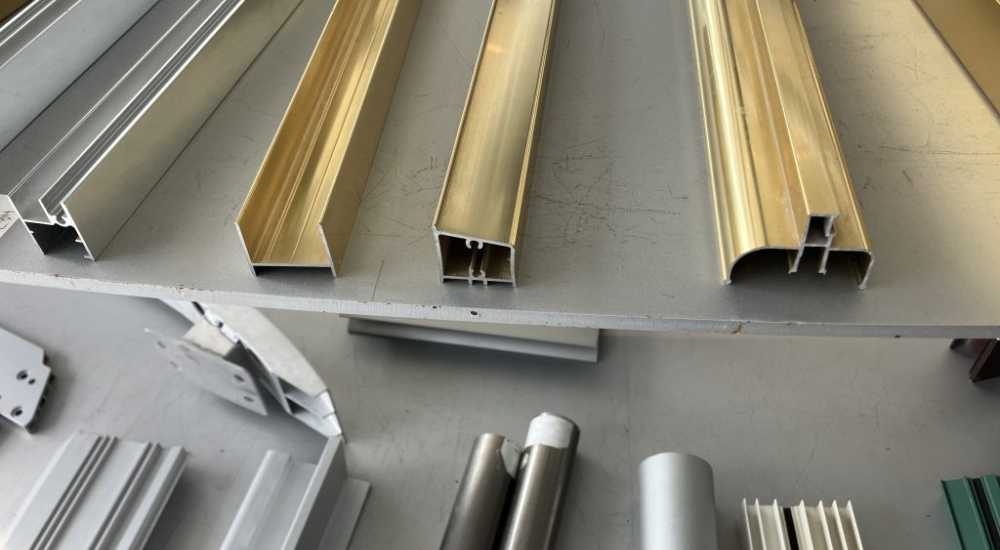
Extrusion is the core forming method for 6xxx aluminum, and this is where the difference in flow characteristics becomes especially relevant.
6063 aluminum offers exceptional extrudability due to its high ductility and fine grain structure. With elongation rates up to 25–30%, it’s the preferred choice for complex, thin-walled, or long aluminum profiles, such as decorative trims, hollow window frames, or curtain wall sections. Its processing advantages include:
- High extrusion speeds (up to 60–100 m/min)
- Low die wear
- Smooth surface finish requiring minimal post-treatment
6061 aluminum, though stronger, exhibits lower plasticity. Its extrusion process requires higher temperatures (500–520°C vs. 480–500°C for 6063) and greater force. The speed is generally slower (30–60 m/min), and attention must be paid to potential cracking or uneven flow. It is better suited for structural profiles with moderate complexity, such as support arms, rails, or camper frame elements.
Rolling
Rolling transforms aluminum into plates or sheets, where surface quality and deformation resistance are critical. When comparing 6061 and 6063 aluminum rolling performance, the intended application is key.
6063 aluminum is ideal for thin-gauge rolling (0.3–3 mm). Thanks to its excellent plasticity and low work hardening rate, it delivers smooth, uniform surfaces with low roughness (Ra < 0.8 μm). It’s commonly used for decorative sheet metal or parts requiring subsequent forming, like appliance casings or architectural cladding.
6061 aluminum is more appropriate for rolling medium to thick plates (3–100 mm) used in structural roles such as machinery bases, marine decks, or heavy-duty frames. However, its higher strength leads to greater rolling force requirements, and intermediate annealing is often necessary to prevent cracking.
עיבוד CNC: Precision & Surface Finish
In 6061 vs 6063 aluminum machining, the choice depends on whether strength or surface quality is more important.
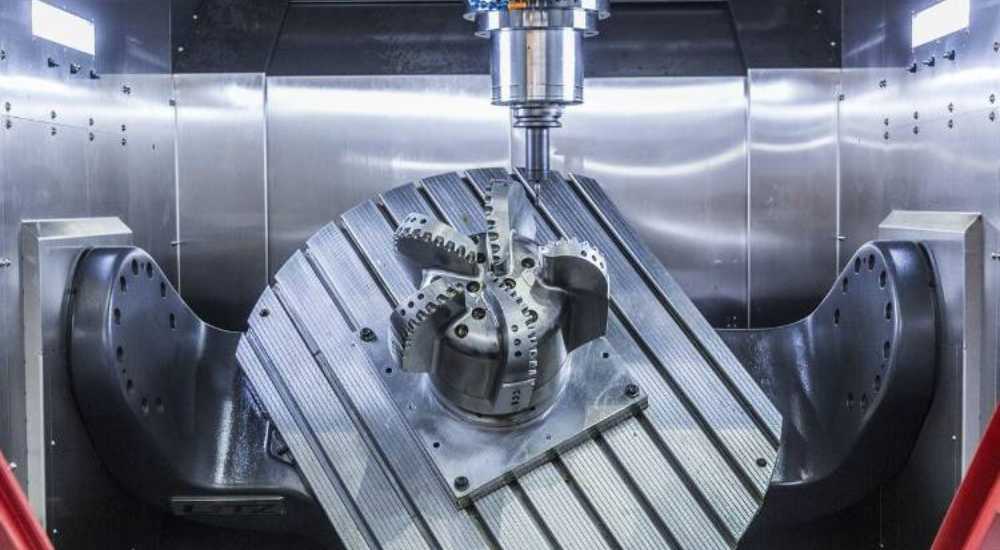
6063 aluminum, being softer, generates lower cutting resistance and produces smooth, non-clogging chips. This makes it excellent for high-speed precision machining of decorative parts, such as ornamental details or slim shafts. Tool wear is minimal, and high-speed steel tools are often sufficient.
6061 aluminum, especially in the T6 condition, offers superior strength (~290 MPa tensile) and dimensional stability. However, it requires harder carbide tooling and higher cutting forces. The chips are more brittle and break easily, which is beneficial for high-efficiency machining of structural parts like brackets, joints, or load-bearing housings.
ריתוך פחים
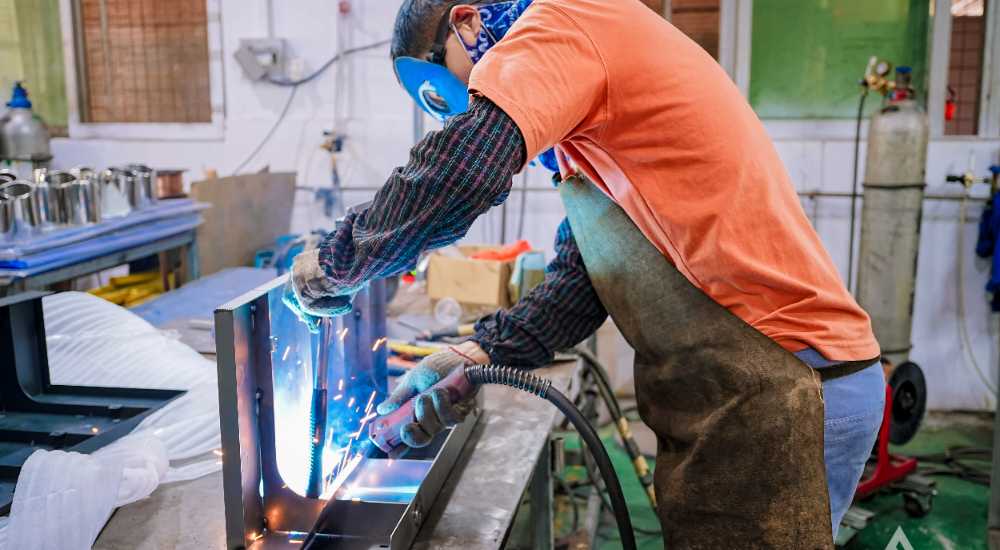
Welding performance of these alloys is a critical factor for assembly and fabrication, particularly in structural or architectural applications.
6063 aluminum is highly weldable, thanks to its clean chemistry and lack of copper. It has low susceptibility to hot cracking and works well with MIG/TIG processes using ER4043 filler wire. Weld seams are clean and strong (up to 80% of base metal), making it ideal for profile splicing in window and door frames.
6061 aluminum, while weldable, presents more challenges due to copper content, which can promote hot cracking. To address this, ER5356 filler wire is recommended, and precise heat input control is critical. Post-weld aging or localized heat treatment is often needed to restore mechanical strength, especially for load-bearing weld joints in automotive or aerospace structures.
6. Surface Finishing Differences: Aluminum 6061 and 6063
While 6061 and 6063 are often used in similar environments, their response to finishing processes varies due to subtle differences in composition and microstructure.
אנודיזציה
Anodizing creates a protective aluminum oxide layer that enhances corrosion resistance and surface durability.
- 6063 aluminum produces a smooth, uniform anodized finish with excellent gloss and consistent color, thanks to its higher purity and fewer impurities. This makes it ideal for decorative applications like window frames, furniture, and display structures.
- 6061 aluminum can be anodized but tends to develop a slightly rougher oxide layer with less consistent coloring due to its copper content. It’s better suited for structural or mechanical parts where strength is critical and aesthetic demands are lower. For wear-resistant applications, hard anodizing works well on 6061.

Chemical Conversion Coating
This process forms a thin, passive film on the surface, improving corrosion resistance and paint adhesion.
- 6063 forms a dense and uniform conversion layer, making it excellent as a pretreatment before painting or as a standalone protective layer in low-corrosion environments.
- 6061 may require more controlled processing to achieve uniform coating because of its impurities, but it’s widely used for industrial components needing reliable corrosion protection before coating.
Coating (Powder Coating and Fluorocarbon Coating)
Organic coatings offer color customization, UV resistance, and additional protection.
- 6063 aluminum’s smooth surface ensures even coating coverage with high gloss, fitting applications such as architectural panels, railings, and high-end consumer products.
- 6061 may need additional surface preparation like sanding due to machining marks but still achieves durable coatings suitable for industrial equipment housings, outdoor structures, and solar panel frames.
ציפוי אלקטרו
Electroplating deposits metals like nickel or chrome to improve wear resistance and decorative appeal.
- 6063 allows for uniform zincate pretreatment and strong plating adhesion, making it popular for decorative parts like lighting fixtures and precision instrument covers.
- 6061 requires optimized pretreatment due to copper content, often involving multiple zincate cycles. It’s typically used for functional plating where conductivity or surface hardness is more important than appearance.
Polishing (Mechanical and Chemical)
Polishing improves surface smoothness and achieves reflective finishes.
- 6063’s ductility makes it easier to achieve high-gloss finishes, ideal for decorative and display applications.
- 6061 demands careful polishing to avoid deformation; chemical polishing needs precise control to prevent uneven corrosion caused by impurities. It suits precision mechanical parts needing smooth surfaces.
Here is a brief chart to summarize the differences of aluminum 6061 and 6063 in surface finishing.
| גימור פני השטח | Suitable Applications for 6061 Aluminum | Suitable Applications for 6063 Aluminum | Key Difference Explanation |
| אנודיזציה | Mechanical parts, brackets (moderate decor) | Windows, furniture (high decor) | 6063 has higher purity, resulting in more uniform oxide layer |
| Chemical Conversion Coating | Corrosion pretreatment for industrial parts | Pretreatment before coating (low corrosion) | 6063’s cleaner surface forms denser conversion film |
| Coating (Powder/Fluorocarbon) | Industrial equipment housings, outdoor structures (strength priority) | Architectural panels, furniture (appearance priority) | 6063 allows more uniform coating adhesion |
| ציפוי אלקטרו | Electronic connectors, mechanical bushings (low decor) | Lighting fixtures, precision housings (high decor) | 6063’s pretreatment (zincate) is more stable |
| מֵרוּט | High-precision mechanical parts (deformation control needed) | Decorative items, crafts (high gloss) | 6063 has better ductility for polishing |
In general, 6063 aluminum excels in surface treatments where uniformity and appearance matter most, while 6061 aluminum provides a more robust base for wear-resistant and structural applications.
7. The Applications of Aluminum 6061 and 6063
Both 6061 and 6063 aluminum alloys serve important but distinct roles across industries. Here’s how their applications differ by sector:
Construction and Architecture
6063 dominates here due to its superior surface finish and extrusion quality, commonly used for window frames, door profiles, curtain walls, and decorative trims. 6061 is less common but used for structural elements requiring extra strength.
Automotive and Transportation
6061 is preferred for chassis components, frames, and structural supports due to its high strength and weldability. 6063 may be used for trim or lightweight panels where appearance is important.

תעופה וחלל
6061 finds extensive use in aerospace for structural parts and fittings that require high strength and durability. 6063 is seldom used here due to lower mechanical properties.
Consumer Goods and Furniture
6063 is favored for furniture frames, lighting fixtures, and other decorative items because of its smooth anodizing and good extrusion capability. 6061 may be used for mechanical components within consumer products.
ציוד תעשייתי
6061 is widely chosen for machinery parts, hydraulic components, and tooling where strength and wear resistance matter. 6063 can be applied to covers or enclosures where aesthetics and corrosion resistance are priorities.
Ultimately, the choice between 6061 and 6063 depends on whether your project values strength and durability over aesthetics and surface quality or vice versa.
8. Cost Comparison of 6061 vs 6063 Aluminum
When comparing 6061 and 6063 aluminum alloy, cost is often a decisive factor—especially in large-scale manufacturing or construction projects.
In general, 6063 is more cost-effective than 6061. This is due to several reasons:
- Material cost: 6063 contains fewer alloying elements like copper or chromium, making it cheaper to produce.
- Processing cost: 6063 offers better extrudability and surface finish. It can be extruded faster with lower die wear, reducing both time and tooling costs.
- Surface treatment cost: 6063 typically requires less pre-treatment for anodizing or painting because of its higher purity and smoother surface.
- Mechanical performance trade-off: While 6061 is stronger and more suitable for structural applications, that performance comes with a higher price tag, both in raw material and machining.
If your application prioritizes appearance and cost-efficiency over strength, 6063 is usually the better choice. But for load-bearing or high-stress environments, the added cost of 6061 may be justified by its superior strength and durability.
9. When to Choose Aluminum 6061 or 6063
Deciding between 6061 and 6063 depends largely on your project’s requirements:
Choose 6061 if:
- High strength and load-bearing performance are essential.
- The part will be machined, welded, or subjected to mechanical stress.
- Hard anodizing or wear resistance is required.
- Dimensional stability under force or heat is important.
- You’re working with thicker sections or structural components.
Choose 6063 if:
- A smooth surface finish or uniform anodizing color is a key requirement.
- The design involves thin-walled, complex extrusions.
- The part will operate under light to moderate mechanical loads.
- Lower cost and easier extrusion processing are priorities.
- Higher thermal or electrical conductivity is beneficial.
This distinction ensures better performance, cost-efficiency, and product quality based on your specific application.
מַסְקָנָה
Aluminum 6061 and 6063 each offer unique strengths suited to different applications. If your project demands high strength, structural integrity, and good weldability, 6061 aluminum is the better choice. On the other hand, if surface finish, extrusion complexity, and decorative quality are more important, 6063 aluminum provides superior anodizing results and extrusion performance.
After knowing their differences in mechanical properties and surface finishing capabilities, you can select the alloy that best fits your industry needs—whether that’s aerospace, architecture, automotive, or consumer goods. This targeted choice improves product quality, manufacturing efficiency, and overall performance. If you’re looking for an expert on selecting the right material and manufacturing process, מַגָע the Beska team.
Deeper into Our Resources
For some insightful reads about surface finishing, we’ve curated a list of recommended articles just for you:
 Hebrew
 English
 Turkish
 French
 Russian
 German
 Spanish
 Portuguese