


Carburizing and nitriding are both used to improve the surface performance of steel parts, but they work in very different ways. Carburizing creates a deeper hardened case through carbon diffusion and quenching, while nitriding forms a shallower nitrogen-enriched case at a lower temperature and usually without quenching.
These differences affect more than surface hardness. They also influence case depth, dimensional change, fatigue behavior, material compatibility, and the amount of machining or grinding required after heat treatment.
For an actual part, the more useful questions are how much hardened depth is needed, how much distortion the geometry can tolerate, what steel grade is being used, and whether finishing will take place before or after heat treatment.
1. What Are Carburizing and Nitriding?
Carburizing and nitriding are both thermochemical surface-hardening processes, but they change the steel surface in different ways. Carburizing introduces carbon at a relatively high temperature and is normally followed by hardening, while nitriding introduces nitrogen at a lower temperature and usually does not require quenching.
Carburizing
Carburizing is commonly used with low-carbon and low-carbon alloy steels when a hard, wear-resistant surface is needed together with a tougher core.
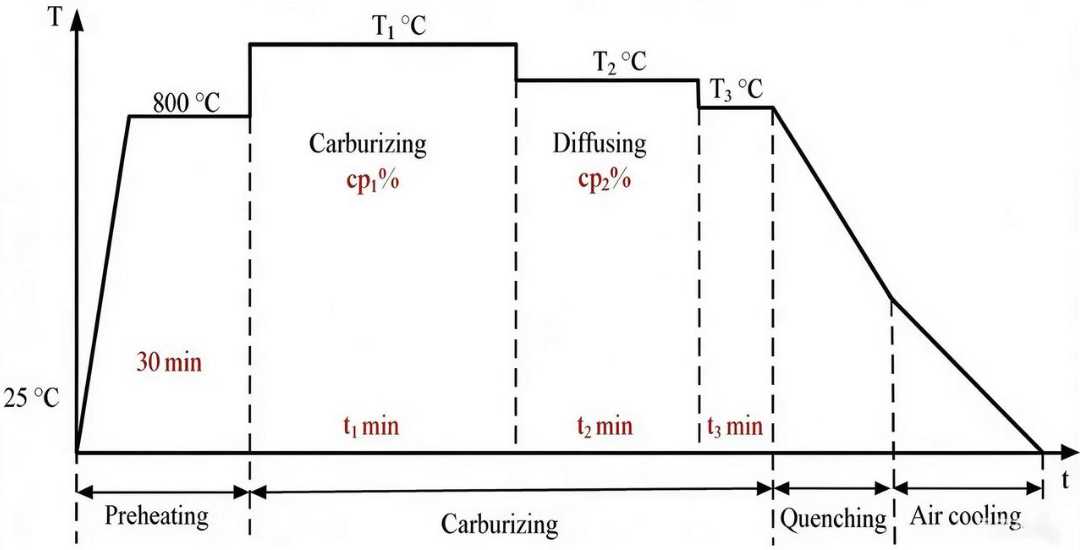
The part is heated in a carbon-rich environment, typically within the austenitizing temperature range. Carbon then diffuses into the surface, increasing its carbon content. Depending on the steel grade and process, carburizing temperatures are often around 850–950°C, while the required carbon level and case depth are controlled according to the application.
After carburizing, the part is normally quenched and tempered so that the carbon-enriched case develops a hard martensitic structure. The core contains less carbon and generally remains tougher than the surface. Effective case depth can range from fractions of a millimeter to several millimeters, depending on the component size, steel grade, loading condition, and required service life.
ניטרידינג
Nitriding introduces nitrogen into the surface of steel at a lower temperature than carburizing, commonly around 480–550°C for conventional gas nitriding. Because the process is normally carried out below the austenitizing range, it does not require the quenching step associated with carburizing.
Nitrogen diffuses into steel and interacts with alloying elements such as chromium, aluminum, molybdenum, and vanadium. Steels containing these nitride-forming elements can develop particularly high surface hardness, although the response to nitriding varies considerably with alloy composition.
A nitrided surface generally consists of a thin compound layer at the surface and a deeper diffusion zone beneath it. The useful case depth depends on the steel grade, nitriding temperature, treatment time, and required properties rather than on one fixed thickness range.
Because nitriding is performed at a lower temperature and avoids quenching, dimensional change is generally much lower than with carburizing. It is not completely eliminated, however, especially in slender, thin-walled, or highly stressed parts.
The practical difference is therefore not simply that carburizing creates a “thick layer” and nitriding creates a “thin layer.” Carburizing develops a relatively deep hardened case through carbon diffusion followed by quenching, while nitriding develops a nitrogen-enriched surface and diffusion zone at a lower temperature with much less quench-related distortion.
2. Core Differences Between Carburizing and Nitriding
Carburizing and nitriding differ most clearly in processing temperature, quenching requirements, case structure, and material response. These differences affect not only surface hardness, but also dimensional control, finishing requirements, and how each process performs in service.
Processing Temperature and Distortion
Carburizing is carried out at a relatively high temperature and is normally followed by quenching. Heating into the austenitizing range, phase transformation, and rapid cooling can all contribute to dimensional change, particularly in slender shafts, thin-walled parts, and components with uneven section thickness.
When tight tolerances are involved, carburized parts may therefore require straightening, grinding, or other finishing operations after heat treatment.
Nitriding is performed at a lower temperature, typically around 480–550°C, and normally does not require quenching. Dimensional change is generally much lower than with carburizing, which makes nitriding useful when the part is already close to its final dimensions.
Lower distortion does not mean zero distortion. Residual stress, part geometry, material condition, and the nitriding cycle can still produce measurable dimensional changes, especially in slender or thin-walled components.
Case Structure and Load Behavior
Carburizing develops a relatively deep hardened case after carbon diffusion, quenching, and tempering. Hardness gradually decreases from the surface toward the core, allowing the surface to resist wear while the core provides structural support.
This deeper case is one reason carburizing is widely used for components exposed to substantial contact stress, repeated loading, and wear.
Nitriding produces a high-hardness surface with a shallower diffusion zone. Its performance depends strongly on the steel grade, nitriding conditions, case depth, and the condition of the surface compound layer.
For this reason, load capacity cannot be reduced to a simple rule that carburizing is for heavy loads and nitriding is only for light loads. The required case depth, contact stress, impact level, core properties, and component geometry all influence which process is more appropriate.
Base Material Compatibility
Carburizing is commonly used with low-carbon and low-carbon alloy steels. The process increases carbon concentration at the surface so that the outer case can be hardened while the lower-carbon core remains comparatively tougher.
Nitriding is more sensitive to alloy composition. Steels containing nitride-forming elements such as chromium, aluminum, and vanadium generally develop higher surface hardness and a more effective nitrided case.
Dedicated nitriding steels such as 38CrMoAlA are often used where high surface hardness and controlled case properties are required. Other steels can also respond to nitriding, but their performance should be evaluated according to the actual alloy composition and treatment conditions rather than assumed from the process alone.
Carburizing vs Nitriding at a Glance
| גוֹרֵם | Carburizing | ניטרידינג |
| Typical Processing Temperature | About 850–950°C | About 480–550°C |
| Quenching | Normally required | Normally not required |
| Case Depth | Generally deeper | Generally shallower |
| Distortion Risk | Higher because of high-temperature treatment and quenching | Generally lower |
| קשיות פני השטח | High after carburizing, quenching, and tempering | Very high in suitable alloy steels |
| Typical Base Materials | Low-carbon and low-carbon alloy steels | Alloy steels with nitride-forming elements respond particularly well |
| Post-Treatment Finishing | Grinding or correction may be required for tight-tolerance parts | Often requires less corrective finishing, although dimensional change still needs to be checked |
Actual results vary with steel grade, part geometry, required case depth, heat-treatment conditions, and process specification.
3. Typical Applications of Carburizing and Nitriding
The different case structures and processing temperatures of carburizing and nitriding make each process more common in certain types of components.
Common Carburizing Applications
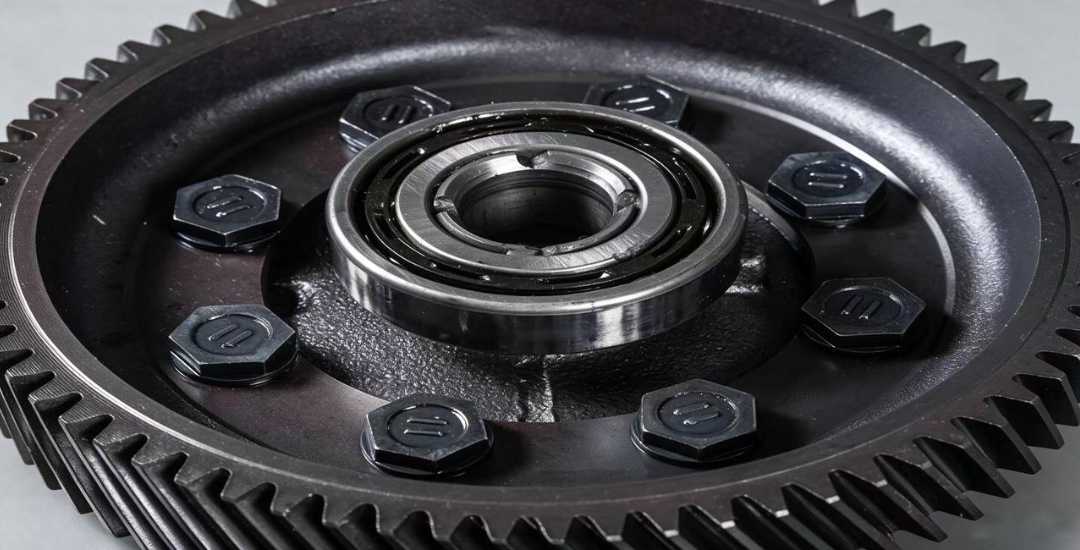
Carburizing is widely used for components that need a relatively deep, wear-resistant case together with a tougher core. Typical examples include transmission gears, sprockets, shafts, pins, and other power-transmission parts exposed to repeated contact stress and wear.
After carburizing, quenching, and tempering, the carbon-enriched surface develops high hardness while the lower-carbon core retains greater toughness. This combination is useful in components where surface durability and core support are both important.
Because quenching can introduce dimensional change, tight-tolerance carburized parts are often designed with subsequent grinding or other finishing operations in mind.
Common Nitriding Applications
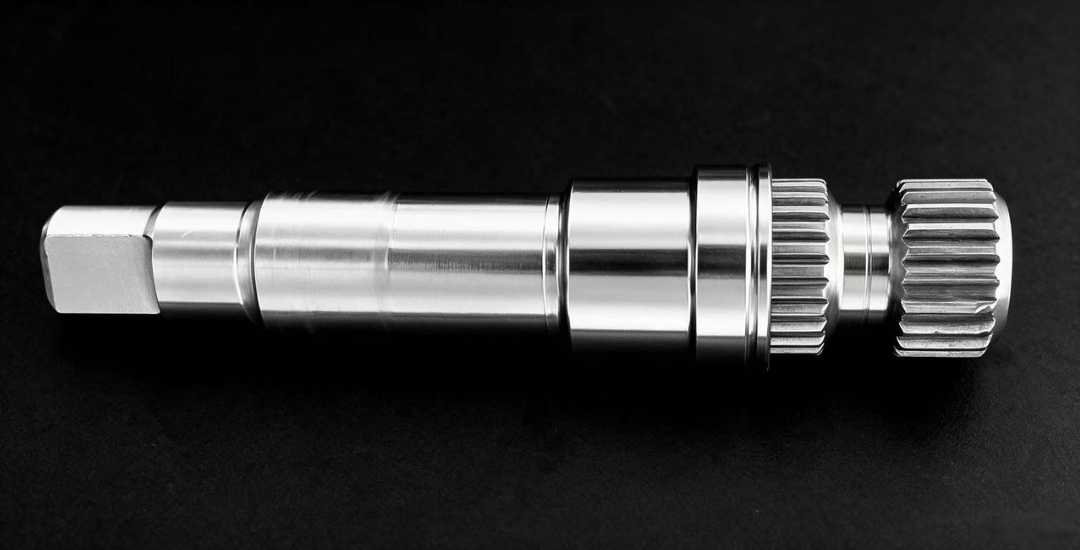
Nitriding is commonly used for precision shafts, spindle components, mold parts, gears, guide components, and other wear-critical surfaces where high surface hardness and relatively low heat-treatment distortion are important.
Since nitriding is performed at a lower temperature and normally does not require quenching, it can often be introduced later in the manufacturing sequence than carburizing. This is useful for parts that are already close to their final dimensions.
The actual suitability of nitriding still depends on the steel grade, required case depth, load conditions, and surface requirements. Alloy steels containing nitride-forming elements generally provide the strongest response to the process.
4. How to Choose Between Carburizing and Nitriding
The process decision usually becomes clearer when the required case depth, allowable dimensional change, base material, and manufacturing sequence are considered together.
Load and Required Case Depth
Parts that require a relatively deep hardened case are more likely to favor carburizing. Its carbon-enriched case can extend much deeper than a typical nitrided case and provides support beneath the hardened surface.
Nitriding is more attractive when a shallower high-hardness case is sufficient and lower heat-treatment distortion is important.
Load alone should not determine the process. Contact stress, impact level, required case depth, core properties, and component geometry all affect how the hardened surface performs in service.
Dimensional Tolerance and Distortion
Dimensional requirements often have a strong influence on the manufacturing route.
Because carburizing normally includes quenching, tight-tolerance parts may need grinding, straightening, or other corrective finishing after טיפול בחום. The required finishing allowance should therefore be considered before carburizing.
Nitriding generally causes less dimensional change and can often be performed when the part is closer to its final dimensions. Dimensional inspection is still important, particularly for slender, thin-walled, or highly stressed components.
Base Material
Steel composition affects both processes, but it is especially important for nitriding.
Carburizing is commonly used with low-carbon and low-carbon alloy steels. Nitriding can be applied to different steels, but alloys containing nitride-forming elements such as chromium, aluminum, and vanadium generally develop higher surface hardness and a more effective nitrided case.
The actual steel grade should therefore be evaluated together with the required hardness and case depth rather than treating the heat-treatment process as independent of the base material.
Manufacturing Sequence and Finishing
Carburizing and nitriding also fit differently into the production sequence.
Carburized parts often require dimensional correction or grinding after quenching, particularly when critical surfaces must remain within tight tolerances. Nitriding usually introduces less distortion, so less corrective finishing may be required after treatment.
Cost and Production Considerations
Heat-treatment cost is influenced by more than the furnace cycle itself. Carburizing may require additional grinding, straightening, or dimensional correction after quenching, while nitriding can involve longer treatment times to develop the required case depth.
Batch size, steel grade, required case depth, finishing allowance, and post-treatment operations can all affect the total manufacturing cost. For this reason, the complete process route is usually more useful for cost comparison than the heat-treatment price alone.
5. Limitations and Common Process Issues
Both carburizing and nitriding can introduce manufacturing challenges if the heat-treatment route is not matched to the part geometry, material, and required case properties.
Common Issues in Carburized Parts
Because carburizing is normally followed by quenching, dimensional change is one of the main manufacturing concerns. Slender shafts, thin-walled parts, and components with uneven section thickness may experience bending, out-of-roundness, or positional shift after heat treatment.
Where tight tolerances are required, additional straightening, grinding, or other corrective finishing may be needed.
Case uniformity can also become more difficult to control on complex geometries. Variations in carbon diffusion, heating, or quenching conditions may affect the final hardness profile and dimensional consistency of the part.
Common Issues in Nitrided Parts
Nitriding generally requires longer treatment times because nitrogen diffusion is relatively slow. The actual cycle depends on the steel grade, required case depth, and nitriding process.
Another concern is the condition of the surface compound layer, often referred to as the white layer. If this layer becomes too thick or brittle for the intended application, it may be more susceptible to cracking or surface damage under demanding contact conditions.
Dimensional change is usually lower than with carburizing, but it is not eliminated. Residual stress, part geometry, and prior machining history can still influence the final dimensions, so inspection remains important for precision components.
6. Quality Inspection After Carburizing and Nitriding
Inspection priorities differ because the two processes create different case structures and dimensional risks.
- For carburized parts, surface hardness and effective case depth are usually checked together, since hardness alone does not confirm how far the hardened case extends. Quench-related dimensional change may also require verification of features such as straightness, roundness, bores, or gear geometry.
- For nitrided parts, inspection typically focuses on surface hardness, nitrided case depth, and dimensional stability. Where the surface compound layer is controlled by the specification, its thickness and condition may also need to be checked.
Acceptance criteria should follow the drawing and heat-treatment specification rather than a universal hardness or case-depth value.
מַסְקָנָה
Carburizing and nitriding improve steel surface performance in different ways. Carburizing is generally preferred when a deeper hardened case and strong core support are required, while nitriding is often considered when high surface hardness and lower heat-treatment distortion are more important.
The final process should be matched to the steel grade, required case depth, loading conditions, dimensional tolerance, and finishing sequence. For CNC-machined parts with critical heat-treatment requirements, these factors should be reviewed early so that material choice, machining allowance, and post-treatment inspection can be planned together.
 Hebrew
 English
 Turkish
 French
 Russian
 German
 Spanish
 Portuguese