


As industries continue to seek higher precision and more personalized solutions, laser engraving on metal has become an integral step in post-processing.
Unlike machining or molding, which shapes the part itself, engraving is applied afterward to add information or aesthetic detail, ranging from identification codes on industrial components to intricate patterns on jewelry. This combination of functionality and design has made it essential across sectors from automotive and aerospace to consumer goods.
The following sections take a closer look at how to laser engrave metal: what the process involves, why it is valued, where it is applied, and how new technologies are driving its adoption worldwide.
1. What is Laser Engraving?

Laser engraving is a process that uses a concentrated beam of light to create precise and permanent marks on metal. By adjusting laser power, frequency, and speed, the surface can be vaporized, oxidized, or altered in color without compromising the material’s structural integrity. The choice of laser type directly determines which metals can be processed and the quality of the engraving.
The principle is straightforward: a laser beam is focused through a lens into a microscopic spot with very high energy density. This energy heats the surface instantly, causing localized vaporization or controlled color changes that form patterns, text, or machine-readable codes.
2. Common Laser Types for Metal Engraving
Different lasers are used depending on the metal and the level of detail required:
- Fiber Laser (1064 nm):
The most widely used for metals. Works well with stainless steel, aluminum alloys, copper, and titanium. Suitable for both deep engraving (0.1–2 mm) and high-speed marking, such as serial numbers on automotive parts. Accuracy can reach 0.01 mm, with thousands of pieces processed per hour. - CO₂ Laser (10.6 μm):
Better suited for coated metals such as anodized aluminum or galvanized steel, as well as thin foils under 0.3 mm. Often used for decorative panels, consumer products, and coated sheet marking. - UV Laser (266 nm):
A “cold processing” technique that minimizes heat damage. Ideal for precious metals like gold, silver, and platinum, as well as medical devices. It enables extremely fine engraving, such as micro-patterns on jewelry or precision scales on surgical tools.
3. Common Metals for Laser Engraving
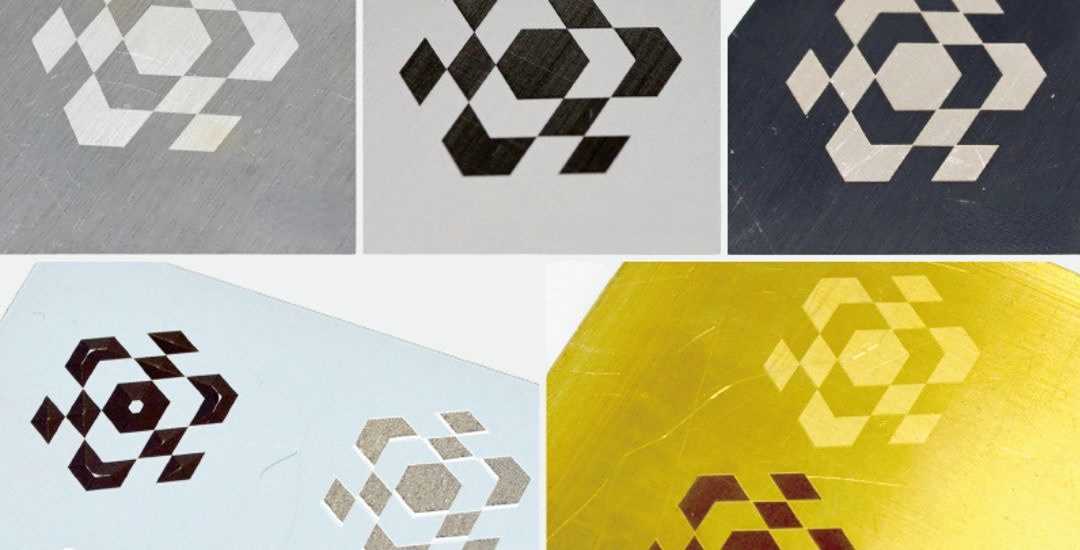
The table below summarizes how different metals respond to laser engraving, the recommended laser type, and the typical results you can expect:
| מַתֶכֶת | Recommended Laser | Typical Depth | Natural Engraved Color | Controllable Colors |
| נירוסטה | Fiber (MOPA) | 0.1–2 mm | Dark gray | Yellow → Blue → Green |
| Aluminum Alloy | Fiber / CO₂ | 0.1–3 mm | White (coating removal) | Black, gray, white |
| פְּלִיז | Fiber | 0.1–3 mm | Brown (oxidized) | Bronze variations |
| נְחוֹשֶׁת | Fiber | 0.05–1.5 mm | Dark brown | Gray / Black |
| Titanium Alloy | Fiber | 0.05–1 mm | Blue-purple | Yellow → Gold → Blue |
| פלדת פחמן | Fiber | 0.1–1.3 mm | Black | Dark gray / Black |
| Gold (Au 999) | UV | 0.05–1.5 mm | Darker gold tone | Gold / Rose gold |
| Silver (Ag 999) | UV | 0.03–0.7 mm | Light gray | Bright silver |
In short, each metal responds differently to laser engraving, so matching the right laser type with the material is essential for getting clear and reliable results.
4. Choosing the Right Laser Engraving Equipment
The performance of your engraving results depends heavily on the equipment you use. When selecting a system, consider:
- Material type: Stainless steel, aluminum, titanium, and precious metals all respond differently to laser wavelengths.
- Depth and precision: Some projects require deep, durable marks, while others need fine, micron-level detail.
- Production volume and speed: High-throughput manufacturing demands different setups than one-off custom work.
- Budget and integration: Costs vary by power output and whether the machine needs to fit into an automated production line.
Typical recommendations:
- For high-volume industrial parts: Fiber lasers (50–200 W) with automated loading deliver speed and reliability.
- For custom jewelry or fine art: UV lasers (3–10 W) produce delicate, heat-free engraving with exceptional precision.
- For coated or thin metals: CO₂ lasers (30–100W) are a cost-effective choice for surface marking and decorative applications.
The right laser system depends on balancing material, detail, and production needs. Once you’ve chosen the right system, the next step is understanding the workflow to achieve high-quality results.
5. Step-by-Step: How to Laser Engrave Metal

Laser engraving on metal involves more than just pressing “start.” A systematic workflow ensures precision, repeatability, and optimal results:
- Machine Selection—Choose the laser type and power based on material, desired depth, and production volume. Fiber lasers suit most industrial metals, UV lasers excel for precious metals, and CO₂ lasers are ideal for coated or thin sheets.
- Surface Preparation—Clean the metal surface to remove oils, oxides, or coatings that could affect laser absorption. For reflective metals like aluminum or copper, light sanding or degreasing improves engraving consistency.
- Parameter Setup—Configure laser power, speed, frequency, and pulse settings according to the material and design requirements. Proper calibration minimizes heat-affected zones and ensures clean edges.
- Artwork/Input— Import the design, pattern, or code into the laser software. Supported formats often include CAD files, vector graphics, or high-resolution images.
- Testing & Adjustments—Run a small test on a sample or a corner of the workpiece. Inspect engraving quality, depth, and color contrast, and fine-tune parameters if necessary.
- Engraving Execution—Perform the full engraving once the setup is validated. Automated loading and scanning can improve efficiency for batch production.
- Post-Processing—Clean the engraved area, remove debris, and apply protective coatings if needed. For colored engraving, additional oxidation or finishing steps may be applied.
With proper setup and workflow, laser engraving offers clear advantages over traditional methods.
6. Six Core Advantages of Laser Engraving on Metal
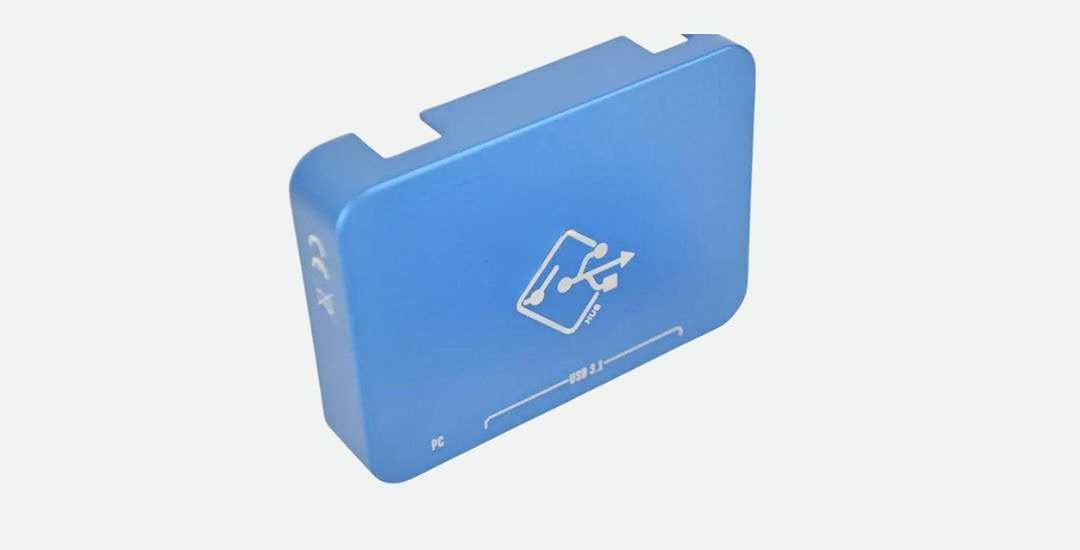
Compared to mechanical engraving, chemical etching, or printing, laser engraving offers distinct advantages in accuracy, efficiency, and sustainability.
Extreme Precision
Minimum line width can be as fine as 0.001 mm (1/50th the width of a human hair). This makes it possible to engrave detailed serial numbers or micro-codes on curved parts while maintaining consistent accuracy.
Non-Contact Processing
No physical tool wear or pressure is applied. Thin-walled parts or delicate components can be engraved without deformation, reducing scrap rates and material waste.
Flexibility for Customization
Designs can be changed instantly through software (CAD, AI, JPG, etc.) without molds or tooling. This makes it ideal for small-batch, customized production.
Higher Efficiency and Lower Cost
Dual-head fiber lasers can engrave 200+ stainless steel items per hour, four times faster than screen printing, without requiring drying or curing.
Environmentally Friendly
Laser engraving eliminates the need for chemical solutions used in etching. The process generates minimal dust and complies with CE, FDA, and RoHS standards.
עֲמִידוּת
Marks are resistant to wear, corrosion, and high temperatures, ensuring long-lasting readability in demanding environments such as oil pipelines or aerospace components.
7. Global Applications of Laser Engraving on Metal
Laser engraving is used worldwide in both industrial and consumer markets.
ייצור תעשייתי
- Automotive: Vehicle Identification Numbers (VIN) on engine blocks for full lifecycle traceability.
- Electronics: QR codes and parameters on stainless steel cooling plates for 5G base stations.
- Aerospace: Part numbers on titanium fasteners that withstand extreme temperatures and vibration.
Creative and Consumer Goods
- Jewelry: Personalized engravings on gold and silver jewelry pieces.
- Collectibles: Reproduction of bronze coins and museum artifacts with intricate details.
- Home Decor: Customized wall art on stainless steel and aluminum panels.
Medical and Healthcare
- Surgical Instruments: Micron-level scales on stainless steel surgical tools.
- Implants: Patient data engraved on titanium prosthetics for reliable traceability.
- Diagnostic Devices: Engraved stainless trays designed for easy sterilization.
Architecture and Signage
- Building Facades: Decorative aluminum panels with gradient geometric patterns.
- Railings and Panels: Durable stainless steel designs resistant to fingerprints.
- Wayfinding Systems: Brass signage with vintage aesthetics for high-end commercial spaces.
8. Market Trends and Regional Insights
Laser engraving continues to expand across industries, driven by increasing demand for precision, customization, and sustainable production. Modern systems are integrating AI and machine learning to automatically optimize parameters, reduce errors, and predict maintenance needs. Energy-efficient and environmentally friendly equipment is becoming standard, while combining laser engraving with additive manufacturing opens new possibilities for complex and custom designs.
Regionally, North America prioritizes high-precision applications in aerospace and medical devices. Europe focuses on sustainability, regulatory compliance, and long-term reliability. The Asia-Pacific market is highly diverse, ranging from entry-level solutions to advanced high-throughput systems, reflecting both price sensitivity and wide-ranging industrial needs.
מַסְקָנָה
Laser engraving on metal is a precise, versatile, and highly customizable process. Success depends on understanding the material, selecting the appropriate laser type (fiber, CO₂, or UV), preparing the surface, setting the right parameters, and following a structured workflow from testing to post-processing. This approach ensures clear, durable, and repeatable markings across a wide range of metals and applications, from industrial parts to decorative and medical components.
At Beska, we apply these principles daily on custom metal parts, including מעובד ב-CNC components and sheet metal products. Our experience shows that the right combination of laser technology, process control, and material knowledge can maximize efficiency, reduce waste, and deliver consistently high-quality results. By consulting an experienced supplier like the Beska team, you can ensure that your laser-engraved parts meet both aesthetic and functional requirements, while speeding up production and maintaining precision.
- Punching Process in Sheet Metal
- How to Stamp Stainless Steel
- How to Spot Weld Sheet Metal
- גיבוש מתכת
- עיבוד CNC 5 צירים
- גימור פני השטח
 Hebrew
 English
 Turkish
 French
 Russian
 German
 Spanish
 Portuguese