


In modern material processing, PMMA (Polymethyl Methacrylate, commonly known as acrylic) is widely used in advertising signage, furniture, medical devices, and electronic components due to its high light transmittance, weather resistance, and ease of fabrication. Cutting is one of the most critical steps in PMMA processing, directly affecting product accuracy, surface quality, and performance.
Whether you are a novice engineer or an experienced fabricator, challenges often arise in selecting the right cutting method, adjusting process parameters, and ensuring quality control.
This guide will cover everything you need to know about how to cut PMMA, from basic principles to advanced techniques, helping you achieve precise and high-quality results.
1. PMMA (Acrylic) Properties and Cutting Considerations

PMMA, also known as acrylic or Plexiglas, is a versatile thermoplastic widely used in signage, furniture, medical devices, and electronics. Compared with regular glass, PMMA offers several advantages:
- Lightweight and strong: Half the weight of glass but over ten times more impact-resistant.
- High transparency: Visible light transmittance up to 92%, even higher than standard glass.
- Excellent weatherability and formability: Can be heated and bent into complex shapes for diverse applications.
However, these benefits also create challenges during cutting:
- Low hardness: Easily scratched, requiring careful handling.
- Poor thermal conductivity: Heat can accumulate during cutting, causing deformation or cracking.
- Notch sensitivity: Improper cutting may lead to crack propagation.
Key Physical Properties of Industrial-Grade PMMA
| Property | Value Range | Notes / Standard |
| Density | 1.18–1.20 g/cm³ | ASTM D792 |
| Light transmittance (visible) | 92–93% | Thickness 3mm, ASTM D1003 |
| Heat deflection temperature (HDT) | 85–105℃ | Load 1.82MPa, ASTM D648 |
| Melting point | 160–180℃ | — |
| Thermal conductivity | 0.19–0.21 W/(m·K) | ASTM C177 |
| Mohs hardness | 2–3 | Easily scratched |
| Tensile strength | 60–75 MPa | ASTM D638 |
| Flexural strength | 90–110 MPa | ASTM D790 |
| Elongation at break | 2–5% | Brittle material, ASTM D638 |
| Water absorption (24 h) | ≤0.3% | ASTM D570 |
| Linear thermal expansion | 70–90×10⁻⁶/℃ | Higher than metals, temperature-sensitive |
PMMA’s unique properties directly influence cutting precision, edge quality, and overall performance.
2. Basic Principles of PMMA Cutting
Cutting PMMA involves applying energy to break the molecular bonds within the material, creating a clean separation. The cutting method you choose depends on the type of energy applied, which can be categorized into three main approaches:
Mechanical Cutting
Mechanical cutting uses physical force to separate PMMA, typically through saws or milling operations. This method is cost-effective and versatile, making it suitable for a wide range of applications. However, it can generate stress concentrations and may cause defects along the edges if not carefully controlled.
Thermal Cutting
Thermal cutting relies on heat to locally melt or vaporize PMMA, with laser cutting being the most common example. This approach delivers high precision and produces smooth, clean edges. The main drawbacks are the high equipment costs and the need for controlled cutting conditions to prevent material deformation or burning.
Chemical Cutting
Chemical cutting involves using solvents to soften or partially dissolve PMMA, allowing it to be separated along the desired line. This method can produce very smooth edges, but it is challenging to control and requires strict adherence to safety protocols due to the chemicals involved.
Each PMMA cutting method has its unique advantages and limitations. Understanding the underlying principles is essential for selecting the appropriate technique and achieving high-quality results in your fabrication projects.
3. Common PMMA Cutting Methods
PMMA can be processed using a variety of cutting techniques, each suited to different thicknesses, precision requirements, and applications. Here are the key methods used in modern fabrication:
Laser Cutting
Laser cutting employs a high-energy laser beam to melt PMMA along precise paths. This method delivers extremely accurate cuts with smooth edges, often eliminating the need for additional polishing. It is ideal for thin to medium sheets (1–15mm, up to 30mm with high-power lasers) and is commonly used for signage, acrylic letters, electronic panels, and medical transparent shields.
CNC Machining

CNC milling allows for complex 2D and 3D shapes, including grooves, chamfers, and reliefs. It provides ultra-high accuracy and repeatable results, making it the preferred choice for precision electronic components, medical guide parts, and high-end acrylic displays. CNC machining is particularly suitable for PMMA sheets and profiles ranging from 3 mm to 50 mm thick.
Mechanical Sawing
Mechanical sawing is a simple, cost-effective method for cutting thick acrylic sheets. While it is fast and can handle long lengths, the resulting edges are rough and require post-polishing. This method is commonly used for thick furniture panels, display frames, or any application where ultra-high precision is not critical.
Waterjet Cutting

Waterjet cutting uses high-pressure water, sometimes mixed with abrasives, to cut PMMA without generating heat. This cold-cutting method preserves material integrity, minimizes deformation, and can handle thick sheets (20–150 mm+). It is particularly useful for large-scale or complex structures, such as aquariums, exhibition props, and medical casings.
Hot Cutting
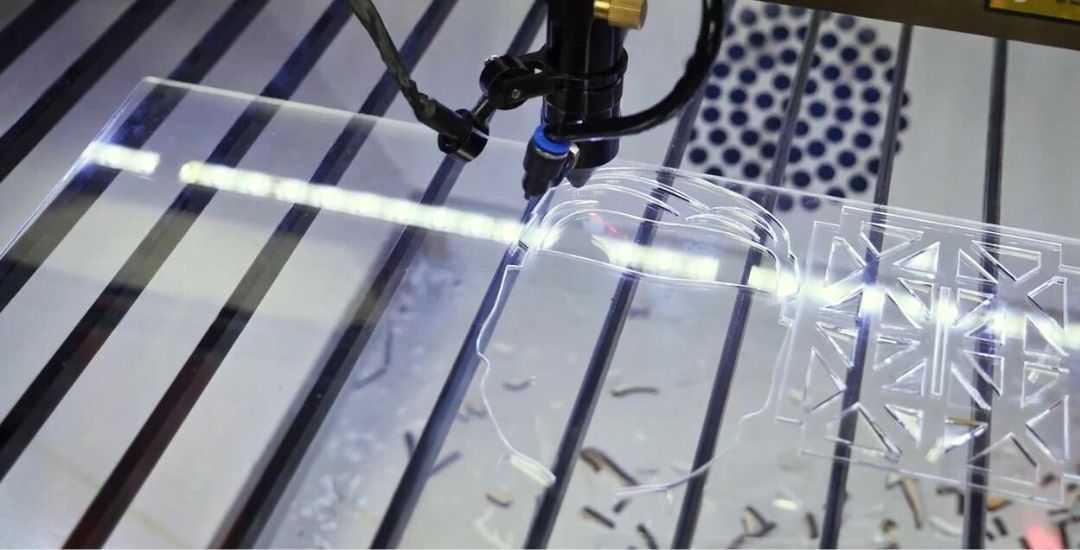
Hot cutting, including heated wire or flame, is an entry-level option. It is inexpensive and simple to operate, but precision is limited and edges are rough. It is best suited for DIY projects, temporary supports, or applications where appearance and accuracy are not critical.
Cutting Method Comparison at A Glance
| Method | Accuracy | Edge Quality | Thickness | Applications |
| Laser | ±0.01 mm | Excellent, no burrs | 1–15 mm (up to 30mm) | Signage, electronic panels |
| CNC | ±0.005–0.01 mm | Excellent, slight polish | 3–50 mm | Precision electronics, medical components |
| Saw | ±0.1–0.3 mm | Requires polish | 10–100 mm | Thick furniture, display panels |
| Waterjet | ±0.05–0.1 mm | Good | 20–150 mm | Thick sheets, complex shapes |
| Hot cutting | ±1–2 mm | Poor | 3–10 mm | DIY, temporary use |
Selecting the right PMMA cutting method depends on the material thickness, required precision, and application. By focusing on each technique’s strengths, fabricators can balance efficiency, quality, and cost while achieving reliable results.
4. Hybrid PMMA Cutting Techniques for Precision and Efficiency
While single cutting methods are effective, they often have limitations in terms of material thickness, precision, or surface quality. This is why hybrid cutting techniques are increasingly adopted in PMMA fabrication.
Laser + CNC
In this approach, laser cutting is first used to quickly process thin sheets and create intricate shapes, while CNC machining follows to refine grooves, chamfers, and detailed features. This combination balances speed and high precision for complex designs.
Waterjet + CNC
For thick or heat-sensitive PMMA sheets, waterjet cutting handles the bulk material without causing thermal deformation. CNC machining then provides fine surface finishing and precise edge detailing, resulting in a high-quality final product.
Saw + CNC
Mechanical sawing is efficient for rough cuts on large or thick panels. CNC milling is subsequently applied to chamfer edges and add detailed features, reducing manual finishing work and improving repeatability.
Hybrid cutting is especially beneficial for multi-spec PMMA production, where different thicknesses and complex geometries must be handled within a single project.
5. Common PMMA Cutting Issues and How to Solve Them

Even with advanced cutting techniques, fabricators may encounter common issues such as burrs, cracking, or discoloration. Understanding the causes and proper remedies can help maintain high-quality results.
Burrs
Burrs often appear along the edges when laser power is insufficient, saw blades are worn, or CNC feed rates are improperly set. To address this, begin with progressive sanding using increasingly fine grit, followed by buffing to restore smoothness. Finally, clean the surface with alcohol to remove residual debris and enhance transparency.
Cracking
Cracks can occur due to internal stress in the material, excessive cutting depth, or uneven clamping during processing. Minor cracks can be repaired by carefully injecting acrylic adhesive into the affected area and allowing it to cure.
For micro-cracks along edges, a brief application of a heat gun can help close the fissures without compromising the surrounding material.
Discoloration and Carbonization
Discoloration or carbonized edges typically result from overheating during laser or hot cutting. Light sanding combined with alcohol cleaning can remove minor surface discoloration. In more severe cases, localized polishing or resurfacing may be necessary to restore the material’s clarity and visual quality.
By identifying the root causes and applying proper post-processing techniques, fabricators can prevent common PMMA cutting defects, ensuring precise, smooth, and visually appealing finished parts.
Conclusion
Cutting PMMA successfully goes beyond choosing a method. It requires understanding how material properties, thickness, and design complexity affect the process. Precision and smooth edges are essential, but production efficiency, post-processing, and long-term reliability are equally important. In many cases, combining techniques, such as laser and CNC or waterjet and CNC, offers the best balance between accuracy and speed.
Experience and expertise make a difference. Consulting an expert like the Beska team not only ensures that the cutting strategy matches your project requirements but also reduces material waste, prevents costly errors, and guarantees consistent quality.
Dive Deeper Into Our Resources
For some insightful reads, we’ve curated a list of recommended articles just for you:
 English
 Hebrew
 Turkish
 French
 Russian
 German
 Spanish
 Portuguese