


With global aluminum production exceeding 60 million tons per year, one value appears repeatedly across smelting, casting, forming, heat treatment and machining: 660.32°C, the recognized melting point of aluminum.
This temperature is not only a basic material property but also a reference parameter applied in die casting for automotive parts, in controlled heat processing for aerospace structures, and in precision bonding for microelectronic aluminum wires.
In this article, we will explore what defines the melting point of aluminum, how alloying elements shift it, how melting behavior influences casting and CNC machining performance, and what engineers should consider when selecting aluminum grades for production.
1. Why the Melting Point of Aluminum Matters
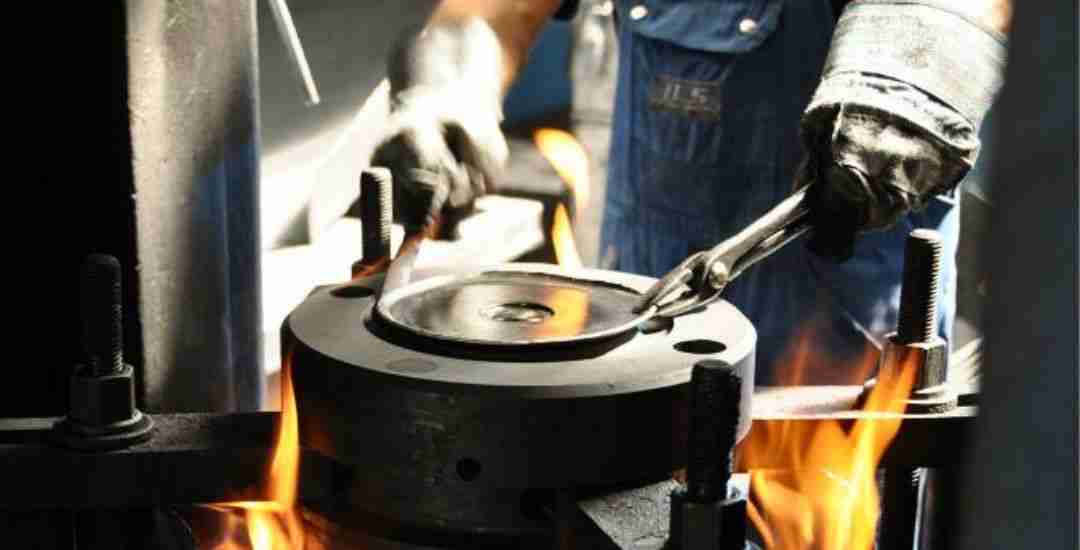
Knowing the melting point of aluminum is not simply remembering a number. For material engineers, manufacturing designers and project managers, it is a referencing basis that links material selection, process planning, reliability evaluation and cost-effective production.
1.1 A Key Basis for Material Selection
Service temperature determines whether aluminum is suitable for an intended design. Understanding how it behaves as temperature approaches its melting point helps prevent performance loss under high heat. Automotive pistons, for instance, run at 300–400°C, a range where ordinary aluminum alloys may weaken.
This drives the adoption of heat-resistant Al-Si alloys. In extreme-temperature furnace environments, aluminum is ruled out entirely and steel or ceramics become the logical choice.
1.2 Crucial for Process Optimization and Defect Prevention
Casting, welding and heat treatment are closely tied to aluminum’s melting point, making temperature precision essential. Engineers must control superheat to ensure proper fluidity without causing porosity, oxidation or coarse grains. In heat treatment, inadequate temperature control may result in softening or over-burning. With correct reference to the melting point, manufacturers can reduce defects and ensure both internal and surface quality.
1.3 A Driver of Manufacturing Technology Progress
A clear understanding of melting behavior also fuels innovation. Nanoparticle aluminum powders with reduced melting temperatures enable low-temperature sintering for electronic applications. Semi-solid forming processes rely on the solid-liquid coexistence condition near the melting point, offering better flowability and reduced shrinkage for high-precision parts.
1.4 A Basis for Safety and Reliability Evaluation
In buildings, transportation and heat-exposed systems, the melting point defines structural limits in extreme conditions. This reference inspires the development of improved coatings, insulation solutions and safety margins to enhance durability during fire or thermal impact.
Its melting point becomes a reference line from which alloy development, processing temperature, and final mechanical behavior unfold, and this is where we begin to see how composition changes everything.
2. Material Properties Behind the Melting Point of Aluminum
Aluminum (Al, atomic number 13) is a lightweight metal with a density of 2.70 g/cm³, about one-third that of steel. Its melting point is controlled by its face-centered cubic (FCC) crystal structure and metallic bonding energy.
| Categoria | Commercial Pure Al (99.5%+) | 6061-T6 Alloy | Key Notes |
| Melting Point (°C) | 660.32 | ~605–650 | Alloying lowers melting temperature |
| Densidade (g/cm³) | 2.7 | 2.7 | Lightweight for mobility & transport |
| Tensile Strength (MPa) | 35–100 (annealed) | ~310 | T6 = solution treated + aged |
| Yield Strength (MPa) | 15–35 | ~276 | Higher load-bearing capability |
| Thermal Conductivity (W/m·K) | 237 | 180–209 | Pure Al transfers heat faster |
| Electrical Resistivity (Ω·m) | 2.7×10⁻⁸ | 3.7×10⁻⁸ | Pure Al conducts electricity better |
| Industrial Reference Temp. | 660.32°C (1220.58°F) | Used as baseline | Guides casting, heat treatment, safety limits |
The melting point directly affects flowability, phase-change behavior, castability and thermal-processing windows. In casting, aluminum is typically poured at 710–760°C to maintain fluidity above liquidus. In heat treatment, solution temperatures must remain below solidus to avoid over-burning or grain collapse. The same reference is also used to evaluate fire-exposure risks in transportation and construction components.
A single value like 660.32°C may appear simple, but it governs how aluminum is shaped, strengthened and safeguarded across industrial workflows.
3. How Alloying Affects Aluminum’s Melting Point and Strength

Pure aluminum offers excellent workability but lacks the mechanical strength required for demanding applications. By introducing alloying elements such as Mg, Si, Cu, and Zn, engineers adjust the solidus–liquidus range of aluminum and unlock strength levels suitable for structural and high-load components.
| Alloy Grade | Key Elements | Solidus/Liquidus (°C) | Suitable Processes | Propriedades | Aplicações |
| 1100 | >99% Al | 660/660 | Rolling / Extrusion / Casting | Very easy to cut | Chemical equipment, heat-dissipation |
| 2024 | Cu, Mg, Mn | 500/640 | Forging / Rolling / Extrusion | High strength, careful corrosion control | Aircraft skin, structural parts |
| 5052 | Mg, Cr | 600/650 | Sheet forming, rolling | Very formable, corrosion-resistant | Ship hulls, tank bodies |
| 6061 | Mg, Si | 580/650 | Extrusion / Forging / Casting | Altamente versátil | Frames, structures |
| 7075 | Zn, Mg, Cu | 475/635 | High-strength forging | Ultra-high strength, lower toughness | Aerospace load-bearing |
| A356 | Si, Mg | 555/615 | Casting / Die casting | Good T6 response | Wheels, engine housings |
4. Measurement and Standards of Aluminum’s Melting Point
Methods for Measuring Melting Point
- Differential Scanning Calorimetry (DSC). It provides precise measurements (±0.1°C) by recording heat flow as a sample transitions from solid to liquid. Commonly used in research and high-precision quality control.
- Capillary Tube Method. A traditional approach where small aluminum samples in thin tubes are observed under controlled heating. Accuracy is moderate (±1°C) and suitable for laboratory demonstrations.
- Thermocouple/Industrial Sensors. Thermocouples embedded in industrial furnaces can estimate melting point during melting or casting operations. Accuracy is typically ±2°C but provides real-time feedback for process control.
Practical Considerations
- Minor impurities, such as iron or silicon, can lower the melting point by 0.5–1°C per 0.1% addition.
- Aluminum alloys exhibit a solidus–liquidus range rather than a single temperature, meaning that partial melting begins below the peak melting point.
- For quality assurance, it is common to combine standard reference data with in-situ measurement to ensure consistency in industrial processes.
Accurate measurement of aluminum’s melting point ensures reliable heat treatment and consistent alloy performance.
5. Precision CNC Machining of Aluminum and Melting Point

Aluminum’s melting point provides both benefits and challenges in CNC machining. Low cutting resistance enables high-speed removal, but heat accumulation may cause built-up edges, deformation, or softening. Cooling, tool selection, and cutting strategy determine final precision.
| Processo | Aplicativo | Melting-Point-Related Considerations | Typical Accuracy | Potential Best Accuracy | Surface Roughness (Ra µm) |
| CNC Milling/Turning | Castings, extrusions, plates | High rpm, consistent cooling, avoid adhesion | IT8-IT10 | IT6-IT7 | 0.8–3.2 |
| Drilling/Tapping | Structural components | Sharp tools, proper chip removal | IT9-IT11 | IT7-IT8 | 1.6–6.3 |
| Moagem | High flatness surfaces | Strict thermal control prevents softening | Flatness 0.005mm | 0.001 mm | 0.1–0.4 |
| EDM | Complex cavities | Not heat-softening dependent | ±0,01 mm | ±0.002 mm | 0.2–1.2 |
| Corte a laser | Sheet materials | High reflectivity, power match required | ±0,1 mm | ±0,02 mm | Varies |
| Chemical Milling | Large-area thinning | No heat input, controlled corrosion | ±0,05 mm | ±0,02 mm | 0.8–3.2 |
Advanced machining environments using temperature-controlled workshops, high-conductivity tooling, and real-time measuring can achieve micron-level tolerances and mirror-grade surfaces.
6. Aluminum’s Melting Point in Additive and Micro-Scale Manufacturing
Modern manufacturing is exploring ways to work beyond aluminum’s traditional melting point. In additive manufacturing, techniques like selective laser melting (SLM) and electron beam melting (EBM) locally fuse aluminum powders at temperatures well above 660°C. This enables complex geometries and optimized internal structures with tolerances as tight as ±0.05–0.1 mm—capabilities difficult to achieve with conventional casting or extrusion.
In micro- and nano-scale fabrication, the lowered melting point of nanosized aluminum powders allows low-temperature sintering for conductive pastes and miniaturized thermal components. Ultra-precision turning with diamond tools can achieve submicron accuracy and mirror-like surfaces, supporting high-end applications in optics, photonics, and microelectronics.
These trends highlight that aluminum’s melting point is not just a physical limit—it shapes how engineers innovate, balancing thermal behavior, precision, and material performance in cutting-edge applications.
Conclusão
Aluminum’s melting point of 660.32°C is more than a physical constant—it quietly dictates how the metal flows, deforms, and responds to heat across casting, forming, and precision machining. From high-strength aerospace components to finely detailed microstructures, understanding these thermal boundaries allows engineers to push designs further, maintain precision, and avoid costly failures.
Looking to turn aluminum designs into high-precision, reliable parts? Consulting with a CNC machining and fabrication expert like the Beska team ensures the material’s thermal behavior is fully accounted for, helping you achieve both performance and quality.
Mergulhe mais fundo em nossos recursos
For some insightful reads, we’ve curated a list of recommended articles just for you:



 Portuguese
  English
  Hebrew
  Turkish
  French
  Russian
  German
  Spanish