
Grinding vs Polishing
A detailed case study How Beska delivered lower costs and flawless surface finish.

Beska – Melhor qualidade com preço competitivo.
Com experiência em fabricação de chapas metálicas e usinagem CNC, estamos aqui.
Introdução
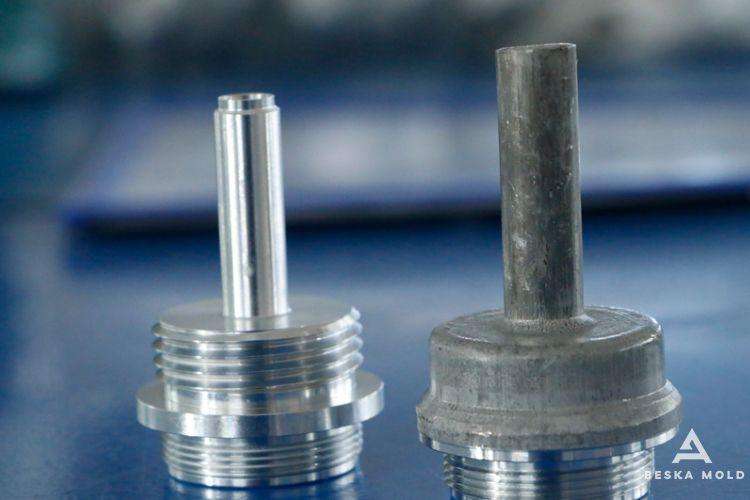
Cliente: An automotive parts manufacturer (anonymous for confidentiality)
Component: Aluminum (6061-T6) car parts, batch of 500 pieces
Key Requirements:
- Visible surfaces: Mirror polish (Ra ≤ 0.4 µm) for aesthetic appeal
- Mounting interfaces: Ground finish (Ra 1.6 µm) for secure assembly
- Target cost reduction: 15% compared to their previous supplier
- Lead time: 2-week production schedule
Desafios:
The client previously experienced high surface defect rates and slower delivery with other suppliers.
These constraints demanded a precise process sequence and careful selection of abrasives, machinery, and inspection methods.
Grinding vs Polishing
Before detailing our approach, it’s important to understand the difference between grinding and polishing in CNC machining: grinding focuses on material removal and dimensional precision, while polishing refines surface smoothness and aesthetics.
| Recurso | Moagem | Polimento |
| Propósito | Material removal, achieving near-final dimensions | Surface refinement, removing micro-scratches and improving aesthetics |
| Rugosidade da superfície | Typically Ra 1.0–2.0 μm after process | Can achieve Ra < 0.8 μm, mirror-like finish |
| Material Impact | More aggressive; may introduce heat or micro-scratches if parameters are not controlled | Gentle on material; mainly removes fine imperfections |
| Suitable Materials | Metals like aluminum, steel, and hardened alloys | Metals and soft alloys, plastics, and composites |
| Processing Speed | Faster, especially for large material removal | Slower, more time-consuming due to manual or fine adjustments |
| Implicações de Custo | Lower for achieving dimensional accuracy | Higher if used alone due to longer process time |
Grinding focuses on material removal and achieving dimensional accuracy, while polishing emphasizes surface smoothness and aesthetic finish. Each serves a different purpose, and understanding the difference helps engineers choose the right technique for their CNC project.
Detailed Challenges & Material Considerations
For this project, the Beska team was tasked with producing 500 aluminum components for an automotive client. Each part measured 200mm x 100mm x 10mm and included visible surfaces requiring a mirror polish (Ra ≤ 0.4 µm), as well as mounting interfaces needing a ground finish (Ra 1.6 µm) to ensure secure assembly.
Aluminum 6061-T6 offered advantages: it’s lightweight and easy to machine. However, in practice, its softness created challenges. During grinding and polishing, the team noticed rapid abrasive clogging, and thin sections were prone to heat-induced distortion if parameters weren’t carefully controlled. Additionally, while aluminum abrasives are more affordable than alternatives like titanium, they require frequent replacement. It’s a factor that needed to be carefully managed to stay within the client’s target cost.
These material-driven challenges require us to develop customized CNC machining strategies, carefully sequence finishing operations, and monitor each stage closely to maintain both precision and efficiency.

Crafting the Finish: CNC Machining, Grinding, and Polishing
In this project, each finishing step was carefully planned to balance precision, surface quality, and efficiency, ensuring that both functional and aesthetic requirements were met.
CNC Machining. Toolpaths were optimized to reduce excess stock for finishing. The resulting surface provided a consistent baseline for subsequent operations. Experienced operators supervised each step to ensure repeatability.
Grinding for Functionality. Aluminum oxide wheels were applied with controlled speed and coolant to maintain dimensional accuracy. A subtle crosshatch pattern enhanced the mounting interface for secure assembly. Surface quality was spot-checked using a portable roughness tester.
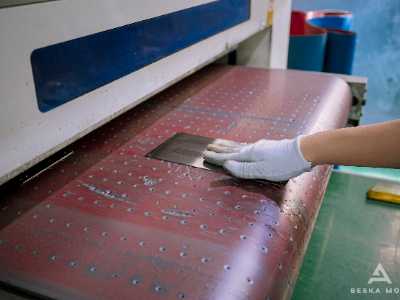
Polishing for Aesthetics. Initial abrasive belts removed machining marks, followed by a polishing compound to achieve a smooth, mirror-like finish. Polishing was applied selectively to visible areas to optimize labor and consumable usage.
These steps established a reliable, high-quality surface that met both the client’s functional and aesthetic expectations.

Why Polishing Costs More
Polishing is generally more time-consuming and delicate than grinding, particularly on aluminum parts. The process requires careful handling and attention to detail to achieve a smooth, mirror-like finish.
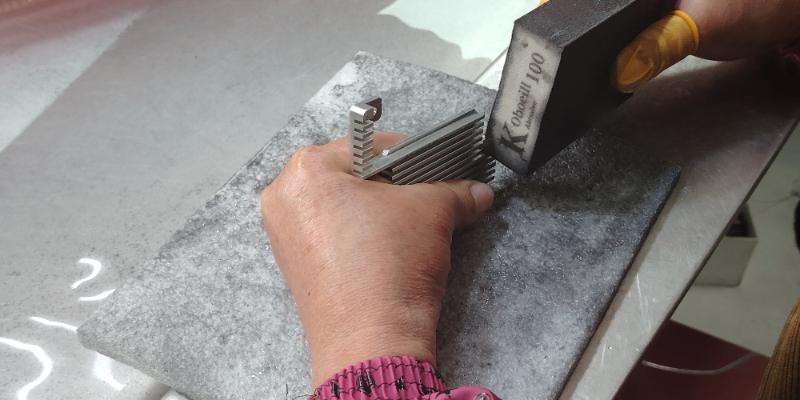
Material-Specific Challenges:
- Aluminum’s softness can cause abrasives to clog quickly, slowing the process.
- Excessive heat or pressure during polishing may warp thin or delicate surfaces.
- These factors make polishing inherently more labor- and resource-intensive, especially on visible surfaces where aesthetics are crucial.
Polishing demands extra care and resources to deliver high-quality surface finishes, which is why it typically costs more than grinding.
Results & Cost Analysis
Compared to the client’s previous supplier, our approach delivered significant improvements across key performance metrics:
- Unit Cost: reduced by roughly 15%
- Lead Time: shortened by about 30%
- Surface Defect Rate: decreased by nearly 90%
- Assembly Line Rejections: dropped to almost zero
By tailoring grinding and polishing processes and optimizing CNC toolpaths, we achieved lower costs, faster delivery, higher quality, and improved sustainability for the client.
More Resources
Have you ever encountered similar problems? We’d like to hear from you. What a equipe Beska pode fazer vai além da usinagem CNC e do acabamento de superfícies. Confira os detalhes para ver o que mais podemos fazer por você!

Get A CNC Machining Quote!
Beska – Melhor qualidade com preço competitivo.
Com experiência em fabricação de chapas metálicas e usinagem CNC, estamos aqui.
 Portuguese
 English
 Hebrew
 Turkish
 French
 Russian
 German
 Spanish