


When a part fails to meet expectations, the cause is often traced back to material choice. Resin and plastic might look interchangeable at first, but subtle differences in strength, flexibility, thermal stability, and durability can determine whether a component holds up under stress or ends up warping, cracking, or underperforming. Misjudging these differences can lead to unexpected delays, extra costs, or repeated iterations.
This article breaks down the essential differences between resin and plastic, exploring their types, key properties, industrial and practical applications, cost and availability, and environmental considerations.
1. What is Resin?

Resin is a polymeric material known for its versatility and adaptability. It can be broadly categorized into natural resins, which are derived from plants, and synthetic resins, which are engineered for modern manufacturing purposes. Natural resins have a long history of use in adhesives, varnishes, and coatings, while synthetic resins, including epoxy, polyester, and acrylic, offer tailored properties for technical applications.
One of the defining characteristics of many resins is their thermosetting behavior. Once cured, these resins harden into a rigid structure that maintains its shape and provides excellent chemical resistance and dimensional stability. The advantages of resin include high hardness, good strength, stability under heat, and the ability to achieve smooth, consistent surfaces. Epoxy resins are known for their high tensile strength and strong adhesion, polyester resins are valued for toughness and lightweight properties, and acrylic resins are prized for transparency and resistance to UV exposure.
From a material perspective, resins generally provide moderate toughness and low thermal deformation, although some types can be brittle under impact. These intrinsic properties make resin a distinct category of polymer, offering performance characteristics that set it apart from plastics and other materials.
2. What is Plastic?
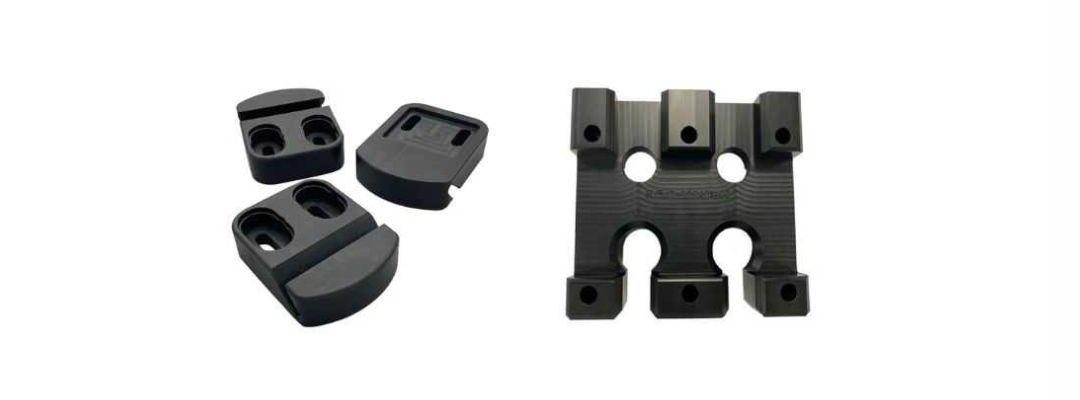
Plastic refers to a broad group of synthetic polymer materials that can be shaped and formed into almost any geometry. What defines plastic is not a single property, but the way it responds to heat and processing. Many plastics soften when heated and harden again as they cool, allowing them to be molded and reshaped without permanently altering their structure.
Plastics are commonly divided into thermoplastics and thermosets. Thermoplastics can be reheated and reshaped multiple times, while thermosets cure into a fixed structure that cannot be remelted. In everyday products and industrial components, thermoplastics such as ABS, PVC, polycarbonate, and nylon are far more common because they offer a wide range of mechanical behaviors.
Depending on the formulation, plastic can be rigid or flexible, impact resistant or wear resistant, lightweight or structurally strong. This variability is what makes plastic such a widely used material category. Rather than being defined by rigidity or hardness alone, plastic is defined by its adaptability and the breadth of properties it can achieve.
3. Key Differences Between Resin and Plastic
The difference between resin and plastic becomes clearer when comparing measurable material properties. While exact values vary by formulation and manufacturer, typical performance ranges show consistent patterns in rigidity, impact resistance, thermal behavior, and processing flexibility.
Below is a general comparison based on commonly used industrial grades such as epoxy resins and engineering thermoplastics like ABS and polycarbonate.
| Property | Resin (Typical Epoxy-Based Systems) | Plastic (Typical Engineering Thermoplastics) |
| Tensile Strength | 50–90 MPa | 30–75 MPa |
| Elastic Modulus | 2,000–5,000 MPa | 1,000–2,500 MPa |
| Impact Strength (Izod) | 10–30 J/m | 150–900 J/m (depending on grade) |
| Heat Deflection Temperature | 80–200°C | 70–140°C |
| Elongation at Break | 1–5% | 10–120% |
| Reprocessability | Not remeltable after curing | Thermoplastics can be reheated and reshaped |
Looking at these ranges, the difference becomes less about which material is stronger and more about how each responds to force and temperature. Resin typically offers higher rigidity and dimensional stability once cured, but that rigidity can limit its ability to absorb sudden impact. Plastics, especially thermoplastics, tend to tolerate deformation better. Higher elongation and impact values translate into greater resilience under dynamic loads.
The structural distinction is equally important. Cured resins form a permanent network, while thermoplastics remain heat-responsive. Both categories can achieve elevated temperature resistance in specific grades, but they do so through different structural mechanisms.
4. Industrial and Practical Applications
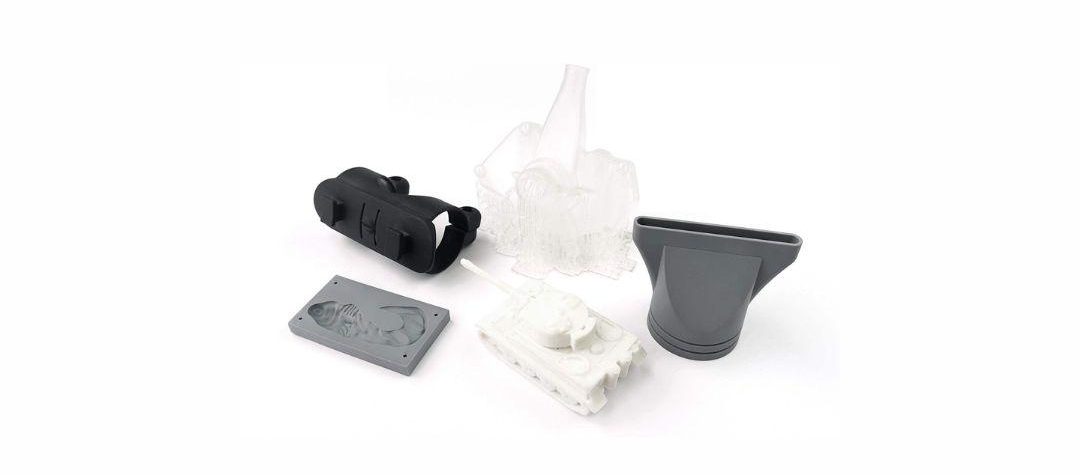
Resin and plastic often appear in similar product categories, but the reasons for choosing one over the other usually come down to specific performance priorities:
- Precision and surface quality: Resin shines in applications where fine details and smooth surfaces matter. For example, photopolymer resins in prototyping or small components help preserve intricate features that could be lost with more flexible materials. Epoxy resins also provide strong bonding and stability in structural parts, while acrylic offers clarity and UV resistance for panels or display elements.
- Durability and mechanical resilience: Plastics are often preferred when impact resistance, flexibility, or repeated use is critical. ABS and polycarbonate, for instance, provide strong yet tough housings for electronics, while nylon or POM excel in gears, bearings, and sliding parts where wear resistance and low friction are essential.
- Scale and production efficiency: Resin tends to be used in lower-volume or highly specialized production because of its curing requirements and material cost. Plastics, especially thermoplastics, are widely available in large volumes and adapt well to injection molding, extrusion, and other high-throughput processes.
In practice, the decision rarely comes down to a single factor. Resins are chosen for precision, chemical resistance, and stability, whereas plastics are favored for resilience, versatility, and scalable production. Understanding these tendencies helps guide material selection in industrial design without oversimplifying the trade-offs involved.
5. Cost and Availability: Resin vs Plastic
When choosing materials, cost and availability often guide the decision as much as performance. Resin and plastic differ noticeably in both areas:
- Material cost and production scale: Resins generally cost more per kilogram than common plastics, which makes them more suitable for small- to medium-volume runs, custom components, or high-precision prototypes. Specialty resins, such as high-temperature epoxies or optical-grade acrylics, may be harder to source, requiring careful planning with suppliers.
- Accessibility and supply chain: Plastics like ABS, polycarbonate, and PVC are widely available and come in standard grades, making them easy to source in large quantities. This accessibility allows faster lead times and smoother planning for high-volume production, whether through injection molding, extrusion, or bulk CNC machining.
- Balancing cost with performance: The choice is rarely about price alone. Engineers must consider whether the higher cost of resin is justified by its precision, chemical resistance, and mechanical properties, or if the scalability and lower cost of plastics better meet the project requirements.
Considering both cost and availability alongside performance helps make material selection more practical, avoiding surprises in production planning while ensuring the final product meets its functional goals.
6. Environmental and Sustainability Considerations
Sustainability is becoming an essential factor when selecting materials. Resin and plastic differ in how they affect the environment, recyclability, and lifecycle impact.
| Aspect | Resin | Plastic |
| Recyclability | Limited; cured resins cannot be remelted | High; most thermoplastics can be reheated and reshaped |
| Energy and resource use | Often higher for specialty resins | Generally lower per unit due to large-scale production |
| Durability and lifecycle | Long-lasting, reduces replacement needs | Variable; some plastics wear faster, increasing material use over time |
| Eco-friendly options | Emerging biodegradable or bio-based resins | Bio-based and recyclable thermoplastics widely available |
In short, resins offer durability and stability but can be harder to recycle, while plastics are generally more recyclable and widely available. Balancing performance with environmental considerations helps ensure practical and responsible material choices.
7. When to Choose Resin or Plastic
Choosing the right material depends on mechanical requirements, production volume, machining methods, and cost considerations:
Choose Resin When:
- The part requires high precision and dimensional stability.
- Chemical or thermal resistance is important.
- Surface finish or transparency matters.
- Batch size is small to medium, or per-part cost is less critical.
Choose Plastic When:
- Flexibility, toughness, and impact resistance are priorities.
- Large-volume production is needed.
- Cost efficiency and easy sourcing are important.
- CNC machining, injection molding, or FDM 3D printing is preferred.
Hybrid Designs:
- Combining resin and plastic can optimize both performance and cost.
- Resin can be used for high-precision sections, while plastic handles bulk or structural areas.
The right choice balances functional needs with production realities. Engineers often weigh precision, durability, and cost to determine whether resin, plastic, or a combination delivers the best outcome.
Conclusion
Resin and plastic each bring unique advantages to manufacturing. Resin stands out for precision, chemical resistance, and surface quality, making it suitable for small to medium batches or high-detail components. Plastic excels in flexibility, toughness, and cost-effective large-volume production.
Choosing the right material depends on matching these properties to the part’s functional requirements, production methods, and budget. For projects where performance and efficiency are critical, consulting an experienced supplier like the Beska team ensures access to the right material, proper processing, and reliable results.
Dive Deeper Into Our Resources
For some insightful reads, we’ve curated a list of recommended articles just for you:
 English
 Hebrew
 Turkish
 French
 Russian
 German
 Spanish
 Portuguese