


Titanium nitride (TiN) is a thin, hard ceramic coating widely used on cutting tools, molds, dies, and other wear-resistant components. Applied primarily through PVD processes, TiN can improve surface hardness, reduce friction, and help extend the service life of the underlying part.
However, TiN is not suitable for every application. Its performance depends on operating temperature, substrate material, coating thickness, surface preparation, and actual wear conditions. For precision parts, even a coating only a few microns thick may also need to be considered when defining final dimensions and fits.
This article explains what titanium nitride coating is, how it is applied, its key properties, and where TiN is most useful in manufacturing.
1. What Is Titanium Nitride (TiN) Coating?
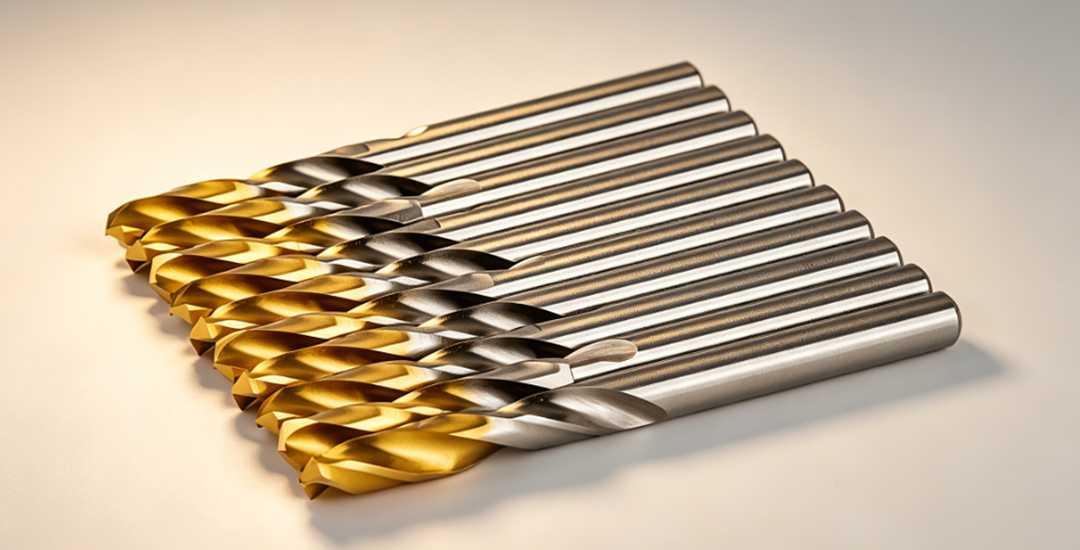
Titanium nitride (TiN) is a thin ceramic coating commonly applied to cutting tools, molds, dies, and other wear-resistant components. Typical TiN coatings are only a few microns thick, often around 2–5 μm, depending on the coating process and application.
TiN is known for its high hardness and relatively low coefficient of friction. Typical coating hardness is around 2,000–2,500 HV, although actual values vary by deposition process and coating conditions. These properties help reduce abrasive wear, friction, and material adhesion in suitable cutting and forming applications.
TiN is a surface coating rather than a standalone structural material. The substrate still provides the bulk strength and toughness, while the TiN layer improves surface performance. For this reason, coating performance depends not only on TiN itself, but also on substrate hardness, surface preparation, and operating conditions.
2. Key Properties of TiN Coating
TiN combines high hardness, good wear resistance, relatively low friction, and useful thermal stability. Actual performance varies with the deposition process, substrate, coating thickness, and operating conditions.
| Property | Typical Value / Range | Practical Effect |
| Hardness | ~2,000–2,500 HV | Improves resistance to abrasive and adhesive wear |
| Coefficient of Friction | Typically ~0.4–0.6 | Can reduce friction and material adhesion under suitable conditions |
| Oxidation Resistance | Up to approximately 500–600°C | Performance declines as oxidation increases at elevated temperatures |
| Chemical Stability | Generally good | Provides useful resistance in many normal industrial environments |
Source: ASM Handbook, Volume 5: Surface Engineering; typical coating supplier data. Actual values vary with deposition method, coating system, substrate, and test conditions.
The combination of hardness and wear resistance is one reason TiN is widely used on cutting and forming tools. Its temperature capability, however, is lower than that of some newer PVD coatings, so coatings such as TiAlN or AlCrN may be more suitable for higher-temperature cutting conditions.
TiN also offers useful chemical stability, but it should not be treated as a dedicated corrosion barrier for aggressive environments. The coating should be selected according to the actual wear, temperature, and contact conditions of the application.
3. How TiN Coatings Are Applied
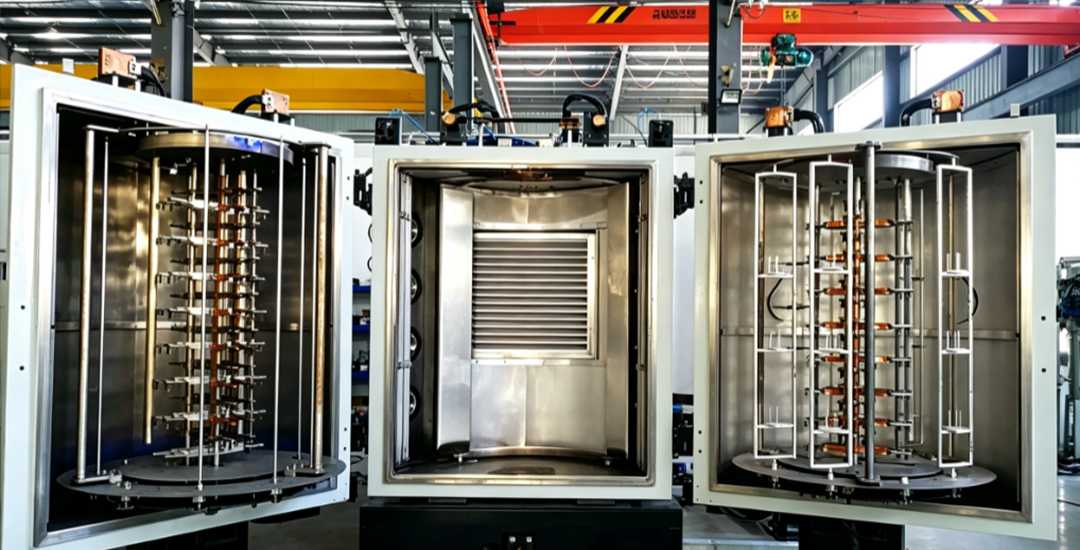
Titanium nitride coatings are commonly deposited using physical vapor deposition (PVD). Inside a vacuum chamber, titanium is vaporized or sputtered from a solid source and reacts with nitrogen before forming a thin TiN layer on the substrate.
Conventional TiN PVD processes often use substrate temperatures in the range of approximately 400–500°C, although the actual temperature depends on the coating system, equipment, and substrate requirements. Two commonly used deposition methods are arc evaporation and magnetron sputtering.
Arc Evaporation vs. Magnetron Sputtering
| Method | How It Works | Key Characteristics | Typical Uses |
| Arc Evaporation | An electric arc vaporizes titanium, which reacts with nitrogen before deposition | High deposition rate and good adhesion; may produce microscopic droplets | Cutting tools, dies, and wear-resistant components |
| Magnetron Sputtering | Plasma ejects atoms from a titanium target, which react with nitrogen and deposit on the substrate | Smooth, controlled films with fewer droplet defects | Precision surfaces, decorative parts, and applications requiring smoother coatings |
Source: ASM Handbook, Volume 5: Surface Engineering; typical equipment manufacturer data. Actual process characteristics depend on the coating system and deposition parameters.
Neither method is universally better. The choice depends on coating performance, surface finish requirements, part geometry, and the capabilities of the coating supplier.
PVD Temperature and the Substrate
Deposition temperature is an important consideration because the substrate must retain its required mechanical properties throughout the coating cycle. Carbides and many appropriately heat-treated tool steels are compatible with conventional TiN PVD temperatures, while some heat-treated steels and aluminum alloys may be more sensitive to thermal exposure.
For hardened steel parts, the PVD temperature should be considered together with the previous heat-treatment and tempering conditions. If the coating cycle exposes the material to an unsuitable temperature, substrate hardness or dimensional stability may be affected.
For this reason, substrate material and heat-treatment condition should be confirmed with the coating supplier before TiN deposition, especially for hardened or temperature-sensitive precision parts.
4. Substrate Compatibility: Which Materials Work with TiN?
TiN coating performance depends not only on the coating itself, but also on the substrate underneath it. Substrate hardness, heat-treatment condition, surface preparation, and PVD temperature all affect the final result.
- Tool Steels and Carbides: These are among the most common substrates for TiN, especially for cutting tools, dies, and wear components. Properly heat-treated tool steels and cemented carbides provide good mechanical support for the hard coating
- Stainless Steels: Stainless steel can also be TiN coated, but surface preparation is important. Cleaning, oxide removal, and appropriate pretreatment help achieve reliable coating adhesion.
- Mold and Die Steels: Grades such as P20 and H13 can be coated with TiN for improved wear resistance and reduced material adhesion. Substrate hardness and heat-treatment condition should be considered before coating.
- Softer or Temperature-Sensitive Alloys: Materials with lower hardness may provide less support for a hard TiN layer under high contact loads. Some alloys may also be affected by conventional PVD temperatures, so the coating process should be evaluated together with the material condition.
The material name alone does not determine whether TiN is suitable. Substrate hardness, heat treatment, surface condition, operating load, and coating temperature should all be considered before specifying the coating.
5. Applications and Industry Use
TiN coating is used across cutting, forming, decorative, and selected medical applications. Its role varies depending on whether the main requirement is wear resistance, reduced friction, surface durability, or appearance.
Cutting Tools
Drill bits, end mills, taps, and inserts are among the most common TiN-coated tools. The coating’s high hardness and relatively low friction help reduce wear and material adhesion, which can extend tool life under suitable cutting conditions.
For cutting operations that generate higher temperatures, coatings such as TiAlN or AlCrN may provide better oxidation resistance than TiN.
Molds and Dies
TiN is also used on injection molds, stamping dies, and forming tools to reduce wear, galling, and material pickup. In molding applications, it can also help improve release performance and protect surfaces exposed to repeated contact.
Its effectiveness depends on the substrate, operating temperature, contact pressure, and type of material being processed.
Decorative Finishes
TiN’s characteristic gold appearance also makes it useful as a decorative coating. It is found on hardware, watch components, architectural parts, and other products where appearance and surface durability are both important.
For decorative applications, surface preparation and coating consistency are particularly important because variations can affect the final appearance.
Medical Devices
TiN is used on selected surgical instruments and medical components where a hard, wear-resistant surface is beneficial. It can also help reduce friction and galling between contacting components.
Requirements vary significantly by medical application, so the coating system and substrate must be evaluated according to the relevant performance and regulatory requirements.
6. Post-Coating Considerations: Thickness, Rework, and Masking
TiN coating is thin, but it can still affect precision features and final assembly. Coating thickness, masking requirements, and possible rework should therefore be considered before the part is sent for PVD coating.
Dimensional Change
TiN coatings are typically only a few microns thick, but that thickness is added to each coated surface. For example, a coating of 2–5 μm on each side of a shaft can increase its overall diameter by approximately 4–10 μm.
For general surfaces, this change may be insignificant. For bearing seats, precision fits, locating features, and other tightly controlled dimensions, however, the coating thickness may need to be considered during machining.
Where final dimensions are critical, the required coating thickness and finished dimension should be defined together so that the pre-coating machining dimensions can be adjusted accordingly.
Rework and Stripping
If a TiN coating does not meet thickness, adhesion, or surface requirements, it may be possible to remove the coating and reapply it. The feasibility of stripping depends on the coating system, substrate material, part geometry, and stripping method.
Because stripping can affect the underlying surface or dimensions, critical parts should be inspected before recoating. Rework should therefore be evaluated with the coating supplier rather than assumed to be harmless.
Masking
Not every surface should necessarily receive TiN coating. Threads, sealing surfaces, locating features, and tightly controlled mating surfaces may need to remain uncoated depending on their function.
These areas can be protected during deposition using suitable masking methods. Masking requirements should be clearly identified on the drawing before coating so that critical dimensions and functional surfaces are handled correctly.
7. Quality and Testing: How to Evaluate a TiN Coating
TiN coating quality cannot be judged by appearance alone. Coating thickness, adhesion, surface condition, and visible defects should be evaluated against the requirements of the specific part and coating specification.
Coating Thickness Measurement
TiN coatings are typically only a few microns thick, so verifying the deposited thickness is important, especially when coating thickness affects wear performance or final part dimensions.
Common measurement methods include:
- Ball crater testing: A small crater is produced through the coating and measured under magnification to determine coating thickness.
- X-ray fluorescence (XRF): A non-destructive method that can be used to measure coating thickness under suitable material and measurement conditions.
The appropriate thickness should be specified according to the coating system and application rather than treated as a universal value.
Coating Adhesion Testing
Coating thickness alone does not indicate how well TiN is bonded to the substrate. Adhesion testing is therefore used to evaluate the coating-substrate system.
The Rockwell indentation test evaluates the cracking and delamination pattern around an indentation in the coated surface. It provides a practical way to identify significant adhesion problems.
The scratch test uses a stylus under increasing load to evaluate when coating damage or delamination occurs. It can provide quantitative information for coating development, comparison, and qualification when performed under controlled test conditions.
Test results should be evaluated according to the applicable coating specification or test standard rather than by visual appearance alone.
Common TiN Coating Defects
| Defect | Typical Appearance | Possible Cause | Why It Matters |
| Droplets | Small raised particles on the surface | Can occur during arc evaporation | May affect surface finish or precision contact areas |
| Color Variation | Changes in the characteristic gold shade | May indicate variations in coating composition, thickness, or process conditions | May require further inspection if coating consistency is critical |
| Peeling or Flaking | Local areas where the coating separates from the substrate | Poor adhesion, contamination, or inadequate surface preparation | Can expose the substrate and lead to premature coating failure |
| Shadowing | Reduced or uneven coating in recessed or obstructed areas | Line-of-sight limitations during PVD deposition | May leave functional surfaces with insufficient coating coverage |
Whether a coating defect is acceptable depends on its location, severity, functional requirements, and the specified acceptance criteria.
8. Cost and Procurement Considerations
The cost of TiN coating depends on more than the coating material itself. Part size and geometry, batch quantity, fixturing, masking, coating thickness, and inspection requirements can all affect the final quotation.
Larger batches may reduce the coating cost per part because more components can be processed in the same coating cycle. Complex geometries, recessed features, and surfaces requiring masking may increase handling and fixturing requirements.
When requesting a TiN coating quotation, it is useful to provide the coating supplier with:
- Part material and heat-treatment condition
- Part dimensions and quantity
- Required coating thickness
- Surfaces to be coated or masked
- Critical dimensional requirements after coating
- Inspection or testing requirements
For precision components, supplier capability should also be evaluated based on process control and inspection methods, particularly when coating thickness and adhesion are important to part performance.
9. TiN vs. Other Coatings: When to Choose TiN
TiN, TiAlN, AlCrN, and DLC coatings are designed for different operating conditions. TiN is widely used for general wear and cutting applications, while other coatings may offer advantages when higher temperature resistance or lower friction is required.
| Property | TiN | TiAlN | AlCrN | DLC |
| Typical Hardness (HV) | ~2,000–2,500 | ~2,800–3,300 | ~3,000–3,500 | Varies widely by DLC type |
| Typical Temperature Capability | Moderate | High | High | Generally lower |
| Friction | Moderate-Low | Moderate-Low | Moderate-Low | Very Low |
| Typical Applications | General cutting, forming, wear protection, decorative parts | Higher-temperature cutting and dry machining | High-temperature cutting and wear applications | Low-friction sliding and wear applications |
Source: ASM Handbook, Volume 5: Surface Engineering; typical coating supplier data. Actual properties vary by coating composition, deposition process, substrate, and test conditions.
TiN remains a practical choice for many general-purpose cutting, forming, and wear applications. TiAlN and AlCrN are often considered when higher-temperature performance and oxidation resistance are more important, while DLC is particularly useful where very low friction is a primary requirement.
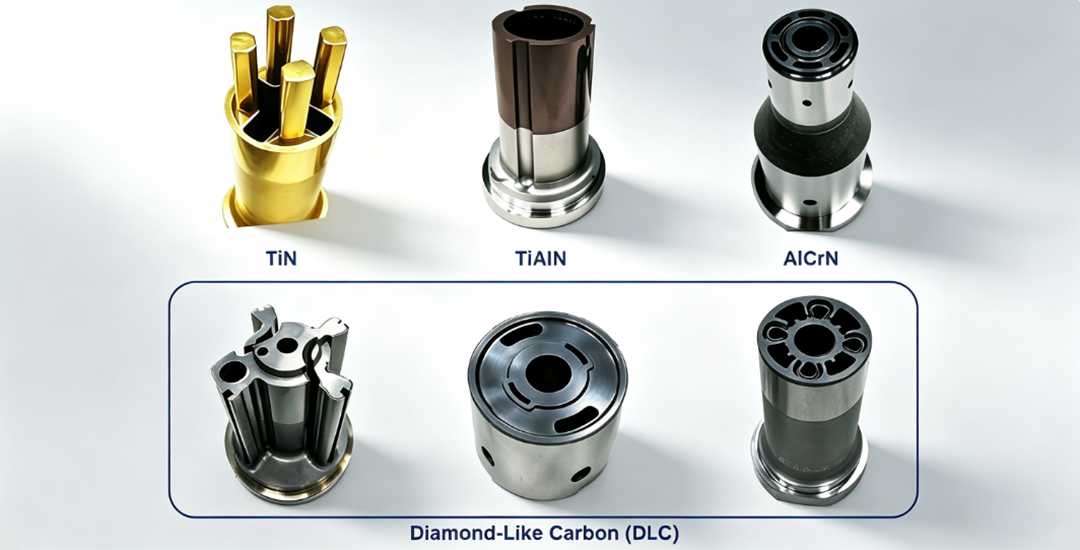
The best coating should therefore be selected according to the operating temperature, workpiece material, wear mechanism, friction requirements, and substrate, rather than by hardness or temperature rating alone.
Conclusion
Titanium nitride (TiN) coating is a practical choice for improving wear resistance, surface hardness, and friction performance on cutting tools, molds, dies, and other industrial components.
Its performance depends on the substrate, operating temperature, wear conditions, and coating requirements. For precision parts, coating thickness should also be considered before machining is finalized. TiN works best when the coating is selected around the actual function and operating conditions of the part.
 English
 Hebrew
 Turkish
 French
 Russian
 German
 Spanish
 Portuguese