


Monel is a family of nickel-copper alloys known for corrosion resistance in selected marine, chemical, and process environments. Unlike stainless steels, which rely heavily on chromium-rich passive films, Monel derives its corrosion behavior from a nickel-copper matrix, making it useful in conditions where conventional stainless grades may not provide the required service life.
Different Monel grades are designed for different priorities. Monel 400 combines corrosion resistance with moderate strength, while Monel K-500 adds precipitation hardening for higher mechanical performance. Both can be challenging to machine because of their tendency to work-harden, so grade selection, service environment, and manufacturing requirements need to be considered together.
1. What Is Monel?
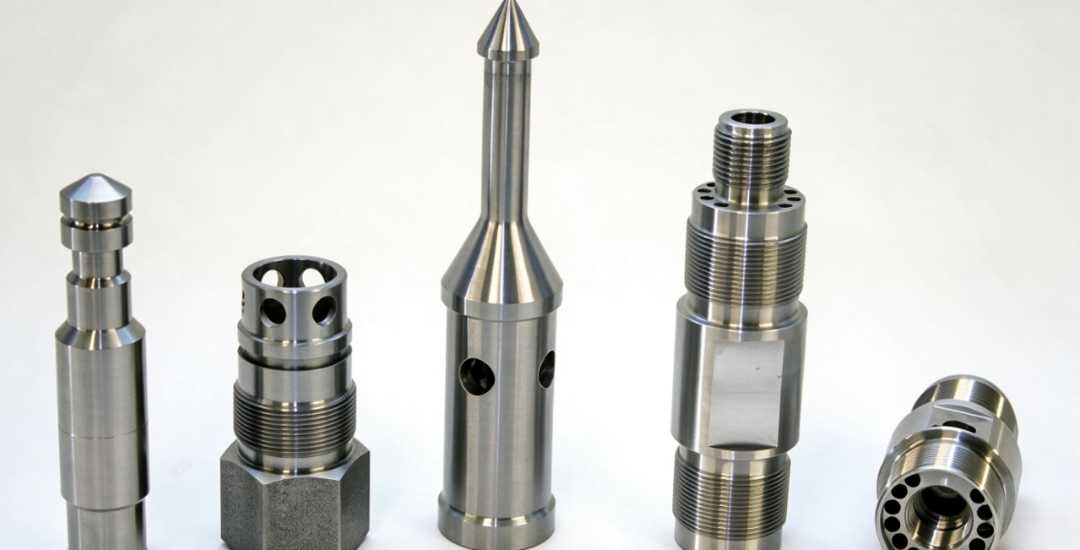
Monel is a family of nickel-copper alloys in which nickel is the principal element and copper is the second major component. Depending on the grade, smaller amounts of iron, manganese, aluminum, titanium, and other elements may also be present.
These alloys are known for combining good mechanical strength with corrosion resistance in selected marine, chemical, and industrial environments. Their performance is especially valuable in applications involving seawater, alkalis, and certain reducing acids, although corrosion resistance still depends on the specific medium, temperature, flow condition, and alloy grade.
The Monel family includes several grades developed for different engineering requirements. Monel 400 is the best-known solid-solution grade, while Monel K-500 adds aluminum and titanium so that it can be strengthened through age hardening. Other grades, such as Monel R-405, are designed with machining characteristics in mind.
Although these alloys share the same nickel-copper base, their composition, strength, machinability, and suitable applications can differ significantly.
2. Chemical Composition of Monel Alloys
Monel alloys are based primarily on nickel and copper, but the exact composition varies by grade. Monel 400 and Monel K-500 share a similar Ni-Cu base, while K-500 contains controlled additions of aluminum and titanium that make age hardening possible.
| Element | Monel 400 (UNS N04400) | Monel K-500 (UNS N05500) |
| Nickel + Cobalt | 63.0% min. | 63.0% min. |
| Copper | 28.0–34.0% | 27.0–33.0% |
| Iron | 2.5% max. | 2.0% max. |
| Manganese | 2.0% max. | 1.5% max. |
| Carbon | 0.30% max. | 0.25% max. |
| Silicon | 0.50% max. | 0.50% max. |
| Sulfur | 0.024% max. | 0.010% max. |
| Aluminum | — | 2.30–3.15% |
| Titanium | — | 0.35–0.85% |
Values are limiting chemical compositions by weight. Monel 400 is essentially a solid-solution nickel-copper alloy and can be strengthened through cold working rather than precipitation hardening.
The most important compositional difference in K-500 is the addition of aluminum and titanium. During controlled aging, these elements form fine Ni₃(Ti,Al) precipitates within the matrix, giving K-500 substantially higher strength and hardness than Monel 400.
Despite this difference, both grades retain a nickel-copper base, which accounts for many of their shared corrosion characteristics. The added Al and Ti in K-500 mainly change its strengthening response and mechanical performance rather than turning it into a completely different alloy system.
3. Key Properties of Monel
Monel alloys combine corrosion resistance, mechanical strength, toughness, and good performance across a range of service temperatures. Their exact behavior depends on the grade, material condition, and operating environment, so the properties of Monel 400 and Monel K-500 should not be treated as identical.
Corrosion Resistance
Corrosion resistance is one of the main reasons Monel is selected for marine and chemical applications. Monel performs well in many non-oxidizing environments, including flowing seawater, alkaline solutions, and certain reducing acids such as hydrofluoric acid.
Its corrosion behavior differs from stainless steel because Monel does not depend on a chromium-rich passive film in the same way. This can provide an advantage in some chloride-containing environments, but it does not make Monel immune to localized corrosion. Stagnant seawater, crevices, and poorly aerated areas can still create corrosion concerns.
Monel is also less suitable for strongly oxidizing environments, so the actual chemical medium, temperature, concentration, and flow condition should be checked before specifying the alloy.
Strength and Temperature Performance
Monel alloys retain useful strength and toughness over a broad temperature range, including low-temperature service. This makes them suitable for applications where both corrosion resistance and mechanical reliability are required.
Mechanical properties vary significantly by grade and condition. Monel 400 provides a combination of strength and ductility, while age-hardened Monel K-500 offers substantially higher strength and hardness for more demanding mechanical applications.
Magnetic Behavior
Magnetic behavior should be evaluated by grade rather than generalized across the entire Monel family. Monel K-500 is known for low magnetic permeability in many conditions, while Monel 400 can show different magnetic behavior depending on composition, temperature, and material condition.
For components used near sensitive instruments or magnetic fields, the required magnetic properties should therefore be confirmed from the specific alloy specification.
Work-Hardening Behavior
Monel tends to work-harden during machining and forming. If the cutting tool rubs against the surface instead of maintaining a clean cut, the material ahead of the tool can become harder, increasing cutting forces and accelerating tool wear.
This behavior can also contribute to built-up edge and poor surface finish. Sharp tooling, stable feeds, rigid setups, and adequate coolant are therefore important when machining Monel, especially for precision parts.
4. Monel 400 vs Monel K-500: Key Differences
Monel 400 and Monel K-500 share a similar nickel-copper base, but they are designed for different mechanical requirements. Monel 400 is a solid-solution alloy that can be strengthened through cold working, while K-500 contains aluminum and titanium so that it can be age hardened for substantially higher strength and hardness.
| Property | Monel 400 (UNS N04400) | Monel K-500 (UNS N05500) |
| Strengthening Method | Solid-solution alloy; strength can be increased by cold working | Age hardenable through Ni₃(Ti,Al) precipitation |
| Strength and Hardness | Lower strength, with good toughness and ductility | Higher strength and hardness after aging |
| Corrosion Resistance | Good resistance in many marine, chemical, and reducing environments | Generally similar to Monel 400, but age-hardened K-500 has a greater tendency toward stress-corrosion cracking in some environments |
| Machinability | Work-hardens during machining but is generally easier to machine than aged K-500 | More difficult after age hardening; heavy machining is preferably performed before aging |
| Typical Applications | Valves, pumps, heat exchangers, marine hardware, process equipment | Pump shafts, fasteners, springs, oilfield tools, marine shafts, and other higher-load components |
| Best Fit | Applications where corrosion resistance and moderate strength are the main priorities | Applications requiring corrosion resistance together with higher mechanical strength |
Special Metals states that K-500 retains corrosion resistance substantially equivalent to Monel 400 in many environments, while age-hardened K-500 has a greater tendency toward stress-corrosion cracking under certain conditions.
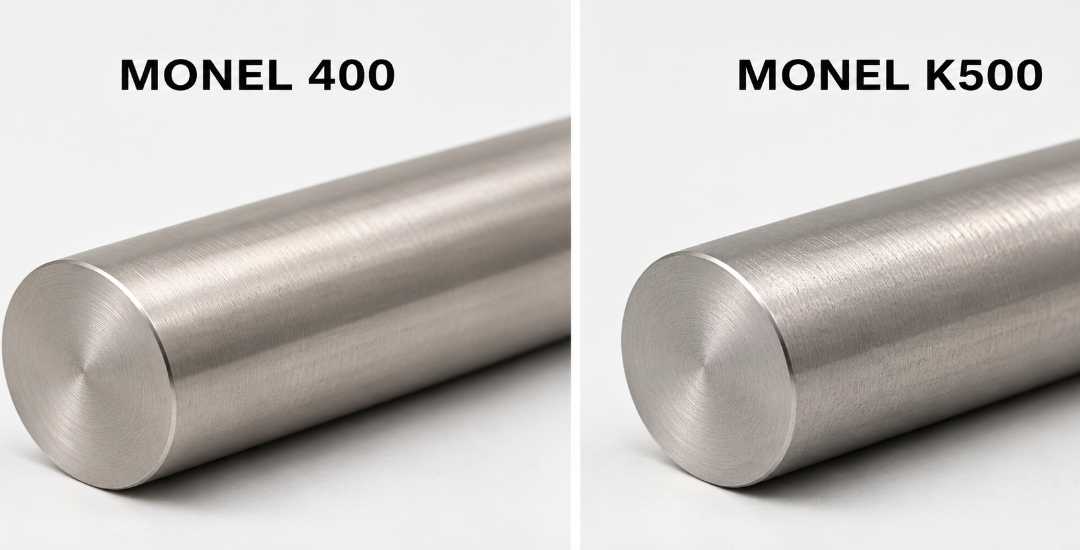
The main difference between the two grades is therefore not corrosion resistance alone. Monel 400 emphasizes a simpler solid-solution structure and easier processing, while K-500 adds precipitation hardening for applications that require greater strength and hardness. The final choice should consider the service environment, mechanical load, heat-treatment condition, and machining requirements together.
5. Common Applications of Monel
Monel is used where its nickel-copper composition provides a useful combination of corrosion resistance, mechanical strength, and durability. The most suitable applications depend on the specific grade, operating environment, temperature, and mechanical load.
Marine and Offshore Equipment
Monel is widely used in marine systems exposed to seawater, particularly where continuous flow and resistance to chloride-containing environments are important.
Typical components include pump and valve parts, marine fasteners, shafts, heat-exchanger components, and seawater piping hardware. Flow conditions still matter, since stagnant seawater and crevices can increase the risk of localized corrosion.
Chemical Processing
Monel is also used in equipment exposed to certain acids, alkalis, and salt solutions. Monel 400, for example, is known for good resistance in hydrofluoric acid and many alkaline environments.
Applications can include valves, pumps, process piping, heat exchangers, and other fluid-contact components where conventional stainless steels may not provide suitable corrosion resistance.
Oil and Gas Equipment
Monel alloys are used in selected oilfield and downhole components that require corrosion resistance together with mechanical reliability.
Examples include valve parts, fasteners, instrument components, pump shafts, and other parts exposed to brines or demanding service conditions. Higher-strength Monel K-500 is particularly relevant where mechanical loading is also a major design requirement.
Aerospace and Specialized Equipment
Monel is used in selected aerospace, instrumentation, and specialty engineering applications where corrosion resistance, toughness, or specific magnetic requirements are important.
Applications may include fasteners, springs, valve components, sensor hardware, and low-temperature equipment. Magnetic behavior should be confirmed for the specific Monel grade and material condition rather than assumed for the entire alloy family.
6. CNC Machining Monel
Monel can be machined with conventional equipment, but its tendency to work-harden means the cutting process needs to remain consistent. Tool rubbing, repeated light passes, or an unstable setup can make the surface progressively harder and increase tool wear.
Work Hardening During Machining
Work hardening is one of the main machining concerns with Monel. Once the surface has hardened, the next cutting pass may require greater force and can become more difficult to control.
Maintaining a consistent cut and avoiding unnecessary tool dwell helps reduce this effect. Rigid workholding is also important when dimensional accuracy and surface finish are critical.
Material Condition and Machinability
Machinability depends partly on the condition in which the material is supplied. For Monel 400, cold-drawn or cold-drawn and stress-relieved material can provide favorable machinability and surface finish.
Where easier chip breaking is important, Monel R-405 is a free-machining version of Monel 400. Controlled sulfur additions form inclusions that help break chips during machining, although the resulting surface finish may be less smooth than Monel 400.
Machining Monel K-500
Monel K-500 becomes considerably harder after age hardening, so heavy machining is generally easier before the aging treatment.
A common approach is to machine the part slightly oversize, perform the required age-hardening treatment, and then finish-machine critical dimensions to final size.
Tooling and Process Control
Tooling, cutting speed, feed, and coolant should be selected according to the operation, material condition, and required finish. The key is to maintain a stable cutting action and avoid excessive rubbing or heat buildup at the cutting edge.
For precision Monel parts, process planning should account for work hardening, tool wear, chip control, and any dimensional change associated with heat treatment.
7. Limitations of Monel
Monel offers strong corrosion resistance in selected environments, but it is not the most practical material for every application. Cost, chemical exposure, grade-specific corrosion behavior, and machining difficulty all need to be considered before specification.
Higher Material and Processing Cost
Monel is generally more expensive than common stainless steels because of its nickel and copper content. Machining can also add cost due to work hardening, tool wear, and slower material removal compared with easier-to-machine alloys.
For applications exposed only to mild atmospheric conditions or fresh water, a lower-cost stainless steel may provide sufficient performance.
Limited Resistance in Strong Oxidizing Environments
Monel performs best in many reducing and non-oxidizing environments, but it is not suitable for every corrosive medium. Strong oxidizing chemicals, including concentrated nitric acid and other highly oxidizing conditions, can significantly reduce its corrosion resistance.
Material selection should therefore be based on the specific chemical, concentration, temperature, and flow conditions rather than on the general reputation of Monel as a corrosion-resistant alloy.
Stress-Corrosion Concerns with K-500
Age-hardened Monel K-500 can be susceptible to stress-corrosion cracking under certain combinations of tensile stress and corrosive exposure.
This does not make K-500 unsuitable for demanding applications, but the service environment, heat-treatment condition, and applied stress should be considered together when the alloy is used in critical components.
Machining Difficulty
Monel work-hardens readily during machining, which can increase cutting forces, tool wear, and production time. Stable cutting conditions, suitable tooling, and careful process planning are therefore more important than with many conventional steels or aluminum alloys.
For simple parts where high corrosion resistance is unnecessary, Monel may add manufacturing cost without providing a meaningful performance benefit.
Conclusion
Monel is most useful when a component needs reliable performance in seawater, alkaline solutions, or certain reducing chemical environments where common stainless steels may be less suitable. Monel 400 is a practical choice when corrosion resistance, toughness, and moderate strength are the main requirements, while Monel K-500 is better suited to parts that need the same nickel-copper corrosion base with substantially higher strength and hardness.
Monel is not automatically the right choice for every corrosive application. Strong oxidizing environments can fall outside its useful range, while mild service conditions may not justify its higher material and machining cost. For CNC-machined parts, the final grade also affects work hardening, heat-treatment sequence, and finishing strategy, making grade selection part of the manufacturing plan rather than a material decision made in isolation.
 English
 Hebrew
 Turkish
 French
 Russian
 German
 Spanish
 Portuguese