


“Should we use aluminum, brass, or stainless steel for this part?” You’re likely holding a non-ferrous metal. They show up in aircraft landing gear brackets and laptop heat sinks alike. They cost more than carbon steel and machine differently. But when the application demands their specific properties, nothing else works.
This guide covers the non-ferrous metals that matter in manufacturing. You’ll learn how each one behaves on the machine, where they perform well, what goes wrong when you push too hard, and how to choose the right one for your next project.
1. What Is a Non-Ferrous Metal?
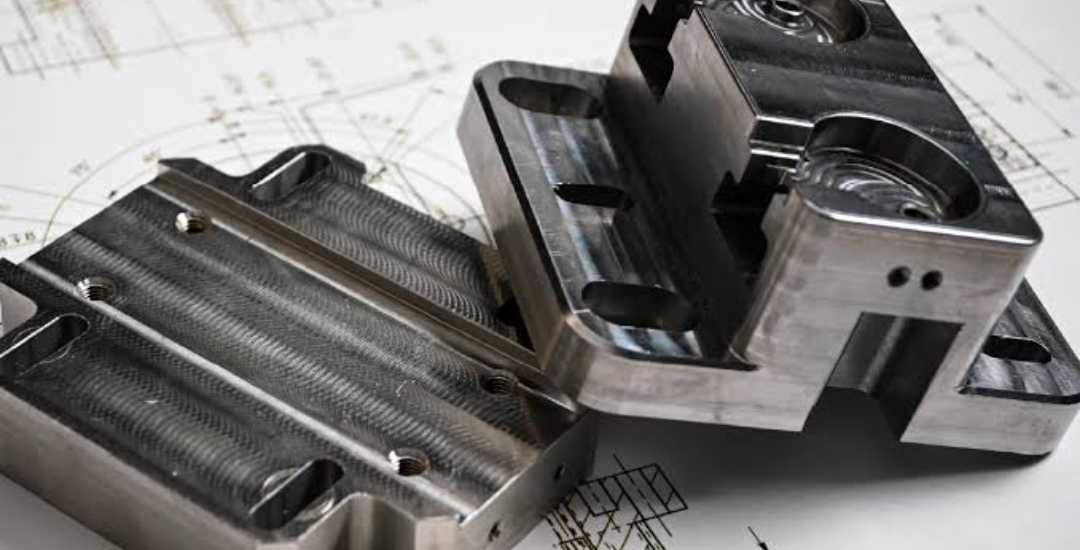
A non-ferrous metal contains no iron as a primary constituent. The term comes from the Latin ferrum, meaning iron. Steel and cast iron are ferrous. Aluminum, copper, titanium, magnesium, nickel, zinc, lead, tin, and alloys like brass and bronze are non-ferrous. Without iron, these metals cannot form the crystal structures that make steel magnetic or capable of hardening through phase transformation. They are non-magnetic, do not rust in the traditional sense, and respond differently to heat treatment.
A magnet test can be a quick field check, but it should not replace material certification or alloy verification. No attraction means non-ferrous. A spark test on a grinding wheel provides a secondary check: ferrous metals throw long yellow sparks; non-ferrous metals produce short reddish sparks or none at all. Visual cues also help. Aluminum looks dull gray, copper is reddish-orange, brass ranges yellow to reddish-yellow, and titanium is dark gray with heft closer to steel.
2. Common Types of Non-Ferrous Metals Used in Machining
Four non-ferrous metals appear on machine shop work orders more often than any others. Each earns its place for a different reason. Here is what sets them apart and where they are commonly used.
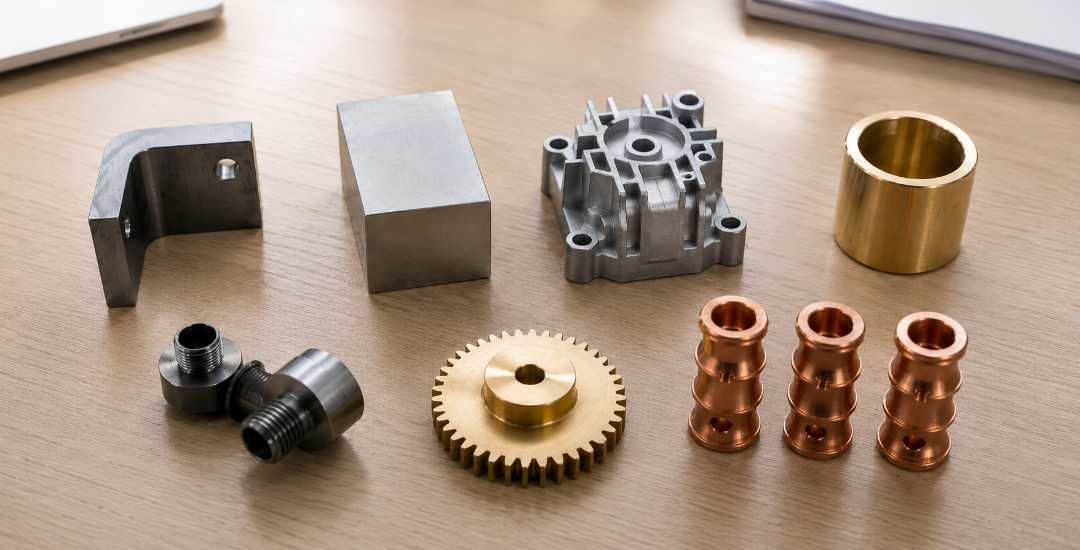
Aluminum
Aluminum is the most commonly machined non-ferrous metal. It cuts quickly, offers good corrosion resistance, and provides an excellent strength-to-weight ratio.
- 6061-T6 structural brackets: Good strength, weldability, and corrosion resistance. The main challenge is distortion after heavy material removal. Rough machining relieves internal stresses, causing the part to move before final machining.
Copper
Copper dominates electrical and thermal applications because of its exceptional conductivity.
- Electrical bus bars: Maximum conductivity. Burrs form readily during milling, so deburring often becomes a significant part of the manufacturing cost.
Titanium
Titanium combines excellent corrosion resistance with one of the highest strength-to-weight ratios among engineering metals.
- Aircraft structural fittings (Ti-6Al-4V): High strength, low weight, and excellent fatigue resistance. Titanium work-hardens quickly if tools dwell or rub instead of cutting.
Brass
Brass remains one of the easiest engineering metals to machine.
- Pneumatic valve bodies: Excellent machinability and corrosion resistance. Free-machining grades such as C360 produce short chips and excellent surface finishes.
Other Non-Ferrous Metals Used in Manufacturing
While aluminum, copper, titanium, and brass account for a large percentage of machined non-ferrous components, several other non-ferrous metals are widely used in engineering and manufacturing applications.
- Bronze. Commonly used for bushings, bearings, worm gears, and marine hardware because of its wear resistance and corrosion resistance.
- Nickel Alloys. Materials such as Inconel 625 and Inconel 718 are selected for high-temperature and corrosion-critical environments, including aerospace and chemical processing equipment.
- Magnesium. One of the lightest structural metals available. Often used in aerospace, automotive, and portable electronic devices where weight reduction is critical.
- Zinc. Frequently used for die-cast components, electrical hardware, and corrosion-resistant coatings.
- Tin. Commonly used as a protective coating and in solder alloys for electronics manufacturing.
- Lead. Primarily found in radiation shielding, counterweights, and specialized industrial applications due to its high density and softness.
The choice of non-ferrous metal ultimately depends on the balance between strength, weight, corrosion resistance, conductivity, manufacturability, and cost.
3. Why Choose Non-Ferrous Metals Instead of Steel
Non-ferrous metals cost more than carbon steel. So why specify them? Four properties drive most decisions on the shop floor.
Corrosion resistance. Most non-ferrous metals form a natural oxide layer that blocks further oxidation. Titanium handles seawater without breaking down. Aluminum passivates in air. Copper develops a protective patina. These metals dominate marine and chemical applications without paint or plating. For parts exposed to moisture or chemicals, non-ferrous metals eliminate a failure mode that coatings can only delay.
Low density. Aluminum weighs about one-third as much as steel. Titanium delivers roughly half the weight with comparable strength. For aircraft and automotive parts, this weight reduction directly lowers operating costs. A lighter aircraft burns less fuel. A lighter vehicle accelerates faster and stops shorter.
Electrical and thermal conductivity. Copper sets the standard. Aluminum delivers about 60% of copper’s conductivity at 30% of the weight. That trade-off explains why power lines use aluminum while motor windings use copper. In electronics, copper heat sinks pull heat away from processors faster than any ferrous alternative.
Non-magnetic behavior. Most non-ferrous metals are non-magnetic. This is a hard requirement for MRI housings, electronic enclosures, and any application sensitive to magnetic interference. Steel brings a magnetic signature that cannot be designed out. Non-ferrous metals eliminate it entirely.
When steel can no longer meet the requirements, one of these properties is usually the reason engineers look elsewhere.
4. Common Applications of Non-Ferrous Metals
A metal finds its way into a part for a reason. Here is how non-ferrous metals serve different engineering demands, organized by what the part actually requires.
Lightweight Structures
Aircraft fuselage ribs use 7075-T6 for strength-to-weight. Landing gear fittings switch to Ti-6Al-4V where aluminum cannot handle the stress. The manufacturing challenge is that aluminum structural parts distort after heavy material removal as internal stresses relax. Titanium work-hardens if the tool dwells even briefly.
Electrical and Thermal Pathways
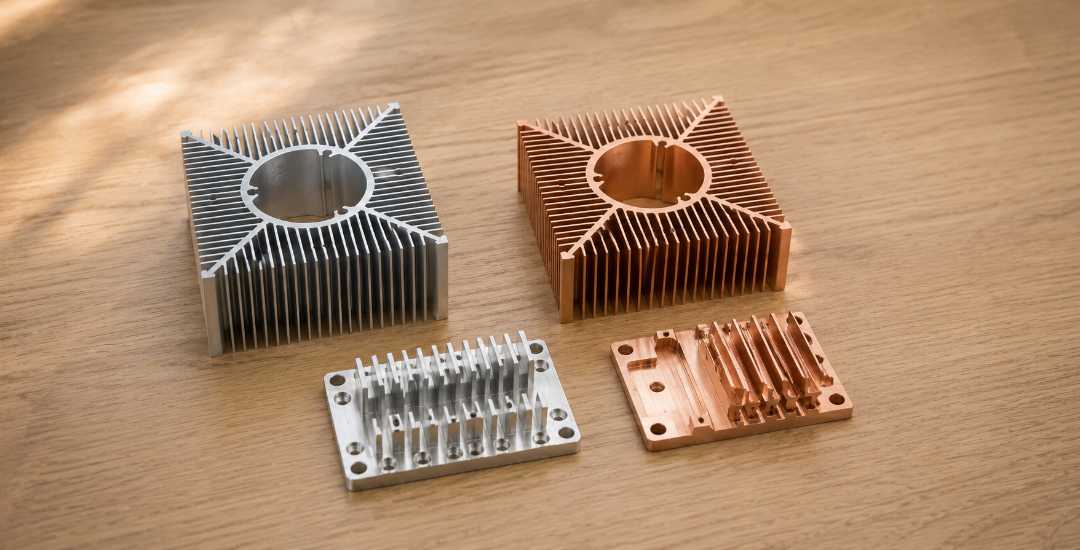
Switchgear bus bars use C110 copper for maximum conductivity. Transformer windings use enameled copper wire. High-power LED heat sinks rely on 6061 aluminum extrusions. The manufacturing challenge is that copper bus bars burr heavily. Aluminum heat sinks with thin fins chatter during machining.
Corrosion-Critical Components
Some applications prioritize durability over weight or conductivity. Marine propellers, seawater pumps, offshore equipment, and chemical processing systems often use bronze, brass, titanium, or nickel alloys because corrosion resistance directly affects service life.
Whether the goal is lower weight, better conductivity, corrosion resistance, or non-magnetic performance, the application usually determines the material long before manufacturing begins.
5. How to Choose the Right Non-Ferrous Metal
Engineers rarely start by asking which metal is best. The more useful question is what the part needs to do.
If the component will operate outdoors, in seawater, or around chemicals, corrosion resistance often becomes the first filter. Materials such as aluminum, titanium, and certain copper alloys are frequently selected for this reason.
For weight-sensitive products such as aircraft components, robotics, and portable equipment, reducing mass may matter more than maximizing strength. In those cases, aluminum or titanium often moves to the top of the shortlist.
Some applications are driven by conductivity rather than mechanical performance. Bus bars, connectors, motor components, and heat sinks typically require copper or aluminum because steel simply cannot match their electrical or thermal properties.
Manufacturing requirements should not be overlooked either. A material may meet every performance target but introduce higher machining costs, longer lead times, or more complex finishing requirements. In many projects, the final decision comes down to balancing performance, manufacturability, and cost rather than maximizing a single property.
6. Manufacturing Considerations for Non-Ferrous Metals
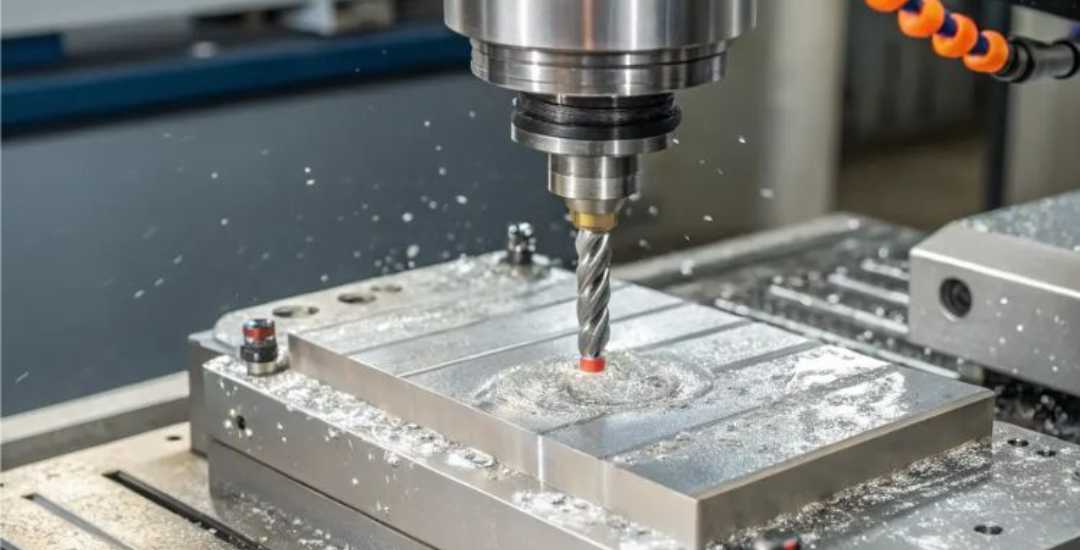
Non-ferrous metals differ not only in performance but also in how they respond to machining and finishing operations.
| Material | Machinability | Surface Finish Potential | Typical Manufacturing Challenge |
| Aluminum | Good | Good | Built-up edge and part distortion |
| Copper | Fair | Excellent | Burr formation and handling damage |
| Titanium | Poor | Good | High cutting temperatures and short tool life |
| Brass | Excellent | Excellent | Few machining challenges compared with other non-ferrous metals |
| Nickel Alloys | Poor | Fair | Severe tool wear and low cutting speeds |
Machinability varies by alloy and tooling conditions. Ratings shown are relative comparisons commonly used in machining references.
Although material properties often drive the initial selection, manufacturing requirements can have a significant impact on overall cost, lead time, and production efficiency.
7. Design and Assembly Considerations for Non-Ferrous Metals
Some of the most expensive problems appear after machining is complete, particularly when non-ferrous metals are combined with other materials or exposed to demanding operating conditions.
Galling Between Aluminum and Stainless Steel
Aluminum and 300-series stainless steel can gall or cold-weld under pressure. Threaded assemblies are especially vulnerable. Isolation washers, suitable coatings, or anti-seize compounds are commonly used to reduce the risk.
Thermal Expansion in Mixed-Material Assemblies
Aluminum expands significantly more than steel as temperature increases. In assemblies that combine different materials, thermal expansion can alter clearances, reduce interference fits, or introduce unwanted stresses. Operating temperature should be considered during the design stage rather than after production begins.
Titanium Chip Fire Risk
Titanium machining produces hot, reactive chips that require proper chip evacuation and coolant delivery. Although primarily a manufacturing concern, it is one reason titanium components are typically more expensive to produce than comparable aluminum parts.
The material itself is only part of the decision. How it behaves in the final assembly matters just as much.
Conclusion
Non-ferrous metals are selected when properties such as corrosion resistance, low weight, conductivity, or non-magnetic performance matter more than the lower cost of steel. The right choice depends not only on the application requirements but also on how the material will be manufactured, assembled, and used in service.
At Beska, we work with a wide range of non-ferrous metals, from aluminum and brass to titanium and nickel alloys. If material selection is still being evaluated, an early manufacturing review can often reveal opportunities to simplify production, reduce cost, or improve long-term performance.
Deeper into Our Resources
For some insightful reads, we’ve curated a list of recommended articles just for you:
 English
 Hebrew
 Turkish
 French
 Russian
 German
 Spanish
 Portuguese