


Teflon coating is widely used on machined metal parts where low friction, non-stick performance, or chemical resistance is required. But specifying the coating is not only about choosing a surface property. The added coating thickness can affect fits, threads, sealing surfaces, and other critical dimensions. A part may meet the drawing before coating and still fail to assemble correctly afterward.
This guide looks at Teflon coating from a practical manufacturing perspective, including how it works, where it is used, and what to consider when specifying it for machined parts.
1. What Is Teflon Coating

Teflon is a brand name owned by Chemours for fluoropolymer materials and coating systems. PTFE (polytetrafluoroethylene) is the material most commonly associated with Teflon, although other fluoropolymers such as PFA and FEP are also used in industrial coating applications.
These coatings are applied to a prepared surface and cured to form a continuous fluoropolymer layer. Their low surface energy makes it difficult for many substances to adhere to the coated surface, which is why they are widely used for non-stick and release applications.
Fluoropolymer coatings can also provide low friction and strong chemical resistance. The exact properties, coating thickness, and operating limits depend on the specific polymer and coating system used.
2. Types of Teflon Coating
Teflon coating is most commonly associated with PTFE, but Teflon-branded coating systems can also use other fluoropolymers such as PFA and FEP. These materials differ in release performance, chemical resistance, coating characteristics, and operating conditions, so the right choice depends on how the coated part will be used.
PTFE Teflon Coating
PTFE is the material most commonly associated with Teflon coating. Its low surface energy provides excellent non-stick and release properties, while its low coefficient of friction makes it useful for components where sliding or repeated contact occurs.
PTFE coatings also resist many chemicals and are widely used on machinery components, molds, food-processing equipment, and other parts where release performance or reduced friction is important. Industrial systems often use a primer beneath the PTFE layer to improve adhesion to the substrate.
PFA Coating
PFA is a melt-processible fluoropolymer used where chemical resistance and barrier protection are particularly important. Compared with PTFE, it can be applied in thicker, more continuous coating systems, which makes it useful for components exposed to aggressive chemical environments.
Typical applications include valve components, process equipment, vessels, and fluid-contact surfaces where protecting the underlying metal is a primary requirement.
FEP Coating
FEP provides good non-stick performance, surface smoothness, and flexibility. It also processes at lower temperatures than PTFE and PFA, which can be useful for certain coating systems and substrate requirements.
FEP coatings are used on release surfaces, heat-sealing equipment, and other components where a smooth fluoropolymer surface is important. Their suitability depends on the required temperature, mechanical load, and operating environment.
ECTFE (Halar)
ECTFE, commonly known by the trade name Halar, is another fluoropolymer used for industrial protective coatings. It is valued primarily for chemical and corrosion resistance and is often used to protect equipment exposed to demanding process environments.
ECTFE should not be classified as a type of Teflon coating. It is better considered a separate fluoropolymer coating option when corrosion protection and chemical resistance are the main requirements.
PTFE, PFA, and FEP each serve different coating requirements. The choice should be based on the function of the surface and the conditions the finished part will face in service.
3. How Industrial Teflon Coating Works
Industrial Teflon coating typically involves surface preparation, coating application, and controlled curing. The exact process varies with the fluoropolymer system, substrate material, coating thickness, and performance requirements, but good surface preparation and process control are essential for consistent adhesion and coating quality.
Surface Preparation
The substrate must be clean and properly prepared before coating. Oil, dirt, oxides, and other contaminants can interfere with adhesion, so parts are typically cleaned and degreased before further treatment.
Abrasive blasting is commonly used on metal substrates to create a controlled surface profile that helps the coating system bond to the part. Other preparation methods may also be used depending on the substrate and coating specification.
Primer Application
Many industrial fluoropolymer coating systems use a primer to improve adhesion between the substrate and the functional coating layer. The primer is selected as part of the overall coating system and must be compatible with both the base material and the fluoropolymer topcoat.
Not every coating follows the same primer system, so the required preparation and primer should be confirmed with the coating supplier.
Coating Application
The fluoropolymer coating is applied in controlled layers to achieve the required coverage and thickness. PTFE, PFA, and FEP systems can differ in application method and achievable coating build.
Thin coatings are commonly used where release or low friction is the main requirement, while thicker coating systems may be specified where chemical barrier protection is more important. Uniform application is particularly important on edges, holes, threads, and other features where coating thickness can affect final dimensions.
Curing
After application, the coating is heated according to the requirements of the specific fluoropolymer system. Controlled curing allows the coating to develop its final surface and adhesion characteristics.
Curing temperature and time depend on the coating chemistry, formulation, substrate, and coating thickness. These parameters should follow the coating manufacturer’s specified process rather than a single temperature or cycle for every Teflon coating.
For precision machined parts, coating thickness should be considered before final dimensions are established. Critical fits, threads, and mating surfaces may need machining allowance or masking so that the finished part remains within specification after coating.
4. Key Properties of PTFE Coating
PTFE coating is mainly selected for its low friction, non-stick behavior, chemical resistance, and electrical insulation. Actual performance depends on the coating formulation, thickness, substrate, curing process, and service conditions.
| Property | Typical PTFE Coating Performance |
| Temperature Resistance | Broad operating range; some PTFE systems are rated for continuous service up to about 260°C |
| Low Friction | Reduces resistance between sliding or contacting surfaces |
| Non-Stick / Release | Low surface energy reduces adhesion of many materials |
| Chemical Resistance | Resistant to many acids, bases, and solvents, depending on concentration and temperature |
| Electrical Insulation | Good dielectric properties for electrically insulating applications |
| Abrasion Resistance | Generally lower than hard wear-resistant coatings; filled formulations can improve wear performance |
These properties make PTFE useful where release, low friction, or chemical resistance matters more than high surface hardness or heavy abrasive wear resistance.
5. Typical Teflon Coating Applications
Teflon and related fluoropolymer coatings are used on machined parts where release performance, low friction, or chemical protection is required. The coating system and thickness should be selected according to the function and operating conditions of the finished part.
Food-Processing Fixtures and Mold Tools

Machined aluminum fixtures, forming tools, release components, and other food-processing equipment may use food-contact-compliant PTFE coatings to reduce sticking and make surfaces easier to clean.
For precision machined parts, coating thickness is an important design consideration. Close-fitting features may need machining allowance or masking so that the finished dimensions remain within tolerance after coating. The specific coating system should also meet the applicable food-contact requirements.
Stainless Steel Valve and Fluid-Handling Components
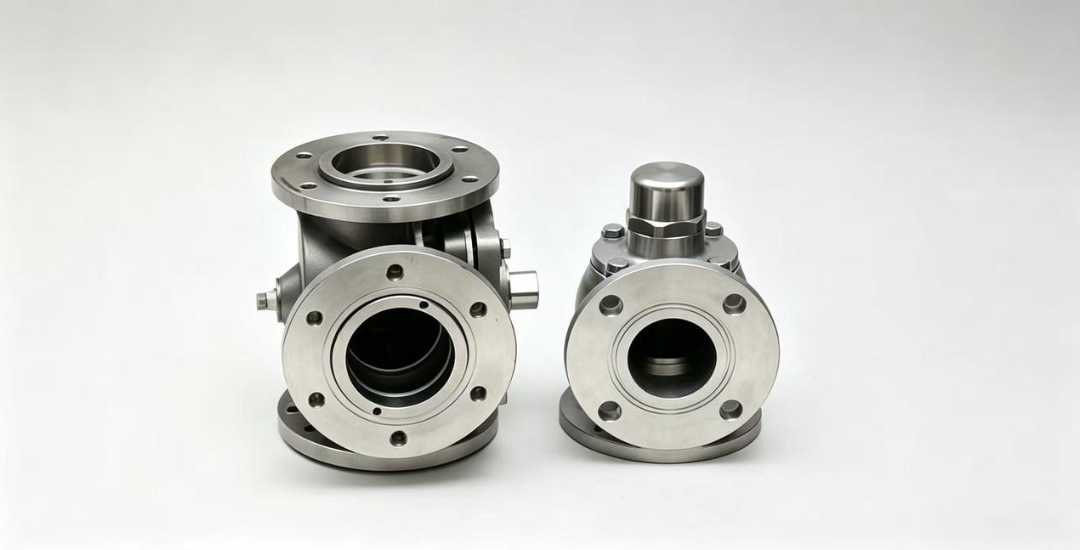
Valve components, pump parts, and other fluid-handling hardware made from stainless steel may use PFA or other fluoropolymer coatings where chemical resistance and barrier protection are important.
Internal bores, sealing areas, edges, and complex geometries can be more difficult to coat uniformly. Where coating continuity is critical, additional inspection methods may be specified to identify discontinuities in the protective layer.
PTFE is commonly considered when low friction and release performance are the main requirements, while PFA may be more suitable when chemical barrier protection and a thicker coating build are important. The final choice should be based on the actual service conditions and coating specification.
6. Teflon Coating Design Considerations
Teflon coating should be considered as part of the finished component rather than an isolated surface treatment. Coating thickness, part geometry, operating conditions, and substrate preparation can all affect the final fit and performance of a machined part.
Account for Coating Thickness
Coating adds material to exposed surfaces and can change the finished dimensions of the part. This matters particularly for close fits, bores, threads, sealing surfaces, and mating features.
Critical dimensions should therefore be specified with the final coated condition in mind. Depending on the coating thickness and tolerance requirements, machining dimensions may need adjustment or certain areas may need masking before coating.
Consider Edge and Feature Geometry
Sharp edges, deep recesses, internal bores, and other difficult-to-access features can make consistent coating coverage more challenging.
Where the design allows, small radii or chamfers can improve edge coverage. For complex internal features, coating feasibility should be reviewed before machining so that areas requiring special preparation or masking can be identified early.
Check Temperature and Wear Conditions
The expected service temperature should remain within the rated range of the specific coating system. PTFE coatings also provide low friction but are not intended to replace hard wear-resistant coatings in every application.
For parts exposed to significant abrasive wear, impact, or repeated high-load contact, wear-modified fluoropolymer formulations or another surface treatment may be more appropriate.
Plan Surface Preparation and Masking
Coating adhesion depends on proper substrate preparation, but the required preparation varies with the substrate and coating system. Areas that must retain a specific surface condition or remain uncoated, such as certain threads, sealing surfaces, electrical contacts, or precision fits, should be clearly identified on the drawing.
Masking requirements should also be agreed with the coating supplier before production, especially when coating boundaries affect assembly or dimensional inspection.
What to Specify in the Drawing
Instead of simply adding “Teflon coating” to the drawing, provide enough information for the manufacturer and finishing supplier to understand the requirement. Depending on the part, this may include the coating type, required thickness or applicable specification, surfaces to be coated, masking areas, critical finished dimensions, and relevant service conditions.
For precision machined parts, defining these requirements before machining is much easier than correcting fit or coating problems after finishing.
7. Teflon Coating vs. Other Surface Treatments
Teflon coating is not the best surface treatment for every application. Hard anodizing, powder coating, electroless nickel, and composite coatings may be better choices when hardness, wear resistance, appearance, or general corrosion protection matters more than low friction and release performance.
| Surface Treatment | Main Strength | Non-Stick / Low Friction | Wear Resistance | Common Use |
| PTFE / Teflon Coating | Release, low friction, chemical resistance | Excellent | Low to moderate | Release surfaces, sliding components, processing equipment |
| Hard Anodizing | Surface hardness and wear resistance | Low | High | Aluminum parts exposed to friction and wear |
| Powder Coating | General corrosion protection and appearance | Low | Moderate | Housings, frames, brackets, external surfaces |
| Electroless Nickel | Uniform metal coating, corrosion and wear protection | Low | Moderate to high | Precision metal parts, bores, complex geometries |
| Nickel-PTFE Composite | Combination of wear resistance and lubricity | Good | Higher than standard PTFE | Sliding and moving components requiring both properties |
The choice depends on what the surface needs to do. PTFE coating is useful when release and low friction are the priorities, while hard anodizing or electroless nickel may be more appropriate when hardness and wear resistance matter more. Nickel-PTFE provides another option when both lubricity and improved wear performance are required.
Conclusion
Teflon coating is widely used on industrial parts where low friction, non-stick performance, or chemical resistance is required. PTFE, PFA, and FEP coating systems offer different characteristics, and the right choice depends on the substrate, operating conditions, wear requirements, and function of the finished surface.
For precision machined parts, coating should be considered before machining is finalized. Coating thickness, masking areas, edge geometry, and critical fits can all affect whether the finished component meets its dimensional and assembly requirements.
At Beska, we support CNC-machined parts that require Teflon and other surface finishes. Our engineering team can review drawings before production to identify coating-related concerns around machining allowance, critical dimensions, masking, and assembly fits, then coordinate machining, finishing, and final inspection for the completed parts.



 English
  Hebrew
  Turkish
  French
  Russian
  German
  Spanish
  Portuguese