


In many steel applications, material selection often comes down to thickness rather than complexity. Among commonly used sheet metal options, 14 gauge steel is frequently specified for its balance of strength, weight, and workability.
A straightforward question such as “How thick is 14 gauge steel?” often leads to more practical considerations, including how thickness is defined across different standards and how it influences performance in real applications.
This article examines what 14 gauge steel represents in measurable terms, how its thickness varies under different standards, how tolerance affects fabrication accuracy, and how it performs in structural and manufacturing contexts.
1. What Is 14 Gauge Steel?
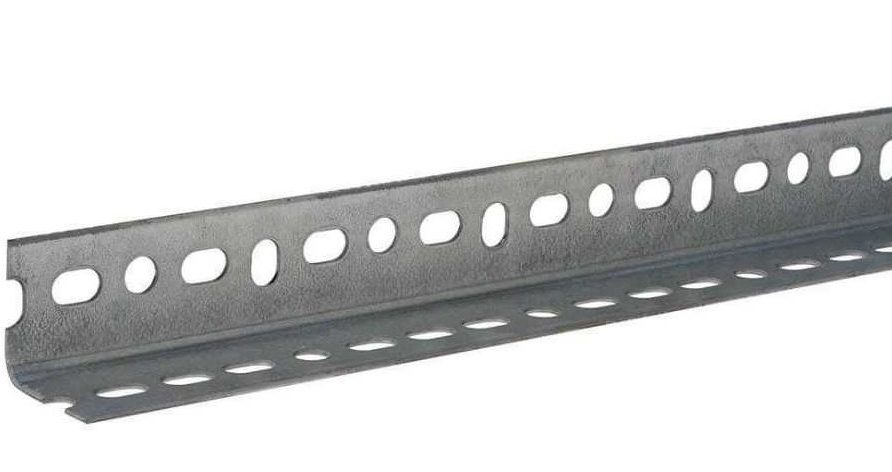
According to China’s GB/T 709-2019 standard for hot-rolled steel plates and strips, 14 gauge steel has a nominal thickness of 3.4 mm. This nominal value represents a standardized dimension used for design, specification, and trade. It does not indicate the exact measurement of every sheet. In practice, the actual thickness varies within a defined tolerance range, as detailed in the same national standard.
The Story Behind the “Gauge” Number
The term “gauge” originated during the early industrial era when engineers and manufacturers sought a simple method to describe sheet thickness. Instead of using decimals or millimeters, they adopted numeric codes that corresponded to approximate thickness values. This simplified communication and ensured consistency across workshops and markets.
Although the metric system has become dominant in modern engineering, the gauge notation is still widely used in factories, procurement documents, and among experienced engineers. It remains a familiar reference in daily communication and continues to represent an enduring industrial convention.
| Gauge Number | Nominal Thickness (mm) | Gauge Number | Nominal Thickness (mm) |
| 4 | 1 | 16 | 4 |
| 6 | 1.4 | 18 | 5 |
| 8 | 1.8 | 20 | 6 |
| 10 | 2 | 22 | 7 |
| 12 | 2.5 | 24 | 8 |
| 14 | 3.4 | 26 | 9 |
The Role of GB/T 709 in Defining Accuracy
The GB/T 709 standard serves as a key reference for defining the dimensional accuracy of hot-rolled steel plates in China. For 14 gauge (3.4 mm) steel, it specifies not only the nominal thickness but also the permissible tolerance range, which depends on the plate width and precision grade.
| Plate Width (mm) | Normal Accuracy (PT.A) | High Accuracy (PT.B) |
| ≤ 1500 | ±0.35 mm | ±0.25 mm |
| 1500–2000 | ±0.40 mm | ±0.29 mm |
| 2000–2500 | ±0.45 mm | ±0.32 mm |
Based on these specifications, a high-precision 14 gauge steel plate (3.4 mm thick, 1800 mm wide) may range between 3.11 mm and 3.69 mm. This level of precision is essential in manufacturing environments where dimensional control affects assembly accuracy, material efficiency, and product performance.
2. 14 Gauge Steel in Different International Standards

When engineers or procurement teams refer to “14 gauge steel,” they must consider that the actual thickness is not globally uniform. Each region follows its own standard system, which defines slightly different theoretical values and tolerances.
| Standard | Code | Theoretical Thickness | Tolerance (±) | Common Applications |
| GB/T 709-2016 | China (Carbon Steel) | 2.0 mm | 0.15 mm | Construction, machinery |
| GB/T 3280-2015 | China (Stainless Steel) | 2.0 mm | 0.12 mm | Food, chemical, medical equipment |
| ASTM A36/A36M | USA | 2.03 mm | 0.10 mm | Export machinery, general structures |
| ASTM A480 | USA (Stainless Steel) | 2.03 mm | 0.08 mm | Precision enclosures |
| EN 10025-2 | Europe | 2.0 mm | 0.13 mm | Building and engineering |
| JIS G3101 | Japan | 2.3 mm | 0.16 mm | Automotive and home appliances |
It is always important to verify which standard applies before making a purchase decision. Even a small difference in thickness, such as 2.0 mm under GB standards compared to 2.3 mm under JIS standards, can affect fit, weight, or load performance in actual use.
3. Mechanical Properties of 14 Gauge Steel
The performance of 14 gauge steel depends not only on thickness but also on the type of steel and its processing. Key mechanical properties such as tensile strength, yield strength, and elongation determine how the material behaves under load and during fabrication. A clear summary of typical properties for common carbon steels is shown below:
| Property | Typical Range (14 Gauge Carbon Steel) | Notes |
| Thickness | 0.0747 in (1.897 mm) | Standard US measurement |
| Tensile Strength | 400–550 MPa | Varies with alloy and temper |
| Yield Strength | 250–350 MPa | Indicates the stress at which permanent deformation occurs |
| Elongation at Break | 20–30% | Allows moderate bending without cracking |
| Hardness (HB) | 120–160 | Influences wear resistance and formability |
These properties make 14 gauge steel suitable for applications requiring a balance of strength and workability. Minor variations in alloy composition or rolling process can slightly alter these values, but the material consistently offers predictable performance for fabrication and structural use.
4. How 14 Gauge Steel Thickness Impacts Strength and Durability
Thickness directly affects a steel sheet’s load capacity, rigidity, and service life.
Strength and Load Capacity
The bending strength of a plate increases with the square of its thickness. Even a 0.1 mm deviation can alter performance. A 3.4 mm plate can withstand significantly higher loads than a 2.5 mm one, making it ideal for structural and mechanical components.
Rigidity and Dimensional Stability
Rigidity increases with the cube of thickness. For example, in machine guards or enclosures, thinner plates may vibrate or deform easily, while 14 gauge steel maintains a quiet, stable structure under operation.
Durability and Safety Margin
In abrasive or corrosive environments, thickness means longer life and safety margin. For instance, in mining equipment or conveyors, 14 gauge plates resist wear and impact better than thinner sheets, reducing maintenance frequency.
Ultimately, choosing the right thickness ensures that each component performs strongly, stably, and reliably throughout its service life as intended.
5. From Design to Fabrication: How Thickness Affects Manufacturing
The thickness of 14 gauge steel affects every stage of manufacturing, from cutting and forming to welding.
Cutting Processes
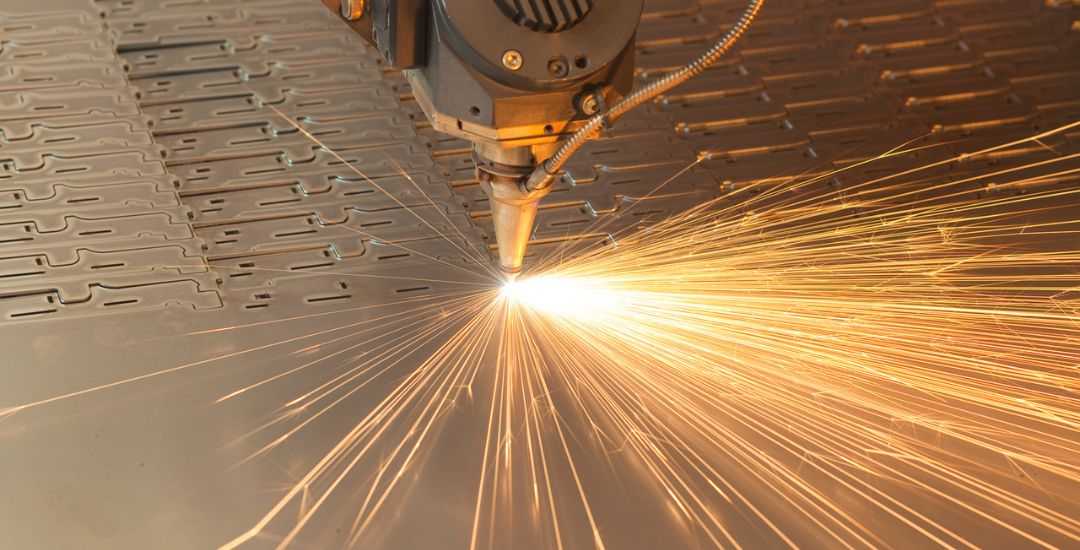
Laser cutting is highly suitable for 14 gauge steel because it provides precise cuts, smooth edges, and minimal heat distortion. Plasma cutting can be used for rough cuts, but it produces a slightly larger heat-affected zone that may require additional finishing. Shearing offers a fast and cost-effective method for straight-line cuts, making it ideal for simpler shapes. Oxy-fuel cutting is generally not recommended for 14 gauge steel, as it can cause warping and uneven edges.
Bending and Forming
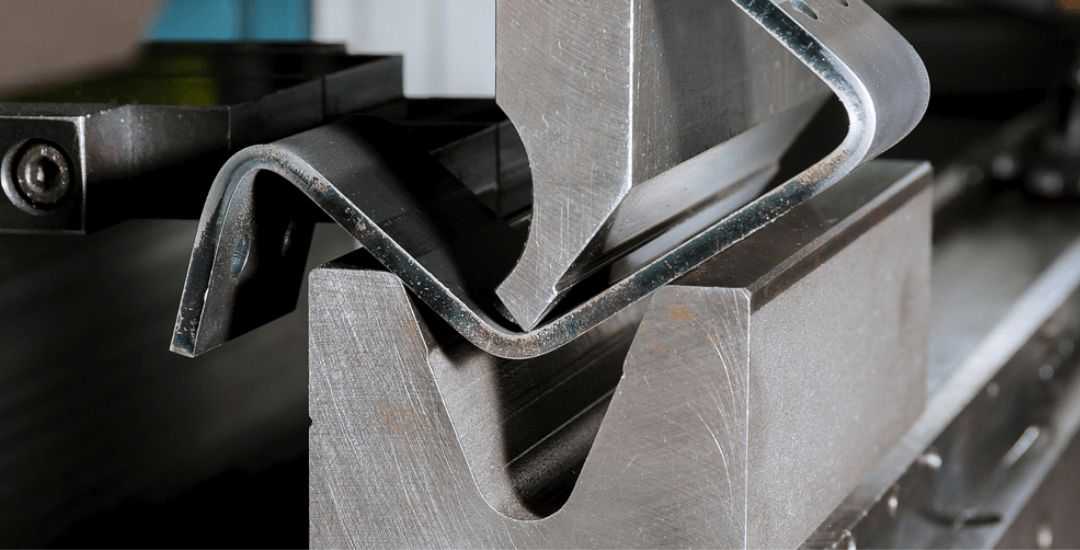
When bending 14 gauge steel, the recommended V-die opening is 6 to 8 times the material thickness, which translates to approximately 20 to 27 mm. This ensures accurate bending angles with predictable springback while minimizing the risk of cracking. Proper consideration of thickness allows manufacturers to achieve precise and consistent shapes in sheet metal components.
Welding
At 3.4 mm thick, 14 gauge steel offers excellent weldability. The thickness is sufficient to prevent burn-through while remaining thin enough for proper penetration. Both MIG/MAG and SMAW welding processes perform effectively on this material, providing strong and durable joints.
After knowing how 14 gauge steel thickness affects cutting, bending, and welding, you can select the appropriate processes, ensuring accuracy, efficiency, and reliability throughout production.
6. Common Misconceptions About 14 Gauge Steel
Despite its widespread use, 14 gauge steel is often misunderstood. Clarifying common misconceptions can help engineers and manufacturers make more informed decisions.
Misconception 1: 14 gauge steel has a fixed thickness
Many assume that 14 gauge steel always has the same thickness. In reality, thickness varies depending on the applicable standard. For example, Chinese GB standards specify 2.0 mm, ASTM standards use 2.03 mm, and Japanese JIS standards define 2.3 mm. Knowing the standard is critical to ensure proper fit and structural performance.
Misconception 2: Thicker steel is always better
Some users believe that a thicker plate automatically improves strength and safety. Excessive thickness, however, increases cost and weight while potentially reducing machinability, bending accuracy, and installation efficiency. The ideal thickness should balance performance and practical considerations.
Misconception 3: Measured thickness equals the true base metal thickness
Surface coatings, rust, or oxidation layers can affect measurements. Directly measuring the steel without accounting for these layers may result in false readings. Always measure the clean base metal to ensure compliance with design requirements.
Misconception 4: Only average thickness matters
Relying solely on average thickness can be misleading. Local thin spots may fall below tolerance limits, reducing structural integrity. Proper quality control should check multiple points across the sheet to verify uniformity.
Misconception 5: Material can be swapped if the gauge is the same
Even when thickness matches, different materials have distinct mechanical and chemical properties. For example, carbon steel and stainless steel may both be 14 gauge, but their strength, corrosion resistance, and weldability differ significantly. Substituting one for the other without consideration can compromise performance.
Correct understanding of these points helps ensure that 14 gauge steel performs reliably in any application.
7. Choosing the Right Thickness for Your Project
When deciding whether to use 14 gauge steel, consider:
- Function. Is it for load-bearing, protection, or enclosure?
- Load type. Static, impact, or vibration?
- Environmental. Exposure to corrosion or wear?
- Forming requirements. Will it be bent, stamped, or welded?
- Standards and regulations. Are there mandatory specifications?
- Total cost. Balance material, processing, and maintenance.
For many medium-load structures, 14 gauge steel provides an ideal compromise between strength, weight, and fabrication efficiency.
Conclusion
14-gauge steel thickness varies depending on the standard, production method, and application. Its thickness influences strength, rigidity, and how the material can be processed. Ensuring the steel meets project requirements is critical for reliable performance and smooth fabrication.
If you are planning a project that involves 14 gauge steel, consulting a skilled sheet metal forming supplier can help guarantee accurate dimensions, consistent quality, and efficient production.
Dive Deeper Into Our Resources
For some insightful reads, we’ve curated a list of recommended articles just for you:
- Electro galvanized sheet thickness chart
- How to harden steel
- Stainless steel machinability chart
- CNC machining stainless steel
 English
 Hebrew
 Turkish
 French
 Russian
 German
 Spanish
 Portuguese