


Looking for a steel that can handle high stress without cracking, resist wear, and still be easy to machine? That’s exactly where 4140 steel shines. Known for its excellent combination of strength and toughness, it’s widely used in automotive, aerospace, and heavy machinery components.
In the following sections, we’ll take a closer look at what makes 4140 steel unique, including its chemical composition, mechanical properties, machining advantages, and typical applications, helping you understand why it’s a preferred choice for precision, high-load parts.
1. What Is 4140 Steel?

4140 steel is a chromium-molybdenum alloy steel, classified under AISI standards as a medium-carbon, low-alloy, high-strength steel. Its name gives insight into its composition:
- “41” – Indicates the chromium-molybdenum series.
- “40” – Represents approximately 0.40% carbon content, balancing hardness, strength, and toughness.
Key Material Properties
- High strength and hardness: After heat treatment (quenching and tempering), 4140 steel can reach up to HRC 59, making it capable of handling high stress and load.
- Excellent fatigue resistance: Its durability under repeated or alternating loads makes it ideal for shafts, gears, and other critical components.
- Good toughness: It can absorb significant energy without cracking, providing strong impact resistance.
- Moderate wear resistance: Better than low-carbon steels, suitable for applications with moderate friction.
- Machinability: In annealed condition, 4140 steel is reasonably easy to machine—around 65% as machinable as AISI 1212 steel—allowing precise CNC operations with modern equipment.
Because of its versatility, 4140 steel is often called “all-around steel.” Heat treatment can further enhance surface hardness and core strength, adapting to demanding conditions.
2. Why 4140 Steel Excels in CNC Machining

4140 steel combines balanced performance with reliable machinability, making it a preferred material for precision parts.
2.1 Core Properties
| Propriedade | Detalhes |
| Strength & Hardness | HRC up to 59 after quenching and tempering. Handles heavy loads efficiently. |
| Fatigue Resistance | Maintains performance under repetitive or alternating stress. |
| Resistência | Absorbs impact without cracking. |
| Resistência ao desgaste | Moderate; suitable for components exposed to friction. |
| Usinabilidade | Annealed 4140 is reasonably machinable and compatible with modern CNC equipment. |
These core properties make 4140 steel a well-balanced material that can withstand demanding mechanical conditions while remaining practical for precision machining and fabrication.
2.2 Chemical Composition
| Elemento | Range (%) | Role & Impact |
| Carbon (C) | 0.38–0.43 | Determines hardness and tensile strength; 0.40% balances strength and toughness. |
| Manganese (Mn) | 0.75–1.00 | Improves hardenability and reduces soft spots during heat treatment. |
| Cromo (Cr) | 0.80–1.10 | Enhances hardenability, wear resistance, and mild corrosion resistance. |
| Molybdenum (Mo) | 0.15–0.25 | Increases hardenability and reduces softening during tempering. |
| Silicon (Si) | 0.15–0.35 | Acts as a deoxidizer and strengthener. |
| Phosphorus (P) | ≤0.035 | Impurity; excessive levels reduce toughness. |
| Sulfur (S) | ≤0.040 | Small amounts improve machinability; excessive levels are harmful. |
Compared with standard carbon steel (like 1045), 4140 steel achieves over 30% higher tensile strength and 25% higher impact toughness, reducing tool wear and avoiding common CNC issues like work hardening or chatter.
2.3 Mechanical Performance
Standard quenching and tempering (28–32 HRC) yields:
- Tensile Strength (σb): ≥ 800 MPa
- Yield Strength (σs): ≥ 650 MPa
- Elongation (δ5): ≥ 15%
- Reduction of Area (ψ): ≥ 45%
- Impact Energy (Akv, 20℃): ≥ 55 J
These values allow components to withstand cyclic loads, impacts, and high-pressure environments such as automotive crankshafts or hydraulic rods without deformation.
2.4 Machining Advantages
- Cutting Performance: Medium hardness reduces cutting resistance; chips break easily, minimizing tool wear. Torneamento CNC, milling, and drilling are efficient, with 15–20% faster material removal compared to 1045 steel.
- Heat Treatment Response: High hardenability ensures uniform hardness in bars over 50 mm in diameter; deviations remain within ±2 HRC.
- Weldability: Preheating (200–300℃) and controlled cooling maintain joint strength above 90% of base metal.
3. What Are the Limitations of 4140 Steel?
While 4140 steel is highly versatile, it’s important to understand its limitations to ensure reliable performance:
- Corrosion Resistance: Not suitable for highly corrosive environments without protective coatings.
- High-Temperature Use: Long-term exposure above 300℃ can reduce strength.
- Weldability: Requires preheating and controlled cooling; improper welding may cause cracks.
- Machining Challenges: Harder than low-carbon steels; excessive cutting speeds can increase tool wear.
Although these limitations exist, they can usually be managed through proper processing, protective treatments, and careful planning, making 4140 steel still a strong choice for precision, high-load components.
4. Typical Applications of 4140 Steel
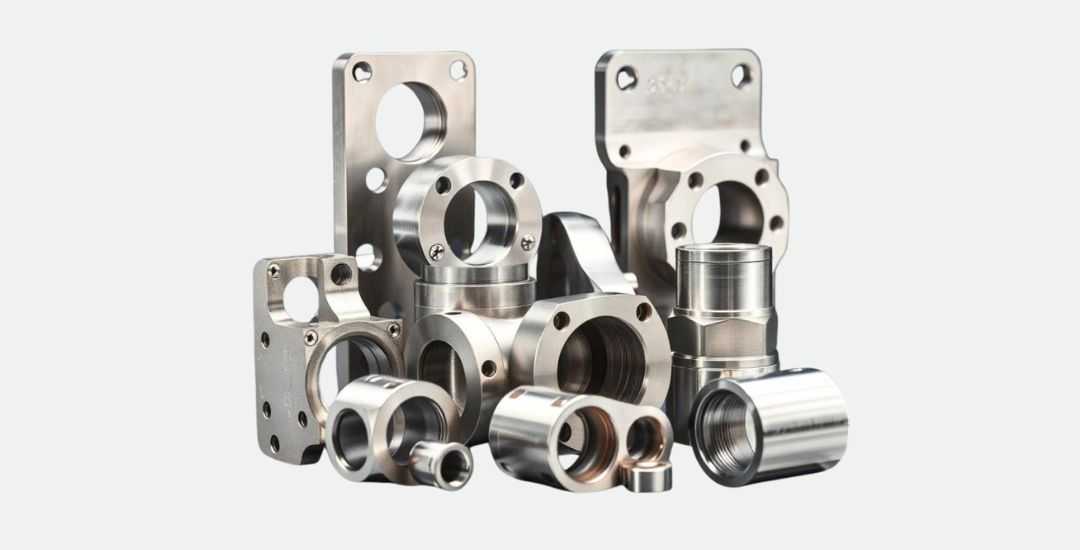
Thanks to its balanced strength, toughness, and machinability, 4140 steel has become a go-to material across multiple industries.
Indústria automotiva
- Crankshafts: CNC turning and milling can achieve roundness ≤ 0.005 mm and surface roughness Ra ≤ 0.8 μm.
- Axles: High impact toughness (Akv ≥ 55 J) ensures durability under varied road conditions.
Heavy Machinery
- Hydraulic Pistons: CNC grinding and chrome plating ensure straightness ≤ 0.01 mm/m; lifespan exceeds 5000 hours under 30 MPa.
- Gears: CNC hobbing and finishing produce Ra ≤ 1.6 μm; contact fatigue strength up to 1200 MPa.
Aeroespacial
- Structural Connectors: CNC milling of complex geometries achieves ± 0.003 mm tolerance.
- Engine Fasteners: CNC turning and threading support temperatures > 400℃, maintaining tensile strength ≥ 650 MPa.
Tooling & Molds
- Plastic Mold Bases: CNC milling ensures parallelism ≤ 0.008 mm; thermal stability keeps dimensional deviation ≤ 0.01 mm after extended use.
- Punches: CNC grinding achieves 50–55 HRC; wear resistance and toughness support over 100,000 stamping cycles.
These final applications show how 4140 steel performs reliably under high loads and demanding conditions.
5. Equivalents of 4140 Steel
4140 steel has international equivalents for global sourcing:
| Padrão | Equivalent | Typical Applications / Notes |
| JIS (Japan) | SCM440 | Common in automotive and machinery; responds well to quenching and tempering |
| DIN/EN (Germany) | 42CrMo4 | Widely used for gears, shafts, and high-strength components; excellent toughness |
| BS (UK) | EN 41CrMo4 | Popular in European heavy machinery; similar strength but may require adjusted heat treatment |
| GB (China) | 42CrMo4 | Standard for engineering components; compatible with CNC machining and forging |
These equivalents share similar chemical compositions and mechanical properties, though minor differences may exist in heat treatment response or machining characteristics.
6. Other Processing Methods for 4140 Steel
Beyond CNC machining, 4140 steel can be processed in several ways to meet different performance or production requirements.
- Forging: Improves toughness and reduces internal defects, making the steel more durable under heavy loads.
- Heat Treatment: Quenching and tempering achieve the desired hardness and strength, essential for high-stress components.
- Surface Treatments: Processes like chrome plating, nitriding, or shot peening enhance wear and corrosion resistance.
- Forming & Stamping: Suitable for simpler parts where strength requirements are moderate, provided proper annealing is applied to prevent cracking.
| Processo | Vantagens | Notas |
| Usinagem CNC | Precision parts | Requires proper tool selection and cutting speeds |
| Forjamento | High toughness | Reduces voids and improves grain structure |
| Tratamento térmico | Target hardness & strength | Must follow recommended protocols |
| Surface Coating | Wear/corrosion resistance | Choose coating based on application load |
| Stamping/Forming | Efficient for simple parts | Annealing may be needed to prevent cracking |
These processing options give engineers flexibility to optimize 4140 steel for performance, durability, and manufacturability.
Conclusão
4140 steel remains one of the most versatile alloy steels for modern manufacturing. Its balance of strength, toughness, and machinability makes it ideal for demanding parts in the automotive, aerospace, heavy machinery, and tooling industries.
By considering not only CNC machining but also forging, heat treatment, and surface finishing, you can fully leverage the performance of 4140 steel for their specific designs. With proper material selection and processing control, 4140 steel offers consistent quality and long-term reliability, making it a smart choice for high-performance components worldwide.
Taking time to consult the right supplier, like the Beska team, who can help you unlock the full potential of 4140 steel in your projects.
Mergulhe mais fundo em nossos recursos
For more details, we’ve curated a few recommended pages and articles just for you:
- 17-4 Stainless Steel vs 304
- Stainless Steel Machinability Chart
- CNC Machining Stainless Steel
- Usinagem CNC de materiais metálicos
 Portuguese
 English
 Hebrew
 Turkish
 French
 Russian
 German
 Spanish