
CNC Bicycle Parts
- Precision CNC milling and turning
- No fit issues at critical interfaces
- With tolerances down to ±0.005 mm
- Flexible production from 1 to 1,000 pieces

Beska – Melhor qualidade com preço competitivo.
Com experiência em fabricação de chapas metálicas e usinagem CNC, estamos aqui.
Precision CNC-machined Bicycle Parts
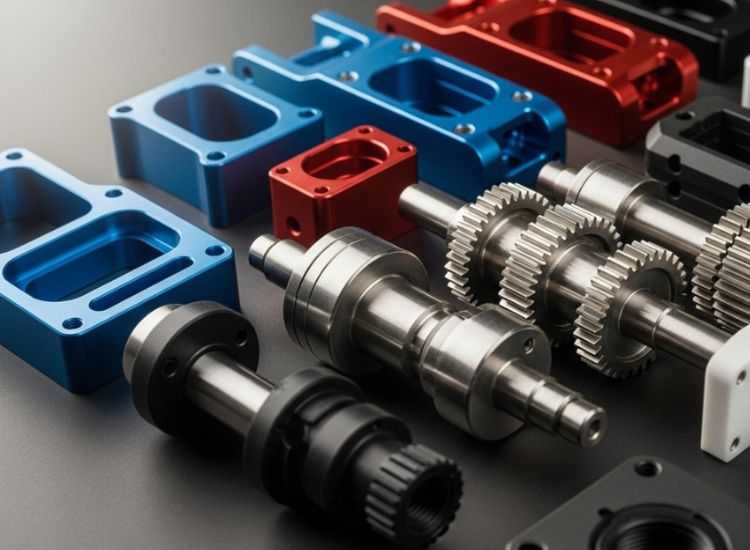
Precision CNC machined bicycle components built for real riding conditions, tight assembly fits, and consistent repeatability in production. At Beska, we usually work with cycling brands, OEM manufacturers, and product developers who are not just looking for a machined part itself but something that actually fits into a complete mechanical system, whether that is a road bike, a mountain bike drivetrain, or an e-bike structure.
Beska – Melhor qualidade com preço competitivo.
Com experiência em fabricação de chapas metálicas e usinagem CNC, estamos aqui.
Machining Capabilities Overview
| Capability Item | Typical Range / Standard |
| Machining accuracy (tolerance) | ±0.01 – ±0.005 mm depending on geometry and material |
| Lead time | 3–7 days for prototypes, 7–15 days for small batch production depending on complexity |
| Materials supported | Aluminum (6061 / 7075), Titanium, Stainless Steel, Engineering Plastics |
| Surface finishing options | Anodizing, hard anodizing, brushing, polishing, powder coating |
| Production type | Prototyping, functional validation, and small batch production |
How Bicycle Parts Are Typically Machined
For example, a bracket may need to reduce weight while still keeping stiffness in a specific load direction, or a crank arm may require internal material removal to optimize weight without affecting fatigue strength around the stress zones.
In these cases, Usinagem CNC is less about simply producing a shape, and more about translating design intent into something that behaves consistently once it is actually loaded and assembled in a real system.
Before production, we usually go through the CAD model from a manufacturing and functional point of view. That includes checking whether the critical interfaces have enough tolerance margin for assembly, how forces are transferred through the part, and whether any thin-wall areas or sharp transitions could lead to stress concentration during long-term use.
This is usually where small geometry adjustments happen, not changing the design idea, but making sure it can be machined cleanly and still perform reliably in real conditions.

Beska – Melhor qualidade com preço competitivo.
Com experiência em fabricação de chapas metálicas e usinagem CNC, estamos aqui.
Bicycle Components We Commonly Work With
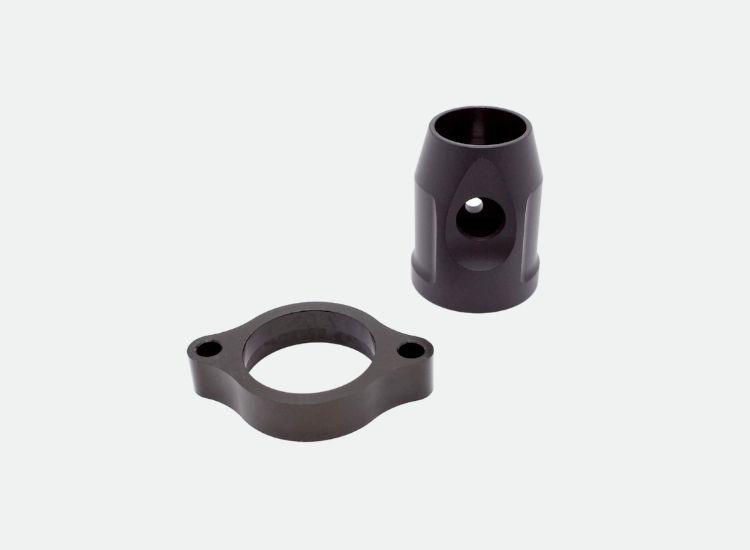

Structural parts
These are things like frame connectors, joints, and custom mounting structures, especially in e-bikes or prototype frames where standard components simply don’t match the design.
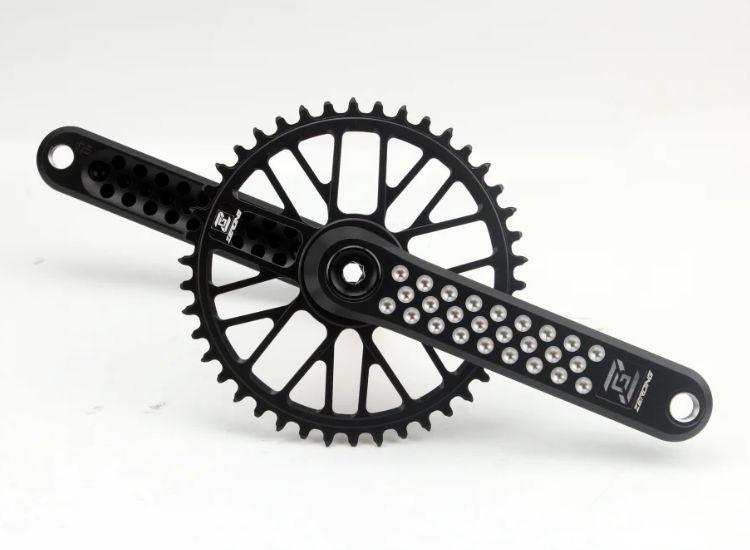
Drivetrain-related parts
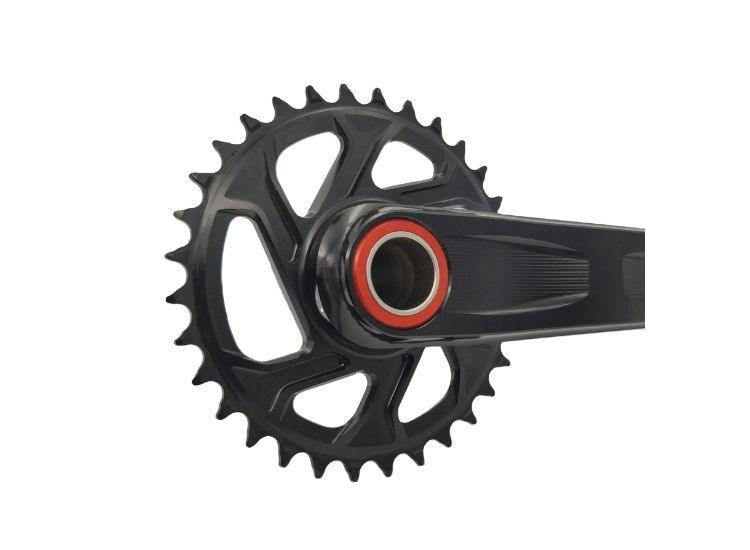
Crank arms and derailleur hangers sit directly in the force transmission path, so dimensional accuracy becomes more noticeable here than in most other bicycle components.
Interface and mounting parts,
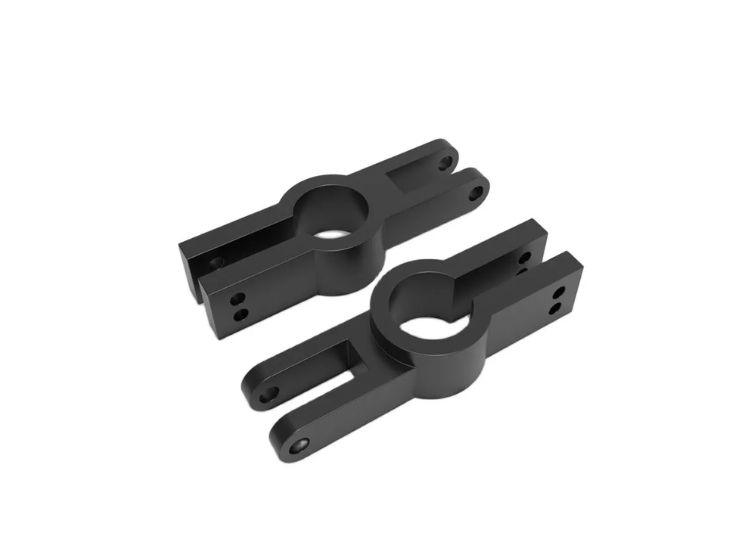
Clamps, adapters, and brackets are widely used across handlebar systems or seatpost assemblies. These parts are usually simpler in geometry, but they depend heavily on consistent fit and repeatable assembly
Common Materials for CNC Bicycle Parts
Material selection in bicycle components is usually driven by how the part behaves under load, the weight target, and the environment it will work in, rather than preference or standard choice.
| Material | Typical Use Cases | Why It’s Used |
| Alumínio 6061 | Frame brackets, general structural parts | Good balance of strength, machinability, and cost efficiency |
| Alumínio 7075 | Crank arms, load-bearing mounts | Higher strength for performance-focused designs where weight still matters |
| Titanium (Grade 2 / 5) | High-end components, long-life parts | Excellent fatigue resistance and strength-to-weight performance |
| Stainless Steel (303 / 304 / 316) | Wear-prone or high-contact interfaces | Strong surface durability and mechanical stability |
| Engineering Plastics (POM / Nylon) | Sliding parts, non-structural supports | Lightweight, low friction, and insulation properties |
Material selection often comes down to balancing strength, weight, and cost within the same design. In many bicycle projects, the final choice is closely tied to how the part interacts with surrounding components rather than material performance alone.
Surface Finishing Options for Bicycles
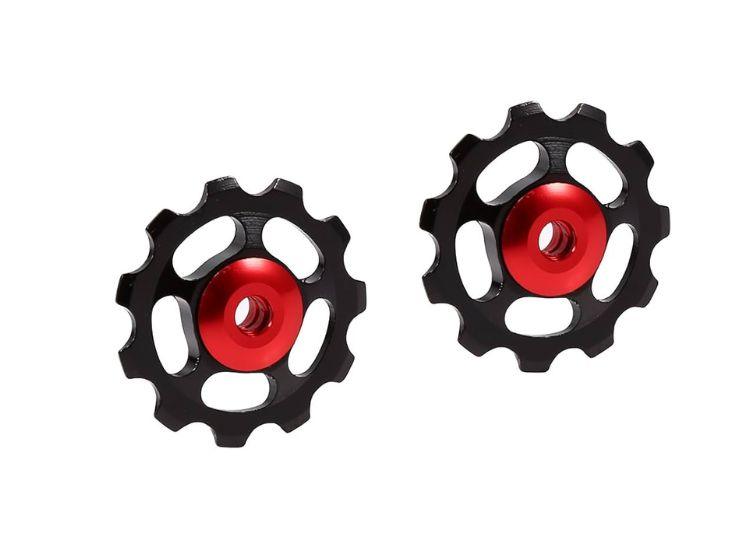
Surface finishing in bicycle components is not only about appearance. It also affects durability, corrosion resistance, and how the part visually integrates with the rest of the bike system. The choice of finishing usually depends on function, expected exposure, and the visual consistency required for the final product.
Beska – Melhor qualidade com preço competitivo.
Com experiência em fabricação de chapas metálicas e usinagem CNC, estamos aqui.
Anodizing (standard and hard)
Anodizing is widely used for aluminum components due to its corrosion resistance and stable appearance. Hard anodizing is applied in higher-wear areas where additional surface hardness is required.
Bead-blasted + anodized finish
This combination creates a uniform matte surface while maintaining corrosion protection and is commonly used for visible structural parts.
Revestimento em pó
Powder coating provides a thicker protective layer and consistent color coverage, making it suitable for outdoor or heavy-duty applications.
Surface finishing is selected based on usage conditions, visibility, and required durability.
Why CNC Machining Is Used in Bicycle Manufacturing
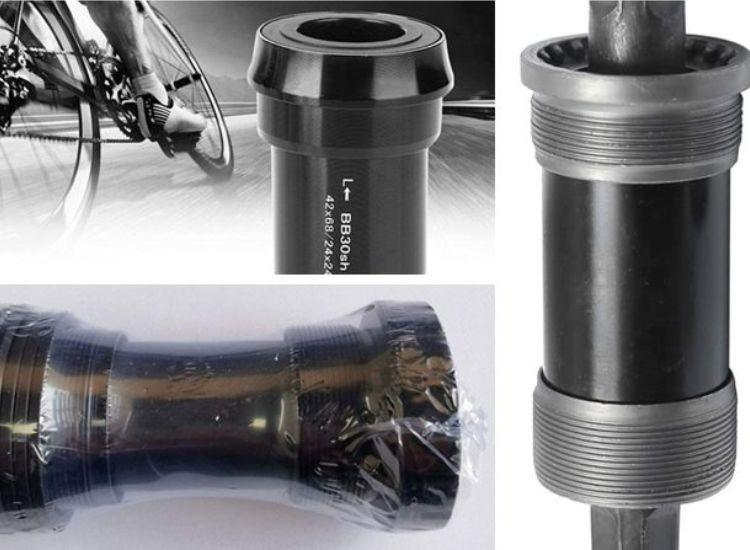
CNC machining is widely used in bicycle manufacturing because it can handle geometric complexity and functional accuracy within the same process.
Complex geometry with functional accuracy
Compared to casting or forging, CNC machining provides more direct control over both external shape and internal material distribution. Material can be removed where it is not needed, interfaces can be refined, and weight can be optimized without changing the overall design intent.
Fast design iteration
Most bicycle components go through several design revisions before final release. CNC machining supports this process because geometry can be updated directly in CAD without changing tooling.
Repeatability from prototype to production
Once a design is confirmed, the same CNC process can be used from prototypes to small batch production without changing the manufacturing method.
These factors usually come together in real bicycle projects, especially when a design moves from concept into a part that needs to perform reliably in use.
Beska – Melhor qualidade com preço competitivo.
Com experiência em fabricação de chapas metálicas e usinagem CNC, estamos aqui.
Quality Control in Functional Bicycle Components
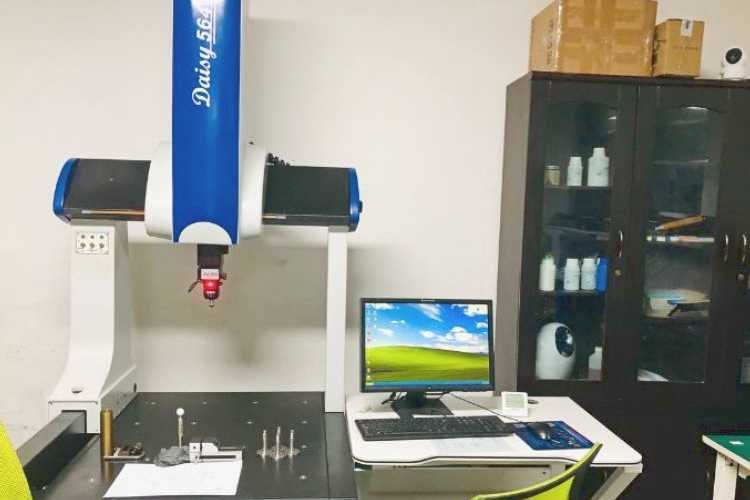
Quality control is centered on how key interfaces and assemblies perform in actual use.
Beska – Melhor qualidade com preço competitivo.
Com experiência em fabricação de chapas metálicas e usinagem CNC, estamos aqui.
Critical interfaces
Mounting holes, bearing seats, and alignment surfaces are checked first, as they directly affect how the part fits within the full bicycle system.
Fit verification
For parts that interact with mating components or moving assemblies, sample checks are carried out under actual assembly conditions to confirm fit behavior.
Production consistency
As production scales, attention shifts to keeping dimensional behavior stable across batches so that assembly performance remains consistent.
Overall, QC ensures that each part meets drawing requirements while performing reliably in the assembled system.
Galeria de produtos
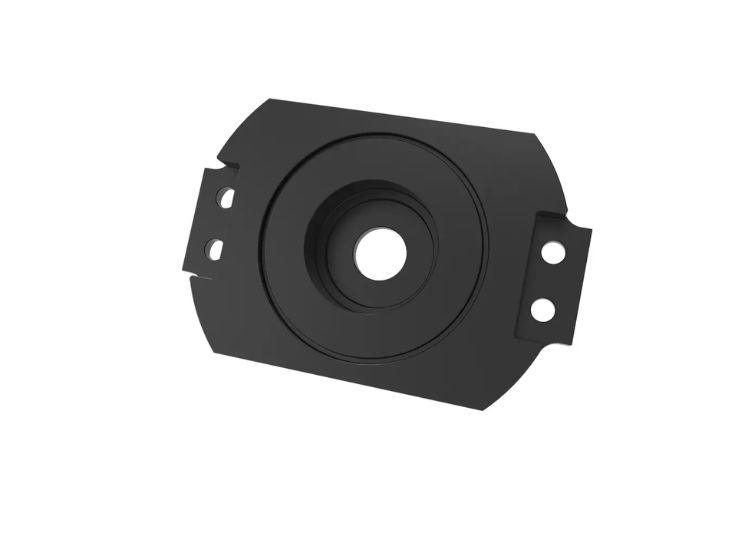
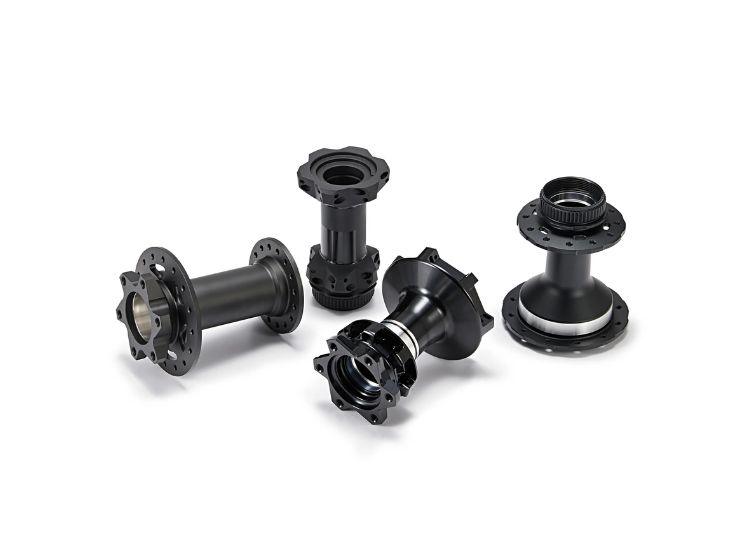
Below are some typical examples of the bicycle components we manufacture, provided as a quick reference to the types of parts discussed above.
Perguntas frequentes
Tolerance depends on geometry and material, but critical interfaces such as mounting points and bearing seats are typically controlled within tight functional requirements to ensure proper assembly.
Yes. CNC machining is suitable for both single prototypes and small batch runs, which allows design validation and gradual transition into production without tooling changes.
Yes. Finishing processes such as anodizing, brushing, or coating are controlled to maintain visual and functional consistency, especially for branded or exposed components.
We review the design from a machining and assembly perspective, focusing on structure, tool access, and functional interfaces to reduce risk before production starts.
It depends on the application. Forging suits high-volume, load-bearing parts, while CNC machining offers more flexibility, tighter interface control, and is better for custom or small batch production.
Yes, when appropriate materials and design are used. High-strength aluminum and titanium are commonly applied in load-bearing components.
Material, geometry complexity, machining time, tolerance, and surface finishing all directly impact cost.
Mergulhe mais fundo em nossos recursos
For more details, we’ve curated a few recommended pages and articles just for you:
Get a CNC Machining Bicycle Quote!
Beska – Melhor qualidade com preço competitivo.
Com experiência em fabricação de chapas metálicas e usinagem CNC, estamos aqui.
 Portuguese
 English
 Hebrew
 Turkish
 French
 Russian
 German
 Spanish