


When designing or manufacturing parts, one common challenge is ensuring they can survive impacts, drops, or mechanical stress without breaking. Choosing the wrong plastic can lead to costly failures, damaged products, or production delays.
Impact-resistant plastics offer a solution, providing the strength and durability needed for components in electronics, automotive, and industrial equipment.
This article highlights the most common impact-resistant plastics, key factors to consider when selecting them, and practical tips for CNC machining and injection molding to ensure reliable, high-quality parts.
1. What is Impact Resistant Plastic?

Impact-resistant plastics, also known as high-impact polymers, are engineered to withstand sudden mechanical forces, shocks, or repeated stress without cracking, breaking, or permanently deforming. Their toughness comes from a combination of molecular structure, energy-dissipating mechanisms, and, in many cases, chemical modification or reinforcement. For example, materials like ABS achieve high impact resistance through a rubbery butadiene phase dispersed within a rigid styrene-acrylonitrile matrix, allowing the plastic to absorb and redistribute energy efficiently.
Key performance characteristics of impact-resistant plastics include:
- Impact strength: The amount of energy the material can absorb before fracture, typically measured by Izod or Charpy impact tests.
- Toughness and ductility: Ability to deform without breaking under sudden stress.
- Dimensional stability: Minimal shrinkage and warping under load or temperature variations.
- Resistance to wear, fatigue, and environmental factors: Maintaining performance under repeated mechanical stress, chemical exposure, or UV radiation.
Manufacturers often enhance impact resistance through blending, copolymerization, or adding reinforcing fillers. For instance, polycarbonate (PC) may be blended with ABS to combine toughness with processability, while impact-modified PMMA or reinforced nylon grades provide improved durability for high-stress applications.
2. 8 Common Types of Impact-Resistant Plastics
Impact-resistant plastics come in a variety of formulations, each offering a unique balance of toughness, rigidity, and energy absorption, making them suitable for different applications.
ABS (Acrilonitrila Butadieno Estireno)
ABS is valued for its combination of rigidity and toughness, with impact strength ranging from 15 to 50 kJ/m² depending on grade. Its structure, a rigid styrene-acrylonitrile matrix with dispersed rubbery butadiene domains, allows it to absorb shocks effectively. This makes it a popular choice for electronic housings and automotive interior components that may experience repeated handling or minor drops. ABS works well in injection molding for high-volume production and can also be machined for prototypes without losing toughness.
Policarbonato (PC)
Polycarbonate is known for exceptional toughness, often exceeding 60 to 70 kJ/m², and maintains its performance even at low temperatures. Its ability to flex rather than fracture under stress makes it ideal for protective shields, helmets, and transparent machine guards. Designers often choose PC when long-term durability under repeated impacts is required.
Nylon (PA)
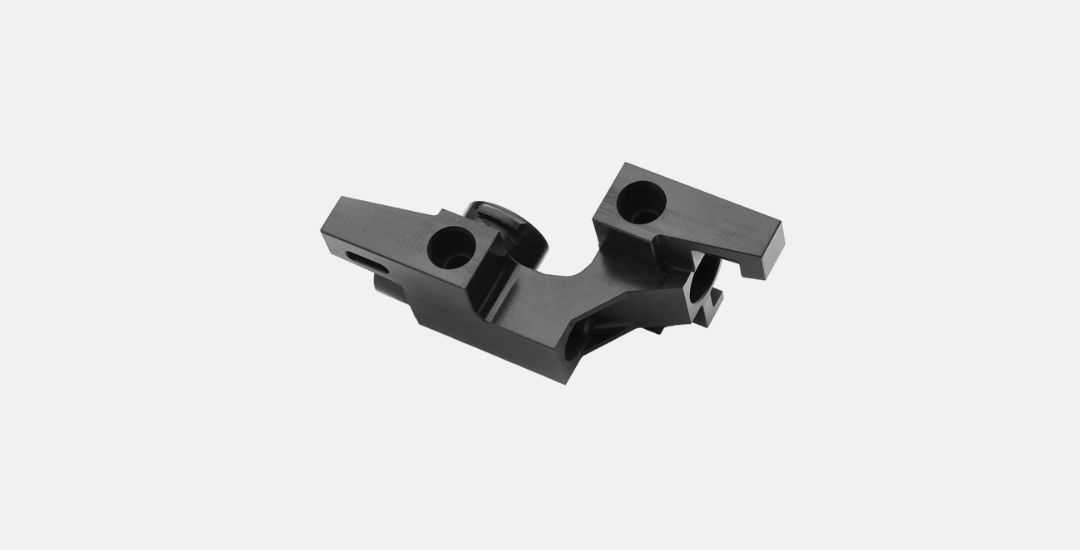
Nylon combines toughness with fatigue resistance, typically achieving 30 to 40 kJ/m² in impact tests. Its semi-crystalline structure allows energy from impacts to be absorbed through slight deformation without cracking. This property makes nylon ideal for gears, bearings, and other moving mechanical parts that undergo repeated stress. Moisture absorption can slightly reduce stiffness while increasing toughness, which is a factor in precision applications.
Polipropileno (PP)
Polypropylene offers moderate impact resistance, generally between 10 and 30 kJ/m², with added chemical resistance and lightweight properties. Impact-modified grades perform better at lower temperatures, making PP suitable for automotive bumpers and protective housings that must withstand minor collisions or mechanical shocks while remaining cost-effective.
Impact-Modified PMMA/Acrylic

Standard acrylic is brittle, but impact-modified grades increase toughness to around 5 to 10 kJ/m² while maintaining transparency. The added rubber phase allows energy from sudden impacts to dissipate, reducing the risk of cracking. These materials are often used for display panels, optical covers, and protective lenses that may be dropped or knocked during handling.
POM (Acetal)
POM provides high stiffness with moderate impact resistance, typically 20 to 40 kJ/m². Its semi-crystalline structure helps resist sudden loads without permanent deformation, which is essential for precision gears, fasteners, and sliding components in automated machinery that undergo repeated mechanical stress.
PC/ABS Blends
Blending polycarbonate with ABS produces a material with balanced toughness, around 40 to 60 kJ/m², combining PC’s high impact strength with ABS’s processability. This makes PC/ABS blends suitable for electronic enclosures, automotive trim, and rugged device cases where durability and manufacturing efficiency are both priorities. Injection molding is often used to ensure consistent performance across high-volume production.
High-Performance PA66/PA12
High-performance nylons achieve impact strength of 40 to 60 kJ/m² while resisting high temperatures and chemical exposure. They are commonly used in under-the-hood automotive components and industrial machinery where repeated impacts occur under stress and elevated temperatures. CNC machining can be employed to achieve precise tolerances without compromising toughness for critical structural parts.
Each of these materials has its own balance of toughness, strength, and flexibility, allowing designers and manufacturers to choose the right option based on the specific demands of their application.
3. Factors to Consider When Choosing Impact-Resistant Plastics
Selecting the wrong plastic can lead to parts that crack under repeated impacts or deform during use, so it is crucial to focus on the properties that truly determine durability in real-world conditions.
| Fator | Key Details | Example / Notes |
| Propriedades Mecânicas | Evaluate impact strength, toughness, flexibility, and wear resistance. | ABS: 15–50 kJ/m² Izod, suitable for housings. PC: >60 kJ/m², withstands repeated shocks. Choose flex or rigidity based on part function. |
| Processing Method | Consider how the material will be formed: injection molding, CNC machining, or 3D printing. | ABS and PC/ABS blends: easy for injection molding. POM and high-performance nylons: CNC machining is possible; watch for heat to avoid toughness loss. |
| Environmental Resistance | Resistance to UV, chemicals, and temperature extremes affects durability. | Polycarbonate: maintains toughness at low temperatures, good for outdoor panels. Polypropylene: may become brittle under prolonged UV or cold unless modified. |
| Estabilidade Dimensional | Materials with low shrinkage and high stability are needed for precision components. | POM and high-performance nylons: maintain shape and impact performance in gears, fasteners, and brackets. |
| Cost and Availability | Balance performance with budget and material access. | High-performance nylons and polycarbonate: high toughness, higher cost. ABS and PP: economical with sufficient impact resistance for many applications. |
This means that even small choices, like opting for a slightly more flexible nylon or ensuring proper molding parameters for polycarbonate, can prevent costly part failures and extend the service life of components.
4. CNC Machining and Injection Molding for Impact-Resistant Plastics

The way impact-resistant plastics are processed can significantly affect their toughness and dimensional accuracy, so understanding the key considerations before manufacturing is essential.
Usinagem CNC
Even tough polymers like POM or ABS can develop micro-cracks or surface stress if machining is not optimized. Using sharp cutting tools and moderate cutting speeds minimizes heat buildup, which can reduce impact strength. Proper part support and clamping are crucial for thin-walled or complex components, as deformation during machining can compromise both dimensional accuracy and energy absorption. In practice, small adjustments in feed rate or tool selection can make the difference between a part that performs reliably and one that fails under repeated shocks.
Moldagem por injeção
Injection molding requires careful control to maintain the material’s impact properties. Different plastics have unique shrinkage rates and flow behaviors, and high-impact grades may need slightly higher mold temperatures or modified cycle times to avoid warping. For transparent or load-bearing parts, improper cooling can introduce internal stress that weakens the polymer. Selecting the right material grade and tuning the molding process ensures that the part retains both shape and toughness under service conditions.
Even with the best materials, small details in machining or molding, such as tool sharpness, clamping strategy, or cooling profile, directly influence the final part’s ability to resist impacts. Thoughtful planning during manufacturing is therefore just as important as choosing the right plastic.
5. Cost and Availability of Impact Resistant Plastics
Material cost and supply chain availability are practical factors that can shape design choices and production schedules, so it is important to consider them early in the selection process.
Material Price Differences
Standard engineering plastics such as ABS and polypropylene are widely available and generally low-cost, making them suitable for high-volume parts where budget is a concern. In contrast, high-performance plastics like polycarbonate, PC/ABS blends, and nylons (PA66/PA12) are more expensive and may be justified only when their superior toughness or environmental resistance provides a clear advantage for critical components.
Supply Chain and Lead Times
Common grades of ABS and polypropylene are typically in stock at most suppliers, allowing for quick procurement. Specialty grades or reinforced formulations may have longer lead times and sometimes require minimum order quantities. Planning ahead with suppliers can prevent delays and ensure timely delivery for production schedules.
Balancing Performance and Cost
Choosing a higher-cost plastic may be worthwhile if it significantly improves durability or reduces the risk of part failure. For example, using a PC/ABS blend for an enclosure exposed to repeated impacts can extend service life and reduce maintenance or replacement costs. Conversely, less demanding parts can often meet performance requirements with ABS or polypropylene, keeping costs low without sacrificing necessary toughness.
Considering both material performance and availability allows engineers and purchasing teams to make informed decisions that optimize durability, production efficiency, and project timelines.
6. Practical Applications & Industry Examples
Real-world applications show how the choice of impact resistant plastics directly affects performance, durability, and safety.
Eletrônicos de consumo
High-impact ABS or PC/ABS blends are commonly used for smartphone and laptop housings. These materials can withstand drops from typical desk height without cracking and maintain surface finish despite daily wear. Injection molding allows precise wall thickness and structural ribs to enhance energy absorption, while transparent polycarbonate is used for display covers that resist cracking.
Indústria automotiva
Polycarbonate blends, reinforced nylons (PA66), and ABS are used for dashboards, door handles, and under-the-hood components. These parts must endure repeated mechanical shocks, high temperatures, and chemical exposure. CNC machining of nylon or POM may be applied for prototype or low-volume custom components, ensuring tight tolerances for moving parts like gears or clips.
Equipamentos Industriais
High-performance nylons (PA12, PA66) and POM are ideal for gears, fasteners, and protective covers in machinery exposed to repeated impact or wear. Choosing materials with low moisture absorption and high dimensional stability ensures precision components retain toughness and alignment during operation. Machining parameters must be carefully optimized to avoid heat-induced brittleness in critical components.
Dispositivos médicos
ABS and polycarbonate are frequently used for casings and components that require both durability and reliability. For example, housings for diagnostic equipment must resist repeated impacts during daily use, while injection molding ensures consistent wall thickness and structural integrity, crucial for both patient safety and device longevity.
Real-world results show that matching the right plastic to the environment and function often prevents early failures more effectively than simply choosing the toughest material.
Conclusão
Impact resistant plastics are essential for parts that must withstand repeated shocks, drops, or mechanical stress. Even small differences in material choice, part thickness, or processing method can significantly affect durability and long-term performance. Selecting a polymer that balances toughness, environmental resistance, and stability reduces the risk of cracking or warping in real-world use.
Consulting a supplier experienced like the Beska team in CNC machining and molding these plastics can help ensure that components are made to exact specifications and perform reliably over time. Early collaboration can prevent costly adjustments later and ensure that the selected material truly meets the demands of the application.
Mergulhe mais fundo em nossos recursos
For some insightful reads, we’ve curated a list of recommended articles just for you:
 Portuguese
 English
 Hebrew
 Turkish
 French
 Russian
 German
 Spanish