


A design engineer specifies four M4 tapped holes in a 1.5 mm aluminum enclosure. The prototype holds. In production, three out of ten threads strip during the first torque check. The sheet is simply too thin to provide reliable thread engagement, while weld nuts introduce distortion and additional processing.
PEM nuts solve this by permanently clinching into the chapa metálica to create strong, reusable threads without welding or tapping. When properly specified and installed, the joint is typically limited by the screw or surrounding sheet material before the PEM nut loses retention.
This article explains the different types of PEM nuts, design and installation guidelines, common applications, and how they compare with weld nuts, rivet nuts, and tapped holes.
1. What Are PEM Nuts and How They Clinch Into Sheet Metal
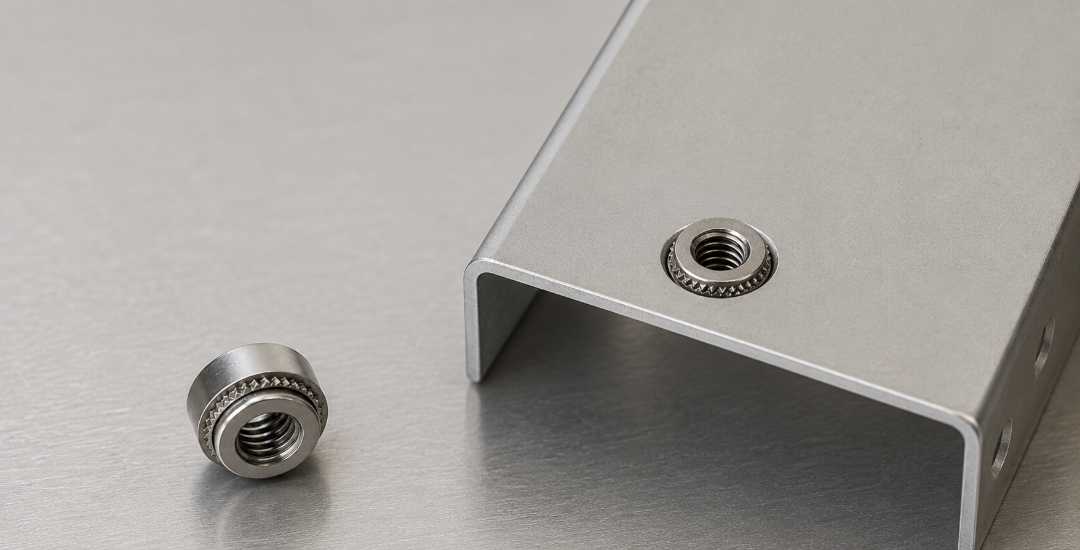
A PEM nut is a self-clinching fastener that installs permanently into a punched or laser-cut hole in sheet metal. PEM is a registered trademark of Penn Engineering. The self-clinching nut design is widely used across the industry, and compatible products are available from multiple manufacturers. The design guidelines in this article apply to self-clinching nuts regardless of brand.
The nut body has a serrated clinching ring near the base and a recessed undercut groove above it. During installation, a parallel press forces the nut into a precisely sized hole. The sheet metal cold-flows around the serrations and into the undercut, creating a mechanical interlock that resists both rotation and push-out.
When properly installed, the joint is typically limited by the screw or surrounding sheet material before the PEM nut loses retention.
2. PEM Nut Types: What Those Designation Letters Mean
The letter codes in a PEM nut part number identify the fastener series, compatible sheet material, and special design features. Selecting the wrong type can create installation or performance problems that cannot be corrected later in production.
| Type | Sheet Material | Sheet Hardness Limit | Key Feature | Typical Application |
| S | Aço, alumínio | HRB 80 max | Standard self-clinching | General enclosures, brackets |
| SS | Stainless, harder alloys | HRB 92 max (depending on size) | Stainless body, stronger clinch | Corrosion environments |
| CLS | Aço, alumínio | HRB 80 max | Flush both sides | Thin panels, cosmetic surfaces |
| CLA | Aluminum sheet | HRB 65 max | Flush, aluminum body | Lightweight aluminum enclosures |
| SP | Harder materials | HRB 85+ | Extra clinch strength | Stainless sheet, HSLA steel |
| F / FH | Thin sheet | HRB 70 max | Compact short body | Space-constrained electronics |
Sources: PEM product catalogs. Sheet hardness and thickness ranges vary by thread size and fastener type. Confirm against the current datasheet for your specific part number.
The S type is suitable for most general sheet metal applications. Other series are selected when the sheet material, surface requirements, or installation conditions require a different clinching design. Choosing the correct series depends on the sheet material, thickness, and functional requirements of the assembly, not on thread size alone.
3. Design Rules: What the Drawing Must Get Right
Five drawing parameters determine whether a PEM nut installs reliably. Once production begins, errors in these parameters are often difficult and expensive to correct, making proper design verification essential.
Hole Diameter and Tolerance
The punched hole diameter is the most critical dimension. If the hole is too large, the sheet material cannot flow sufficiently into the undercut and the nut may rotate under torque. If the hole is too small, installation force increases, which can deform the fastener or damage the surrounding sheet. Hole tolerances are typically around ±0.05 mm.
For an M4 S-type PEM nut, the recommended hole diameter is approximately 5.4 mm in aluminum and 5.5 mm in steel. The exact value depends on the fastener series, thread size, and sheet material. Always use the manufacturer’s recommended hole size for the selected part number.
Sheet Material Hardness
PEM nuts rely on plastic deformation of the sheet material during installation. The sheet must be softer than the fastener and ductile enough to flow into the clinching features without cracking.
Higher-strength alloys or heat-treated tempers close to the recommended hardness limit may require a different fastener series. Extremely soft materials can present the opposite problem, providing insufficient resistance for the clinching ring to develop full retention, especially with smaller thread sizes.
When sheet hardness is close to the recommended limit, installing a small number of sample parts before production is recommended to verify installation performance.
Minimum Edge Distance
When a PEM nut is installed too close to the sheet edge, displaced material can bulge outward or cause edge cracking during installation. The minimum distance from the hole center to the sheet edge is typically twice the hole diameter. For an M4 PEM nut with a 5.4 mm hole, the hole center should be approximately 11 mm from the nearest edge. If space is limited, validate the design with production-representative test samples before release.
Sheet Thickness
Every PEM nut series specifies a minimum sheet thickness. Below that value, the undercut cannot fill completely, reducing push-out and torque performance. For an S-type M4 nut, the minimum sheet thickness is typically 1.0 mm. A 0.8 mm sheet generally requires a CLS or F series fastener.
As sheet thickness increases, tapping or other fastening methods may become more practical depending on the application, production volume, and required joint strength.
Installation Direction
PEM nuts must be installed from the specified entry side, so the clinching ring seats correctly in the sheet material. Installing the fastener from the opposite side prevents proper material flow into the undercut and significantly reduces retention. The drawing should clearly indicate the installation direction, and the installation tooling should prevent incorrect orientation during production.
Based on our project experience, incorrect installation direction and out-of-tolerance hole diameters are among the most common causes of PEM nut installation failures. When these two parameters are properly controlled, installation issues are significantly reduced.
4. PEM Nut Installation Setup and Tooling
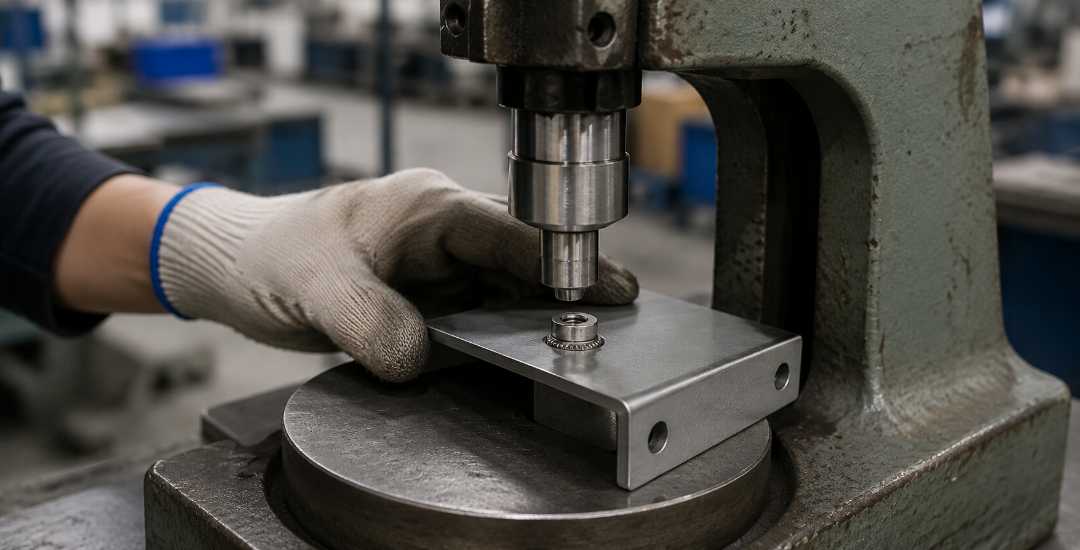
Correct fastener selection alone does not guarantee a reliable joint. Press alignment, tooling condition, and installation setup all influence whether the PEM nut develops its full retention strength.
Press Selection
A PEM nut does not require a high-capacity press. For small sizes such as M3 and M4 in aluminum, a manual arbor press rated at 1 to 2 tons is suitable for most applications. Pneumatic or hydraulic presses with adjustable stroke control are preferred for production because they provide consistent installation force from part to part. Accurate alignment is equally important. The press ram should remain perpendicular to the sheet surface throughout the installation cycle to ensure uniform material flow around the clinching ring.
Anvil and Fixture
The anvil supports the sheet during installation and should be flat, clean, and larger than the fastener flange to distribute the load evenly. A worn or damaged anvil can leave surface marks or deform the panel around the installation hole.
For panels with multiple PEM nuts, dedicated fixtures position the sheet accurately and improve installation consistency. At Beska, fixtures are designed to install all fasteners in a single setup whenever possible. Although fixture preparation requires additional time, it improves repeatability and shortens overall production time.
Alignment
The fastener should enter the hole squarely before pressing begins. If the press and hole are not properly aligned, the fastener may tilt during installation, preventing the clinching ring from engaging the sheet evenly. Fixtures should locate the sheet using reference edges or dedicated locating holes rather than the installation hole itself.
Multi-Nut Panels
Panels containing multiple PEM nuts benefit from dedicated fixtures or indexing systems that reduce handling and improve positioning consistency. As the number of fasteners increases, a single setup becomes more efficient than repositioning the panel after every installation, while also improving installation consistency across the entire part.
5. PEM Nuts on Real Parts
The right PEM nut depends on the application. Sheet material, surface finish, installation process, and functional requirements all influence the final design. The following examples illustrate how these factors affect fastener selection in different sheet metal products.
Electronics Enclosure Rear Panel
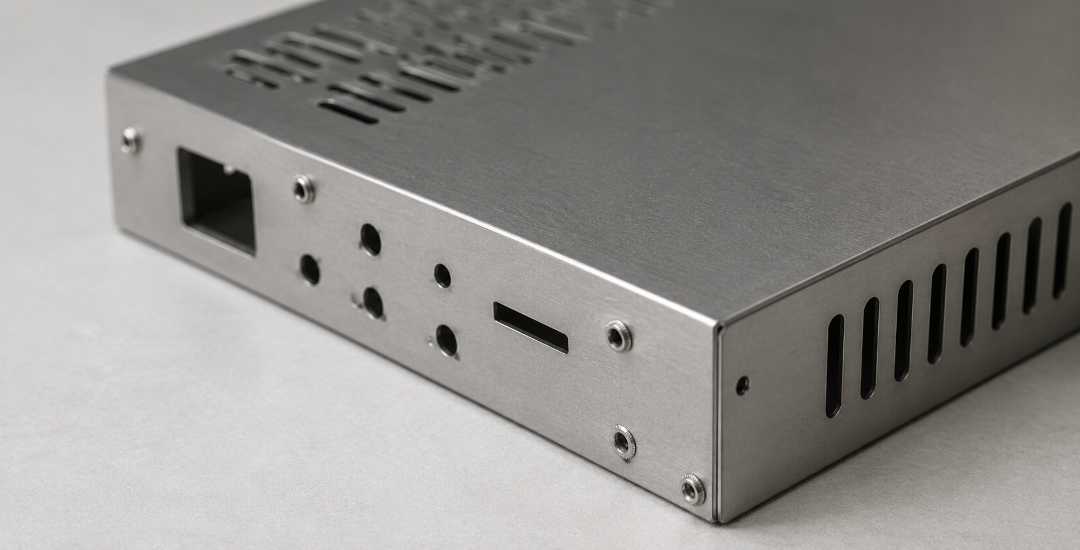
A 1.5 mm aluminum rear panel for a rack-mount chassis requires twelve M3 threaded mounting points for a motherboard. The load is moderate, and the enclosure is anodized after fabrication. Stainless steel S-type PEM nuts are installed before anodizing so the clinching ring locks directly into the aluminum sheet.
Engineering Note: Install PEM nuts before anodizing whenever possible. Installing through the anodized layer reduces the clinching ring’s ability to engage the base material and can reduce long-term retention. If anodizing must be completed first, mask the hole locations to keep the clinching area free of oxide.
Medical Device Mounting Bracket
A 1.2 mm 304 stainless steel bracket supports a sensor assembly inside medical equipment. The sheet is too thin for reliable tapping, while weld nuts introduce heat distortion that makes it difficult to maintain the required flatness. An SP-series PEM nut provides improved retention in the harder stainless sheet and maintains a permanent threaded connection without welding.
Engineering Note: Harder stainless steel leaves less margin for oversized holes than aluminum. Maintaining the specified hole diameter is more critical because reduced material flow during installation increases the risk of fastener rotation.
Outdoor Equipment Controller Box
A powder-coated steel enclosure for an irrigation controller requires six M5 grounding points on the bottom panel. Reliable electrical continuity is part of the design requirement, making a direct metal-to-metal connection more important than blind-side installation. S-type steel PEM nuts provide a permanent threaded connection while maintaining a conductive path through the mounting location.
Engineering Note: When a powder-coated surface is part of the assembly, verify that the installed fastener provides consistent electrical contact after coating. If the coating thickness is high, masking the clinching area before powder coating is often the most reliable solution for maintaining electrical continuity.
6. When PEM Nuts Work and When They Don’t
PEM nuts perform best in thin sheet metal where conventional tapping provides insufficient thread engagement and welding is undesirable. They are less suitable for very hard materials, thick sections, or applications where installation access is limited.
| Condition | PEM Nut | Alternative |
| Sheet 0.8-2.5 mm, aluminum or mild steel | Works well with S or CLS type | – |
| Sheet under 0.8 mm | Use F or FH type with reduced torque | Rivet nut if blind-side access is limited |
| Sheet hardness above HRB 85 | Use SP type | Weld nut if flatness is not critical |
| Sheet above 2.5 mm, aluminum | Tap the hole directly | PEM nut if thread must be replaceable |
| Blind assembly, no rear access | Cannot install (needs both sides) | Rivet nut |
| Cosmetic surface both sides | Use CLS or CLA type | Countersunk screw from rear if load is light |
| High-vibration environment | Add thread locker to screw | Weld nut with prevailing-torque thread |
The most common design mistake is selecting a standard fastener without verifying the sheet material. Materials close to the recommended hardness limit may require a different fastener series or installation testing before production.
Insufficient edge distance is another frequent cause of installation problems. Although the fastener may install successfully, reduced material around the hole increases the likelihood of deformation or edge cracking during assembly and service.
PEM nut selection should be evaluated as a complete system. Sheet thickness, material hardness, hole quality, edge distance, and installation methods all influence long-term performance. Focusing on only one parameter often leads to installation failures later in production.
Conclusão
A PEM nut delivers a reliable threaded connection only when the sheet material, hole dimensions, edge distance, and installation process are designed as a complete system. Most installation problems are not caused by the fastener itself, but by details that were overlooked before production began.
For sheet metal parts, reviewing these requirements during the design stage is usually far easier than correcting installation problems after fabrication. A small change to the drawing can often prevent rework, improve assembly consistency, and reduce manufacturing cost.
At Beska, PEM nut requirements are reviewed as part of the processo de fabricação de chapas metálicas. Material selection, hole dimensions, edge distance, and installation methods are checked before production to help avoid manufacturing issues and ensure the fasteners perform as intended. If your sheet metal design includes PEM nuts or other self-clinching fasteners, we’re happy to review the design with you before fabrication begins.
Deeper into Our Resources
For some insightful reads, we’ve curated a list of recommended articles just for you:
 Portuguese
 English
 Hebrew
 Turkish
 French
 Russian
 German
 Spanish