


A 304 stainless steel sheet sits on a workbench, and a magnet does not stick to it. Next to it is a 430 stainless steel sheet, where the magnet attaches firmly. Both are called stainless steel and look almost identical, yet one is magnetic and the other is not.
This difference often causes confusion in engineering and purchasing. Stainless steel is not a single material but a family of alloys with different crystal structures. Whether a stainless steel is magnetic depends primarily on its crystal structure rather than its corrosion resistance or overall quality.
This article explains why some stainless steel grades are magnetic, how manufacturing processes affect magnetic behavior, practical methods for identifying magnetic stainless steel, and how to select the right grade for different applications.
1. What Makes Stainless Steel Magnetic?
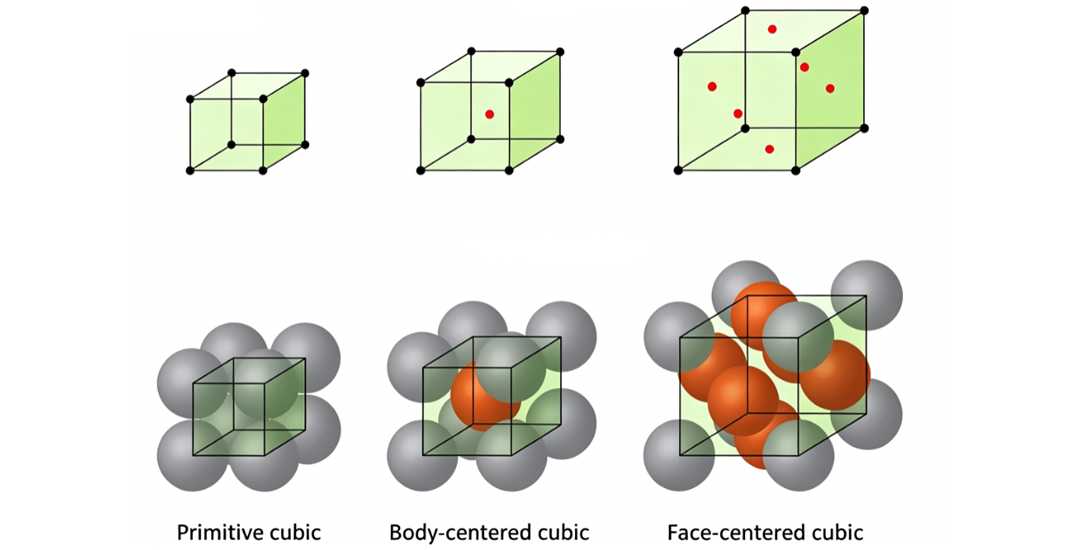
Stainless steel contains a high proportion of iron, but magnetic behavior is determined by the crystal structure rather than iron content alone. The arrangement of iron atoms decides whether a stainless steel grade is magnetic.
Three crystal structures are relevant to magnetic behavior in stainless steel.
- Body-Centered Cubic (BCC). Iron atoms are arranged in a cube with one atom at the center. Ferritic and martensitic stainless steels have this structure and are magnetic.
- Face-Centered Cubic (FCC). Iron atoms are arranged in a cube with atoms at the center of each face. Austenitic stainless steels have this structure and are generally non-magnetic in the annealed condition.
- Body-Centered Tetragonal (BCT). This structure forms when certain austenitic stainless steels undergo cold working. Because it is closely related to the BCC structure, it increases the magnetic response of materials that are normally non-magnetic.
The balance of alloying elements determines which crystal structure remains stable. Chromium, molybdenum, and silicon tend to stabilize BCC structures, while nickel, manganese, and nitrogen stabilize FCC structures.
As a result, grades such as 304 and 316 contain enough nickel to maintain the FCC structure and are generally non-magnetic after solution annealing. Grade 430 contains little or no nickel, allowing the BCC structure to remain stable and giving it its magnetic properties.
2. Types of Stainless Steel and Their Magnetic Properties
Different stainless steel grades do not behave the same way around a magnet because they belong to different alloy families with different crystal structures. The table below summarizes the typical magnetic properties of the major stainless steel families.
Type | Common Grades | Crystal Structure | Magnetic Property | Aplicações típicas |
|---|---|---|---|---|
Austenítico | 304, 316, 310 | FCC (Face-Centered Cubic) | Non-magnetic or weakly magnetic | Food equipment, medical devices, chemical piping |
Ferrítico | 430, 409, 439 | BCC (Body-Centered Cubic) | Magnetic (strong) | Automotive exhaust, appliances, decorative trim |
Martensitic | 410, 420, 440 | BCT (Body-Centered Tetragonal) | Magnetic (strong) | Cutlery, bearings, valves, shafts |
Duplex | 2205, 2507 | FCC + BCC mixed | Moderate magnetic (from ferrite phase) | Marine engineering, chemical processing |
In general, austenitic stainless steels are generally non-magnetic because of their FCC structure. Ferritic and martensitic stainless steels are magnetic because of their BCC or BCT structures. Duplex stainless steels contain both austenite and ferrite, giving them moderate magnetic properties.
Magnetic behavior should not be used to judge material quality. Stainless steel grades are selected according to corrosion resistance, mechanical properties, fabrication requirements, and service conditions rather than magnetic attraction alone. A magnetic grade such as 430 is not lower quality than 304. It is designed for different engineering requirements.
Sources: ASM International; Materials Engineering; industry standards and material data sheets.
Note: Magnetic properties shown are typical values. Actual magnetic behavior varies with alloy composition, heat treatment, cold working, and other processing conditions.
3. Why Austenitic Stainless Steels Become Magnetic
Austenitic stainless steels such as 304 and 316 are generally non-magnetic after solution annealing. During manufacturing, however, many parts undergo forming or machining, which can change their magnetic behavior.
Cold Working Changes the Structure
Operations such as bending, stamping, drawing, and machining can partially transform the FCC structure into strain-induced martensite with a BCT crystal structure, increasing the material’s magnetic response. The amount of martensite formed depends on the degree of deformation, alloy composition, and processing temperature. Lower temperatures generally promote greater martensite formation, which is why cold heading and deep drawing often produce a stronger magnetic response than simple bending.
More Deformation Means More Magnetism
The amount of martensite increases with deformation. A light bend produces only a small amount, while deep drawing or heavy cold working produces much more. As a result, magnetic attraction can vary significantly even between parts made from the same stainless steel grade.
Alloy Composition Also Matters
Material composition also influences how easily martensite forms. Grade 304 contains less nickel than 316, making it more susceptible to transformation during cold working. Under similar forming conditions, cold-worked 304 generally exhibits a stronger magnetic response than cold-worked 316.
A Practical Takeaway
A 304 stainless steel part may leave the mill in a non-magnetic condition but become magnetic after forming. The material grade remains the same, but its microstructure changes during processing, altering its magnetic behavior. When low magnetic permeability is required, both the material grade and the final processing condition should be specified on the engineering drawing.
Sources: ASM Handbook, Volume 1: Properties and Selection; Outokumpu Stainless Steel Handbook; manufacturer technical data on strain-induced martensite transformation.
4. How to Identify Magnetic Stainless Steel
The magnet test is the fastest way to check whether a stainless steel part is magnetic. It is widely used during receiving inspection, production, and shop floor troubleshooting because it requires no special equipment.
However, the magnet test cannot identify the material grade. Non-magnetic materials such as copper and zinc alloys also do not attract a magnet, while cold-worked austenitic stainless steels may become magnetic. The test indicates magnetic behavior, not material identity.
Where available, grade markings such as 304, 316, 430, and 410 provide a quick reference to the material. However, not all finished parts are permanently marked, particularly small machined or formed components.
For positive material identification, the Material Test Report (MTR) remains the most reliable reference. It provides the certified chemical composition and mechanical properties supplied with the material.
The magnet test is best used as a quick screening method. A part that does not attract a magnet is likely an annealed austenitic stainless steel, while a magnetic part may be ferritic, martensitic, or a cold-worked austenitic grade. When the exact material grade must be confirmed, always rely on the Material Test Report (MTR) or chemical analysis rather than magnetic attraction alone.
5. Choosing Magnetic Stainless Steel for Different Applications
Magnetic requirements vary widely between applications. Structural components often place little importance on magnetism, while medical devices, electronic equipment, and some welded assemblies may require careful material selection.
When Magnetism Matters
Magnetism is not a defect but a material property whose importance depends on the application. For many structural and decorative components, magnetic stainless steel performs perfectly well. In applications involving sensitive equipment or specialized manufacturing processes, however, magnetic behavior may become an important design consideration.
Application Type | Does Magnetism Matter? | Typical Examples | Selection Advice |
|---|---|---|---|
Structural parts | Não | Brackets, frames, supports | 430 works well. Lower cost than 304. |
Decorative trim | Não | Handrails, kitchen equipment, automotive trim | 430 is often sufficient. |
Food equipment | Usually no | Tanks, piping, food contact surfaces | 304 is common. Magnetism is not a concern. |
Medical equipment | Sim | MRI machines, surgical instruments | Requires non-magnetic materials. Check grade and processing condition. |
Electronic devices | Sim | Sensors, housings for sensitive electronics | Non-magnetic required. 316 is safer than 304. |
Welding applications | Sometimes | Parts that will be welded | Magnetic materials can affect arc stability. Check before welding. |
For most sheet metal and structural applications, magnetism is not a deciding factor. Corrosion resistance, mechanical performance, manufacturability, and cost usually have a greater influence on material selection. Magnetic properties become important only when required by the application or specified on the engineering drawing.
Sources: ASM International; industry application guidelines.
Note: Magnetic requirements vary by equipment, industry standards, and end-user specifications. Always verify project-specific requirements before selecting a material.
Material Selection Based on Magnetic Requirements
Material selection should be based on the functional requirements of the finished part rather than magnetic behavior alone.
- General structural and decorative parts: Ferritic stainless steel such as 430 is often the most economical option. Its magnetic properties rarely affect performance, while its corrosion resistance is sufficient for many indoor and general-purpose applications.
- Food processing and general industrial equipment: Austenitic stainless steel such as 304 is widely used because of its good corrosion resistance and formability. In most cases, magnetism is not a design requirement.
- Marine, medical, and highly corrosive environments: 316 is generally preferred because it provides better corrosion resistance than 304. When low magnetic permeability is also required, both the material grade and the final processing condition should be considered.
- Parts that will be formed or heavily cold-worked: Processing is just as important as material selection. Cold working can increase the magnetic response of austenitic stainless steels. If low magnetic permeability is required after forming, specify the required material condition or heat treatment on the engineering drawing.
- Applications requiring minimal magnetic response: Selecting the correct material alone may not be enough. Depending on the application, additional requirements such as solution annealing after forming or magnetic permeability inspection may be needed to verify the finished part.
6. Can Stainless Steel Magnetism Be Removed?
Whether magnetism can be removed depends on why the material became magnetic in the first place. Some stainless steels regain their original magnetic properties after tratamento térmico, while others remain magnetic regardless of the process used.
Solution Annealing for Austenitic Grades
For cold-worked austenitic stainless steel, magnetism is caused by strain-induced martensite. Heating the material to approximately 1050°C followed by rapid cooling restores the original FCC structure through solution annealing, reducing or eliminating the magnetic response.
Solution annealing restores low magnetic permeability but also removes the strengthening effect produced by cold working. When both high strength and low magnetic permeability are required, material selection should be considered early in the design stage.
Ferritic and Martensitic Grades
Ferritic and martensitic stainless steels are magnetic because of their BCC crystal structure. Since their magnetism is an inherent material characteristic, solution annealing does not remove it.
Surface demagnetization may temporarily reduce residual magnetic attraction, but it does not change the crystal structure or eliminate the material’s inherent magnetic properties.
Common Misconceptions About Removing Magnetism
Moderate heating or simple demagnetization methods cannot permanently remove magnetism from stainless steel. Effective treatment depends on both the stainless steel grade and the cause of the magnetic behavior. Improper heat treatment may also introduce other problems, including sensitization, distortion, or changes in mechanical properties.
In most applications, selecting the appropriate stainless steel grade and processing condition is more effective than attempting to modify magnetic properties after manufacturing.
7. Common Misconceptions About Magnetic Stainless Steel
Misunderstandings about magnetic stainless steel often lead to incorrect material selection, unnecessary inspections, and avoidable manufacturing problems. The following are some of the most common misconceptions encountered in engineering and manufacturing.
All Stainless Steel Is Non-Magnetic
This is one of the most common misconceptions. Stainless steel includes several families with different crystal structures. Ferritic and martensitic stainless steels are naturally magnetic, while austenitic grades such as 304 and 316 are generally non-magnetic only in the annealed condition.
If a Magnet Sticks, It Is Not Stainless Steel
A magnet readily attracts grades such as 430, 410, and 440, all of which are stainless steels. Magnetic attraction alone cannot identify whether a material is stainless steel. It only indicates that the material has a magnetic crystal structure. Material certification or appropriate testing should be used when material identification is required.
304 Stainless Steel Never Attracts a Magnet
Annealed 304 stainless steel is generally non-magnetic. However, bending, stamping, drawing, or other cold-working processes can partially transform its microstructure, increasing its magnetic response. The material grade remains 304 even though its magnetic behavior changes.
Stronger Magnetism Means Lower Quality
Magnetism is not an indicator of material quality. It is determined by crystal structure rather than corrosion resistance, strength, or durability. Ferritic and martensitic stainless steels are magnetic and are widely used in many demanding industrial applications. Material selection should always be based on functional requirements rather than magnetic attraction alone.
304 and 316 Behave the Same Magnetically
Both 304 and 316 belong to the austenitic stainless steel family and are generally non-magnetic after solution annealing. However, 304 is more likely to develop magnetic attraction after cold working because it transforms to martensite more readily than 316. Material selection between 304 and 316 should therefore be based primarily on corrosion resistance, service environment, and application requirements rather than magnetic behavior alone.
Conclusão
Magnetic stainless steel is neither better nor worse than non-magnetic stainless steel. The appropriate material should be selected according to the application’s corrosion resistance, mechanical performance, manufacturing process, and magnetic requirements rather than magnetic behavior alone.
The magnetic properties of a finished part are influenced not only by the stainless steel grade but also by how the material is processed. Cold working, heat treatment, and other manufacturing operations can change magnetic behavior, making the final part different from the original material. Considering both material selection and processing requirements early in the design stage helps avoid unexpected inspection or assembly issues.
At Beska, we manufacture precision CNC machined and sheet metal components in a wide range of stainless steel grades. Whether a project requires magnetic or non-magnetic materials, our engineering team helps evaluate material selection and manufacturing requirements to support reliable production and consistent part performance.
Deeper into Our Resources
For some insightful reads, we’ve curated a list of recommended articles just for you:
 Portuguese
 English
 Hebrew
 Turkish
 French
 Russian
 German
 Spanish