


Kovar and Invar are both low-expansion iron-nickel alloys used in precision engineering, but they solve very different problems. Kovar is designed for controlled thermal expansion that can match selected glass or ceramic sealing systems, while Invar is valued for its unusually low thermal expansion and dimensional stability.
Kovar is commonly used in hermetic packages, electrical feedthroughs, and other applications where metal must remain reliably joined to glass or ceramic through temperature changes. Invar is more often used in precision instruments, optical structures, cryogenic equipment, and other components where dimensional change with temperature needs to be minimized.
Their different thermal behavior also affects how the alloys are machined, heat treated, joined, and used in service. Choosing between them therefore starts with the function of the part: Kovar is primarily a sealing alloy, while Invar is primarily a dimensional-stability alloy.
1. What Is Kovar?
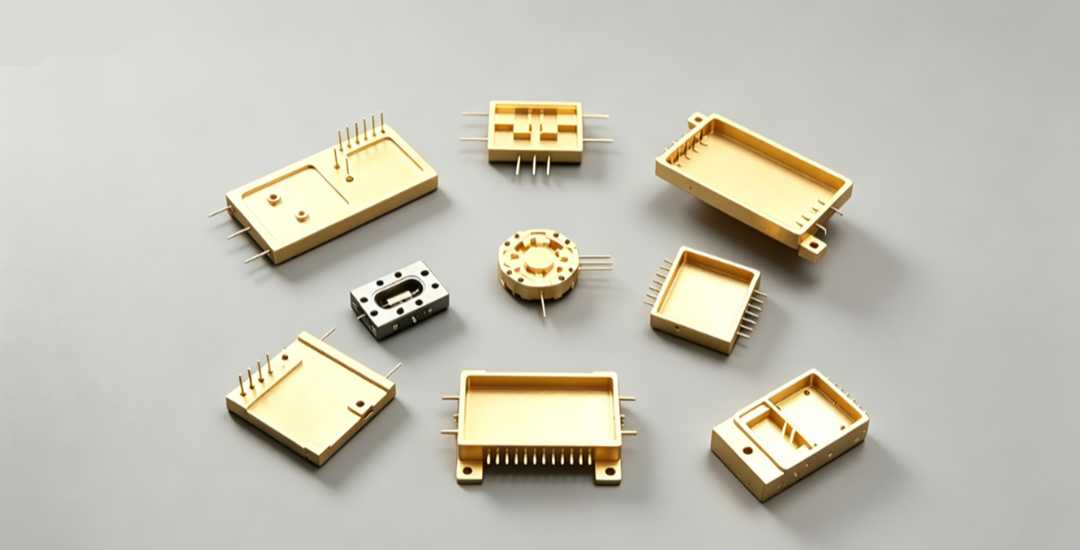
Kovar is a controlled-expansion iron-nickel-cobalt alloy commonly used where a metal component must remain reliably joined to glass or ceramic through temperature changes.
Its composition is roughly 29% nickel, 17% cobalt, and the balance iron, with small additions of elements such as manganese and silicon. This composition gives Kovar a thermal expansion behavior that can be matched to selected glass and ceramic sealing systems.
That expansion compatibility is especially important in hermetic packages, electrical feedthroughs, and similar components. When the metal and insulating material expand at comparable rates, thermal stress at the joint can be reduced during cooling and temperature cycling.
Kovar is commonly supplied in forms such as rod, bar, sheet, strip, and wire and is specified under ASTM F15.
2. What Is Invar?
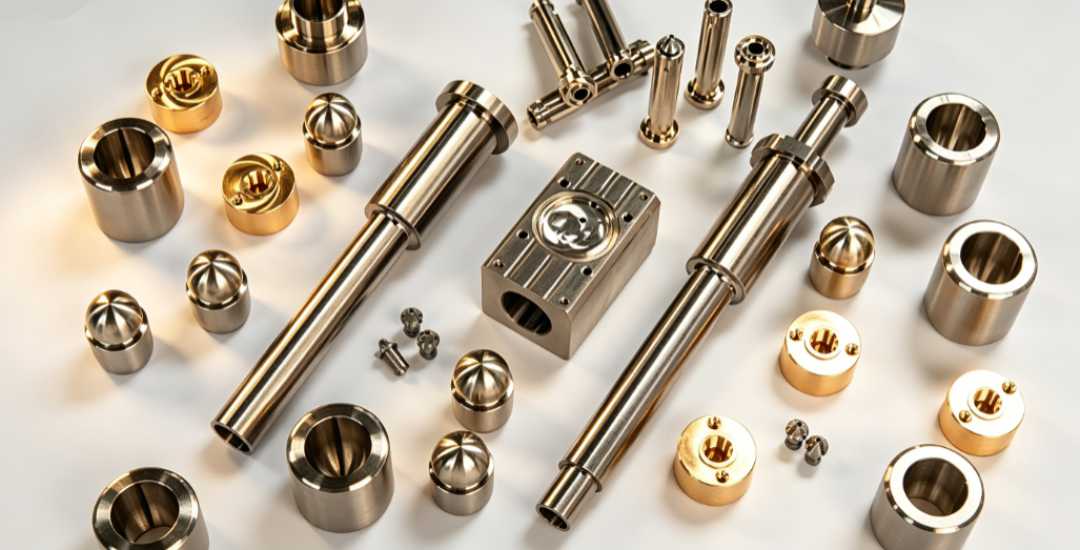
Invar 36 is a low-expansion iron-nickel alloy containing approximately 36% nickel, with iron making up most of the balance. Its defining characteristic is its very low thermal expansion compared with conventional engineering steels.
This low expansion makes Invar useful where dimensional changes caused by temperature need to be minimized. Common applications include precision instruments, optical mounts, cryogenic equipment, tooling, and aerospace structures.
The thermal expansion of Invar still changes with temperature, material condition, and processing history, so the relevant temperature range should be considered when using expansion data for design.
Invar 36 is commonly supplied in forms such as rod, bar, sheet, and plate and is identified as UNS K93600. The draft also references ASTM F1684 for this alloy.
3. Kovar vs Invar: Key Property Differences
Thermal expansion is usually the first property to compare between Kovar and Invar. Their mechanical properties are relatively similar, while their thermal expansion behavior is distinctly different and serves different engineering purposes.
| Propriedade | Kovar | Invar 36 |
| Typical Thermal Expansion Coefficient | ~5.0 ppm/°C over 20–400°C | ~1.5 ppm/°C over 20–100°C |
| Magnetic Behavior | Magnético | Magnético |
| Typical Density (g/cm³) | ~8.3 | ~8.1 |
| Approx. Melting Point (°C) | ~1450 | ~1430 |
| Typical Tensile Strength (MPa) | 500–700 | 450–550 |
| Typical Hardness (HRB) | 75–90 | 70–85 |
These are typical values from the sources cited in the draft rather than guaranteed design values. Thermal expansion in particular varies with temperature range, tratamento térmico, processing history, and material condition.
The main distinction is thermal behavior. Kovar is commonly selected when controlled expansion must be matched to a specific glass or ceramic sealing system, while Invar is selected when minimizing dimensional change with temperature is the primary requirement. Mechanical and magnetic properties may still matter, but they are usually evaluated after the thermal requirement is defined.
4. Manufacturing Differences Between Kovar and Invar
Kovar and Invar may appear similar in basic mechanical properties, but their different thermal behavior and intended uses affect how they are machined, heat treated, joined, and finished.
Usinagem
Both Kovar and Invar can work-harden during usinagem, so tool condition and cutting strategy are important.
Kovar can produce difficult chips and may become harder to cut if the tool rubs rather than cuts cleanly. Sharp tooling, consistent feed, controlled cutting speed, and adequate coolant help maintain a more stable cutting process.
Invar can also develop built-up edge and poor surface finish if cutting conditions are not well controlled. Avoiding excessive tool dwell and maintaining a continuous cut is particularly important on precision features.
Tratamento térmico
Heat treatment serves different purposes for the two alloys.
For Kovar used in glass-to-metal sealing, surface preparation may include controlled oxidation depending on the glass composition and sealing process. The surface condition influences glass wetting, bonding, and the final integrity of the seal.
For Invar, heat treatment is more commonly associated with stress relief and dimensional stabilization. Machining, forming, or cold working can introduce residual stress, which may affect dimensional stability in precision components.
Welding and Brazing
Kovar can be welded or brazed in electronic and hermetic assemblies. Processes such as TIG/GTAW and electron-beam welding may be used, while brazing is also common for certain joint designs. Filler metal and process selection should consider thermal expansion, service temperature, atmosphere, and joint requirements.
Invar is also weldable, but welding can introduce residual stress and dimensional change. This is especially important when the alloy is being used because of its low thermal expansion. Heat input, restraint, joint geometry, and post-weld treatment therefore need to be considered carefully.
Glass-to-Metal Sealing
Glass-to-metal sealing is one of Kovar’s most important applications. Seal performance depends on the compatibility between the metal and glass, surface cleanliness, surface condition, and the heating and cooling cycle used during sealing.
Controlled oxidation may be part of the process for some sealing systems, but the required oxide condition depends on the glass composition and process specification.
Helium leak testing is commonly used to verify hermeticity after sealing. The acceptable leak rate should be defined by the applicable product specification, package design, or industry standard rather than by a single universal limit.
5. Applications of Kovar and Invar
Kovar and Invar are both used in precision engineering, but they usually enter a design for different reasons. Kovar is selected when thermal expansion must be controlled at a sealed metal-to-glass or metal-to-ceramic interface, while Invar is used when the main concern is keeping a structure dimensionally stable as temperature changes.
Kovar Applications
Kovar is closely associated with hermetic sealing and electronic packaging. Common applications include electrical feedthroughs, electronic packages, microwave components, sensors, connectors, and semiconductor equipment where a metal housing must remain reliably joined to glass or ceramic insulation.
Its value comes from controlled thermal expansion rather than simply from having a low expansion rate. When Kovar is paired with a compatible sealing material, the closer expansion behavior can reduce thermal stress at the interface during heating, cooling, and repeated temperature cycling.
This makes Kovar especially useful in aerospace and electronic systems where sealed electrical or sensor connections must maintain hermeticity while operating through changing temperatures.
Invar Applications
Invar is used in applications where even small temperature-driven dimensional changes can affect alignment, measurement accuracy, or structural geometry. Typical uses include precision instruments, optical mounts, composite tooling, satellite structures, cryogenic equipment, and selected LNG systems.
In optical and measurement equipment, small changes in a supporting frame can shift alignment or introduce measurement error. Invar helps limit this movement because its thermal expansion is much lower than that of conventional engineering steels.
The same characteristic is valuable in aerospace structures, optical benches, antenna components, and precision tooling where dimensional stability needs to be maintained across changing thermal conditions.
Combined Use in Complex Assemblies
Kovar and Invar are not always alternatives for the same component. In complex assemblies, each alloy may be used where its thermal behavior is most useful.
For example, an aerospace or precision-instrument system may use Kovar around hermetic feedthroughs or electronic packages, while Invar is used in an optical bench, frame, or supporting structure where maintaining alignment is more important.
In these cases, the two alloys perform complementary functions. Kovar helps control thermal stress at sealed interfaces, while Invar limits dimensional movement in precision structures. The material choice therefore depends on the thermal and functional requirements of each component rather than on which alloy has the lower expansion coefficient overall.
6. Cost and Availability of Kovar and Invar
Material cost matters, but it is rarely useful to compare Kovar and Invar by price alone. Kovar often carries a higher alloy cost because of its cobalt content, while the final price of either material can vary substantially with product form, dimensions, quantity, condition, and supplier availability.
| Fator | Kovar | Invar 36 |
| General Cost Tendency | Often higher because of cobalt content | Often lower in comparable forms |
| Common Supply Forms | Sheet, strip, rod, bar, wire | Sheet, plate, rod, bar |
| Specification Details | Alloy standard, dimensions, material condition, and sealing requirements should be defined clearly | Alloy standard, dimensions, material condition, and dimensional-stability requirements should be defined clearly |
| Disponibilidade | Depends on form, thickness, quantity, and supplier | Depends on form, thickness, quantity, and supplier |
Availability can become especially important when a design requires unusual thicknesses, tight dimensional tolerances, or a specific material condition. These requirements may affect lead time and minimum order quantity for either alloy, so they are better confirmed with the supplier rather than assumed from the alloy name alone.
7. How to Choose Between Kovar and Invar
The choice between Kovar and Invar starts with the thermal requirement of the part. Kovar is generally selected when a controlled expansion match is needed at a sealed interface, while Invar is used when minimizing dimensional change with temperature is the main priority.
Choose Kovar for Controlled-Expansion Sealing
Kovar is the more appropriate choice when the component forms part of a glass-to-metal or selected ceramic-to-metal sealing system. Its controlled thermal expansion helps reduce mismatch at the joint during heating, cooling, and thermal cycling.
This makes Kovar well suited to hermetic feedthroughs, electronic packages, sensor housings, and similar components where seal integrity is part of the design requirement.
Choose Invar for Dimensional Stability
Invar is the stronger candidate when the main requirement is to keep dimensions, alignment, or geometry stable as temperature changes.
Its low thermal expansion is useful in precision instruments, optical structures, tooling, cryogenic equipment, and aerospace assemblies where even small thermal movements can affect performance.
Consider the Full Assembly and Temperature Range
Not every design fits neatly into a single material rule. The relevant temperature range, joint design, manufacturing process, dimensional tolerance, and surrounding materials can all influence the final choice.
In assemblies that need both hermetic sealing and dimensional stability, Kovar and Invar may be used in different components, each serving a different thermal function. Where the decision remains uncertain, testing the actual part or assembly under representative thermal conditions can provide more useful confirmation than relying on nominal expansion values alone.
Conclusão
Kovar and Invar solve different thermal problems. Kovar is primarily used where controlled expansion supports glass-to-metal or ceramic-to-metal sealing, while Invar is selected where dimensional stability across temperature changes is the main requirement.
Thermal expansion is usually the main distinction, but it should not be considered in isolation. Part geometry, operating temperature range, joining method, material condition, and manufacturing requirements can all affect how either alloy performs in the final assembly.
When the choice is not obvious from the application alone, evaluating the actual part or assembly under representative thermal conditions can help confirm whether the selected alloy provides the required sealing or dimensional stability.
 Portuguese
 English
 Hebrew
 Turkish
 French
 Russian
 German
 Spanish