


Aluminum remains a core material across industries such as automotive, construction, and electronics because of its lightweight properties, corrosion resistance, and excellent machinability.
Among the many surface treatment methods available, sandblasting is widely used as a cost-effective and versatile process that improves both surface appearance and functional performance. If you are evaluating sandblasted finishes for aluminum components, CNC machined aluminum samples with sandblasted surfaces can also be requested for reference.
This article provides a complete guide on how to sandblast aluminum, covering the basic principles, preparation steps, suitable blasting media, equipment selection, and key process parameters used in different industrial applications.
1. What Is Aluminum Sandblasting?
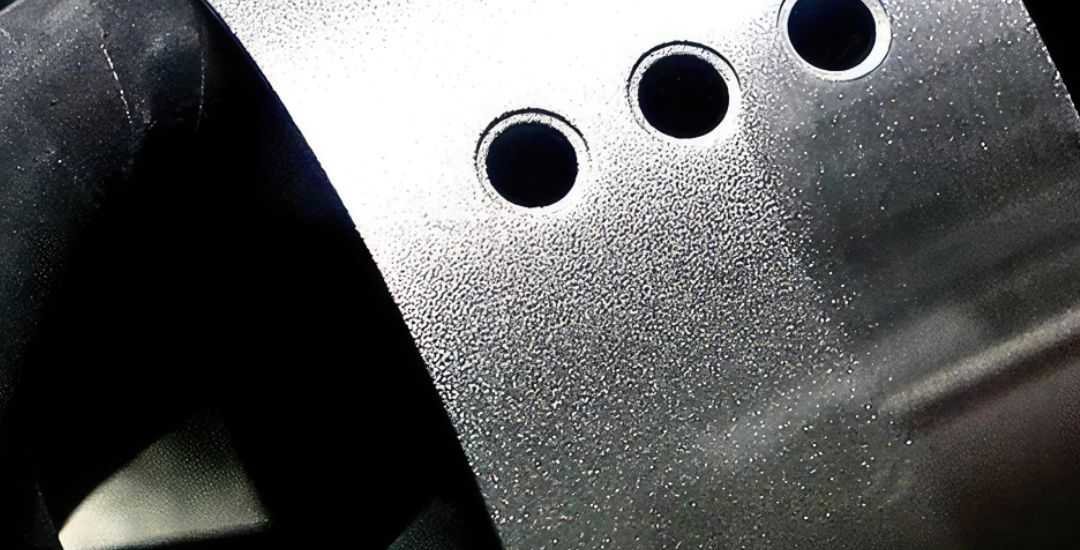
Jateamento de areia is a surface preparation technique in which abrasive materials such as aluminum oxide, glass beads, or garnet are propelled at high velocity against a surface. The process removes oxides and contaminants, creates controlled roughness for improved coating adhesion, and can enhance the visual appearance of aluminum parts.
It is often applied to aluminum before anodizing, painting, or further machining to achieve a consistent surface finish and meet high quality standards. By adjusting factors such as abrasive type, particle size, and blasting pressure, the surface texture can be precisely controlled for both functional and decorative purposes.
2. Benefits of Sandblasting Aluminum
Sandblasting offers several significant advantages that improve the quality and performance of aluminum parts. These benefits range from surface cleanliness to enhanced mechanical properties and aesthetics.
Removes Surface Impurities
During extrusion and processing, aluminum profiles often accumulate oil stains, iron particles, and dust. Sandblasting effectively removes these contaminants, resulting in a clean and reactive surface. This preparation is essential for subsequent treatments such as anodizing to achieve consistent and durable finishes.
Prepares for Secondary Processes
The natural oxide film on raw aluminum is thin and porous, allowing strong adhesion of coatings. Sandblasting helps to standardize and strengthen this oxide layer, which improves the effectiveness of downstream processes like electrolytic coloring, electrophoretic coating, and powder coating. Additionally, the textured surface created by sandblasting enhances lubrication during mechanical operations such as drilling, tapping, and cutting.
Deburring and Smoothing
Burrs are an inevitable byproduct of extrusion and tool wear, and they can compromise dimensional accuracy. Sandblasting smooths these rough edges, making parts safer to handle and better suited for applications that require precision, including aerospace and medical components.
Enhances Mechanical Properties
When combined with anodizing, sandblasting can increase the surface hardness and fatigue resistance of aluminum parts. For example, 6063-T5 aluminum can reach tensile strengths up to 180 MPa after treatment. The oxide layer thickens beyond typical standards, offering improved wear and corrosion resistance.
Improves Aesthetic Appeal
Adjusting sandblasting parameters allows control over surface roughness, producing finishes ranging from satin to matte. This flexibility enhances the visual quality and uniformity of aluminum parts, meeting various aesthetic requirements.
Extends Product Life
Beyond appearance and mechanical strength, sandblasting also contributes to longer service life by reducing internal stresses and promoting better coating adhesion. It ensures an even oxide layer, even on complex geometries, which in turn enhances corrosion resistance and overall durability.
Overall, sandblasting is not just a surface treatment. It systematically enhances aluminum parts by improving their cleanliness, performance, durability, and visual quality, and it serves as a critical step for both functional and aesthetic applications.
3. Preparing for Sandblasting Aluminum
Before starting the sandblasting process, it is important to select the right aluminum grade and properly prepare the surface. These steps ensure effective blasting results and protect the integrity of the material.
3.1 Aluminum Grade Selection
Different aluminum alloys respond uniquely to sandblasting due to their composition and mechanical properties.
| Aluminum Series | Characteristics | Sandblasting Suitability |
| 1xxx (Pure Al) | Soft, ductile | Provides a uniform finish but is prone to deformation |
| 5xxx (Al-Mg) | Strong, corrosion-resistant | Offers excellent surface texture |
| 6xxx (Al-Mg-Si) | Common in construction | Ideal for anodizing after blasting |
| 7xxx (Al-Zn-Mg) | High strength | Requires low-pressure blasting to prevent stress cracking |
3.2. Pre-Treatment Steps
Proper pretreatment of aluminum surfaces is essential to remove contaminants and protect areas not intended for blasting. A typical preparation workflow includes:
- Degreasing: Clean the aluminum using an alkaline solution (pH 9–11) at 40–60°C for 5–10 minutes to remove oils and grease.
- Rinsing: Perform a dual-stage rinse to thoroughly eliminate chemical residues.
- Drying: Use compressed air or oven drying at 80–100°C to ensure the surface is completely dry.
- Masking: Protect any areas that should not be blasted by applying tape or using specialized jigs.
Taking these preparatory measures not only improves blasting effectiveness but also helps maintain the quality and consistency of the finished product.
4. Choosing the Right Equipment and Abrasives
Different machines and abrasives suit various aluminum parts and finish requirements.
4.1 Sandblasting Machine Types
Sandblasting equipment varies in operation and suitability depending on the part size, precision needed, and production volume. Below is a comparison of common machine types:
| Type | Working Principle | Best for | Vantagens | Limitações |
| Pressure Blaster | Air-driven media | Small precision parts | Adjustable pressure | Lower throughput |
| Centrifugal Blaster | Rotor throws media | Flat panels, extrusions | High volume | Less precise control |
| Wet Blaster | Water + abrasives | Thin-walled parts | Dust-free, smooth finish | Requires drying stage |
| Vacuum Blaster | Closed loop system | On-site repair | Eco-friendly | Slower process |
4.2 Matching Surface
Requirements by Region
Customer preferences for aluminum surface textures can vary by region. For example:
- Germany often prefers an orange peel texture with a roughness around Ra 2.5 µm.
- The US market generally favors a satin finish near Ra 1.6 µm.
- Southeast Asian clients may request a mirror-like finish with roughness below Ra 0.8 µm.
- Adjusting equipment and abrasive choice accordingly helps meet these specific standards.
4.3 Abrasive Media Selection
The choice of abrasive media directly affects the surface finish and efficiency of the sandblasting process. Common abrasive types include
| Media Type | Characteristics | Best Use |
| Brown Aluminum Oxide | Sharp, high cutting force | Rough texturing |
| White Aluminum Oxide | High purity, durable | Fine surface preparation |
| Contas de vidro | Spherical, gentle | Decorative finishes |
| Carboneto de silício | Extremely hard | Specialized hardening |
| Plastic Media | Non-abrasive | Thin-walled aluminum parts |
| Walnut Shell | Natural, soft | Food-grade surfaces |
The recommended grit sizes vary based on the desired finish:
- Coarse: 80–180 mesh for more aggressive texture removal.
- Fine: 180–320 mesh for smoother, more delicate finishes.
- Selecting the right abrasive ensures the optimal balance between surface quality and processing time.
5. Sandblasting vs Bead Blasting for Aluminum
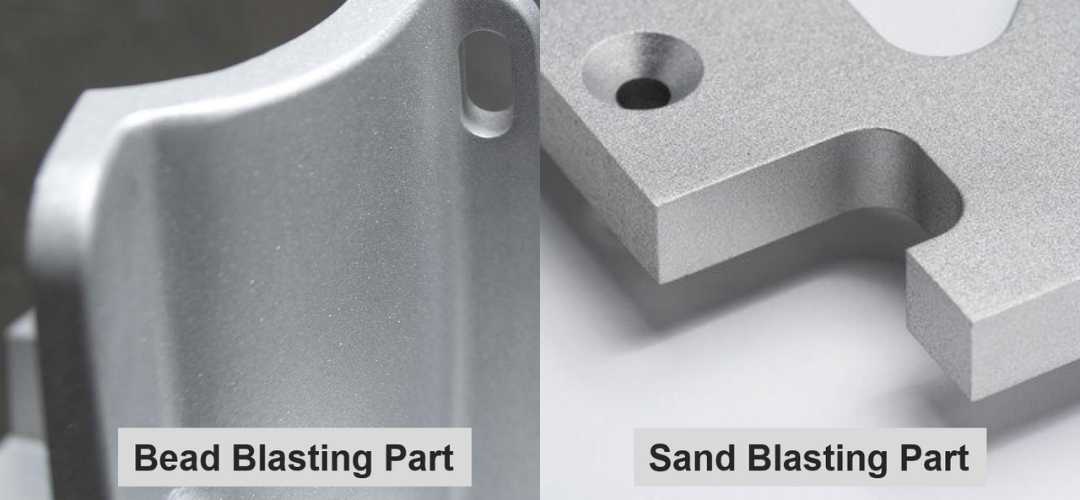
Although sandblasting and bead blasting are sometimes used interchangeably, they are distinct abrasive processes that produce different surface characteristics on aluminum. The differences can be summarized as follows:
Abrasive media
Sandblasting typically uses harder and more angular media, such as aluminum oxide or garnet, which allows for stronger material removal and effective surface preparation. In contrast, bead blasting uses spherical glass beads that gently impact the surface, creating a smoother and more controlled finish.
Surface finish
The finish achieved with sandblasting is generally rougher, which improves coating adhesion for processes such as anodizing or painting. Bead blasting produces a finer, uniform matte finish that is often preferred for visible components or decorative applications.
Material removal rate
Sandblasting removes material more aggressively, making it suitable for eliminating oxidation, scale, or old coatings. Bead blasting removes minimal material and is primarily used to refine the surface rather than perform heavy cleaning.
Typical surface roughness (Ra)
Depending on the abrasive size and blasting pressure, sandblasting can produce surface roughness in the range of Ra 3.2–6.3 µm. Bead blasting typically results in a finer finish, often around Ra 0.8–3.2 µm, providing a smoother texture suitable for cosmetic purposes.
Common applications
Sandblasting is widely used to prepare aluminum surfaces for anodizing, painting, or other coating processes where strong adhesion is required. Bead blasting is often chosen for parts that need a consistent appearance and a smooth surface, such as electronic housings, decorative panels, or consumer products.
The choice between sandblasting and bead blasting depends on the desired surface roughness, functional requirements, and visual appearance. Sandblasting is usually preferred when adhesion and surface preparation are the priority, while bead blasting is selected when a uniform and aesthetically pleasing finish is desired.
6. Sandblasting Process Parameters
To achieve consistent and high-quality results, controlling key sandblasting parameters is essential. These settings depend on the aluminum part’s thickness, shape, and the desired surface finish.
| Parâmetro | Recommended Range |
| Air Pressure | 2.5–4.5 bar (use lower pressure for thin parts) |
| Spray Angle | 45°–75° (avoid 90° unless specific texture required) |
| Spray Distance | 100–300 mm |
| Movement Speed | 0.3–1.2 m/s |
6.1 Dry Sandblasting
Dry sandblasting is the most common method for aluminum parts and requires efficient dust control:
- Use a cyclone separator with at least 95% efficiency to recycle abrasive media.
- Maintain a nozzle distance between 150 and 200 mm and a spray angle between 45° and 60°.
- Control the blasting speed to cover approximately 0.5 square meters per minute per pass.
- A high-efficiency dust collection system (filtration efficiency above 99.9%) is necessary to meet environmental standards and protect worker safety.
6.2 Wet Sandblasting
Wet sandblasting is preferred in situations with high dust sensitivity or for thin-walled parts:
- It reduces airborne dust, improving workplace safety.
- Maintain a sand-to-water ratio of 1:3 with stirring speeds of 150–200 rpm.
- Immediately rinse blasted parts with deionized water to remove residues.
- Dry the parts at 80–100°C for 15–20 minutes to ensure moisture removal.
6.3 Automated Sandblasting Lines
For large-scale production, automated lines improve consistency and throughput:
- Typically equipped with 6 to 8 rotating spray guns, combined with inline thickness sensors.
- Can process 500 to 800 parts per shift (based on 100×100 mm parts).
- Automation reduces manual errors and cuts rework rates by approximately 30%.
Tips for Special Shapes
- Deep Holes and Grooves: Use extended nozzles and increase air pressure by 10–15% to reach difficult areas.
- Sharp Edges: Lower pressure by about 20% and move the nozzle quickly to prevent over-blasting.
- Thin Parts (<1 mm): – Wet blasting with pressure below 1.5 bar helps avoid deformation.
- Large Profiles: Use sectional blasting with 30–50 mm overlap to ensure uniform coverage.
Quality Control Practices
Maintaining high quality requires rigorous inspection:
- Measure surface roughness with 3–5 readings per batch to ensure consistency.
- Perform visual inspections for uniform texture and finish.
- Use tape tests to detect residual abrasive particles on the surface.
- Conduct adhesion tests using the cross-cut method following ISO 2409 standards to verify coating durability.
Maintaining careful control of sandblasting parameters ensures not only a uniform surface finish but also consistent performance and durability across different aluminum parts and production methods.
7. Common Issues and Fixes
Even with a well-controlled sandblasting process, some common issues can arise. Identifying their causes and applying the right solutions helps maintain consistent quality.
7.1 Uneven Finish
An uneven surface finish is often caused by factors such as
- Moist abrasive media with moisture content above 1%
- Nozzle wear leading to an enlarged or irregular opening
- Fluctuating air pressure during blasting
How to fix:
Dry the abrasive thoroughly at 105°C for at least 2 hours, replace worn nozzles regularly, and stabilize air pressure by adding an air tank or reservoir.
7.2 Warping
Thin aluminum parts are susceptible to warping from prolonged or uneven blasting.
Prevention methods:
- Secure parts firmly with fixtures, alternate blasting on different sides to balance stresses, and limit blasting time to under 3 minutes per side.
7.3 Embedded Media
Sometimes abrasive particles can become embedded in the aluminum surface, affecting coating adhesion and appearance.
Remedies:
Perform an acid wash using 5% nitric acid for 30 seconds, follow with ultrasonic cleaning at 40 kHz for 5 minutes, and finish with a high-pressure water rinse above 50 bar to thoroughly remove residual media.
By proactively addressing these common issues and applying appropriate corrective measures, sandblasting can consistently produce high-quality aluminum surfaces while minimizing rework and defects.
8. Safety Guidelines for Sandblasting Aluminum
Sandblasting aluminum involves high-speed abrasive particles and airborne dust, so following proper safety measures is essential to protect operators and maintain a safe working environment. Key precautions include:
Protective equipment
Operators should always wear safety goggles, gloves, protective clothing, and approved respirators. These items prevent direct exposure to abrasive particles and dust that can cause injuries or respiratory issues.
Ventilation and dust control
Adequate ventilation or dust collection systems should be in place to remove airborne particles from the blasting area. Proper dust control not only protects personnel but also ensures clear visibility and stable operation during the process.
Equipment inspection
Hoses, nozzles, and pressure systems should be regularly inspected for wear, leaks, or damage. Maintaining equipment in good condition prevents unexpected failures and contributes to consistent blasting performance.
Work area management
The blasting zone should be clearly designated, and non-essential personnel should be kept at a safe distance. Properly managing the work area minimizes the risk of accidents and ensures that blasting is conducted efficiently.
Handling of abrasive media
Abrasive media should be stored, handled, and disposed of according to recommended safety guidelines. Proper handling prevents contamination, reduces dust generation, and maintains the quality of the blasting media for consistent results.
By following these safety considerations, sandblasting aluminum can be performed effectively while minimizing risks to operators and surrounding equipment.
Conclusão
Mastering the sandblasting process for aluminum is key to achieving consistent precision and surface quality. Whether the goal is to prepare parts for anodizing, enhance their appearance, or improve durability, applying the correct techniques and carefully controlling parameters will help meet the rigorous standards demanded by today’s global industries.
By customizing your sandblasting approach based on the specific aluminum alloy, part geometry, and subsequent finishing requirements, you can optimize both product quality and production efficiency. This thoughtful adjustment ensures your aluminum components deliver reliable performance and aesthetic appeal throughout their service life.
If you have any questions or need expert support with your aluminum sandblasting projects, feel free to contato the Beska team—we’re here to help you achieve the best results.
Mergulhe mais fundo em nossos recursos
Procurando opções de serviços mais diversificadas? Navegue pelas nossas seleções criteriosamente selecionadas:
 Portuguese
 English
 Hebrew
 Turkish
 French
 Russian
 German
 Spanish