


6063 aluminum is a heat-treatable Al-Mg-Si alloy known for good extrudability, surface finish, corrosion resistance, and thermal conductivity. Compared with 6061, it is generally used where appearance, complex extruded profiles, or heat dissipation matter more than maximum mechanical strength.
This guide covers the composition, mechanical and thermal properties, common tempers, CNC machining behavior, applications, limitations, and key differences between 6063 and 6061 aluminum. It also explains where 6063 performs well and when another aluminum alloy may be a better choice.
1. What is 6063 Aluminum
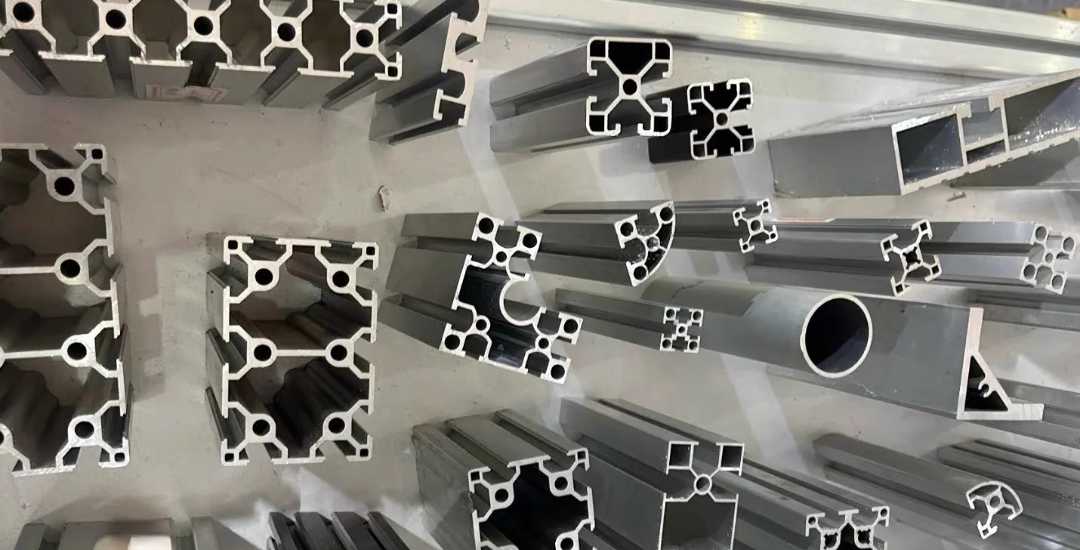
6063 aluminum is a heat-treatable Al-Mg-Si alloy in the 6xxx series, designated UNS A96063. It combines moderate strength with good corrosion resistance, thermal conductivity, and especially strong extrusion performance, which makes it widely used for profiles, housings, heat sinks, frames, and other parts where surface quality or complex cross-sections are important.
Magnesium and silicon provide the main strengthening elements and form Mg₂Si during heat treatment. 6063 is commonly supplied in tempers such as T5 and T6, with the final mechanical properties depending on the temper, product form, and applicable material specification.
Compared with 6061, 6063 generally offers better extrudability and is well suited to decorative or surface-sensitive applications, while 6061 is typically selected when higher mechanical strength is more important.
2. Key Properties of 6063 Aluminum
The properties of 6063 aluminum depend on the temper, product form, and applicable material specification. T5 and T6 are both commonly used conditions, with T6 generally providing higher strength after solution heat treatment and artificial aging.
Propriedades Mecânicas
6063 is considered a medium-strength aluminum alloy. For 6063-T6, commonly published reference values are around 240 MPa tensile strength and 210 MPa yield strength, although specified minimum values vary with product form, section thickness, and governing standard.
Its strength is lower than that of 6061-T6, which is one reason 6063 is more often selected for extruded profiles, housings, frames, and other parts where extrusion performance, surface appearance, or thermal management are more important than maximum structural strength.
Lower strength also means thin sections can be more sensitive to clamping pressure during machining, so workholding should be planned carefully where flatness or dimensional stability is important.
Physical and Thermal Properties
6063 has a density of approximately 2.70 g/cm³, similar to other common aluminum alloys. Its coefficient of thermal expansion is around 23 × 10⁻⁶ /°C, so temperature changes can affect dimensional measurements when tolerances become tight.
Thermal conductivity is one of 6063’s useful characteristics, with commonly published values around 200 W/m·K, depending on temper and material condition. Combined with its excellent extrudability, this makes 6063 widely used for heat sinks and other thermal-management components with complex finned profiles.
Surface Finish and Anodizing
6063 is also well suited to applications where surface appearance matters. Its alloy chemistry and strong extrusion characteristics can support smooth profiles and good anodização results.
The final anodized appearance still depends on factors such as material lot, extrusion quality, surface preparation, temper, and anodizing process control. For this reason, uniform color or defect-free finishing should not be treated as an inherent guarantee of the alloy itself.
3. Chemical Composition of 6063 Aluminum
6063 is an Al-Mg-Si alloy, with magnesium and silicon as its main alloying elements. These elements enable precipitation hardening while allowing the alloy to retain the extrusion characteristics for which 6063 is widely used.
| Elemento | Composition (wt.%) |
| Aluminum (Al) | Remainder |
| Magnesium (Mg) | 0.45–0.90 |
| Silicon (Si) | 0.20–0.60 |
| Iron (Fe) | ≤ 0.35 |
| Cobre (Cu) | ≤ 0.10 |
| Manganese (Mn) | ≤ 0.10 |
| Cromo (Cr) | ≤ 0.10 |
| Zinc (Zn) | ≤ 0.10 |
| Titanium (Ti) | ≤ 0.10 |
| Other, each | ≤ 0.05 |
| Other, total | ≤ 0.15 |
Composition limits are commonly published for AA 6063. Production material should be verified against the applicable specification and mill certificate.
Magnesium and silicon form the Mg₂Si strengthening phase during heat treatment. The relatively low levels of other alloying elements also help distinguish 6063 from higher-strength 6xxx alloys such as 6061.
4. CNC Machining Characteristics of 6063 Aluminum
6063 is frequently supplied as extruded stock, so its machining behavior is closely tied to the condition and geometry of the extrusion. It machines well in many applications, but thin sections, residual stress, and surface requirements still need attention.
Extruded Stock and Dimensional Stability
Extrusion allows 6063 to be produced in complex profiles before CNC machining, which can reduce the amount of material that needs to be removed later.
However, extruded sections may still contain residual stress or dimensional variation. Removing material from one side of a thin or uneven section can cause the part to move, especially during deep pocketing or finishing.
For parts with tighter tolerances, roughing and finishing should be planned with enough allowance to manage any movement that appears after material removal.
Surface Finish and Machining Behavior
6063 is relatively soft and generally machines cleanly, making it suitable for parts where a smooth visible surface is important.
At the same time, softer aluminum can develop built-up material on the cutting edge if tooling or cutting conditions are not well controlled. Sharp tools, stable cutting conditions, and suitable lubrication or coolant help maintain a cleaner machined surface.
This is especially important when the part will later be anodized, because machining marks and surface defects may remain visible after finishing.
Fixturing Thin or Soft Sections
Thin-wall 6063 profiles can be sensitive to concentrated clamping force. Excessive pressure may leave marks, distort the section, or affect flatness after the part is released.
Soft jaws, larger contact areas, and controlled clamping force can help support the part without damaging visible surfaces or flexible sections.
5. Common Applications of 6063 Aluminum
6063 aluminum is widely used where extrusion performance, surface appearance, corrosion resistance, and thermal conductivity are more important than maximum structural strength. Its applications range from heat-dissipation components to architectural profiles and lightweight housings.
Heat Sinks and Thermal Components
6063 is commonly used for heat sinks, LED housings, and other thermal-management parts. Its good thermal conductivity and excellent extrudability make it suitable for profiles with fins and other heat-dissipation features.
Anodizing is also commonly applied where corrosion resistance or appearance is important, although the final surface quality depends on the material condition and finishing process.
Architectural and Decorative Profiles
Window frames, curtain-wall profiles, handrails, trim, and similar components are common uses for 6063 aluminum.
Its extrusion characteristics make it suitable for long and relatively complex profiles, while its surface finish works well with anodizing, powder coating, and other decorative treatments.
Lightweight Frames and Equipment Components
6063 can also be used for machine frames, brackets, supports, covers, and other components that do not require the higher strength of alloys such as 6061.
In these applications, its low weight, corrosion resistance, and ability to form complex extruded sections can simplify both part design and manufacturing.
Consumer and Electronic Housings
Electronic enclosures, display frames, bezels, and sensor housings can benefit from 6063’s smooth surface and finishing characteristics.
It is especially useful where the visible surface matters and where the component also needs moderate strength, low weight, or heat dissipation.
6. 6063 vs 6061 Aluminum: Key Differences
6063 and 6061 are both heat-treatable Al-Mg-Si alloys, but they are usually selected for different priorities. 6063 offers better extrudability and is well suited to visible, anodized, and heat-dissipation components, while 6061 is generally preferred when higher mechanical strength is required.
| Propriedade | 6063-T6 Aluminum | 6061-T6 Aluminum |
| Typical tensile strength | Around 240 MPa | Around 290–310 MPa |
| Relative strength | Moderado | Mais alto |
| Thermal conductivity | Around 200 W/m·K | Around 167 W/m·K |
| Extrudability | Excellent, especially for complex or thin-wall profiles | Good, but generally less favorable for intricate profiles |
| Surface finish | Well suited to decorative and visible extrusions | Good, but less commonly chosen primarily for cosmetic extrusion |
| Anodização | Often selected for applications where anodized appearance matters | Widely anodized, but alloy and process conditions can affect appearance |
| Typical uses | Heat sinks, architectural profiles, housings, trim, lightweight frames | Structural brackets, machine parts, fixtures, frames, higher-load components |
Typical values are for general comparison only. Actual properties depend on temper, product form, section thickness, and material specification.
The main trade-off is therefore extrudability and surface performance versus mechanical strength. If a part needs complex extruded geometry, good anodized appearance, or efficient heat transfer without high structural loads, 6063 may be the better fit. If strength, fatigue resistance, or load-carrying capacity is more important, 6061 is usually the stronger candidate.
The final choice should still consider the temper, geometry, manufacturing route, surface treatment, and actual service loads rather than alloy grade alone.
7. Common Limitations of 6063 Aluminum
6063 offers useful advantages in extrusion, surface finishing, and thermal applications, but its lower mechanical strength compared with alloys such as 6061 can limit its use in more demanding structural designs.
Lower Mechanical Strength
6063 is a medium-strength aluminum alloy and generally provides lower tensile and yield strength than 6061 in comparable tempers.
For parts exposed to higher structural loads, repeated impact, or demanding fatigue conditions, the required strength should be checked carefully before selecting 6063. In these cases, a higher-strength aluminum alloy may be more appropriate.
Sensitivity to Clamping and Thin-Wall Distortion
Thin or lightly supported 6063 sections can be sensitive to concentrated clamping pressure during machining. Excessive force may leave marks, deform the section, or affect flatness after the part is released.
Suitable support, larger contact areas, soft jaws, and controlled clamping force can help reduce these risks.
Elevated-Temperature Service
6063 is widely used for heat-dissipation components, but good thermal conductivity does not mean the alloy is suitable for every high-temperature application.
Long-term exposure to elevated temperatures can affect the properties of precipitation-hardened aluminum alloys. Parts used under sustained heat or repeated thermal cycling should therefore be evaluated according to the actual operating temperature, temper, load, and service requirements.
Threads in Thin or Frequently Assembled Sections
Threads machined directly into thin or relatively soft aluminum sections may be more vulnerable to wear or stripping when fasteners are repeatedly removed and installed.
Where repeated assembly is expected, thread engagement, wall thickness, tightening load, and the possible use of threaded inserts should be considered during design.
Conclusão
6063 aluminum combines good extrudability, corrosion resistance, thermal conductivity, and surface-finishing potential with moderate mechanical strength. It is well suited to heat sinks, housings, extruded profiles, and other parts where complex geometry, appearance, or heat dissipation matter more than maximum structural strength. When higher load capacity is required, alloys such as 6061 may be a better starting point.
The final choice should consider the temper, stock form, section geometry, machining requirements, surface treatment, and actual service loads. For an RFQ, providing these requirements together with the drawing gives Beska a clearer basis for material selection, machining planning, and quotation.
 Portuguese
 English
 Hebrew
 Turkish
 French
 Russian
 German
 Spanish