


A jet-engine turbine blade can operate in gas temperatures above 1000°C while carrying high rotational and thermal loads. At these temperatures, many conventional metals lose strength rapidly, oxidize, or deform through creep. Modern turbine components rely on superalloys, together with cooling and protective coatings, to remain stable under these extreme conditions.
Superalloys are designed to retain mechanical strength, resist oxidation and hot corrosion, and maintain structural stability at elevated temperatures. Their performance, however, varies significantly by alloy family and grade. A material that performs well under one combination of temperature, stress, and environment may behave very differently under another, which is why superalloy selection must go beyond temperature alone.
1. What Is a Superalloy?
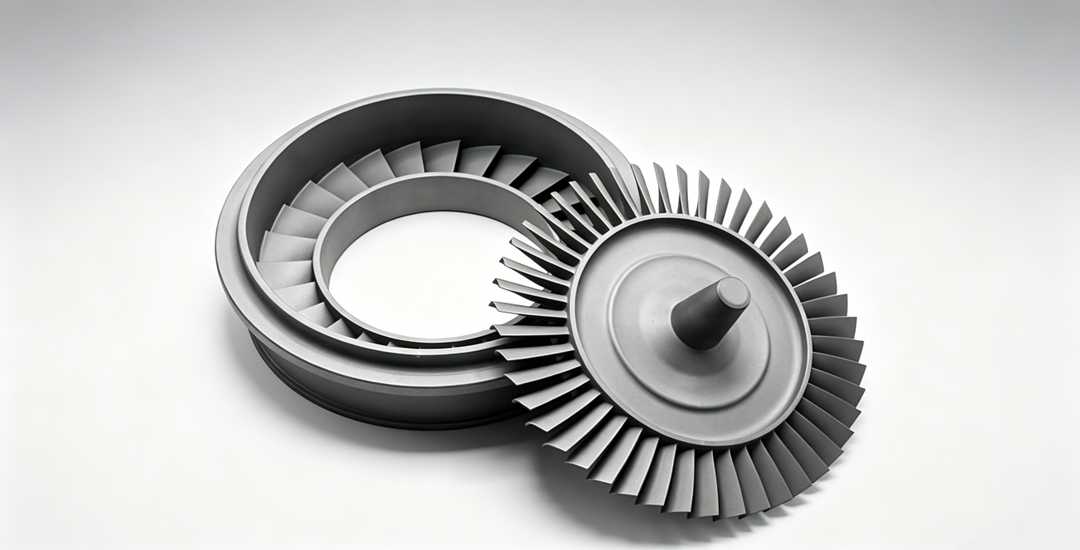
A superalloy is a high-performance metallic alloy designed to retain mechanical strength, creep resistance, and structural stability at elevated temperatures. Most superalloys are based on nickel, cobalt, or iron-nickel systems and contain carefully controlled alloying elements that improve their behavior under heat, stress, oxidation, and corrosive environments.
What distinguishes a superalloy is not a single temperature limit, but its ability to maintain useful properties when conventional structural metals begin to lose strength or dimensional stability. Depending on the grade, this performance may come from solid-solution strengthening, precipitation strengthening, carbide formation, and control of the grain structure.
Superalloys are therefore used where several demanding conditions occur together: high temperature, sustained mechanical load, oxidation or hot corrosion, and long service life. Jet engines, industrial gas turbines, chemical processing equipment, and other high-temperature systems are typical examples.
2. Types of Superalloys
Superalloys are commonly classified by their primary base metal. The three main families are nickel-based, cobalt-based, and iron-nickel-based superalloys. Each family offers a different balance of high-temperature strength, oxidation resistance, hot-corrosion resistance, manufacturability, and cost.
| Superalloy Family | Typical Characteristics | Common Grades | Aplicações típicas |
| Nickel-Based | Strong creep resistance, high-temperature strength, and good oxidation resistance | Inconel 718, Inconel 625, Hastelloy X, Waspaloy | Turbine discs, shafts, combustors, aerospace and energy components |
| Cobalt-Based | Good hot-corrosion resistance, thermal-fatigue resistance, and wear performance | Haynes 188, selected Stellite grades | Combustors, hot-section hardware, valve seats, wear-resistant components |
| Iron-Nickel-Based | Useful high-temperature strength with lower alloy cost in many applications | A-286, Incoloy 800 | Fasteners, furnace components, heat exchangers, high-temperature structural parts |
Nickel-Based Superalloys
Nickel-based superalloys are the most widely used family for high-temperature structural applications. Depending on the grade, they may be strengthened by solid solution, precipitation hardening, or a combination of mechanisms.
Grades such as Inconel 718 are widely used where high strength and fatigue resistance are important, while alloys such as Hastelloy X are better known for oxidation resistance and high-temperature fabricability.
Cobalt-Based Superalloys
Cobalt-based superalloys are valued for their resistance to hot corrosion, thermal cycling, and wear. They are often used in components exposed to aggressive combustion environments or repeated heating and cooling.
Their advantage is not simply that they operate at a “higher temperature” than nickel alloys. The choice depends on the specific combination of stress, corrosion, oxidation, and thermal-fatigue requirements.
Iron-Nickel-Based Superalloys
Iron-nickel-based superalloys combine iron, nickel, chromium, and other alloying elements to provide elevated-temperature strength and oxidation resistance at a generally lower alloying cost than many nickel- or cobalt-rich materials.
Examples such as A-286 and Incoloy 800 are used in fasteners, furnace hardware, heat exchangers, and other components that require reliable performance at elevated temperatures without the full performance profile of more highly alloyed nickel-based grades.
The base-metal family helps narrow the material range, but it does not define a fixed service-temperature limit. Final selection depends on the specific grade, applied stress, exposure time, oxidation or corrosion environment, and required component life.
3. Key Properties of Superalloys
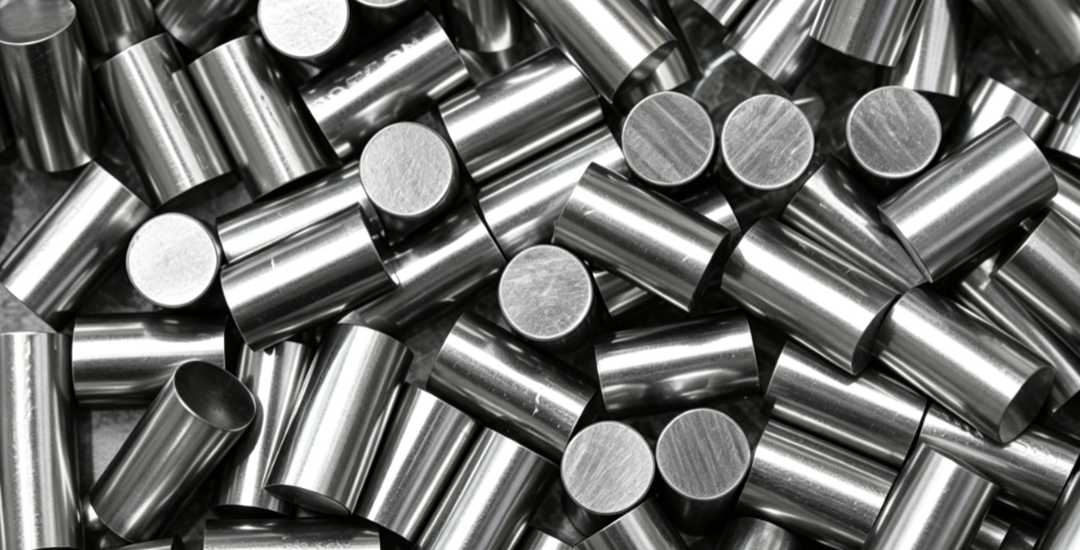
Superalloys are valued because they retain useful mechanical and chemical performance after long exposure to heat. Four properties are particularly important in high-temperature service.
High-Temperature Strength and Creep Resistance
Creep is the gradual deformation of a material under sustained load at elevated temperature. For turbine discs, shafts, and other continuously loaded parts, creep resistance can be more important than room-temperature tensile strength.
For example, INCONEL 718 has published creep and rupture data at temperatures around 649–704°C (1200–1300°F), with performance strongly affected by stress, exposure time, tratamento térmico, and section size. This is why superalloy capability cannot be expressed by a single maximum temperature.
Oxidation and Hot-Corrosion Resistance
Superalloys often contain chromium, aluminum, and other elements that help slow oxidation at high temperature. Hot corrosion is different: salts, sulfur compounds, and combustion products can attack or disrupt the protective surface scale.
The behavior varies considerably by grade. HAYNES 188, for example, is rated by its manufacturer for long-term exposure in oxidizing environments up to about 1095°C (2000°F) and also shows strong resistance to sulfate-deposit hot corrosion.
Microstructural Stability
Long exposure to heat can change the phases inside a superalloy. Strengthening phases may coarsen, while undesirable phases can form and reduce ductility or toughness.
This is not just a theoretical concern. HAYNES reports that prolonged thermal exposure of alloy 188 can produce a Co₂W Laves phase, which can reduce tensile ductility and impact strength. Microstructural stability therefore has to be evaluated for the specific alloy and service temperature.
Thermal and Cyclic Fatigue
Hot-section components repeatedly expand and contract during startup, shutdown, or changing load. These cycles can initiate cracks even when the material is strong enough to carry the steady mechanical load.
Cyclic performance is therefore important for combustors, turbine hardware, and exhaust components. HAYNES 188, for example, has published elevated-temperature low-cycle fatigue data from approximately 425°C to 870°C, illustrating why cyclic loading is evaluated separately from creep or oxidation resistance.
4. How Superalloys Are Strengthened
Superalloys do not rely on a single strengthening mechanism. Depending on the grade, high-temperature strength may come from solid-solution strengthening, precipitation strengthening, carbide formation, and grain-boundary control. Many commercial superalloys combine several of these mechanisms.
Solid-Solution Strengthening
Solid-solution strengthening occurs when alloying elements dissolve into the base metal and distort its crystal lattice, making dislocation movement more difficult.
Elements such as molybdenum and tungsten are commonly used for this purpose because they can improve strength and creep resistance at elevated temperatures. HAYNES 188, for example, is a cobalt-based alloy strengthened largely through solid-solution alloying, with tungsten playing an important role in its high-temperature strength.
This type of strengthening does not require an aging treatment to form a separate strengthening phase.
Precipitation Strengthening
Precipitation-hardened superalloys develop fine secondary phases within the matrix during controlled heat treatment. These particles hinder dislocation movement and can significantly increase strength at elevated temperatures.
In nickel-based superalloys, two important strengthening phases are gamma prime (γ′) and gamma double prime (γ″). INCONEL 718, for example, relies heavily on γ″ precipitation, with additional γ′ strengthening, which gives the alloy its high strength after aging.
Because these precipitates depend on heat treatment, the solution-treatment and aging condition can strongly influence the final mechanical properties.
Carbides and Grain-Boundary Strengthening
Carbon can combine with elements such as titanium, niobium, chromium, molybdenum, or tungsten to form carbides within a superalloy. Properly distributed carbides can help stabilize grain boundaries and resist grain-boundary sliding during high-temperature creep.
Grain-boundary chemistry and grain size are also carefully controlled. For example, larger grains may improve creep resistance in some high-temperature applications, while finer grains can provide advantages for fatigue and room-temperature strength.
The goal is therefore not simply to make the alloy as hard as possible. Superalloy design balances matrix strength, precipitates, carbides, and grain structure so that the material remains stable under the required combination of temperature, stress, and service time.
5. Common Applications of Superalloys
Superalloys are used where high temperature is combined with sustained load, oxidation, corrosion, or repeated thermal cycling. The required properties differ by industry, so the same alloy is not suitable for every high-temperature component.
Aerospace and Gas Turbines
Aircraft engines and industrial gas turbines are among the most important applications for superalloys. Turbine discs, shafts, combustors, casings, and other hot-section components must retain strength while exposed to high temperature and repeated mechanical loading.
Nickel-based alloys such as INCONEL 718 are widely used for high-strength rotating and structural components, while oxidation-resistant nickel- and cobalt-based alloys are used in combustors and other parts exposed directly to hot gases. Turbine blades may require even more specialized cast or single-crystal nickel-based superalloys together with cooling passages and thermal-barrier coatings.
Chemical and Thermal Processing
Chemical plants, furnaces, and heat-treatment equipment use superalloys where elevated temperature occurs together with corrosive gases or process media.
Typical components include furnace hardware, heat exchangers, reactor parts, burner components, and high-temperature piping. Alloys such as Incoloy 800 are used in thermal-processing equipment, while nickel-based corrosion-resistant alloys may be selected where both temperature and chemical attack are severe.
Energy and Nuclear
Power-generation systems use nickel-based and iron-nickel alloys in components exposed to heat, pressure, and corrosive fluids.
In nuclear power systems, nickel alloys are used in applications such as steam-generator tubing and selected reactor-internal components, where corrosion resistance and long-term stability are important. Gas-fired and other thermal-energy systems also use superalloys in combustion and high-temperature hardware.
Automotive and Motorsport
Most conventional automotive components do not require superalloys, but they appear in areas exposed to unusually high exhaust temperatures or severe mechanical loading.
Examples include selected turbocharger components, exhaust valves, high-temperature fasteners, and motorsport exhaust hardware. In these applications, superalloys are used when ordinary steels or stainless steels cannot provide the required combination of heat resistance, fatigue performance, and oxidation resistance.
6. Manufacturing Considerations for Superalloys
Superalloys can be challenging to manufacture because the same properties that help them survive high-temperature service also affect cutting, heat treatment, and welding. The exact manufacturing route depends strongly on the alloy grade and its strengthening mechanism.
Usinagem Desafios
Many superalloys work-harden during cutting and retain considerable strength at elevated temperatures. Nickel-based grades can also conduct heat away from the cutting zone relatively slowly, concentrating heat near the tool edge and accelerating wear.
Stable cutting conditions are therefore important. Rigid workholding, sharp tooling, consistent feed, and avoiding unnecessary rubbing or tool dwell help reduce work hardening and maintain dimensional control.
Grade and Heat-Treatment Condition
Machinability can change significantly with material condition. Precipitation-hardened alloys such as INCONEL 718 become harder after aging, while solid-solution-strengthened grades follow different heat-treatment routes.
For some precipitation-hardened superalloys, heavy machining is easier before final aging, followed by finishing where dimensional requirements demand it. This should not be treated as a universal sequence, however, because solution treatment, aging temperature, and machining order are grade-specific.
Welding Considerations
Weldability also varies considerably between superalloys. Some solid-solution-strengthened nickel- and cobalt-based grades can be welded using established procedures, while precipitation-hardened alloys may require tighter control of heat input and subsequent heat treatment.
Preheating and post-weld heat treatment should therefore be specified according to the alloy and welding procedure rather than applied as general rules for all superalloys.
Conclusão
Superalloys earn their place in applications where heat changes how a component fails. A turbine disc may be limited by creep, a combustor liner by oxidation and hot corrosion, and a furnace component by repeated thermal cycling. All three operate at high temperature, but they place very different demands on the material.
That is why grades such as INCONEL 718, HAYNES 188, and A-286 cannot be arranged on a simple temperature ladder. Their useful range comes from the combination of strength, microstructural stability, corrosion behavior, and time under load. Once those service conditions are defined, the alloy grade and heat-treatment condition can be matched to the actual job rather than to a broad “nickel vs cobalt vs iron” rule.
 Portuguese
 English
 Hebrew
 Turkish
 French
 Russian
 German
 Spanish